Costa Rica just got a chikungunya travel alert. Here's the bite-and-vaccine plan.
The CDC added a Level 2 chikungunya notice for Costa Rica; here is what the destination-specific alert means, who should discuss VIMKUNYA, how to prevent bites, and when fever and joint pain need medical care.
The headline, translated
If Costa Rica is on your summer itinerary, the CDC has added a Level 2 Travel Health Notice for chikungunya. The outbreak is in Guanacaste Province, with most reported cases in Playa Langosta. Level 2 means practice enhanced precautions, not “cancel every trip.” 1
The useful takeaway is simple: this is a mosquito-bite prevention problem with a vaccine decision for some travelers. It is not a reason for someone in the United States who is not traveling to panic. The CDC’s current map says the most recent locally acquired U.S. case was reported in 2025. 2
What changed in Costa Rica
On July 16, 2026, the CDC listed chikungunya in Costa Rica as a new Level 2 notice. The affected area named in the notice is Guanacaste Province, especially Playa Langosta. The CDC’s broader risk page also flags the northwest Pacific coastal areas of Costa Rica. 1 2
Chikungunya is a virus spread by infected mosquitoes. The mosquitoes that carry it can bite during the day and at night, so “I only need spray after sunset” is not a reliable plan. 3
This is also not the same thing as saying every part of Costa Rica has the same risk. The notice names a province and a hotspot. Check your actual destination, lodging, and activities rather than treating the entire country as one giant exposure zone.
Should you consider the vaccine?
The U.S. vaccine is called VIMKUNYA. CDC says it is approved for people 12 and older, given as a single dose, and recommended for adolescents and adults traveling to an area with a chikungunya outbreak. That makes a trip into the named Costa Rica outbreak area a reason to talk with a healthcare provider before leaving, rather than a reason to book a random last-minute shot without checking your situation. 4
CDC says vaccination may also be considered for adults and adolescents traveling or moving to an area with elevated risk, especially for a long stay such as six months or more. That is a different bucket from a short visit to an active outbreak area, so the decision depends on the destination and the length of the trip. 4
Ask a clinician about the vaccine before travel if you are pregnant, have a weakened immune system, have a history of a severe allergic reaction to a vaccine ingredient, or have a condition such as diabetes, high blood pressure, or heart disease. CDC specifically says pregnant travelers should discuss the risks and benefits rather than making a blanket decision. 4
The bite plan that actually works
Use more than one layer, especially if you will be outside, sleeping without strong screens, or spending time near vegetation or water:
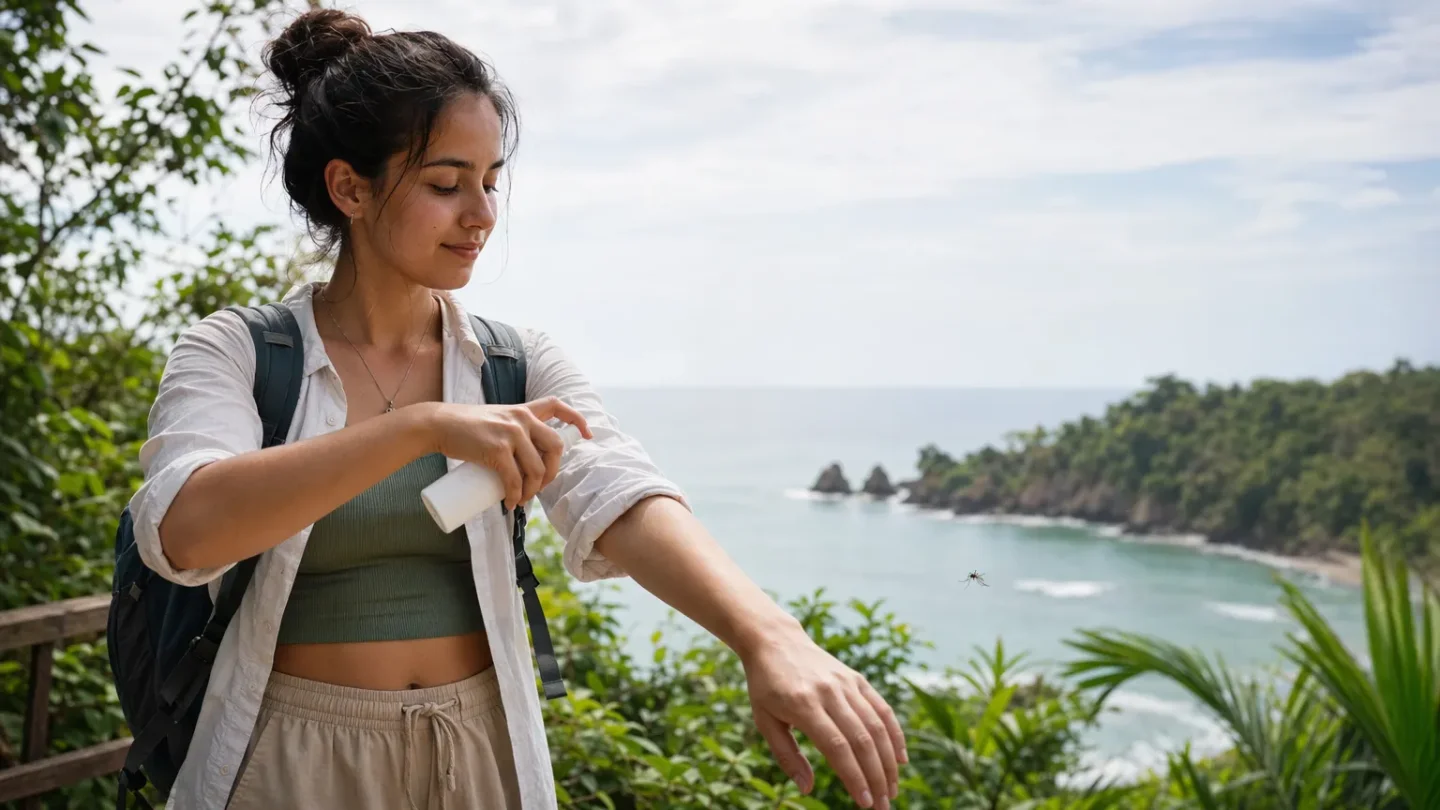
- Use an Environmental Protection Agency-registered insect repellent and follow its label. You do not need a “natural” product for it to count as effective; the EPA registration is the useful signal.
- Wear long sleeves, long pants, and loose-fitting clothing when practical.
- Treat clothing and gear with 0.5% permethrin. Do not put permethrin directly on skin.
- Choose lodging with air conditioning or intact window and door screens. Use a mosquito net if you are sleeping outdoors.
- Keep the plan running during the day, not just during the evening.
These steps are CDC’s core prevention advice for chikungunya. 3
What chikungunya feels like
Symptoms usually start 3 to 7 days after an infected mosquito bite. Fever and joint pain are the classic combination. Headache, muscle pain, joint swelling, and a rash can also show up. Most people feel better within about a week, but joint pain can be severe and can stick around for months in some people. 5
If you get fever and strong joint pain after visiting Costa Rica or another area where chikungunya is circulating, contact a healthcare provider and say exactly where and when you traveled. Chikungunya, dengue, and Zika can look similar, and CDC says testing may be needed to sort them out. 5
The medication detail people miss
There is no specific antiviral medicine for chikungunya. Rest and fluids can help. CDC says acetaminophen is the preferred first-line option for fever and joint pain until dengue has been ruled out. Avoid aspirin, ibuprofen, and other NSAIDs until a clinician has ruled out dengue, because those medicines can raise the risk of bleeding if the illness is actually dengue. 6
Do not use someone else’s prescription medication or stack multiple cold-and-flu products without checking their ingredients. If you have liver disease, take other medicines, or are unsure how much acetaminophen is safe for you, ask a pharmacist or clinician.
If you become sick during or after the trip, keep preventing mosquito bites for the first week of illness. Someone with chikungunya can infect mosquitoes that bite them during that early period, and those mosquitoes can then spread the virus to other people. 6
When to get help
Contact a clinician promptly for fever and joint pain after travel to a chikungunya-risk area, especially if the fever is high, the pain is disabling, you cannot keep fluids down, or symptoms are not improving. Tell them your travel history before assuming it is “just a bad viral thing.” CDC lists older adults, newborns exposed around birth, and people with conditions such as diabetes, high blood pressure, or heart disease as groups at higher risk for severe illness. 5
Call 911 or your local emergency number for trouble breathing, fainting, new confusion, a seizure, blue or gray lips, inability to stay awake, or signs of severe dehydration such as collapse. Those are general emergency signs, regardless of which infection is causing the fever.
The bottom line
Going to Costa Rica does not automatically mean you will get chikungunya. If your plans include Guanacaste or Playa Langosta, treat the CDC notice as a prompt to check the vaccine question with a clinician and pack a serious bite-prevention setup. If you are not traveling, the notice does not create a new everyday risk in the United States. And if fever plus joint pain shows up after a trip, mention the destination early. That one detail can change which infections a clinician tests for and which pain medicines are safest to start with.
관련 콘텐츠
- 로그인하면 댓글을 작성할 수 있습니다.
More from this channel
- Your migraine plan starts before the pain peaks. Here's what actually helps.
- Your resting heart rate is not a health score. Here's what the new study actually means.
- Alcohol is not a health hack. Here's what the new mortality study actually says.
- You do not need a gym-bro routine. Here's the strength-training target that matters.
- The Cyclospora outbreak now has a food link. Here's the Taco Bell reality check.
- Ebola is spreading fast in the DRC. Here's the travel reality check.
- A parasite outbreak is driving a lot of summer diarrhea. Here's the Cyclospora plan.
- Your flu shot was not useless. Here's what this season's numbers actually mean.