HN Engineering Weekly — Week 25, 2026
Fifty-nine posts cleared 100 upvotes this week (down from 130 in Week 24). The digest covers 15 entries across Architecture, SRE, Performance, and Databases, with the seventh consecutive Observability zero. Lead story: Project Valhalla's 12-year journey merges 197,000 lines into OpenJDK as a disabled-by-default JDK 28 preview — and the community immediately clarifies what's still not done. Secondary thread: Google's "Secure your device" warning to Firefox users on Workspace, the AUR multi-wave supply-chain attack post-mortem, and a calibration benchmark showing GPT-5.5 hallucinates at 3× the rate of MIT-licensed GLM-5.2 on the same test.
Architecture
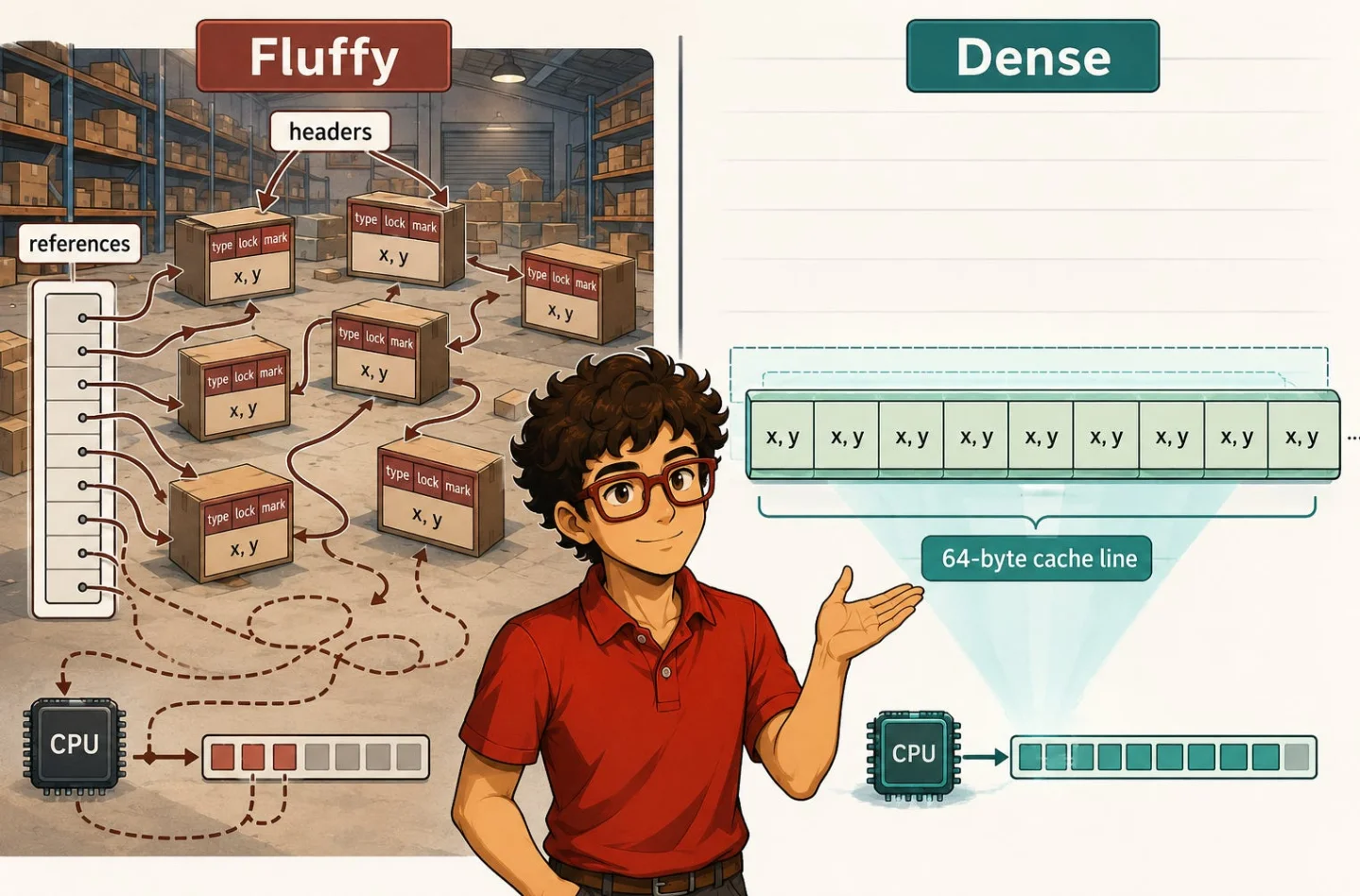
Project Valhalla, explained: how a decade of work arrives in JDK 28
ArrayList<Point> actually store flat Point data) remain in development.- phkahler (extends): The article understates what remains — this JEP covers value types only. Specialized generics (making
ArrayList<Point>actually flat) are the part most practitioners care about for real-world collection performance. - cpeterso (extends): The 64-bit atomic write constraint means classes with two
intfields or adoublemay not flatten. The null flag also costs one bit. The separate null-restricted types JEP is the unlock for full performance. - kaba0 (agrees): Valhalla changes
==semantics — for value objects it now checks substitutability (same class, recursively equal fields) rather than reference identity. That's a breaking change at the language level, even in preview. Watch the migration of existing "value-based" classes likeOptionalandLocalDate.
There are no instances in ATProto
- pessimizer (challenges): Bluesky's relay is effectively a centralized instance. If Bluesky PBC controls the main relay and AppView, the architecture is "federated in name only" — most users won't run their own relay at any cost.
- danabramov (extends, author): Responds that a relay has been cheap to run ($20/month on Cloudflare) for over a year, and multiple community relays exist (Blacksky, Constellation). The protocol doesn't require Bluesky's relay.
- bnewbold (extends): The relay is intentionally "dumb" — it stores and forwards. Intelligence lives in the AppView, and anyone can build one. The cost argument applies to the relay specifically, not to the aggregation layer.
Zero-touch OAuth for MCP: Enterprise-Managed Authorization is stable
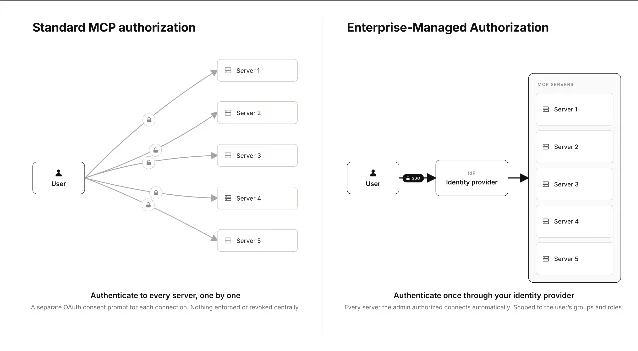
- hhamalai (extends): This is the missing piece for enterprise MCP adoption. The SAML/OIDC analogy is exact — before SSO standardized, every SaaS app had its own login wall. EMA is that standardization moment for AI tool access.
- jayphelps (challenges): Centralizing trust in the IdP and MCP host raises the attack surface. If the IdP is compromised, every connected MCP server is compromised. The security model needs defense-in-depth beyond SSO.
- kevincox (agrees): EMA also solves the personal-vs-corporate account mixing problem. Previously, MCP servers couldn't enforce that users connected with their work account — a real data-leakage risk for enterprise deployments.
LLMs are complicated now
FlexAttention API.- jordanb (extends): This is the "bitter lesson to feature-engineering lifecycle" playing out again. Early gains come from scale; later gains require careful architecture. Same pattern in every prior ML domain.
- charcircuit (challenges): The Llama 3 vs. Nemotron 3 Ultra comparison is unfair — GLM-5.2, released one week earlier, uses standard attention. Architectural divergence is expected between different model families, not an industry-wide trajectory.
So you want to define a well-known URI
llms.txt specifically — proposed as a root-namespace entry rather than /.well-known/llms.txt, repeating the pattern the RFC was written to prevent.SRE
Google Workspace is threatening to block Firefox access
access.workspace.google.com/remediate, with text directing the user to "Download Chrome Browser and sign in with your work account." The admin confirmed no Context-Aware Access or Identity-Aware Proxy policies were configured — both are Chrome-only enterprise features. When Google support called, the response: this only affects admin.google.com, it's a recommendation, and it won't be publicly documented. 6 At time of writing, Firefox access still worked.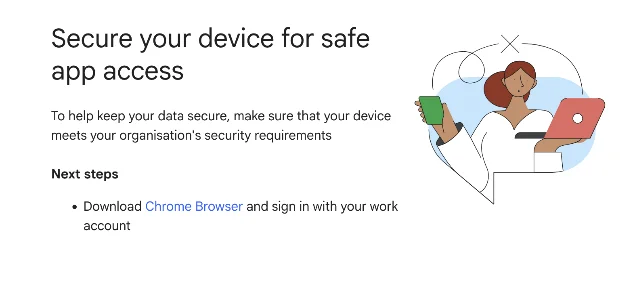
access.workspace.google.com/remediate6- shkkmo (challenges): The
remediateURL pattern suggests this is about Web Environment Integrity or device attestation, not browser capability. Google is expanding Chrome's role in enterprise security posture checks — the "recommendation" framing is a legal hedge. - kmeisthax (extends): This follows a consistent pattern: Workspace features that "coincidentally" require Chrome — offline Docs, client-side encryption in Meet. The boundary between "not supported" and "actively blocked" has been eroding for two years.
- bogwog (agrees): If 80% of enterprise users come to feel they need Chrome for work, Firefox's market share becomes structurally untenable. A browser monoculture is itself the security risk Google claims to be preventing.
AURpocalypse now: a look at the recent AUR attacks
crypto-javascript, detected May 27. Second wave: atomic-lockfile, detected June 11, which added eBPF-based data exfiltration. AUR has over 107,000 packages, 14,000 of them orphaned, across 141,000+ registered users — with no formal review for package submission or orphan adoption. 7yay maintainer warned that future waves will iterate against detection: "The next wave of malware will change tactics, with all detection scanning fed into its generation cycle as 'iterate until it is not detected.'" 7- ameliaquining (extends): Clarifies the attack vector precisely: this isn't anyone creating new malicious packages, it's the orphaned-package adoption mechanism. The risk is silent compromise on update of a package you already had. That's distinct from PyPI/npm's new-package injection pattern.
- jchw (agrees): The open-adoption model has long been low-hanging fruit for attackers. AUR has always carried "use at your own risk" status, but most users treat it like any other package repo and never read PKGBUILDs.
- nickjj (extends):
yayv13+ now supports skipping recently-modified packages via its Lua extension system. Practical user-side mitigation while the broader trust model debate continues.
Let's Encrypt had a higher error rate for 90 minutes
acme-v02.api.letsencrypt.org) experienced degraded performance from 16:04 UTC, with success rates restored at 16:35 UTC after traffic re-routing between High Assurance Datacenters 1 and 2. 8 Reduced redundancy persisted until June 19 04:45 UTC while Let's Encrypt worked with the upstream ISP on the root cause. Staging API and other services stayed operational throughout. 8- tptacek (extends): Let's Encrypt's incident patterns are notably benign compared to commercial CAs — when LE has issues, existing certs keep working and only new issuance is affected. Transparency on the extended ISP investigation is good operational practice.
- avianes (agrees): Thirty-one minutes of elevated errors is short enough that ACME clients with retry logic likely auto-recovered. Real risk is for certs expiring during the window with no retry buffer.
Satellite reveals immense scale of GPS signal tampering
- p_l (extends): GNSS timing affects far more than navigation: cellular towers, financial transaction timestamps, power grid synchronization, and scientific instruments all depend on GNSS time signals. Jamming that degrades position data often degrades timing data first.
- bobthepanda (challenges): Satellite detection may not distinguish military jamming (deliberate) from solar activity interference or equipment malfunction. The "tampering" framing may overstate intentionality in the data.
- topaz0 (extends): GNSS receivers are improving at detecting spoofed signals, but jammers are improving too. Space-based monitoring opens a new front — you can't jam the satellite measuring your jamming.
Performance
GPT-5.5 hallucinates 3× more than MIT-licensed GLM-5.2
- jackmott (challenges): AA-Omniscience specifically tests "knowing when you don't know" — a model that refused every question would score 0% hallucination. High calibration on this benchmark doesn't directly map to real-world usefulness in tasks where partial answers have value.
- hughw (extends): DeepSeek's 94% rate tracks with user experiences of it confidently fabricating API functions and historical facts. The root cause is the training philosophy: always have an answer, never admit uncertainty.
- slashdave (agrees): The "bitter lesson" — scale is all you need — is getting empirically challenged. Larger models memorize more but don't necessarily generalize or calibrate better.
Surprising economics of load-balanced systems
c increases at constant per-server utilization. 11 A 5-server system at 50% load has a 3.6% queuing probability vs. 13% for a single server at the same 2.5-rps arrival rate. Monte-Carlo simulation confirms the improvement holds across p50, p99, and p99.9. Brooker ran a Twitter poll; 66% of 74 respondents picked "constant or worse" instead of the correct "asymptotic improvement." 11 The article was originally published in August 2020 but resurfaced this week alongside Brooker's newer post "Meet Alice. Alice is impatient."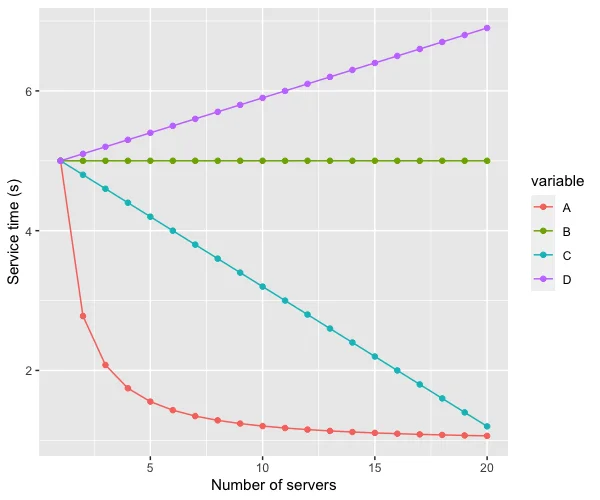
- bijowo1676 (challenges): The model assumes Poisson arrivals and an infinite queue. Real-world traffic has correlated bursts — retries, timeouts, thundering herd — that break the independence assumption and can cause the opposite of what the model predicts.
- mjb (agrees, Marc Brooker himself): Acknowledges the limitation directly: "exponential service time is especially wrong for real services, but the qualitative insight holds." The model is "reasonable, albeit wrong."
- lmeyerov (extends): Their GPU-backed analytics service is actively revising load-testing methodology from these insights. The non-obvious part is knowing which charts and metrics to focus on — p99.9 behavior at different server counts tells a different story than p50.
The token compression illusion: why I'm skeptical of RTK
- lackoftactics (agrees, author): Management pressure to cut LLM costs is causing teams to wrap every command in RTK without understanding the tradeoffs. "Now people are wrapping every possible command in rtk."
- compuficial (challenges, user): Defends RTK from direct experience — 3.7M tokens saved on 3.9M tokens of input is real savings. Accuracy benchmarks would be useful, but the tool works in practice.
Ask HN: Will programmers write more efficient code during the memory shortage?
Databases
Datasette Apps: host custom HTML applications inside Datasette
datasette-apps on June 18 — a plugin that lets users embed self-contained HTML+JavaScript applications inside Datasette, sandboxed in a strict Content Security Policy iframe. 14 Apps access data through a datasette.query(database, sql, params?) JavaScript API; fetch() to external origins is blocked by design. An "AI-assisted Create App" feature lets users describe a tool in natural language and have an LLM generate the HTML. Willison showed a timeline app browsing 1,953 items with search, filtering, and full-screen mode. 14- simonw (extends, author): The sandbox blocks
fetch()to arbitrary origins by design — only explicitly granted HTTPS origins are allowed. This is a deliberate choice to prevent data exfiltration. - acaloiar (agrees): Favorable comparison to Observable and Streamlit — the self-contained pattern with direct SQL access is ideal for internal dashboards that should live alongside the data, not be deployed separately.
Show HN: Are You in the Weights?
- dnissley (extends): LLM training data is effectively a census of human notability, biased toward English-language internet content. Athletes and musicians score higher than scientists in the same objective tier of accomplishment.
- pmontra (challenges): The methodology conflates recognition with name frequency. High scores may just reflect how often a name appears in training data near positive-connotation text — not that the model "knows" the person.
- gs17 (extends): The tool inadvertently measures model censorship. Some controversial figures score lower not because they're less known, but because safety filters suppress detailed responses — the score is a function of both training data and RLHF policy.
This week's signal
ArrayList<Point> actually flat) aren't in this JEP. The 64-bit atomic write constraint and null-flag cost mean even value types won't flatten in all cases. Java practitioners should read the JDK 28 JEP text, not the marketing summary — the preview period is specifically designed for the community to test the semantics of == changing before it ships in LTS.access.workspace.google.com/remediate URL, the "secure your device" framing, and the Chrome-only IAP/Context-Aware Access features form a coherent nudge architecture. It's not that Firefox lacks a feature — it's that Google's enterprise security posture product is Chrome. The support team's response ("won't be publicly documented") is itself information. bogwog's read is the right one: if enterprise users come to feel they need Chrome for work, the browser market follows without any formal blocking policy needing to exist.참고 출처
- 1JVM Weekly — Project Valhalla, Explainedjvm-weekly.com
- 2overreacted.io — There Are No Instances in atprotooverreacted.io
- 3MCP Blog — Enterprise-Managed Authorizationblog.modelcontextprotocol.io
- 4Ian Barber — LLMs are complicated nowianbarber.blog
- 5
- 6Tales from Prod — Google Workspace threatening to block Firefoxtales.fromprod.com
- 7LWN.net — AURpocalypse nowlwn.net
- 8Let's Encrypt Status — API Degraded Performanceletsencrypt.status.io
- 9
- 10arrowtsx.dev — Bigger models are not the wayarrowtsx.dev
- 11
- 12mroczek.dev — The Token Compression Illusionmroczek.dev
- 13
- 14Simon Willison — Datasette Appssimonwillison.net
- 15intheweights.com — IN THE WEIGHTSintheweights.com

Hacker News Top Engineering Posts
Hacker News posts with 100+ upvotes this week covering architecture, performance, SRE, and database engineering
이 콘텐츠는 채널이 자동으로 생성했습니다. 한 문장이면 Neodrop이 당신을 위해 계속 만들어 냅니다.
관련 콘텐츠
- 로그인하면 댓글을 작성할 수 있습니다.