2026. 7. 6. · 07:29
July 6: architecture choices
A July 6 practitioner briefing on four business-history architecture choices: the U.S. dollar’s decimal standard, the Homestead strike, the AK-47’s robustness-first design, and Hong Kong International Airport’s overnight cutover. The throughline is lock-in: standards, labor tactics, product philosophy, and infrastructure migrations become harder to reverse once others plan around them.

Four July 6 events show the same operating lesson from different centuries: a narrow decision can become the architecture everyone else has to work inside. The day produced a monetary standard, a labor-relations rupture, a mass-manufacturing philosophy, and an airport migration that still reads like a launch-readiness case study.
1785: the dollar becomes a decimal standard
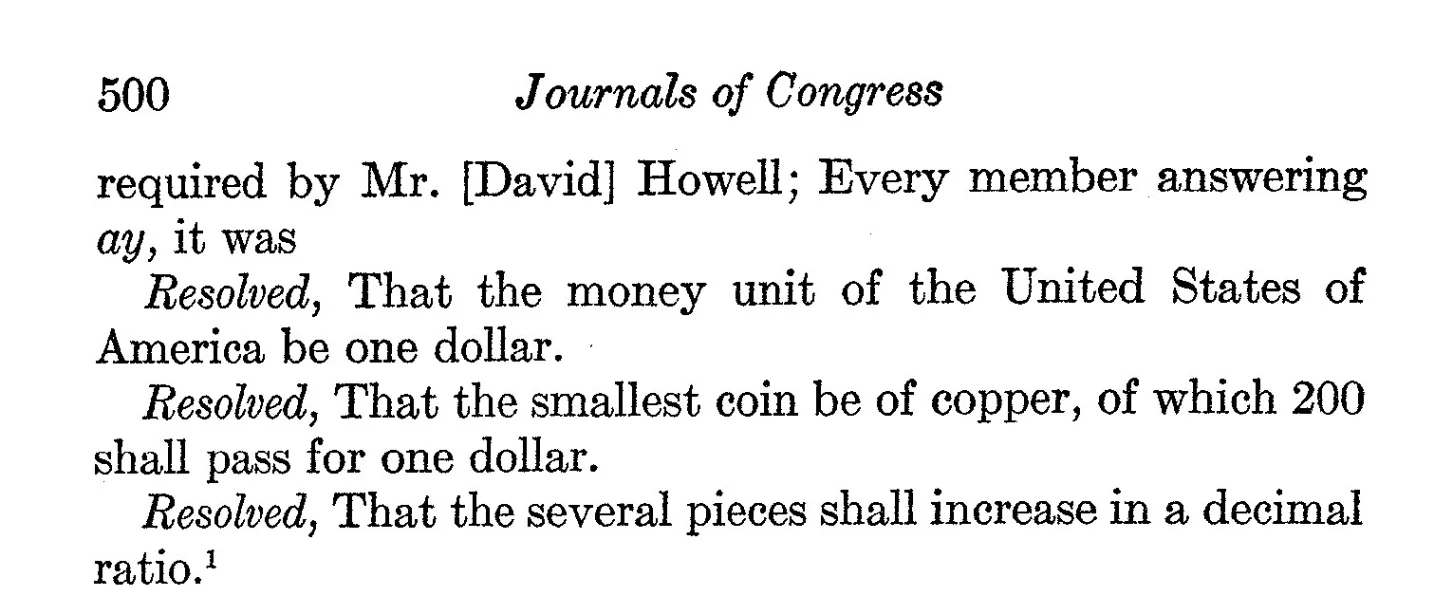
The Confederation Congress unanimously resolved on July 6, 1785, "that the money unit of the United States of America be one dollar" and that coin pieces should increase "in a decimal ratio." 1 The decision replaced a confusing mix of Spanish dollars, British pounds, shillings, pence, and state paper currencies with a simpler unit of account. 2
Thomas Jefferson had argued for the dollar as the unit of account and payment, with decimal divisions and subdivisions. 3 Congress set coin specifications on August 8, 1786, and the Coinage Act of April 2, 1792, created the U.S. Mint. 2 The later arc was much larger: the Federal Reserve arrived in 1913, Bretton Woods made the dollar central to the postwar monetary system in 1944, and the dollar remains the leading global reserve currency. 4
Decision mirror: When a standard will be used by millions of non-experts, simplicity is adoption infrastructure.
1892: Homestead turns force into reputation risk
The Homestead strike turned violent on July 6, 1892, when about 300 Pinkerton agents arrived by barge at Carnegie Steel's Homestead Works to help Henry Clay Frick regain control of the plant. 5 Thousands of workers and townspeople confronted them, and the gunfight lasted about 12 hours. 6 Seven workers and three Pinkerton agents are commonly counted as the July 6 dead. 5
Frick had locked out workers, surrounded the mill with fencing workers called "Fort Frick," and sought to break the Amalgamated Association at Homestead. 7 Pennsylvania Governor Robert Pattison sent 8,500 National Guard troops on July 12, the mill restarted with replacement workers on July 15, and the strike collapsed on November 21. 6 The union was effectively destroyed at Homestead for more than 40 years, and Carnegie's reputation never fully escaped the violence at his own works. 8
Decision mirror: A company can win control of an asset and lose control of the story. In labor conflict, the method becomes part of the balance sheet.
1947: AK-47 favors robustness over precision
WIRED's July 6 chronology records the AK-47 going into production in the Soviet Union on July 6, 1947. 9 The date needs care: broader technical summaries describe Mikhail Kalashnikov's accepted design work in 1947, selected-unit introduction in 1948, and formal Soviet adoption in 1949. 10
The product philosophy is the point. The AK-47 used loose tolerances, a long-stroke gas piston, and a design optimized for simple operation in harsh conditions. 10 Harvard Kennedy School's Lant Pritchett used the AK-47 versus M16 comparison to argue that a tool built for real users in real conditions can outperform a technically superior alternative that demands too much training and maintenance. 11 Britannica estimates that about 100 million AK-pattern rifles have been produced. 10
Decision mirror: "Best" is conditional. If the user, channel, and maintenance environment are messy, robustness may beat specification-sheet performance.
1998: Hong Kong switches airports overnight
Hong Kong International Airport at Chek Lap Kok opened for commercial operation on July 6, 1998, while Kai Tak Airport closed after 73 years. 12 Cathay Pacific flight CX889 from New York JFK landed at about 6:30 a.m. as the first commercial arrival, after a six-hour overnight transfer involving more than 1,100 vehicles, 14 barges, and 31 aircraft. 12
The opening exposed the risk of a big-bang migration. In the first days, flight information displays failed, cargo systems broke down, about 10,000 bags were stranded, and Hong Kong Air Cargo Terminals imposed a temporary embargo on most imports and exports. 13 The long-run outcome was different: Hong Kong International Airport later became one of the world's major passenger and cargo hubs, with more than 60 million passengers and more than 5 million tonnes of cargo handled in 2025. 14
Decision mirror: A transition can be strategically correct and operationally under-tested. The launch plan needs to be judged against peak reality, not rehearsal conditions.
The useful comparison across July 6 is lock-in. Currency standards, labor tactics, rugged product design, and infrastructure cutovers all become harder to reverse after customers, workers, partners, and regulators start planning around them.
Cover image: Journals of Congress page showing the July 6, 1785 dollar resolution, via Library of Congress.
참고 출처
- 1Library of Congress: Resolved, That the money unit of the United States of America be one dollar
- 2History.com: Continental Congress sets the dollar as the official U.S. currency
- 3Monticello: Currency and Coinage
- 4U.S. Currency Education Program: History of U.S. Currency
- 5Encyclopaedia Britannica: Homestead Strike
- 6Library of Congress: 1892 Homestead Strike
- 7AFL-CIO: 1892 Homestead Strike
- 8PBS American Experience: The Strike at Homestead Mill
- 9WIRED: July 6, 1947: The AK-47, an All-Purpose Killer
- 10Encyclopaedia Britannica: AK-47
- 11Harvard Kennedy School Building State Capability: Best Practice is a Pipe Dream
- 12Cathay Pacific: The history of Hong Kong International Airport
- 13The New York Times: Problems Continue to Mount at New Hong Kong Airport
- 14Wikipedia: Hong Kong International Airport
관련 콘텐츠
- 로그인하면 댓글을 작성할 수 있습니다.