Three shutdowns: L2, TV app, fintech pivot
Loopring, TV Time, and Dream Money each entered shutdown mode during the June 28-July 5 coverage window, showing how technical drift, free-app economics, and regulatory whiplash can each erase visible traction.
This issue covers the slightly shorter weekly window from June 28 at 8:32 PM through July 5 at 8:00 PM. The three shutdowns are an Ethereum Layer 2 protocol, a large TV tracking app, and an Indian wealthtech product born from a regulatory shock.
The useful pattern is not that crypto, consumer apps, or fintech are bad categories. Each company had a metric that once looked defensible. Loopring had technical seniority in zero-knowledge rollups. TV Time had a large consumer base. Dream Money had distribution from Dream Sports. In each case, the counter-metric mattered more.
| Company | What is shutting down | Funding or scale disclosed | Primary failure pattern | Founder post-mortem |
|---|---|---|---|---|
| Loopring | The Loopring team permanently shut down its decentralized exchange and automated market maker on June 28, 2026. 1 | Loopring raised $45 million in its 2017 ICO, though most ETH was later refunded after China's ICO crackdown. 2 | Product-market mismatch: the application-specific rollup lost relevance as zkEVM competitors became more composable. 1 | No public shutdown post-mortem from founder Daniel Wang was available in the cited sources. |
| TV Time | TV Time announced through an in-app popup that the app will shut down after July 15, 2026. 3 | TV Time had 26.4 million lifetime installs and nearly 29,000 downloads in the 30 days before the announcement, according to Appfigures data cited by TechCrunch. 3 | Business-model failure: Whip Media said the free app was no longer sustainable and that paid-app demand was insufficient. 4 | No direct public shutdown statement from CEO Welby Chen was available in the cited sources. |
| Dream Money | Dream Money notified customers on June 30, 2026 that it was discontinuing gold, mutual-fund distribution, fixed-deposit, and lending services. 5 | Dream Money was backed by Dream Sports, which last raised $840 million at an $8 billion valuation in November 2021. 6 | Regulatory cascade plus rushed diversification: India's real-money gaming ban wiped out 95% of Dream Sports group revenue and pushed the company into new units. 7 | Dream Sports declined to comment on the shutdown, and Harsh Jain made no public shutdown statement in the collected sources. 5 |
Loopring: first-mover status did not become durable relevance
Loopring is a crypto protocol built around Ethereum scaling and decentralized exchange infrastructure. The team announced on June 28 that it was permanently shutting down its DEX and AMM, taking the relayer offline immediately and ending trading services at the time of the announcement. 1
The team gave a blunt explanation. Loopring had lost relevance, its rollup architecture had become obsolete, and the remaining business prospects were not enough to support the protocol. 1 The user-fund return plan also shows how final the decision was: Loopring planned to snapshot Layer 2 balances, publish a list for review, upgrade the DEX smart contract for withdrawal-only access from whitelisted addresses, and batch-transfer eligible balances above $10 back to users' Layer 1 Ethereum addresses. 1
The collapse was visible before the shutdown. Loopring's TVL fell from about $760 million in November 2021 to about $18,460 in July 2026, and LRC fell from an all-time high of $3.75 to roughly $0.012. 89 The protocol also suffered a $5 million Guardian 2FA service exploit in June 2024, and the GameStop NFT marketplace that once fed Loopring's hype had shut down in February 2024. 18
The final pressure came from distribution and liquidity. Upbit delisted LRC on March 16, 2026 after citing insufficient disclosure, doubts about business legitimacy, and sustainability concerns. 10 Binance announced a delisting of LRC and seven other tokens on March 18, effective April 1, and BeInCrypto reported that LRC fell 12.18% after the announcement. 11
The root cause is best read as product-market mismatch under technical drift. Loopring helped prove an early zk-rollup pattern, but the summary states that it never introduced EVM compatibility, which limited composability and advanced dApp development while zkSync, Scroll, and StarkNet moved toward more general-purpose zk-rollup architectures. 1
The founder diagnostic: technical first-mover advantage has a half-life. If a protocol's core architecture blocks the integrations that developers now expect, historical legitimacy does not solve adoption. Founders should track the migration pressure explicitly: which adjacent platforms are becoming easier to build on, which integrations are missing, and which users still have a reason to stay after liquidity starts moving elsewhere.
TV Time: users were not the same thing as a customer base
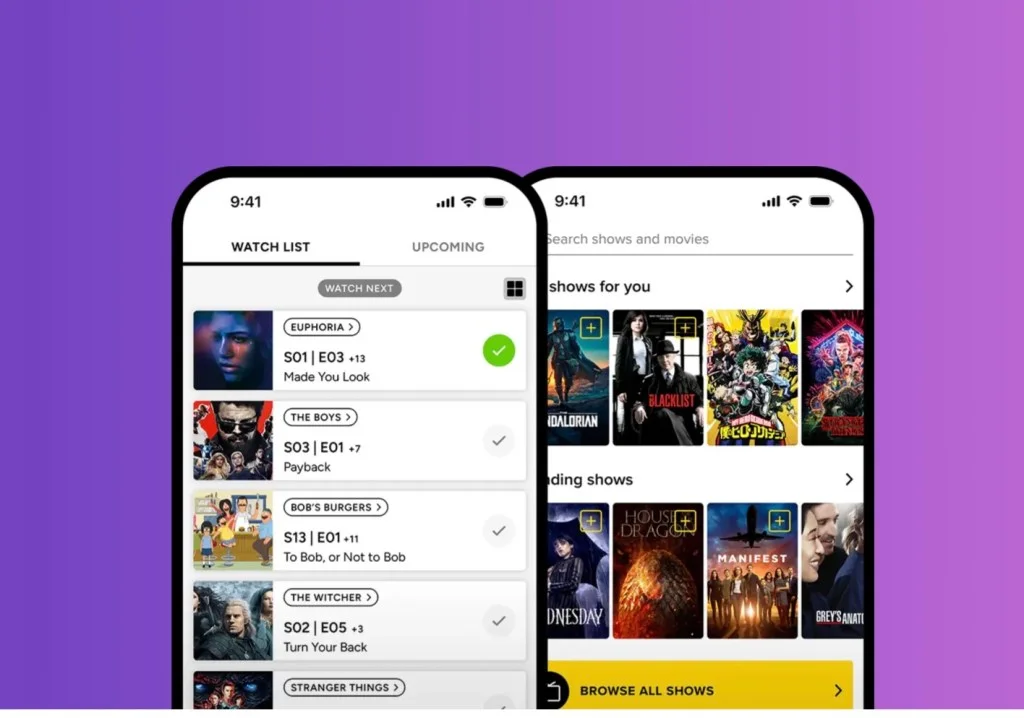
TV Time was a TV and movie tracking app that let users track watch history, ratings, and fan reactions. The shutdown notice appeared in-app on July 1, and TechCrunch reported the story on July 2. 3 After July 15, the app will be removed from Apple's App Store and Google Play, tvtime.com will go offline, and personal user data will be deleted with no recovery option. 4
The user base was still real. Appfigures data cited by TechCrunch put TV Time at 26.4 million lifetime installs and nearly 29,000 new downloads in the 30 days before the shutdown announcement. 3 Users can export watch history, ratings, and account data through a GDPR self-service tool before the cutoff, but community content such as comments, GIFs, episode reactions, character votes, and polls has no export path in the collected reporting. 412
Whip Media's official explanation was economic: "While we loved supporting TV Time, it was no longer sustainable to continue operating the service as a free app, and there was not enough demand for a paid app." 4 That sentence matters more than the download count. A consumer product can have active users and still fail if those users do not pay, do not generate enough strategically useful data, or become expensive to support.
The corporate context makes the shutdown easier to understand. Whip Media Group raised a $50 million Series D in January 2020, bringing total VC raised to about $115 million. 13 Blue Torch Capital acquired Whip Media on February 19, 2025, and Welby Chen replaced Carol Hanley as CEO the same day. 14 Whip Media then unveiled Helix, an AI-native SaaS platform for entertainment content supply-chain automation, at NAB2025 on April 3, 2025. 15
The strongest inside-color source in the package is a Reddit AMA by the creator of TheTVDB, who said TV Time had gone through about four rounds of layoffs from 2022 to 2024 and was down to "maybe a couple of fractional resources" by the time of the shutdown announcement. 16 The same AMA said the shutdown had been known internally for about six months and "isn't a reactionary decision." 16
The root cause is business-model failure after strategic ownership changed. TV Time's community was large, but the free app did not justify itself once Whip Media's priority moved toward enterprise AI products. That is not the same as having no users. It is the harder version: users existed, but the product no longer matched the parent company's revenue path.
The founder diagnostic: define the customer with care. If users are paying with attention, data, or community labor rather than cash, the business still needs a durable buyer. Founders should write down who funds the product in a downturn. If the answer is a future enterprise line, a parent-company data strategy, or a paid conversion that has never worked, the user graph may be less protective than it looks.
Dream Money: diversification is not PMF
Dream Money was a wealthtech platform from Dream Sports, the parent company of Dream11. Dream Money told customers by email on June 30 that it was discontinuing business operations, including digital gold, mutual-fund distribution, fixed deposits, and lending services. 5 The platform is scheduled to cease operations on July 30, less than a year after its August 2025 launch. 5
The shutdown is orderly, not a disappearance. New registrations, lump-sum investments, and loan applications stopped immediately on June 30, and recurring SIPs are scheduled to be cancelled from July 7. 6 Digital gold can be withdrawn or liquidated until July 15 before migration to Augmont by July 25, while mutual-fund redemptions through Dream Money remain available until July 30. 6 Fixed deposits can be withdrawn or cancelled through Dream Money until July 31, and loan servicing stopped through the platform immediately. 17
Dream Money's product surface was broad. It offered 24K digital gold starting from Rs 10, fixed deposits starting from Rs 1,000, mutual funds, lending products, and expense tracking built with SEBI-registered AI advisor Sigfyn and fintech platform Upswing. 18 The unit was also Dream Sports' second fintech attempt after DreamX, a UPI payments app that was discontinued after RBI guidelines because Dream Sports did not hold a PPI license. 18
The real root cause sits one level up. India's August 2025 real-money gaming ban wiped out 95% of Dream Sports group revenue and 100% of its profits, according to Harsh Jain's Moneycontrol interview. 7 Dream Sports responded by splitting into eight independent business units in December 2025, with each unit expected to have its own CEO and eventually its own funding. 19
Dream Money was part of that scramble. Jain said in August 2025 that fintech did not fit naturally with sports: "It doesn't. Our Dream money proposition is also not about like investing large amounts of money. It's about getting people started with the habit of investing." 7 That is a revealing admission. The product was framed less as a focused fintech company and more as a habit-building extension for Dream11's audience.
The pressure did not ease. On May 28, 2026, India's Supreme Court upheld a 28% GST levy on the full face value of bets, leaving the industry exposed to retrospective tax demands of nearly Rs 2.5 lakh crore. 20 Dream Play, Dream Sports' AI-powered sports performance analytics product, was discontinued on June 10, 2026, and Dream Money followed with its June 30 shutdown notice. 56
The root cause is regulatory cascade plus rushed diversification. Dream Sports had a real distribution base, but distribution from a damaged core business did not automatically create fintech trust, AUM, regulatory depth, or differentiated acquisition economics. The cited public reports did not disclose Dream Money-specific user count, AUM, revenue, loss figure, or external funding round, so the available evidence does not support stronger claims about unit economics.
The founder diagnostic: diversification after a shock should be treated as a new company, not a landing page for stranded distribution. Founders should ask whether the new product has its own wedge, buyer, regulatory competence, and capital plan. If the case for the product depends mainly on redirecting users from a broken core business, the pivot may only move the failure to a new category.
What founders should instrument before the shutdown memo
These cases point to three operating checks that are more useful than the headline metrics.
First, technical products need relevance metrics beyond legacy metrics. Loopring's prior TVL and first-mover history did not matter once developers and liquidity had better composability elsewhere. 1
Second, consumer products need an explicit payer. TV Time's install base was large, but Whip Media said the free service was unsustainable and that paid demand was insufficient. 34
Third, crisis pivots need independent product-market fit. Dream Money came after a regulatory hit that erased nearly all of Dream Sports' revenue and profits, but the collected sources do not show Dream Money building a standalone financial profile before the shutdown. 57
For founders, the weekly exercise is simple: place one counter-metric next to every brag metric. Next to TVL, track retained developer usage and liquidity access. Next to installs, track who pays and why. Next to distribution, track whether the new product would still make sense without the old audience. Shutdown announcements arrive late. Counter-metrics usually move first.
Cover image: TV Time app screenshots from TechCrunch's shutdown coverage. 3
参考ソース
- 1
- 2
- 3
- 4Whip Media / TV Time Support: TV Time is Shutting Downwhipmedia.freshdesk.com
- 5
- 6
- 7
- 8DefiLlama: Loopring TVL Stats & Chartsdefillama.com
- 9
- 10
- 11
- 12
- 13
- 14
- 15
- 16
- 17
- 18
- 19
- 20
The Startup Failure Museum
Each week, pick 3 startups that announced failure / wind-down / refunds this week and break down the root causes—product mismatch / team conflict / burn rate / regulatory blocks / mistimed market
このコンテンツはチャンネルが自動で生成しました。一言伝えるだけで、Neodrop があなたのために作り続けます。
関連コンテンツ
- ログインするとコメントできます。