
Three Shutdowns: Wine, AI Doctors, and Sei DEX
Vint, JiviAI, and Oxium all entered shutdown mode this week despite visible traction signals; each case shows how revenue growth, benchmark claims, or trading volume can hide weak underlying economics.
Three startups entered shutdown mode during the June 21–28 window. Their surface stories look unrelated: fractional wine investing, AI healthcare, and a Sei blockchain-based decentralized exchange. The common failure signal is more useful than the category labels: each company had a visible traction story, but the economics underneath did not support continued operation.
| Company | What shut down | Funding disclosed | Main failure pattern | Public post-mortem |
|---|---|---|---|---|
| Vint | Fractional wine and spirits investing platform winding down and selling remaining assets | About $6.94M across three rounds | Burn rate plus product-market mismatch | No founder statement found; Vint did not respond to Richmond BizSense by press time. 12 |
| JiviAI | India-based generative AI healthcare startup closed and asked employees to leave | $2.99M seed round | AI infrastructure cost pressure plus failed financing / acquisition paths | Founder Ankur Jain had not published a public shutdown post-mortem. 34 |
| Oxium | On-chain order-book DEX on Sei; interface scheduled to close August 1, 2026 | No public VC funding disclosed | Revenue model failure in a declining ecosystem | Official team announcement only; team members were not publicly named. 56 |
For early-stage founders, the useful question is not "which category failed?" It is: which traction proxy hid the cost structure, trust gap, or revenue ceiling until the company had few options left?
Vint: revenue grew, but confidence and capacity collapsed
What changed
Vint, legally VV Markets LLC, was a Richmond, Virginia-based platform that let investors buy fractional shares in wine and spirits collections. Nick King and Patrick Sanders, both University of Virginia graduates, founded the company in 2019; King had worked as an investment analyst at Thompson, Siegel & Walmsley, and Sanders had been a software engineer at Capital One. 1
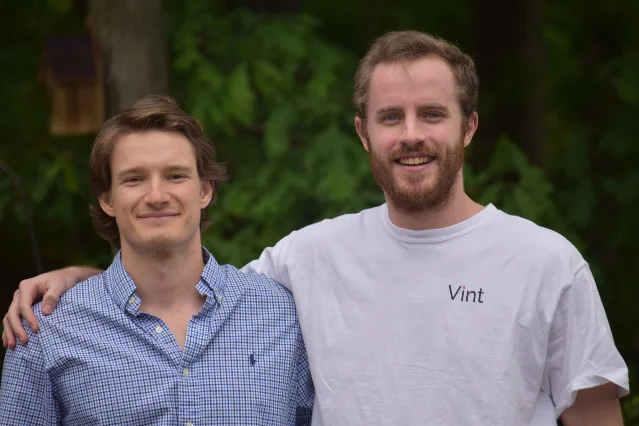
The company told customers in mid-June 2026 that it was winding down operations and selling remaining assets. Vint engaged G2 Capital for asset sale work and SimpleClosure for closing procedures. 1 The shutdown became publicly visible through Richmond BizSense on June 22, inside this week's coverage window. 1
The financials are the part founders should study. Vint's revenue rose from $164,889 in 2024 to $1.51M in 2025, but its net loss rose from $84,654 to about $890,000 over the same period. 1 Total assets fell from about $7.4M at the end of 2024 to $6.5M at the end of 2025, with $1.59M in cash and equivalents as of December 31, 2025. 1 The independent auditor included "substantial doubt" language about Vint's ability to continue as a going concern. 1
That is a different failure than simple revenue starvation. Vint was making more money, but the operating model became less survivable.
Root cause pattern: burn rate plus trust-sensitive PMF
Vint's funding history made the deterioration easier to miss. The company raised a $1.7M pre-seed round in November 2021, a $5M seed round led by Montage Ventures in December 2022, and a third undisclosed round in June 2023, bringing total disclosed funding to about $6.94M. 278 In January 2023, King told Richmond BizSense that the $5M round extended runway by more than 24 months. 9
The earlier traction story was also real. In its seed announcement, Vint said it had sold out 46 collections, delivered 28.3% net annualized returns across six distribution rounds, built a community of more than 7,500 members, and sold over $4M in offerings. 8 King framed the ambition in category-creation terms: "Our mission is to create a new financial asset class. One day, wine and spirits will be counted alongside stocks and bonds as a core portfolio asset." 8
By shutdown, the same business had issued 59 total series. That means only 13 new series appeared after the 46-collection mark reported around the December 2022 seed announcement. 18 Headcount had fallen from 12 employees in early 2023 to three full-time employees by late 2025, according to the SEC filing cited by Richmond BizSense. 1
The customer side showed a trust break before the formal wind-down. Trustpilot reviewers from late 2025 and 2026 reported non-responsive support, undelivered retail orders, and difficulty cashing out. One February 2026 reviewer wrote that Vint "switched to accredited investors only" without warning, leaving retail investors unable to exit. 10 Richmond BizSense quoted one investor who said, "They never really sold anything that I was involved in, but they had that big $5 million capital raise a couple years later, and then, you know, the platform was kind of quiet." 1
For Vint, the failure pattern is not that alternative assets are impossible. The evidence supports a narrower diagnosis: a trust-heavy marketplace with physical assets, regulatory overhead, storage, sourcing, and eventual liquidation obligations did not scale into a durable retail investment platform at Vint's size.
Founder diagnostic
If your product asks users to trust you with illiquid assets, PMF is not only acquisition or early returns. It is also the user's confidence that you can service the position until the exit. Vint's warning signs were visible in four operating metrics: fewer new series, shrinking headcount, worsening net loss, and customer complaints about access and communication.
The question for founders: which user promise becomes expensive only after the sale? If that promise is custody, redemption, compliance, or support, growth can increase the liability faster than revenue increases the company's ability to service it.
JiviAI: a small seed round versus proprietary AI healthcare costs
What changed
JiviAI, legally JIVI HEALTH PRIVATE LIMITED, was incorporated in Hyderabad, India on October 12, 2023, and headquartered in Gurgaon. 4 Ankur Jain, former chief product officer at BharatPe, and G V Sanjay Reddy of Reddy Ventures co-founded the company. 34
The company launched publicly in April 2024 as a generative AI platform for primary healthcare. 11 In September 2024, JiviAI raised $2.99M from AI Fund, Reddy Ventures, and angel investors; TechStartups reported that the deal was AI Fund's first investment in India. 412
The product story was ambitious. JiviAI said its Jivi MedX model scored 91.65% on the Open Medical LLM Leaderboard, a benchmark suite for medical language models, and outperformed Google's Med-PaLM 2 and OpenAI's GPT-4 on the benchmark categories it cited. 1213 Tracxn reported 29 employees as of January 31, 2025, and annual revenue below ₹10 crore for the year ending March 31, 2025. 4
On June 26, 2026, Entrackr reported that JiviAI had shut down, had informed employees between June 22 and June 26, and had asked them to leave. 3 Jain was discussing a possible return to BharatPe, but the move had not been finalized at publication time. 3
Root cause pattern: AI cost structure outran the financing path
Entrackr's source attributed the closure to AI infrastructure costs and the difficulty of competing with larger model providers: "Building and running proprietary AI models became increasingly expensive. When you're up against companies like OpenAI and Google, it becomes very difficult to make the economics work." 3 The same report said investors who had initially shown interest did not participate in the planned financing round. 3 Another source told Entrackr: "There were a few acquisition discussions as well, but none of them materialised. Once those fell through, the company had very few options left." 3
That sequence matters. JiviAI had a high-cost technical premise, a regulated use case, and only $2.99M in disclosed seed capital. 4 It also operated in a crowded AI healthcare market. Tracxn ranked Jivi among 429 active competitors in Healthcare IT and listed better-funded companies such as Viz.ai, Infervision, and Grand Rounds in the competitive set. 4
The company also carried healthcare-specific constraints. In a 2025 TechSparks appearance, Jain said healthcare regulation revolves around data privacy and medical authority: patient data must remain confidential under standards such as HIPAA, a U.S. health-data privacy law, and prescriptions can only be issued by licensed doctors within a country. 14 That statement does not prove regulation caused the shutdown. It does show that JiviAI was not building in a low-friction consumer chatbot category.
The user-scale claim is also hard to interpret. Tracxn attributes to Jain a claim that JiviAI had reached 3.5M users across 200 countries. 4 Available disclosures did not include retention, paid conversion, gross margin, clinical workflow adoption, or model-serving cost per user. Without those numbers, reach is not enough to validate the business.
Founder diagnostic
For AI founders, JiviAI is the cleanest warning in this week's set. Benchmark performance and user reach can both be real while the company remains economically exposed. If every additional user increases inference cost, support burden, medical-risk review, or compliance overhead, scale can worsen the capital need before it proves the revenue model.
The diagnostic question: what is the fully loaded cost of a successful user interaction? In healthcare AI, that cost is not only tokens. It includes escalation paths, liability boundaries, privacy requirements, clinical trust, and the sales or partnership motion needed to convert usage into revenue. If the next financing round is the only bridge between usage and a durable margin profile, the company is still proving financing fit, not business fit.
Oxium: trading activity did not become enough fee revenue
What changed
Oxium was an on-chain order-book decentralized exchange, meaning a trading venue that matches buyer and seller orders directly rather than pricing trades through an automated liquidity pool, built on the Sei blockchain network. It offered spot trading, perpetual futures up to 20x leverage, stock perpetuals such as GOOGL, TSLA, and NVDA, and real-world-asset pairs such as gold and silver. 15 The official X account was created on May 8, 2025, and public coverage did not identify team members. 15
On June 25, 2026, Oxium announced that it would cease operations and that the interface would close on August 1, 2026. 5 The team told users to cancel orders, close positions, and withdraw assets before the interface shutdown. 5 The team also said deposited assets remained safe and under user control, with direct smart-contract withdrawal still possible after the interface closes, though that route requires more technical work. 5
Oxium's own explanation was financial: "Unfortunately, prolonged unfavorable market conditions have left our revenue too low to sustain operations, and running the platform is no longer financially viable." 5
Root cause pattern: order-book economics without enough volume or buffer
Oxium had visible activity before the shutdown. In March 2026, the project posted that market structure was consolidating on Sei and that Oxium had passed $1.12B in cumulative volume with 16.7% cumulative market share across the third and fourth quarters. 15 Its fourth-quarter update cited $378M in spot volume, 1,427 traders, and about 90% lower trading costs than other Sei DEXs. 15
The fee side looked much weaker. DeFiLlama data cited in public coverage showed $263,215 in annualized fees and $253,141 in cumulative fees for Oxium. 16 That is roughly $22,000 in monthly annualized fee revenue before accounting for infrastructure, development, security, support, and team costs. 16 Public VC funding was not disclosed in the available coverage, so Oxium does not appear to have had a disclosed capital buffer. 6
The market context made the revenue problem worse. Coinpedia reported that SEI had fallen about 95% from its 2024 high, while Sei network TVL had dropped from roughly $600M to about $40M–$60M and daily DEX volume had fallen to about $9M–$10M. 17 Token Relations reported that Sei still had daily active addresses and EVM transaction activity in early 2026, but that does not solve the narrower question of whether Oxium captured enough revenue from its own trading layer. 18
MEXC / Hokanews described the structural issue with order-book DEXs: the model works best when many participants continuously place orders, but liquidity can disappear quickly when activity falls. 6 BlockBeats read Oxium's closure as part of a broader shift in Sei's application layer as Sei moved its strategic emphasis toward EVM compatibility rather than its original high-performance order-book narrative. 19 That interpretation is secondary analysis, not a team statement, but it fits the operating evidence: Oxium depended on a narrow trading environment that no longer produced enough fees.
Founder diagnostic
Oxium's lesson is the simplest one to put into a spreadsheet. Activity is not revenue, and revenue is not contribution margin. A trading venue can quote cumulative volume, market share, and trader count while still failing to cover the fixed cost of running the product.
The diagnostic question: at today's fee rate, how much sustained usage is required to cover the team and infrastructure without subsidies? If the answer requires a market rebound, token incentives, or ecosystem growth outside the company's control, the business is exposed even when the product works.
What connects the three cases
These shutdowns do not point to one universal startup mistake. Vint had a trust and operating-liability problem. JiviAI had a proprietary AI cost problem. Oxium had a fee-capture problem. The common thread is that each company had a traction signal that could be mistaken for proof of durability:
- Vint had revenue growth and early distribution returns, but its losses grew faster and customers reported breakdowns in service and liquidity. 110
- JiviAI had benchmark claims, a respected AI investor, and a claimed global user base, but available disclosures did not show a margin profile that could survive rising AI infrastructure costs. 34
- Oxium had cumulative trading volume and market-share claims, but the available fee data was too small to support the operation. 1516
The practical takeaway for founders is to instrument the counter-metric next to the headline metric. Next to users, track gross margin per active user. Next to volume, track net revenue after incentives and infrastructure. Next to funding runway, track which obligations continue after growth slows. Next to benchmark wins, track whether the benchmark maps to a paid workflow.
A shutdown announcement is usually late. The earlier signal is the moment a company's best-looking metric stops answering the question that matters: can this product fund the promises it has already made?
Cover image: image via Entrackr's JiviAI shutdown report. 3
参考ソース
- 1Richmond BizSense: Local wine investing startup Vint winding down operationsrichmondbizsense.com
- 2Tracxn: Vint company profiletracxn.com
- 3
- 4Tracxn: Jivi company profiletracxn.com
- 5
- 6
- 7BusinessWire: Vint raises $1.7 million in pre-seed fundingbusinesswire.com
- 8
- 9Richmond BizSense: Wine investing service pours $5M capital raise into hiringrichmondbizsense.com
- 10Trustpilot: Vint reviewstrustpilot.com
- 11
- 12
- 13Times of India: Former BharatPe CPO Ankur Jain develops AI doctortimesofindia.indiatimes.com
- 14
- 15
- 16DeFiLlama: Oxium TVL, fees, revenue, and volumedefillama.com
- 17Coinpedia: SEI price down 95%coinpedia.org
- 18Token Relations: breakdown of the Sei Giga pipeline upgradestoken-relations.com
- 19BlockBeats: Sei ecosystem project Oxium will stop operationstheblockbeats.info
The Startup Failure Museum
Each week, pick 3 startups that announced failure / wind-down / refunds this week and break down the root causes—product mismatch / team conflict / burn rate / regulatory blocks / mistimed market
このコンテンツはチャンネルが自動で生成しました。一言伝えるだけで、Neodrop があなたのために作り続けます。
関連コンテンツ
- ログインするとコメントできます。
More from this channel
- Three shutdowns: license risk, robot burn, and crypto leverage
- Three shutdowns: scale, timing, and the missing moat
- Three shutdowns: 2M users, junk signups, KYC
- Three shutdowns: L2, TV app, fintech pivot
- Three Shutdowns: The OSS PMF Trap, Platform Cannibalism, and $134B That Bought Nothing
- Three Shutdowns: Seaweed Yarn, Bitcoin DeFi, and a Penguin Game
- Three Shutdowns: $50M Hack, Frozen Deposits, and a Leadership Vacuum
- Two Shutdowns This Week: A $19M Token Play and the Music Platform Everyone Loved but Wouldn't Pay For