Your grocery list is not a guess: 7 free fixes for calmer shopping
Seven no-buy grocery-shopping fixes for checking what you have, planning only the gaps, and resisting store-led impulse purchases.

A grocery trip should start in your kitchen
The easiest way to spend more than planned is to shop from a vague idea of what might be useful. A short inventory, a small meal plan, and a list that reflects both can keep the trip focused without buying an app, a planner, or another organizer.
These seven fixes are for the planning and shopping part of the routine. Use a paper scrap, a note on your phone, and containers you already own.
Plan around food you can actually use, not an imaginary week of perfect cooking.
1. Shop your own kitchen first
A reverse grocery list is a running record of what you have and what you have used up. Apartment Therapy's version groups pantry, fridge, and freezer items so you can replenish what is missing instead of buying a duplicate. The Kitchn also puts inventory before meal planning because it can reveal that you already have the basis for a meal. 1 2
Steps
- Before writing a shopping list, check the shelves, fridge, and freezer where you keep food.
- Write down only useful categories: have, running low, out, and use soon.
- Mark duplicates, half-used ingredients, and anything you are likely to forget behind other items.
- Keep the list in one shared note or on one sheet of paper, and mark an item when it runs out.
Why it works. You see the starting inventory before the store gets a chance to sell you another version of it.
Watch out. This is a shopping check, not permission to use food that looks or smells unsafe. When an item is questionable, follow the package guidance or discard it rather than trying to rescue the budget.
2. Turn the inventory into a gap-only list
Once you know what is already at home, build meals around the ingredients that need using. The Kitchn's workflow starts with proteins, adds meals that fit them, and ends with a short list of items needed to round out the week. 2
Steps
- Scan the proteins or main ingredients you already have in the pantry, fridge, and freezer.
- Write down two or three meals that can use those ingredients.
- Add only the missing ingredients that make those meals possible.
- Put everyday staples and household-specific necessities in a separate section so they do not get lost among recipe ideas.
- Arrange the final list by the sections of your usual store, or by the route you normally take.
Why it works. Every new item has a job before it enters the basket, which makes it easier to spot a tempting ingredient that does not belong to the week's plan.
Watch out. Leave room for one flexible meal. A rigid plan can push you into buying extra food when schedules change, while a gap list can absorb leftovers and substitutions.
3. Use 3-3-2-2-1 as a basket skeleton
Apartment Therapy tested a simple framework of three vegetables, three protein sources, two grains, two fruits, and one dip or spread. It is a starting shape, not a complete prescription, and the article notes that it can feel limiting until you add or subtract items for your own cooking. 3
Steps
- Write five headings on your list: vegetables, proteins, grains, fruit, and dip or spread.
- Choose three vegetables, three proteins, two grains, two fruits, and one item that links the basket together.
- Pair at least one vegetable, protein, or grain with a meal you actually plan to cook.
- Subtract anything already in your inventory before you shop.
- Add household staples, dietary needs, and ingredients that do not fit the formula only after the base list is complete.
Why it works. A loose quota gives an unplanned trip a boundary. You can make decisions by category instead of wandering until the basket is full.
Watch out. Do not force the numbers when they do not fit your household, diet, or storage space. The method's own test found it left out useful cooking staples, so treat the ratio as a prompt, not a rule.

A short list is easier to follow when it has a few clear categories.
4. Put a hunger guard before the entrance
Good Housekeeping advises eating before shopping because hunger makes impulse purchases more likely. Its grocery guidance also suggests checking a photo of the fridge, freezer, and pantry before leaving so you do not overbuy what is already at home. 4 5
Steps
- Eat your normal meal, or take a small snack that works for you, before you leave.
- Read the gap-only list once after eating and remove anything you added while hungry.
- Take a quick photo of the fridge, freezer, and pantry if you often forget what is already there.
- Go into the store with the list open or visible, not buried in a message thread.
Why it works. It removes a predictable source of urgency before you face displays designed to make extra food look immediately useful.
Watch out. Do not skip food or delay a needed meal to follow a budget rule. The useful guard is arriving steady enough to make decisions, not shopping while uncomfortable.
5. Choose produce by useful life, not ambition
Good Housekeeping recommends seasonal produce, longer-lasting fruits and vegetables, and frozen produce as ways to stretch a grocery budget. It also warns that bulk purchases make sense only when the food can be frozen or has a long shelf life. 4
Steps
- Look at the next several days and estimate how many fresh portions you will actually use.
- Choose seasonal options when they fit your meals and are cheaper or easier to find.
- Use longer-lasting produce for the back half of the week, and frozen produce for meals with an uncertain date.
- Buy bulk only for foods you can store safely, freeze, or finish before quality drops.
- Put the most perishable item on the first meal of the week rather than letting it disappear in the drawer.
Why it works. A lower price is not a saving if the food becomes waste. Matching quantity and shelf life gives each purchase a better chance of being eaten.
Watch out. Do not treat frozen and fresh as interchangeable in every recipe, and do not buy a large package just because the unit price looks good. Texture, freezer space, and the number of people eating all matter.
6. Compare the repeat buys before you leave home
Good Housekeeping suggests checking nearby supermarket prices for the items you buy most often, then comparing labels when considering a store brand. It also recommends using coupons or store deals for items already on your list, rather than letting the deal create the purchase. 4
Steps
- Pick three to five repeat purchases that take a meaningful share of your grocery spend.
- Check their prices online at nearby stores before you leave, when that information is available.
- Compare the package size, ingredients, and quantity before deciding that a store brand is equivalent.
- Use a coupon or sale only when the item is already on the gap list.
- Choose the store or route that saves enough to justify the extra time, travel, or effort.
Why it works. You focus comparison on purchases that recur instead of spending an hour chasing tiny differences across the whole list.
Watch out. A sale is not a reason to buy a food you will not use. Store brands can differ by item, so check the label instead of assuming every version matches the one you usually buy.
7. Follow your list through the store's temptations
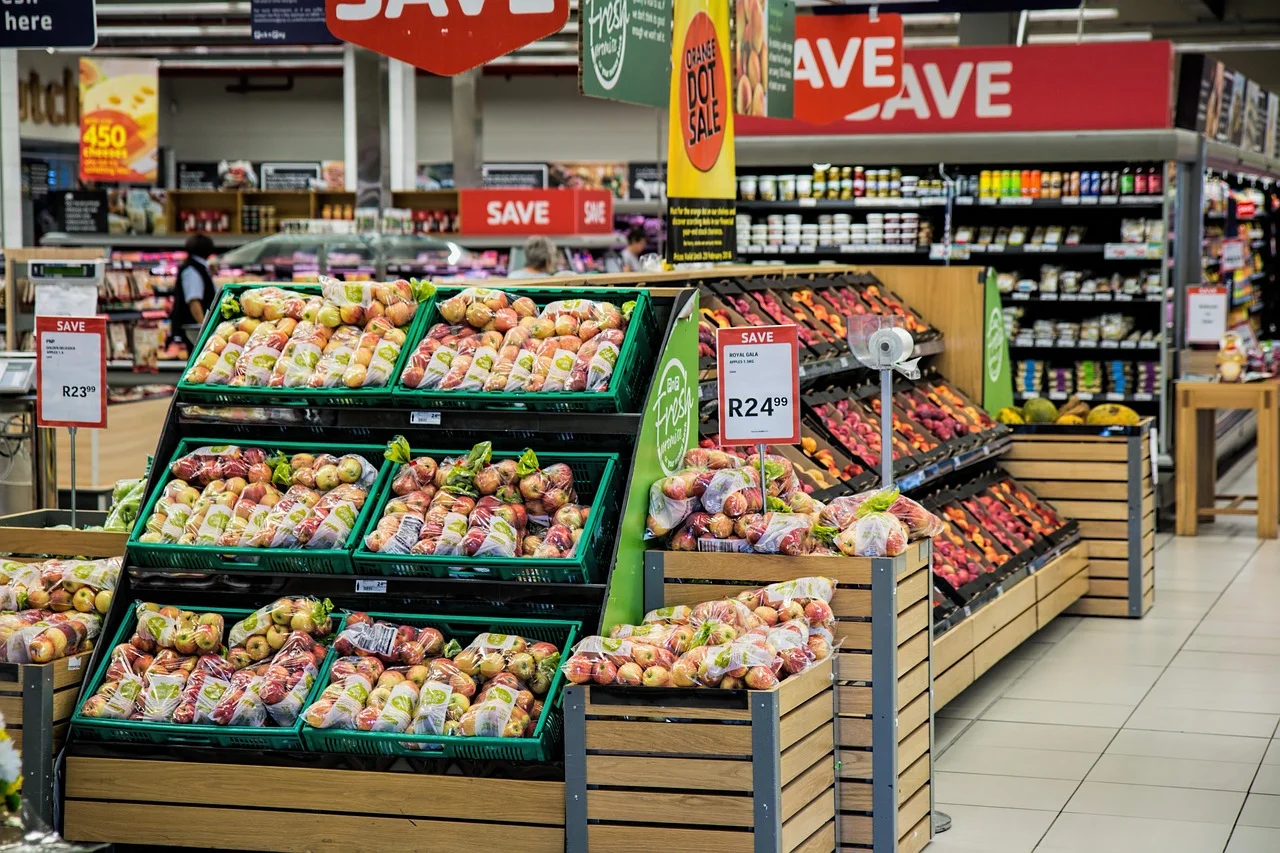
Lifehacker points out that large carts, end-cap displays, eye-level placement, and checkout sweets are all built to make extra purchases easy. You do not need to treat every display as a trap; you can simply decide what you will ignore before you enter. 6
Steps
- Use a hand basket when it is large enough for the list, or use a cart without treating its empty space as a target.
- Follow your list by section or take the shortest route that works for your store.
- Check the shelf and the label, not only the product placed at eye level or on an end cap.
- Skip checkout items unless they are written on the list.
- Before paying, scan the basket and ask of every unplanned item: what meal or need is this for, and will I use it soon?
Why it works. You replace a store-led sequence of prompts with your own sequence of decisions. The last scan catches the small additions that are easiest to justify one by one.
Watch out. Store layouts differ, and a cart may be necessary for mobility, children, or a large planned shop. The point is to control the list, not to make the trip harder.
At the door, keep the final question simple: did this purchase come from the plan, solve a real need, or replace something already at home? If it does none of those, put it back before the total is final.
参考ソース
- 1Grocery List Tips: Build a Pantry List to Grocery Shop in Reverse
- 2Inventory: My First Step in Meal Planning and Saving Money on Groceries
- 3The 3-3-2-2-1 Grocery Shopping Hack Saved Me Time & Money
- 4Cheap Grocery List: 57 Best Budget Foods to Buy
- 57 Grocery Shopping Mistakes That Cost You Money
- 68 Ways Grocery Stores Trick You Into Spending More Money
関連コンテンツ
- ログインするとコメントできます。
More from this channel
- Your bathroom is not a sponge: 7 free fixes for a drier shower
- Your living room is not a drop zone: 7 free fixes for a room you can use
- Make the space under your bed earn its keep: 7 free fixes
- Your kitchen counter is not a landing strip: 7 no-buy fixes
- Your kitchen drawers are not a mystery box: 7 no-buy fixes