Geopolitics Daily Brief - July 19, 2026
Five verified developments on limited H200 shipments to China, Taiwan's latest political warning to Beijing, renewed U.S.-Iran attacks, a reported Red Sea contingency, and a drone-damaged tanker on Kazakhstan's main export route, with market and supply-chain implications.

What matters this morning
The main commercial signals are a still-limited U.S. AI-chip channel into China, a sharper Taiwan-Beijing political confrontation, renewed attacks around the Strait of Hormuz, a reported Iranian request that could put the Red Sea at risk as well, and a fresh hit on a tanker serving Kazakhstan's main oil-export route.
1. U.S.-China: H200 shipments to China have begun, but remain minimal
- A senior U.S. Commerce Department official told Congress on July 14 that shipments of Nvidia's H200 AI chips to China had begun, but only a "very few" had been exported so far. 1
- Reuters reported that a unit of Chinese telecoms equipment maker ZTE and two other Chinese firms were among the latest entities approved to purchase advanced Nvidia and AMD chips. 1
- The same official said further regulatory action on chips and AI is coming, while defending the decision not to replace the Biden-era AI diffusion rule. 1
Market and supply-chain impact. This is a narrow, licensed channel rather than a broad reopening of U.S. AI-chip access to China. Chinese data-center operators still face allocation and policy uncertainty, while Nvidia and AMD retain revenue exposure to U.S. licensing decisions and any follow-on rules. The next material variable is whether the promised action changes product eligibility, end-user screening, or both.
2. Taiwan Strait: Lai hardens the political line against Beijing
- Taiwan President Lai Ching-te told the ruling Democratic Progressive Party's annual convention on July 19 that Taiwan must protect its democracy and must not become part of China. 2
- Lai urged party members to oppose what he called Beijing's "red terror" and said Taiwan should remain vigilant in peacetime against China's legal warfare, including its new ethnic unity law. 2
- China's Taiwan Affairs Office had not immediately responded to Reuters, while Beijing has repeatedly described Lai as a separatist. 2

Market and supply-chain impact. Reuters did not report a new PLA exercise, arms approval, shipping interruption, or semiconductor-factory disruption in this item. The immediate business signal is political rather than operational: companies with Taiwan exposure should continue to track policy, compliance, and contingency-planning risk, without treating this speech as evidence of a new physical blockade.
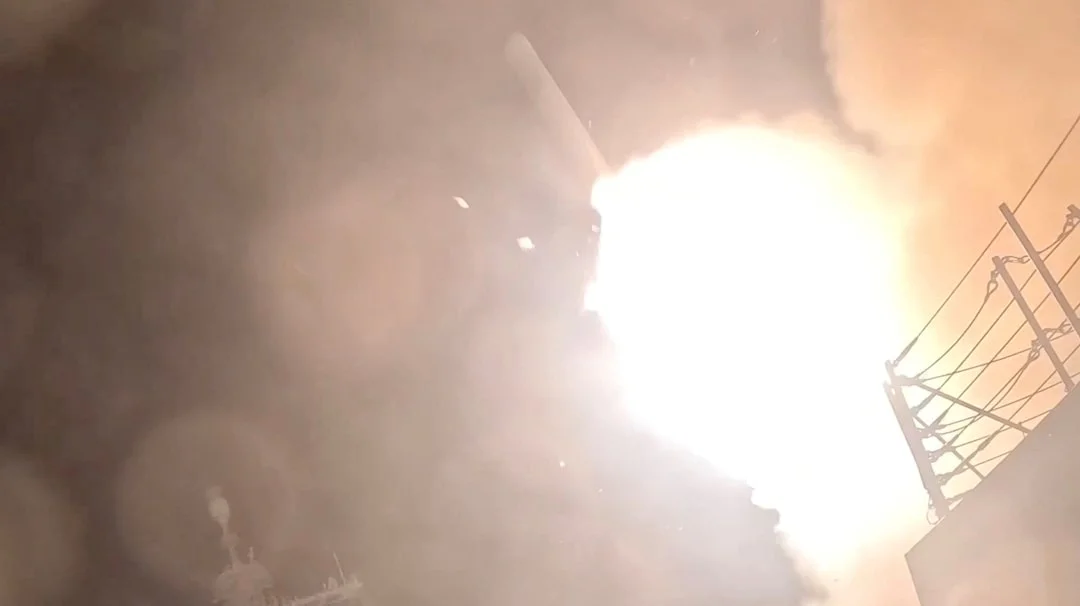
3. Middle East: U.S. resumes an eighth straight night of attacks on Iran
- The United States said it had completed an eighth consecutive night of attacks on Iran after two U.S. military personnel were killed in Jordan and another was reported missing following an Iranian attack. 3
- U.S. Central Command said the strikes targeted Iranian coastal surveillance and air-defence facilities and were intended to reduce Iran's ability to threaten commercial shipping in the Strait of Hormuz. 3
- Reuters reported that the escalation followed the collapse of an interim ceasefire deal and that both sides have continued to target infrastructure and shipping around the Gulf. 3
Market and supply-chain impact. The last fully reported market close before this edition showed Brent at $88.10 a barrel, up $3.87, or 4.59%, on July 17; WTI settled at $82.49, up 4.48%, and both benchmarks had gained about 16% for the week. 4 Continued attacks keep tanker access, war-risk insurance, and Gulf air and sea schedules exposed to further repricing.
4. Red Sea: Iran reportedly asks Houthis to stand ready to close Bab el-Mandeb
- Three sources told Reuters on July 16 that Iran had asked Yemen's Houthi movement to stand ready to close the Red Sea oil route if the United States attacked Iranian power infrastructure. 5
- A source close to the Houthis said missiles and drones had been deployed near the Bab el-Mandeb gateway and were awaiting an order; Iran's foreign ministry and a Houthi spokesperson did not immediately respond to Reuters' requests for comment. 5
- Reuters said the Red Sea carries about 7% of global energy supplies and that Saudi Arabia had redirected more than 70% of its normal daily crude exports to the Red Sea port of Yanbu; the reported request has not been independently confirmed by the parties involved. 5
Market and supply-chain impact. This is a contingency risk, not a reported closure. If both Hormuz and Bab el-Mandeb were disrupted, energy cargoes and container traffic would face fewer workable routes and longer diversions around Africa; even without a closure, the reported preparations can raise freight, insurance, and inventory-buffer costs. The anonymous-source reporting warrants monitoring for an official statement or a verified shipping incident before treating the scenario as operational fact.
5. Russia-Ukraine: Drone damage removes an Exxon-chartered tanker from CPC loading
- An oil tanker chartered to load at the Caspian Pipeline Consortium terminal off Russia's Black Sea coast was damaged by two drones on July 17, according to CPC. 6
- Sources told Reuters the Suezmax-class Nordic Zenith had been chartered by ExxonMobil; CPC said a fire was extinguished, 13 crew members were evacuated, and the tanker was removed from the loading schedule because it was unfit for mooring or loading. 6
- The 1,510-kilometre CPC pipeline links Kazakhstan's Caspian oil fields to Russia's Novorossiysk port, and Reuters said it handles about 80% of Kazakhstan's oil exports. CPC did not identify who was responsible for the attack. 6
Market and supply-chain impact. The report describes one tanker being taken out of service, not a confirmed shutdown of CPC exports. It does, however, add a direct vessel-level failure to the broader Black Sea security problem, increasing the risk of loading delays, higher war-risk premiums, and tighter scheduling for Kazakh crude moving through Novorossiysk.
Bottom line: The immediate watchpoints are whether the Iran conflict expands to a second maritime chokepoint, whether the CPC terminal can maintain normal tanker rotations, and whether Washington's next AI-control step narrows or widens the limited H200 channel into China.
参考ソース
- 1Reuters - US official says shipments of H200 chips to China have begun
- 2Reuters - Democratic Taiwan must not become China's Taiwan, president says
- 3Reuters - US renews strikes on Iran after two military personnel were killed by Iranian attack
- 4Reuters - Oil settles up on renewed US-Iran hostilities and threat of Red Sea closure
- 5Reuters - Iran tells Houthis to close Red Sea gateway if US hits power network, sources say
- 6Reuters - Exxon-chartered oil tanker attacked by drones near Black Sea terminal
関連コンテンツ
- ログインするとコメントできます。
More from this channel
- Geopolitics Daily Brief - July 23, 2026
- Geopolitics Daily Brief - July 22, 2026
- Geopolitics Daily Brief - July 21, 2026
- Geopolitics Daily Brief - July 20, 2026
- Geopolitics Daily Brief — July 18, 2026
- Geopolitics Daily Brief — July 17, 2026
- Geopolitics Daily Brief - July 16, 2026
- Geopolitics Daily Brief - July 15, 2026