Your resting heart rate is not a health score. Here's what the new study actually means.
A two-cohort study linked higher resting heart rate with higher long-term mortality, but it does not predict your individual future; here is how to measure yours and when a persistent change deserves care.
The headline, without the panic
A new study found that young and middle-aged adults with higher resting heart rates were more likely to die during long-term follow-up. That sounds alarming when reduced to a notification-sized headline. The useful version is calmer: resting heart rate may be a health clue, but one reading is not a diagnosis, a prediction, or a grade for how well you are doing.
The paper analyzed 3,291 U.S. adults ages 20–49 from NHANES 1999–2004, then checked the finding against a separate group of 8,941 adults from NHANES III. The first group was followed for a median of 17.8 years; the replication group was followed for 27.6 years. 1
What the study found
The researchers modeled resting heart rate in 10-beats-per-minute steps. After adjusting for demographic factors, lifestyle, and health conditions, each 10 bpm increase was associated with:
- A hazard ratio of 1.26 in the first cohort, with a 95% confidence interval of 1.07–1.50.
- A hazard ratio of 1.17 in the replication cohort, with a 95% confidence interval of 1.12–1.22.
In plain English, the groups with higher resting heart rates had higher relative rates of death over the study period. A hazard ratio is not the same as saying your personal chance of dying is 17% or 26% higher. It also does not prove that lowering your heart rate would prevent those deaths.
The result was not limited to cardiovascular deaths. In the first cohort, 99 of the 120 deaths were from non-cardiovascular causes, and there were only 21 cardiovascular deaths, so that specific analysis was too small to be reliable. In the replication cohort, higher resting heart rate was associated with cardiovascular and non-cardiovascular mortality at about the same level. The association became more noticeable in the early-to-mid 30s, but that does not make age 30 a danger line. 1
If you are 18 or 19, this particular study did not include your age group. And even if you are in your 20s, the participants were measured decades ago and followed through 2019. This is useful population research, not a personal forecast.
What counts as a normal resting heart rate?
For a calm adult who is sitting or lying down and feels well, the American Heart Association gives a usual resting range of 60–100 beats per minute. Below 60 can be normal for some athletes and people taking certain medicines. Above 100 is called tachycardia, but a temporary reading above 100 is not automatically a heart problem. Heat, exercise, pain, stress, illness, body position, caffeine, alcohol, nicotine, and some medicines can all move the number. 2
That context is why comparing your watch number with a stranger's online number is a bad use of your morning. A person who always sits around 58 may feel completely fine. Someone whose usual number is 68 and is suddenly at 98 while sick, dehydrated, or anxious may have a meaningful change even though 98 is technically inside the usual range.
How to check yours without turning it into a new obsession
You do not need a medical device to get a reasonable resting count.
- Sit or lie down quietly for a few minutes. Do not measure right after a workout, hot shower, stressful conversation, or energy drink.
- Put your index and middle fingers on the pulse at the inside of your wrist. Do not use your thumb, which has its own pulse.
- Count the beats for a full 60 seconds. Write down the number and what was going on around it, such as poor sleep, fever, anxiety, dehydration, caffeine, nicotine, or a new medicine. The AHA also lists the wrist, elbow, neck, and top of the foot as places where a pulse can be found. 2
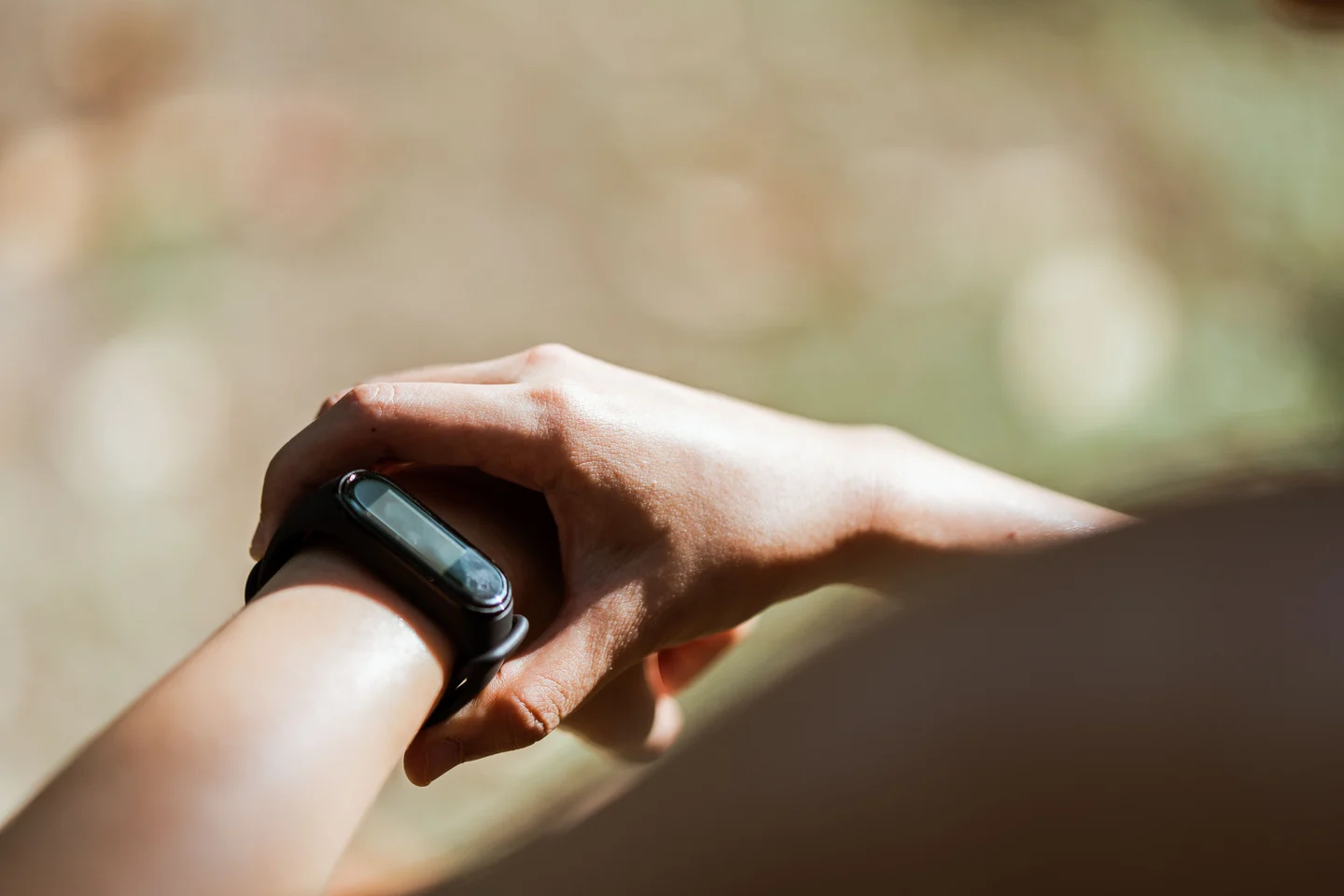
A smartwatch can help you notice a pattern, but treat it as a prompt to check, not a verdict. If a reading looks strange, repeat it manually while calm. The study measured resting heart rate as one exposure in a research setting; it did not test whether a watch's one-off alert can identify disease.
What to do with a higher number
Start with the boring explanations. Were you sick, overheated, dehydrated, stressed, under-slept, using more caffeine or nicotine than usual, or taking a cold, allergy, asthma, or other medicine that can raise heart rate? If the number settles when the trigger settles, that is different from a persistent change in your usual baseline.
If your resting heart rate is repeatedly higher than usual, repeatedly above 100 when you are calm, or comes with weakness, dizziness, or a near-fainting feeling, make a routine appointment or use a same-week medical advice line. A clinician can decide whether you need an exam, an electrocardiogram, blood tests, or a longer monitor. Do not try to force the number down with someone else's heart medicine, supplements, or extreme exercise. 2 3
When to call 911
Call 911 for a sudden very fast or very slow heart rate with chest pain or pressure, shortness of breath, fainting, severe dizziness, confusion, or feeling like you may pass out. Do not drive yourself if you are having those symptoms. The AHA notes that some fast rhythms can be life-threatening, and that chest pain, breathing trouble, dizziness, or fainting with a rapid heartbeat need emergency attention. 2 3
The study's best takeaway is not "get your resting heart rate as low as possible." It is to notice a persistent change, look at the surrounding context, and get help when the number comes with symptoms. Your pulse is information. It is not a personality test, and it is definitely not a reason to panic over one weird morning.
Sources
関連コンテンツ
- ログインするとコメントできます。
More from this channel
- The U.S. measles count just passed last year's total. Here's your MMR check.
- Your migraine plan starts before the pain peaks. Here's what actually helps.
- Alcohol is not a health hack. Here's what the new mortality study actually says.
- You do not need a gym-bro routine. Here's the strength-training target that matters.
- Costa Rica just got a chikungunya travel alert. Here's the bite-and-vaccine plan.
- The Cyclospora outbreak now has a food link. Here's the Taco Bell reality check.