
Your living room is not a drop zone: 7 free fixes for a room you can use
Seven free, no-buy living-room fixes for clearing stray clutter, giving everyday items a home, and keeping the room ready to use.

A living room you can use again
The fastest way to make a living room feel calmer is to stop treating every surface as temporary storage. Keep the reset free: use a laundry basket, cardboard box, spare tote, or drawer you already own, and give each type of clutter a next destination.
These seven fixes are designed to work together. Start with the timed sweep if the room is visibly messy, then choose one boundary to maintain. The goal is not a showroom. It is being able to sit down without clearing a chair first.
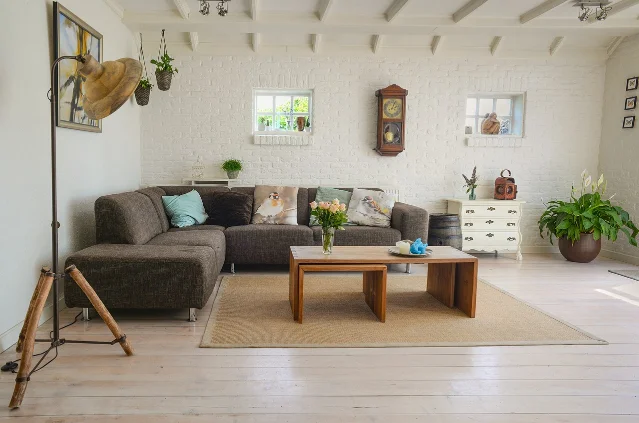
A clear room is easier to reset when the main surfaces and walking paths stay visible.
1. Run a 20-minute whole-room sweep
Apartment Therapy's timed living-room assignment uses a portable basket and a fixed list of places to look: the coffee table, sofa area, side tables, drawers, bookcases, and entertainment center. The useful part is the boundary. You are collecting out-of-place things, not deep-cleaning the room. 1
Steps
- Set a timer for 20 minutes and grab a laundry basket, box, or tote.
- Walk the room in one direction. Pick up only items that belong elsewhere.
- Check under and around the sofa, the coffee table, side tables, shelves, and the TV area.
- When the timer ends, return the collected items to their homes. Put rubbish in the right bin and place donations in a separate bag.
Why it works. A short limit lowers the activation energy of a messy room and keeps the job from turning into an unplanned furniture project.
Watch out. Do not start opening every drawer or sorting old photos during the sweep. If an item needs a longer decision, put it in a small "decide later" box and give that box its own deadline.
2. Give stray items a temporary landing basket
A large basket or other container can make a living room look orderly when you do not have time to return every item immediately. Apartment Therapy recommends this kind of "clutter catcher" and pairs it with regular emptying, which is the part that keeps it from becoming a second junk pile. 2
Steps
- Choose one existing basket, open box, tote, or sturdy bag as the room's temporary landing spot.
- Put it in one corner, not in the middle of a walkway.
- During the day, place stray books, toys, chargers, and small household items inside it.
- Empty it during a fixed daily trigger, such as after dinner, and return each item to its real home.
Why it works. One visible container gives loose objects a short stopover instead of letting them spread across the floor and furniture.
Watch out. This is not a permanent home. Do not put leaking cups, food, sharp tools, medicines, or fragile objects into a mixed basket, and do not let it become so full that you cannot identify what is inside.
3. Make the coffee table a twice-daily clear zone
A small clearing routine is easier to repeat than an occasional full-room rescue. Apartment Therapy specifically suggests a coffee-table clearing moment before leaving for the day or before bed. 2
Steps
- Pick one trigger: leaving home, starting the evening, or turning off the lights.
- Remove cups, plates, wrappers, mail, cables, and anything that does not belong on the table.
- Return reusable items to their homes and put rubbish in the correct bin.
- Leave only the objects you actually use there, with a clear patch for a drink or book.
Why it works. The coffee table is a high-visibility, high-touch surface. Clearing it at a predictable moment stops small deposits from becoming the room's visual center.
Watch out. Do not turn "clear" into "empty at all costs." If a lamp, coaster, or accessibility item earns its place, keep it. The rule is usable space, not a blank surface.
4. Reset one living-room zone instead of the whole room
When a bookshelf, TV console, or coffee-table drawer has become a dense pocket of clutter, use a one-zone reset. Apartment Therapy's method recommends choosing one or two zones, emptying the selected area, sorting the contents, cleaning the space, and putting back only what belongs. 3
Steps
- Write three possible zones on a note: for example, TV console, bookshelf, or the basket corner.
- Pick the smallest one you can finish in the time you have.
- Remove everything from that zone and sort it into keep, move, release, and decide later.
- Wipe or vacuum the empty surface, then return the keepers by category and frequency of use.
- Put the next zone on your note rather than expanding today's job.
Why it works. A small, named boundary makes the work finite. It also gives you a clean surface to evaluate before you put anything back.
Watch out. The area may look worse while it is empty. Do not begin a zone you cannot finish before you need the room; use a box to contain the temporary mess and stop at the boundary you chose.
5. Give every keeper a real home
The "organizational triangle" has a simple rule that fits a shared living room: an item should be in its assigned home or in someone's hand, not wandering between temporary spots. The same method also recommends grouping similar items together. 4
Steps
- Pick up one category, such as remotes, blankets, game controllers, or reading glasses.
- Put all of that category together in one existing drawer, shelf, box, or basket.
- Choose a plain label if other people need to use the same home.
- Test the return path: can someone put the item away in one motion after using it?
- If the home is too difficult to reach, move the category to a simpler existing spot.
Why it works. Grouping makes the inventory visible and removes the daily question of where something belongs. A home that is easy to use is more likely to survive real life.
Watch out. Do not create a dozen tiny homes that nobody remembers. Shared items need one obvious location, and personal items can go back to the room of the person who uses them most.
6. Use a one-in, one-out limit for duplicates
After the first edit, a one-in, one-out rule can stop the living room from refilling with duplicate throws, games, decorations, or spare cables. Lifehacker describes the rule as a way to keep storage from growing past its available space. 4
Steps
- Choose one category that keeps multiplying, such as board games, throw blankets, or decorative objects.
- Put every item in that category together so you can see duplicates and gaps.
- Decide how many the room can hold without blocking seats, shelves, or walkways.
- When a new item enters, remove one similar item before giving the new one a home.
- Record no inventory and buy no organizer. The visible space limit is the rule.
Why it works. The limit acts before the next pile forms. It also forces a comparison between what you already own and what you are about to add.
Watch out. Do not discard a necessary safety item or something another household member has a clear use for just to satisfy the rule. Use it for duplicates and discretionary clutter, not essentials.
7. Move paper and projects out of the living room's sightline
Paper piles, laundry, and unfinished projects can make a room feel like a list of tasks waiting for you. Good Housekeeping recommends keeping paperwork in a separate command station with areas for incoming mail, action items, and filing or scanning. It also advises keeping toys and other activity-based clutter contained rather than spread across the room. 5
Steps
- Choose an existing shelf, drawer, folder, or box outside the main seating area for incoming papers.
- Split the paper into three simple groups: act, file or scan, and recycle or shred.
- Give an unfinished hobby or project one container, then return it there when you stop.
- Move laundry, shoes, and bags to the place where they will actually be handled.
- Set a short weekly appointment to process the paper and project container.
Why it works. The room stops displaying every unfinished task, while the items still have a visible next step and a known location.
Watch out. A box is not permission to postpone sensitive paperwork forever. Do not throw away documents containing personal information without using a safer disposal method, and do not store food, damp laundry, or medicines in a general project container.
A 10-minute maintenance loop
If the room still resets slowly, borrow the 10-10 idea: choose one small area, set a 10-minute timer, and remove 10 items. Good Housekeeping describes it as a quick method for a small space, with speed helping when decisions tend to stall. 6
Do this on one shelf, one side table, or one basket. Stop when the timer ends, even if the whole room is not finished. The point is to keep a small boundary from quietly expanding, not to start another marathon clean.
Keep the first pass small: clear the main path, give the loose items a destination, and stop before the room becomes another project.
関連コンテンツ
- ログインするとコメントできます。
More from this channel
- Your bathroom is not a sponge: 7 free fixes for a drier shower
- Your grocery list is not a guess: 7 free fixes for calmer shopping
- Make the space under your bed earn its keep: 7 free fixes
- Your kitchen counter is not a landing strip: 7 no-buy fixes
- Your kitchen drawers are not a mystery box: 7 no-buy fixes
- Your windows are not self-cleaning: 7 no-buy fixes for clearer glass