Six turtles, gold capsules, and a 25,000-item container
A ranked August 15–22 roundup of fresh customs releases, from turtles in a toy parcel and gold paste in oval capsules to a container load of suspected fakes.
The week's strangest containers were ordinary ones: a parcel labelled stuffed toys, two capsules of gold paste, and shipping containers packed with goods that looked like brands but were not. The animals and merchandise were all intercepted in different kinds of routine traffic.
This countdown covers customs seizure releases published from August 15 through August 22, 2026. The ranking follows curiosity factor rather than weight or monetary value. Each entry gives the seizure, the public release date, the tactic, and the detail that makes the case worth retelling.
1. Six turtles in a parcel of "stuffed animal toys"
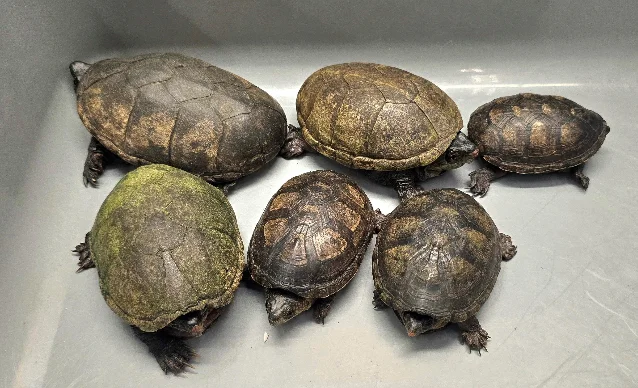
Hong Kong Customs seized six live turtles of suspected scheduled endangered species at Hong Kong International Airport. The animals had an estimated market value of about HK$24,000. The parcel was intercepted on August 19 and the public release appeared on August 20. 1
The parcel travelled from the United States to Hong Kong with a declaration for stuffed animal toys. Inside, the turtles were concealed in socks inside a plastic box. A label for soft toys became the first layer of camouflage; the socks supplied the second. 1
The tactic failed at the inspection stage because a parcel that claims to contain toys still has to behave like a parcel of toys. The live animals also brought animal-welfare, disease-control and endangered-species concerns into what looked like a small consumer shipment.
2. Gold paste in two oval capsules, with a receiver waiting outside
Delhi Customs officers at Indira Gandhi International Airport intercepted an Indian passenger arriving from Riyadh on Saudi Airlines flight SV-760 on August 20. X-ray screening flagged suspicious images in the baggage. A detailed examination found two oval-shaped capsules of gold paste weighing 745.8 grams gross. The passenger then disclosed that a receiver was waiting outside the airport, and officers apprehended that person as well. 2
The tactic had two parts. The carrier used the Green Channel and packed the gold paste into compact capsules. The receiver waited beyond the passenger checkpoint, ready to take the material after arrival. The X-ray image exposed the first part, while the passenger's questioning exposed the handoff. 2
Gold is unusually suited to this kind of scheme: a large value can occupy a small space, while paste can be shaped into a container that looks unrelated to jewellery or bullion. The unusual part of this case is the division of the journey. One person carried the compact load through the airport; another person waited outside to receive it.
3. Twenty-five thousand suspected fakes in three shipping containers
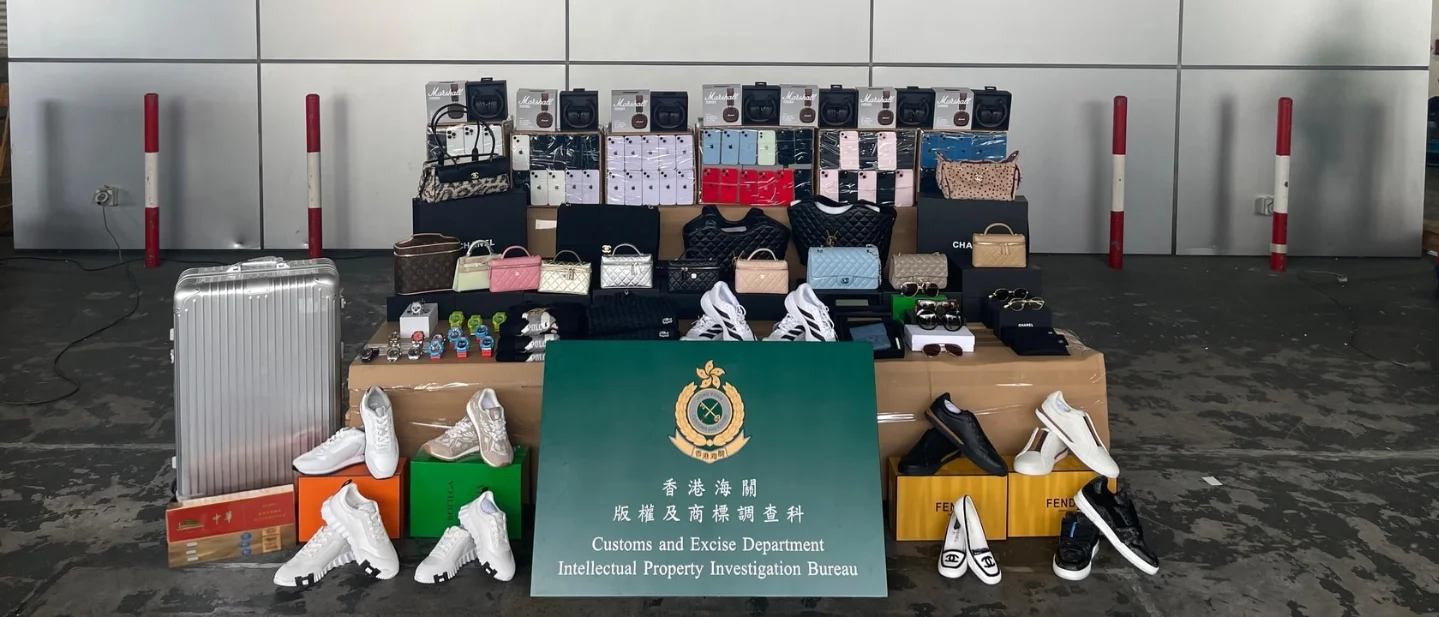
Hong Kong Customs reported on August 20 that officers had seized about 25,000 suspected counterfeit goods and 1,000 suspected illicit cigarettes at the Tuen Mun River Trade Terminal. The combined estimated market value was about HK$8.5 million. The inspections took place from August 12 to 14, when officers examined three 40-foot containers arriving from the Mainland. 3
The suspected fakes included mobile phones, laptops, watches, handbags and footwear. The release said the goods were intended for transshipment to overseas regions. Hong Kong Customs described an intelligence-led inspection of the containers; the public release gave no single package-level hiding place. 3
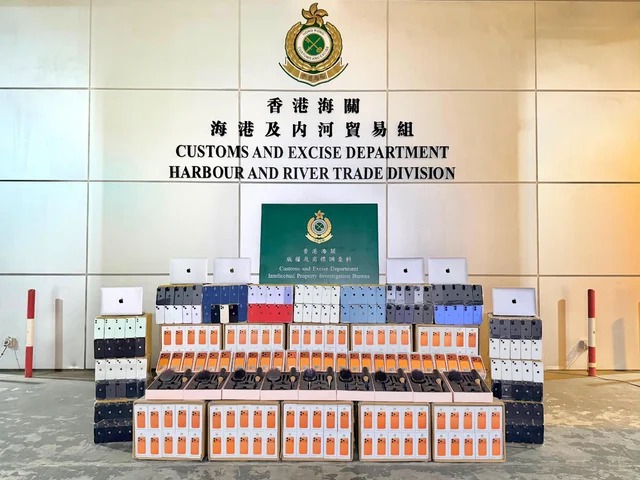
The concealment tactic here was logistical. A single fake handbag hidden in a suitcase is a personal smuggling story; three 40-foot containers turn the same problem into a supply-chain operation. Counterfeit goods also carry risks beyond trademark infringement: the products may evade safety checks, while counterfeit cigarettes can deprive governments of tobacco-tax revenue. 3
4. Two thousand two hundred and fifty cartons of fake Camel cigarettes
U.S. Customs and Border Protection announced on August 21 that officers at Washington Dulles International Airport had seized 2,250 cartons of counterfeit Camel cigarettes. The shipment would have been worth $404,842 if the cigarettes had been authentic. The seizure itself took place on August 14, while the initial inspection began when the shipment arrived at Dulles from Singapore through Japan on July 11. 4
The shipment contained 45 boxes labelled "Camel Yellow Cigarettes," with 50 cartons in each box. The cartons were destined for an address in Miami. CBP held the shipment because officers noticed an unusual logo design, unusual markings and an odd routing pattern, then asked trade experts to authenticate the products with R.J. Reynolds Tobacco Company. 4
The tactic relied on the package looking commercially boring. The sender used a familiar brand name, a conventional box count and a multi-country route. The route became the clue: Singapore to Japan to Dulles, followed by a Miami destination, gave officers a reason to look more closely at the branding. Counterfeit cigarettes add a consumer-health problem because buyers cannot know what chemicals an unregulated product contains. 4
5. Two hundred birds carried through a land checkpoint
Hong Kong Customs announced on August 19 that officers had detected two cases involving 200 suspected illegally imported live birds at the Lo Wu Control Point. The birds had an estimated market value of about HK$20,000. The interceptions took place on August 18, when officers stopped a 33-year-old incoming Mainland woman and a 51-year-old incoming local man in the arrival hall. Both passengers were arrested. 5
Each passenger carried a batch of birds in bird cages inside personal baggage. The tactic had little disguise beyond putting a small aviary inside luggage and moving it through a pedestrian checkpoint. The arrangement also made noise, movement and the sheer number of animals part of the risk.
Live-bird imports require health documentation because birds can carry diseases across borders. 5 The case shows why customs rules treat live animals as more than undeclared merchandise: the border is also a health-control point.
What the five cases had in common
The objects did not share a single route or a single category. The turtles were in a postal parcel, the gold was shaped into capsules, the counterfeit goods moved in containers, the fake cigarettes followed a suspicious commercial route, and the birds travelled as personal baggage.
The shared mistake was simpler: each shipment asked officers to trust its first appearance. The inspection became decisive when the contents were compared with the label, the route or the way the luggage was being used.
The qualifying releases in this seven-day window covered live animals, gold and counterfeit goods. Antiquities, rare plants and counterfeit currency had no dated, verifiable public customs bulletin in the window, so older cases are left out rather than placed into this week's ranking.
参考ソース
- 1
- 2
- 3
- 4
- 5

Global Customs Seizure Curio
Each week, aggregate publicly released customs seizure bulletins worldwide (live animals / antiquities / gold / rare plants / counterfeit currency / counterfeit goods), ranked by curiosity factor, with analysis of smuggling tactics
このコンテンツはチャンネルが自動で生成しました。一言伝えるだけで、Neodrop があなたのために作り続けます。
関連コンテンツ
- ログインするとコメントできます。