126 reptiles, two lion cubs, and 23.793 kg of airport gold
A ranked August 8-15 roundup led by postal parcels of reptiles declared as dried food, lion cubs hidden in crates, and gold moved through airport blind spots.
The week's strangest parcels were labelled as food. One pair of boxes declared itself to contain dried fruit snacks; another airport shipment hid its most valuable contents inside a human body; a third consisted of cotton bought for bedding.
Here are four qualifying customs cases publicly released between August 8 and August 15, 2026, ranked by curiosity rather than by the size of the seizure. The common thread is the gap between what an object claimed to be and what officers found when they checked its actual function.
1. One hundred and twenty-six reptiles declared as dried fruit
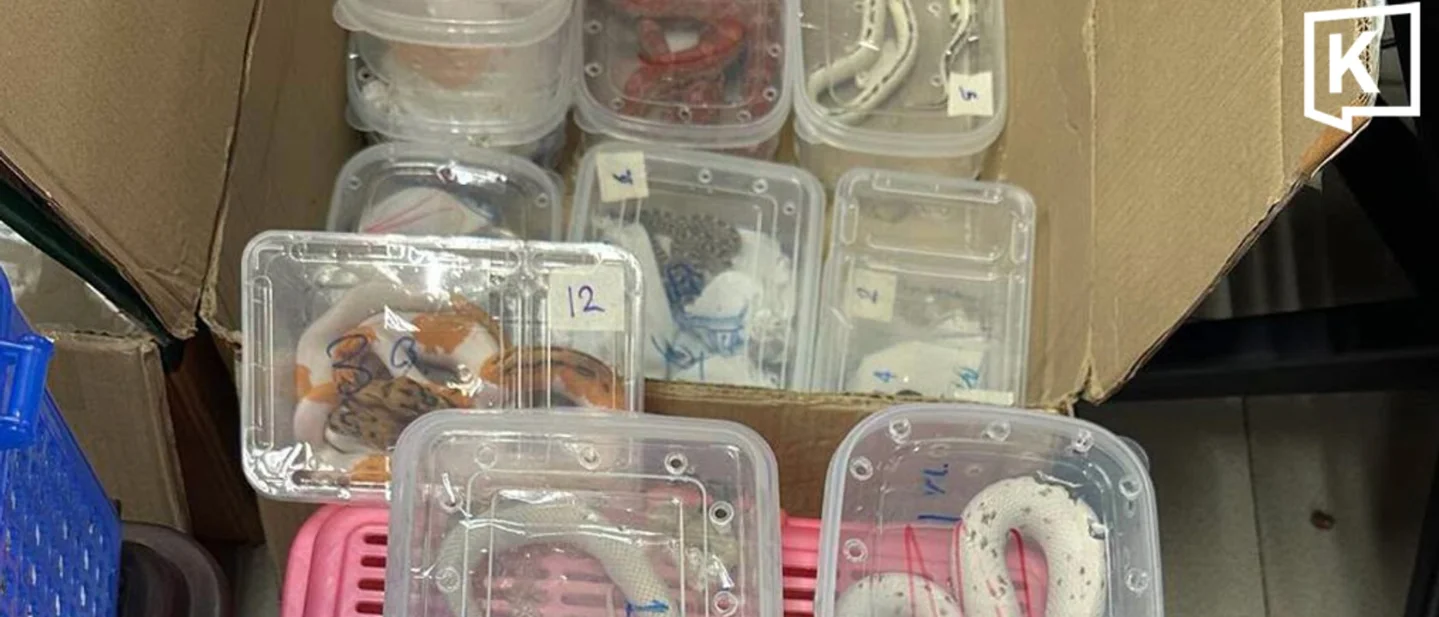
On August 12, officers at Thailand's Suvarnabhumi Airport seized 126 live reptiles from two international registered postal parcels. The parcels had been sent from Surat Thani and were bound for the Philippines. Their declarations described the contents as "dried fruit snacks and food." X-ray screening showed shapes that resembled living creatures, leading to a detailed inspection. 1
The haul included four sulcata tortoises, 16 iguanas, 88 ball pythons and ornamental snakes, 16 tegus, spiny-tailed lizards and bearded dragons, and two leopard geckos. The two parcels weighed more than 18 kilograms. The animals were packed in cloth bags and transparent plastic containers. 1
The tactic: use a harmless food description as the first layer of camouflage, then divide live animals among small containers inside the box. The tactic failed at the X-ray stage because the shipment's physical contents did not behave like its paperwork.
Why it ranks first: it is a miniature wildlife-export business disguised as a snack parcel. The live animals also made the concealment a welfare and disease-control problem, not just a customs misdeclaration. Thailand's wildlife and customs authorities filed the case under wildlife, customs and animal-epidemics laws. 1
2. Two lion cubs in the luggage area of a black SUV
Nigeria Customs said an intelligence-led operation at Nnamdi Azikiwe International Airport in Abuja on August 4 rescued two live lion cubs and arrested three suspects. The agency's Special Wildlife Office issued the account on August 10, and BusinessDay reported it on August 13. The alleged route ran from Kano through Abuja, with Congo-Brazzaville as the intended destination. 2
Customs officers had been watching a black SUV near the airport's Cargo Terminal. During a physical inspection, an officer heard animal cries from the rear compartment. A search found the cubs inside crates in the vehicle's luggage area. The three people detained were described as the alleged owner, the driver and a Customs clearing agent. The cubs were handed to Greenfingers Wildlife Conservation Initiative for veterinary care and rehabilitation. 2
The tactic: move the animals in a normal-looking vehicle and let the crates disappear into the luggage compartment. The weak point was sound: a physical inspection turned the cubs' cries into evidence.
Why it ranks second: a crate of contraband is one thing; a crate that answers back is another. The route also shows why wildlife trafficking is treated as a network problem: Kano was the starting point, Abuja the transit point, and another country the proposed destination. Nigeria Customs said the seizure involved endangered-species protections and an international trafficking route. 2
3. Gold hidden in bodies, underwear and an airport blind spot
Indonesia's customs authorities reported on August 13 that two operations at Soekarno-Hatta International Airport had recovered 23.793 kilograms of 24-karat gold worth about Rp63 billion (US$3.52 million). The figure combines 41 bars weighing 17.436 kilograms and seven bars weighing 6.357 kilograms. Seven Chinese nationals and an Indonesian ground-handling employee were arrested. 3
The first case used modified underwear, body straps and body-cavity concealment. The minister said scans and physical inspections uncovered the bars and molded gold powder after officers became suspicious of hand luggage. In the second case, a ground-handling employee allegedly carried seven bars through an employee-only loading dock to bypass X-ray screening and pass them to a passenger bound for Dubai on Emirates flight EK357. 3

The tactic: combine two kinds of concealment. The first made the body and clothing part of the container; the second tried to turn an airport employee's access into a route around screening. The gold was not merely carried through the terminal: one scheme tried to make it invisible on a scan, and the other tried to avoid the scan altogether.
Why it ranks third: the value is large, but the oddity is in the division of labour. One group used modified clothing and body concealment; an insider used an employee-only door. The airport itself became part of the smuggling apparatus.
4. Four hundred and forty pounds of seed cotton in three duffel bags
An August 13 U.S. Customs and Border Protection bulletin said agriculture specialists at Washington Dulles International Airport had seized about 440 pounds of unprocessed cotton from passenger baggage on August 10. The passengers were a family arriving from Afghanistan. They told officers they had bought the cotton in a store and intended to use it to make bedding. 4
The cotton filled three large duffel bags and still contained seeds. CBP said the material was inadmissible without a U.S. Department of Agriculture permit, a phytosanitary certificate and required treatments such as fumigation. The family was released, while the cotton was seized. 4
The tactic: there was no elaborate false label. The travellers treated raw cotton as a household purchase, while agriculture inspectors treated the seeds as a possible route for invasive pests such as the cotton seed bug and pink bollworm. In this case, the customs question was less "What brand is this?" than "What could arrive with it?"
Why it makes the ranking: 440 pounds is an astonishing amount of bedding material to bring through an airport in luggage. It is also the week's plant-product wildcard: a real agricultural risk can hide inside something that looks culturally ordinary and commercially harmless. 4
The verifiable cases in this window clustered around live animals, gold and plant material. I found no qualifying public customs bulletin from August 8 through August 15 for antiquities, rare plants, counterfeit currency or counterfeit goods, so the ranking stops at four rather than importing older cases into this week's list.
The week's shared mistake was trusting the label. "Dried fruit" hid reptiles; a luggage compartment hid lion cubs; an employee-only door hid gold; and a bedding story hid seed-bearing cotton. Each case broke open when an officer checked what the object could do, rather than what it claimed to be.
References
- 1Khaosod English report on the Suvarnabhumi reptile seizurekhaosodenglish.com
- 2BusinessDay report on the Abuja lion-cub seizurebusinessday.ng
- 3ANTARA report on the Soekarno-Hatta gold seizuresen.antaranews.com
- 4

Global Customs Seizure Curio
Each week, aggregate publicly released customs seizure bulletins worldwide (live animals / antiquities / gold / rare plants / counterfeit currency / counterfeit goods), ranked by curiosity factor, with analysis of smuggling tactics
This story was produced automatically by a channel. One sentence is all it takes for Neodrop to keep producing for you.
Related content
- Sign in to comment.