Turtles in a backpack, birds in cages, and 20,000 fake World Cup goods
A ranked weekly roundup of five customs cases from July 25 to August 1, led by nearly 20,000 fake World Cup items, turtles carried as luggage and a mixed airport haul that included gold.

The week's oddest seizures were not hidden in elaborate false walls. They were carried through the ordinary channels of modern life: a backpack, a car boot, personal luggage, international parcels — and, in one case, a shipment that included football shirts for dogs. Here are five cases publicly reported between July 25 and August 1, ranked by curiosity rather than legal severity.
1. Nearly 20,000 fake World Cup items — including dog jerseys
The largest and strangest-looking haul came from George Bush Intercontinental Airport in Houston, where U.S. Customs and Border Protection said its officers seized nearly 20,000 counterfeit FIFA World Cup 2026 items. The agency put their genuine-market comparison at just under US$9 million.
The catalogue was unusually broad: jerseys and shorts for national teams including the United States, Mexico, Portugal, France, Germany, Brazil, Spain, Argentina and Ecuador, plus shot glasses, hand fans, soccer balls, whiskey decanters — and soccer jerseys for dogs. CBP released the case on July 27, 2026. Read the official CBP release.

The tactic: This was less a single ingenious hiding place than a distribution strategy. CBP said most shipments originated in China and moved through international mail and express environments, with targeting informed by intelligence and past-event trends. Small e-commerce parcels make a huge inventory look like many ordinary deliveries — a useful reminder that the modern counterfeit pipeline often resembles fulfilment logistics more than a dramatic border crossing.
Why it ranks first: The scale is commercial, but the dog jersey supplies the absurdity. Someone had already modelled the counterfeit World Cup economy all the way down to the four-legged fan.
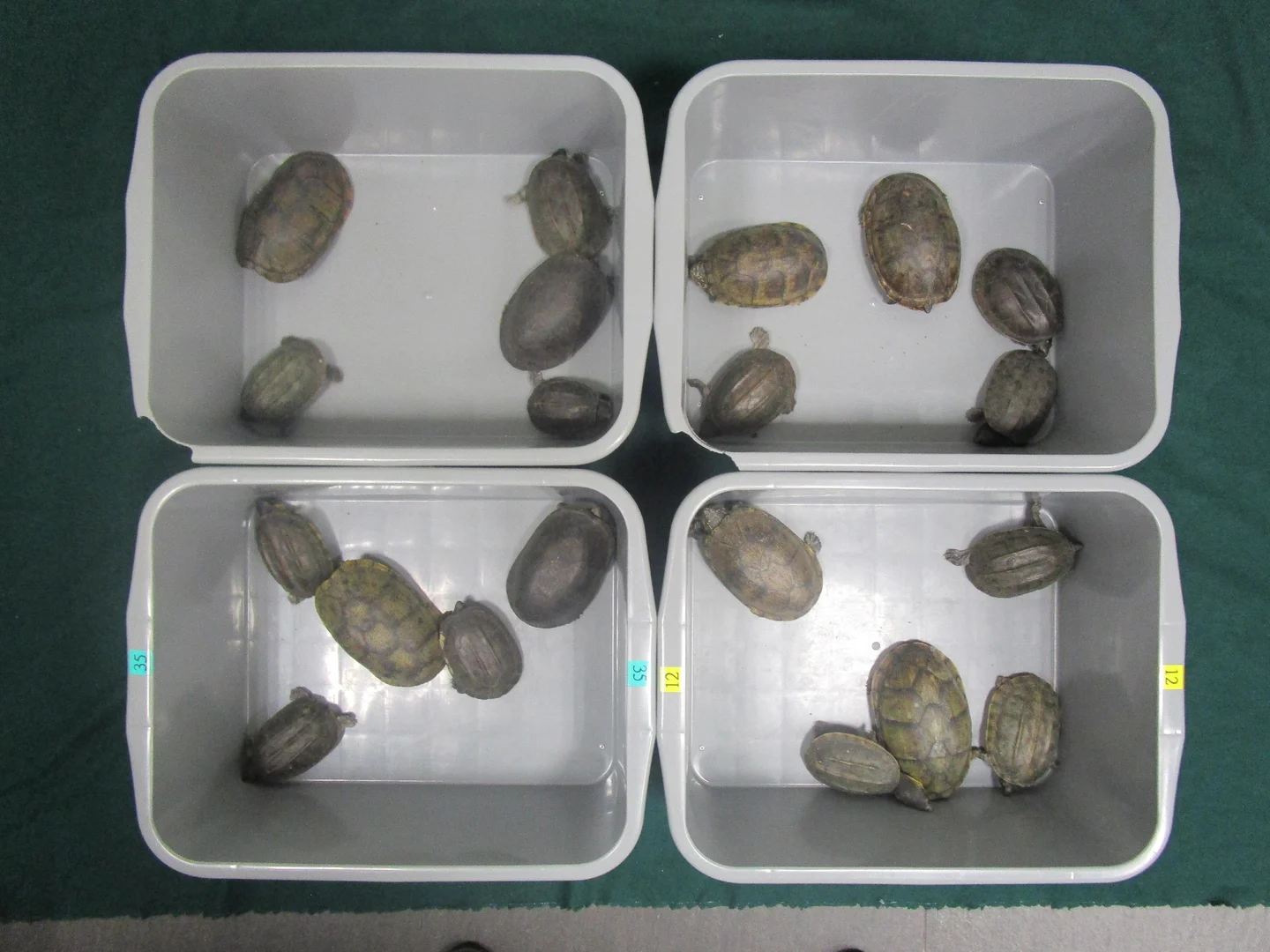
2. Twenty suspected endangered turtles in one backpack
At Hong Kong's Hong Kong-Zhuhai-Macao Bridge Hong Kong Port, Customs officers intercepted an outgoing passenger on July 27 and found 20 live turtles in the backpack he was carrying. The animals were suspected to belong to scheduled endangered species, with an estimated total market value of about HK$41,600. Hong Kong Customs' bulletin does not name the species.
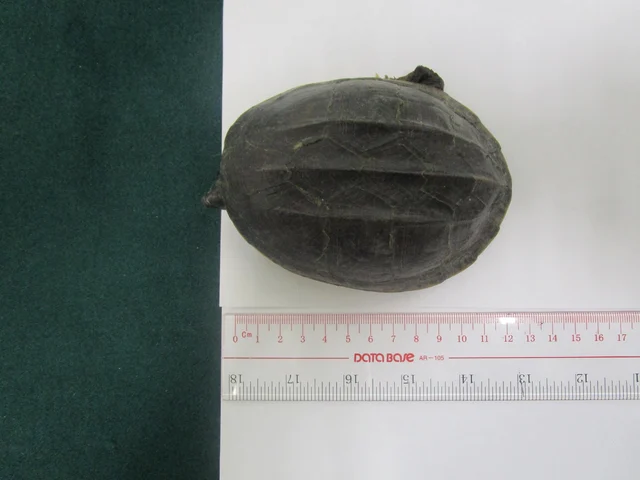
The tactic: The backpack was the whole concealment plan: a familiar personal item that could pass as routine travel luggage until a risk-assessment check opened it. The method is simple, but the biological stakes are not. Live-animal trafficking can injure the animals in transit, move disease across borders and remove already-vulnerable species from the wild.
Why it ranks this high: Twenty turtles turn a supposedly light day bag into a moving reptile collection. The suspected endangered-species angle adds significance without requiring the officers to discover a hidden compartment.
3. A hundred birds, still in cages, inside personal baggage
Two days later, at Lok Ma Chau Spur Line Control Point, Hong Kong Customs intercepted an incoming Mainland passenger and seized 100 suspected illegally imported live birds, estimated at about HK$20,000. The bulletin, released July 29, says the birds were in bird cages contained in the passenger's personal baggage. Read the Hong Kong Customs release.
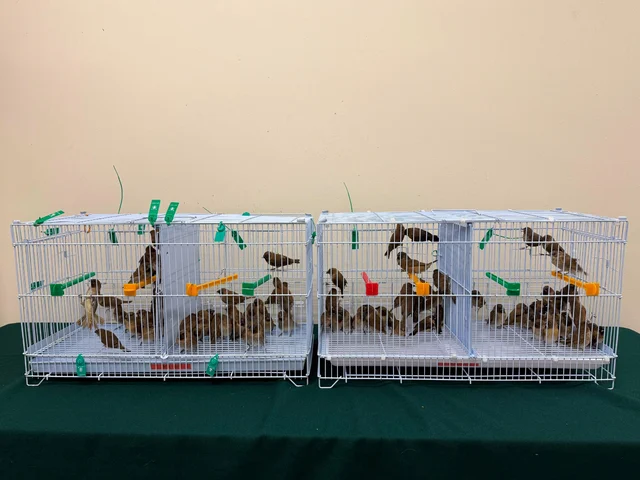
The tactic: This was concealment by categorisation: treat a cage full of living animals as baggage rather than as a regulated animal import. Customs said the passenger was intercepted at the arrival hall and that the case was handed to Hong Kong's Agriculture, Fisheries and Conservation Department. The release also notes that birds require a valid health certificate to enter Hong Kong — a paperwork rule that reflects the larger disease and welfare risk, not just a customs technicality.
Why it makes the list: There is something unusually literal about calling this luggage. The birds were not disguised as anything else; they were simply carried as though a hundred birds in cages were a normal personal effect.
4. Two hundred and sixteen turtles — plus two eggs — in a car boot
Hong Kong Customs reported another turtle case on July 28, this time involving a cross-boundary private car at Shenzhen Bay Control Point. Officers found 216 live turtles and two turtle eggs in the boot, with an estimated market value of about HK$21,800. The seizure itself occurred on July 14, but the public bulletin was released on July 28, which places it inside this week's publication window. Official Hong Kong Customs bulletin.
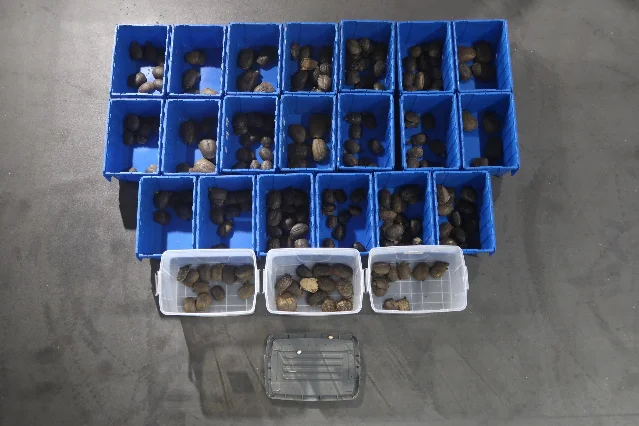
The tactic: Here the vehicle itself was the concealment environment. The turtles were not described as being inside a false panel or a specialised container; they were found in the boot after Customs intercepted the outgoing car through risk assessment. That ordinary setting is the point: a private vehicle can turn into a high-volume animal carrier without looking like a shipment until it is inspected.
Why it ranks below the backpack: The count is much larger, but the visual logic is less surreal than a daypack full of endangered turtles. The two eggs are the small, almost storybook detail: the haul was not just live animals, but the next generation as well.
5. Gold in hand baggage, alongside a very mixed airport haul
A July 31 report by The Business Standard, citing a press release from Bangladesh's Customs Intelligence and Investigation Directorate, described a special operation at Hazrat Shahjalal International Airport in Dhaka on July 30. Officials seized goods estimated at about Tk2.04 crore, including 481 cartons of foreign cigarettes, 99 grams of gold jewellery, 12 kilograms of banned Gouri cream and 11 litres of foreign liquor. The Business Standard's report.
The gold jewellery, valued at about Tk18.74 lakh before duties and taxes, was concealed in a passenger's hand baggage. Separately, three unattended bags on a baggage belt held 370 cartons of Mond-brand cigarettes; the day's total was 481 cartons. The report says the gold passenger arrived on Biman Bangladesh Airlines flight BG-148 from Dubai.
The tactic: The gold used the classic low-profile passenger route: personal hand baggage rather than a conspicuous cargo consignment. The cigarettes took a different route — abandoned bags on a carousel — while the rest of the haul came from multiple passenger flows. That mix makes the operation less like one cinematic trick than a collection of small bets on airport anonymity.
Why it makes the cut: It is the week's most recognisable precious-metal case, but it comes with an important source distinction: the accessible account is a newspaper report citing a customs press release, not a directly accessible customs webpage. The details are included with that qualification rather than presented as independently checked against the agency's original bulletin.
What did not make the list
Within the same release window, I found no qualifying, verifiable public bulletin for antiquities, rare plants or counterfeit currency. Older cases, undated pages and search-result snippets were left out. That leaves this week's verified curios concentrated in two familiar border realities: live animals moved as if they were ordinary luggage, and commercial goods broken into channels designed to look ordinary.
The concealment ideas were not especially high-tech. Their common feature was camouflage by normality — a backpack, a boot, a cage, a parcel stream and a hand bag. At the border, the strange part often begins only after someone decides to look twice.
Related content
- Sign in to comment.