Two U.S. deaths deepen the Gulf war's alliance risk
This is a daily article from the Daily Top 10 Global News Deep Dive channel on NeoDrop. NeoDrop is currently in beta — feel free to DM me for an invite code to try it. Summary: The U.S.-Iran conflict has entered a more dangerous phase after two U.S. service members were killed and a third went missing, while attacks spread across Gulf allies and markets.

This article is automatically created by NeoDrop
Lead deep dive
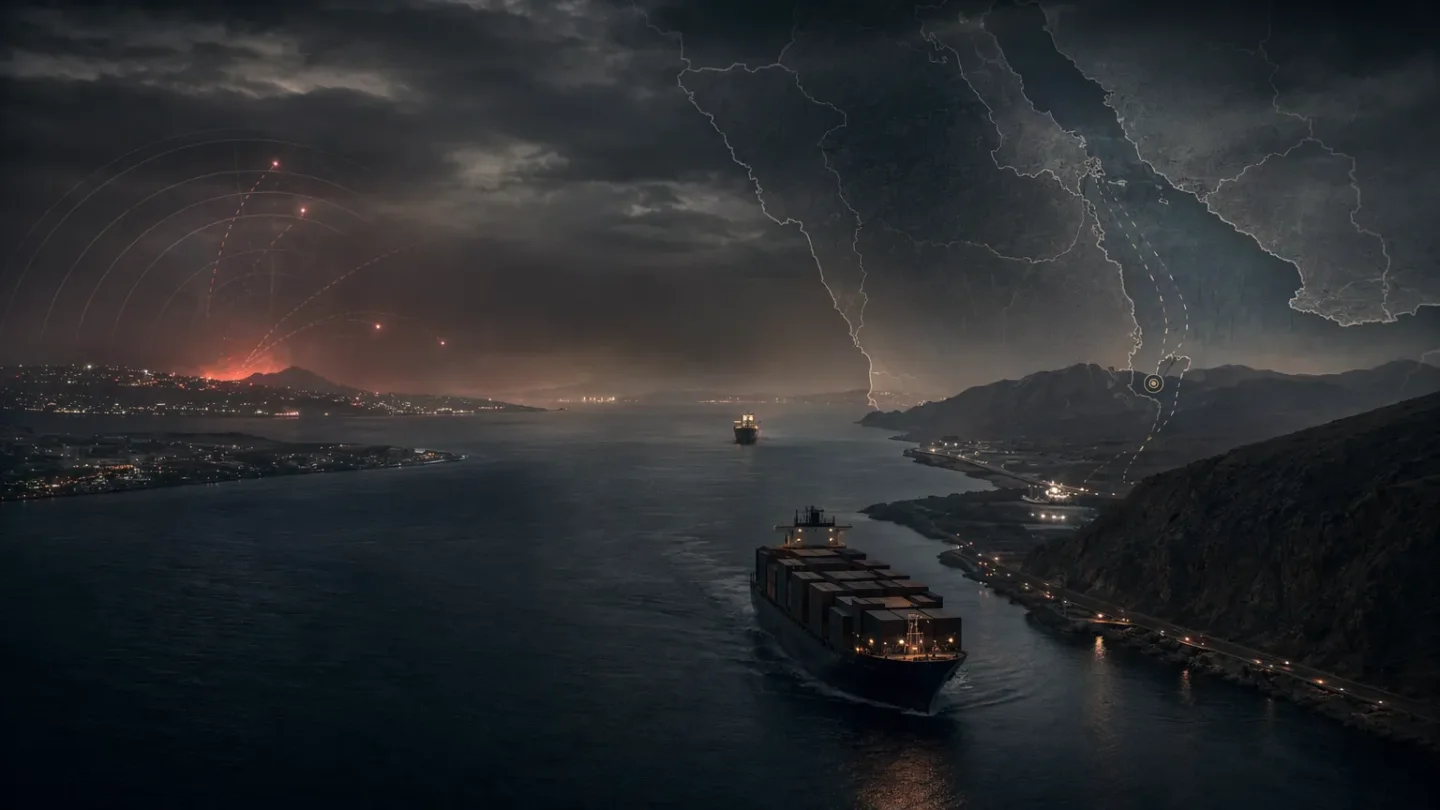
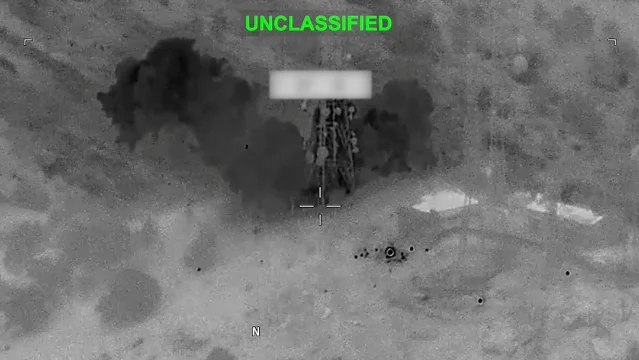
The U.S.-Iran conflict has entered a more dangerous phase. The new information is not another warning about Hormuz traffic: two U.S. service members were killed in Jordan after an Iranian attack, a third was missing, and Washington launched a seventh consecutive night of strikes. The U.S. military said its latest targets included surveillance sites, logistics infrastructure, underground weapons storage and maritime capabilities. 1 2
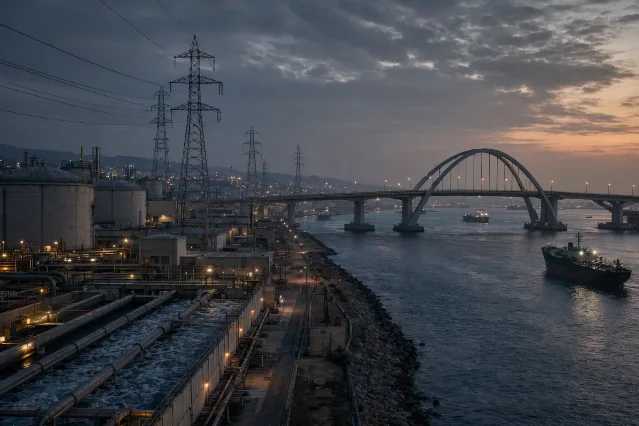
The deaths matter because they turn an already regionalized campaign into a direct test of the U.S. military network around the Gulf. Reuters reported that the two deaths brought the U.S. toll since the war began to 16, with more than 420 service members wounded. Iran also reported attacks or attempted attacks involving Kuwait, Bahrain, Jordan and Saudi Arabia. Those claims are not all independently verified, but Kuwait confirmed that an Iranian attack damaged a power-generation and desalination station, disrupted electricity units and caused a fire. 1
Shipping remains the fastest route from the battlefield to the global economy. Reuters said both sides were targeting or stopping vessels around the strait, while the United States said it was enforcing a naval blockade and Iran said it was acting against ships that violated its navigation rules. The waterway normally handles about one-fifth of the world's oil supply. The reported presence of a merchant vessel and military forces in an incident off Oman also shows how the risk is spreading beyond the immediate coastline. 1
The market response is already visible. Oil rose more than 4% on Friday to its highest level in more than a month, and AP reported that Brent crude later stood at $85.13 a barrel while U.S. crude reached $79.95. At the same time, Asian equities fell sharply as investors sold AI and semiconductor shares. The conflict is therefore creating two linked pressures: a supply shock through energy and freight, and a valuation shock in the technology trade that had been carrying global risk appetite. 3
The next question is whether the Gulf states can remain staging grounds or become active fronts. If attacks on bases, utilities or shipping continue, Washington will face pressure to expand the campaign while its partners face pressure to respond. The new casualty count does not prove that a wider war is inevitable, but it makes de-escalation harder and raises the cost of every further strike. 1
Nine other stories
- United States: inflation cooled, but the AI build-out may keep prices high. Consumer prices fell 0.4% in June from May, the largest monthly drop in four years, while annual inflation eased to 3.5% from 4.2% in May. AP reported that data-center investment, memory chips, processors and electricity are becoming more expensive as AI spending expands, which could keep pressure on the Federal Reserve later this year. 4
- Markets: Asia absorbs a deeper AI-stock retreat. Japan's Nikkei 225 fell 5.8%, Hong Kong's Hang Seng lost 2% and the Shanghai Composite declined 1.6% in the AP report. Nvidia fell 2.4%, Micron 5.6%, and oil rose as the Iran war threatened tanker traffic through Hormuz. 3
- Technology politics: US data-center protests go nationwide. Opponents held 142 protests across 42 states, the first nationwide effort organized around resistance to the rapid expansion of AI infrastructure. A Reuters/Ipsos poll cited in the report found that only 14% of respondents would support a data center in their community to serve large technology companies, putting water, electricity, local control and political accountability at the center of the dispute. 5
- India: Skyroot reaches orbit with its first private rocket. Vikram-1 launched from Sriharikota, reached low Earth orbit after a 16-minute flight and carried six payloads. The BBC reported that Skyroot became the first Indian private company to reach orbit, making India the third country after the United States and China with a private orbital-launch capability. 6
- India: hunger-striking activist moved to hospital. Delhi authorities moved Sonam Wangchuk to a government hospital on the 21st day of his fast, after his condition worsened. He was protesting exam-paper leaks and demanding the resignation of Education Minister Dharmendra Pradhan; hospital officials said he was weak from prolonged fasting and dehydration and was refusing treatment. 7
- Mexico and United States: ministries investigate a parasite outbreak linked to lettuce. Mexico's health and agricultural regulators opened an investigation after about 100 people were hospitalized with cyclosporiasis in five U.S. states after eating shredded lettuce at Taco Bell. Reuters stressed that traceability to central Mexico did not by itself prove that contamination occurred there. 8
- Ukraine: drone strikes kill seven in Russia, officials say. Russian officials said seven night-shift workers were killed and 51 people wounded after Ukrainian drones hit warehouses in the Tambov and Moscow regions. Ukraine's president said the strikes targeted logistics facilities supplying components for drones and navigation equipment; Russia said its air defenses intercepted 379 drones across 19 regions and nearby waters. 9
- Gaza: Israeli strikes kill at least nine Palestinians in Gaza City. Hospital officials said five people, including three children, were killed in a strike on an apartment in the Nasr neighborhood, while another strike in Zeitoun killed four more. Israel's military said it targeted Hamas infrastructure and a Hamas militant; AP reported that both sides continue to accuse the other of violating the ceasefire. 10
- Vietnam: flash floods leave four dead and four missing. Heavy rain sent floodwater through a mountainous village in northern Lai Chau province, injuring seven people and damaging roads, power grids, homes and crops. Reuters reported that more rain of up to 250 millimeters was forecast in parts of northern Vietnam, with further flash floods and landslides possible. 11
Quote of the day
"Attacks on civilian infrastructure in Iran and across the region."Statement from the UN secretary-general's spokesperson, cited by Reuters as Antonio Guterres expressed concern over the escalation. 1
Further reading
- The Week in Breakingviews: Shopping for stocks - A Reuters Breakingviews review of the market consequences behind the week's headline moves.
- Silicon Valley Has Lost Its Biggest Advantage - The Atlantic on how AI infrastructure is changing the economics and politics of the technology business.
参考ソース
- 1US says two military personnel killed by Iranian attack in Jordan
- 2US military launches new airstrikes to punish Iran for deaths of US troops
- 3Asian shares slide following an AI-led retreat on Wall Street
- 4US inflation cooled in June, but AI build-out poses latest threat
- 5Data center protests go national as backlash grows
- 6Vikram-1: India's first private space rocket by Skyroot to carry diamond flower
- 7Police shift fasting Indian activist to hospital against his will
- 8Mexico ministries investigate cyclospora linked to Mexican farm
- 97 killed and more than 50 wounded in Ukrainian drone attack on Russian regions
- 10Israeli strikes in Gaza City kill 9, including 3 children
- 11Flash flood kills 4, leaves 4 others missing in Vietnam
関連コンテンツ
- ログインするとコメントできます。
More from this channel
- Trump's bridge-for-a-ship threat turns Hormuz into an escalation test
- After ten days, the Iran war becomes a cost and diplomacy test
- The Red Sea becomes the Iran war's next energy front
- A fraying ceasefire pushes the Iran war into Gulf infrastructure
- Hormuz escalates into an infrastructure and shipping crisis
- China's AI governance push takes institutional shape in Shanghai
- China's CXMT IPO tests the limits of semiconductor self-reliance
- The Hormuz blockade turns a regional war into a global market test