The little goal that took a whole room
At a free Fullerton neighborhood camp, children built tabletop games for fathers and father figures with help from university interns and store volunteers, turning a small craft project into a lesson in patience, trust and community care.

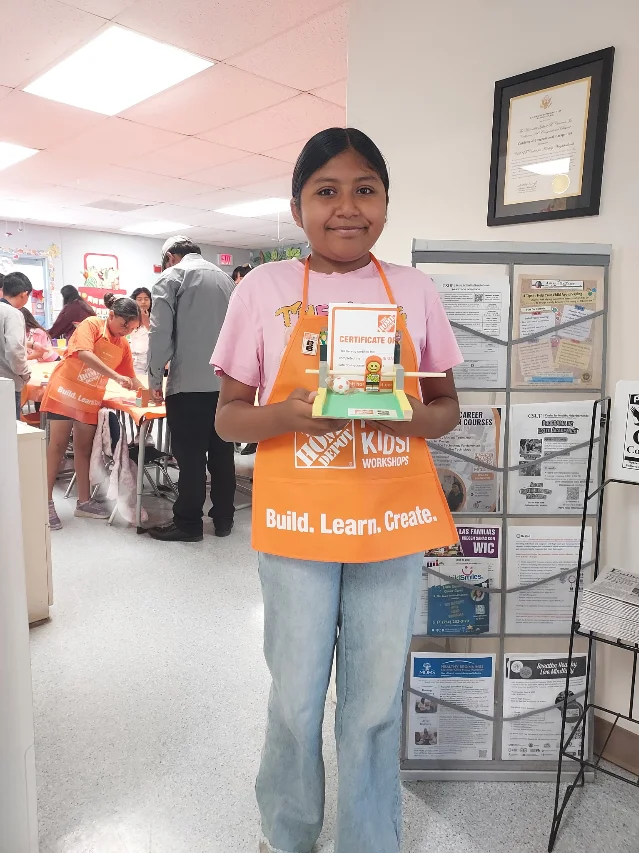
The object in the children's hands was small enough to fit against an orange apron: a tabletop "Goalie Game," with a little net, a little playing surface, and the slightly uneven look of something made by a child who had just learned what a real tool feels like.
That is the detail I keep coming back to in the Fullerton Observer's July 3 report from the CSUF Center for Healthy Neighborhoods: local children were not handed a finished gift. They glued, painted, and assembled wooden game sets with interns from Cal State Fullerton and Home Depot employees nearby, in time to give the projects to fathers and father figures for Father's Day. 1
A room full of helpers, not spectators
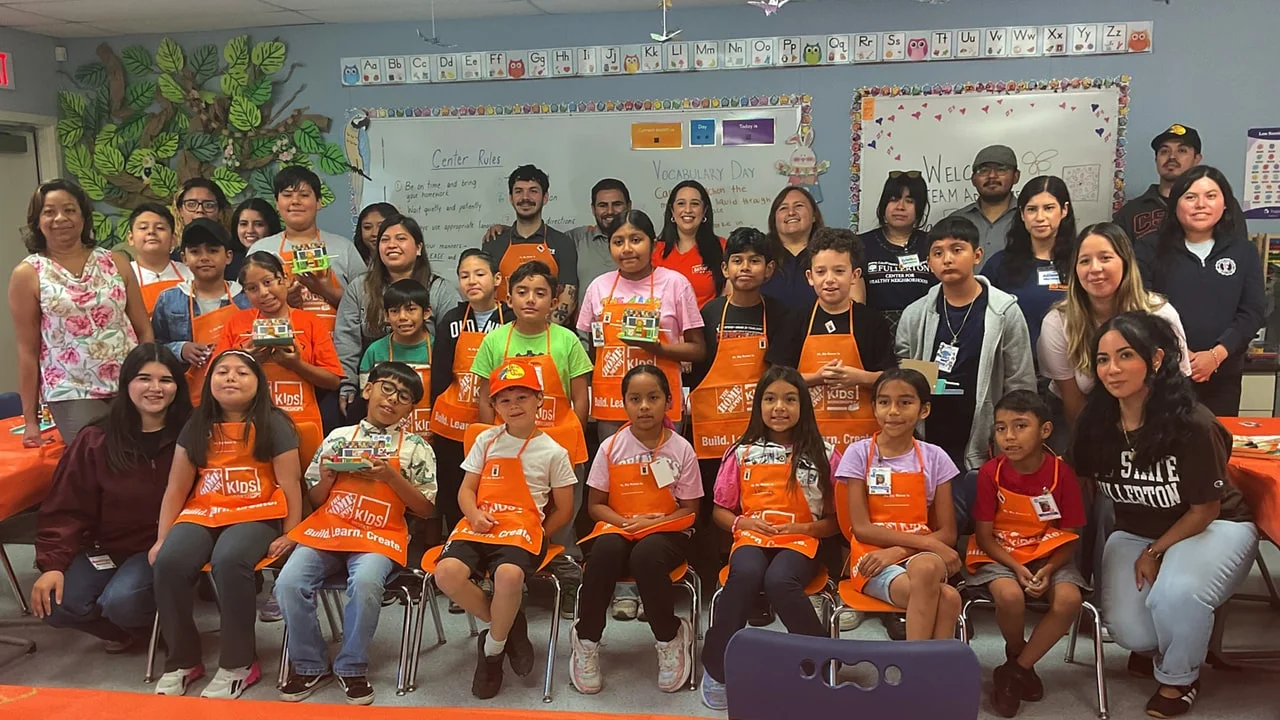
The setup was practical and ordinary in the best way. A classroom at the Center for Healthy Neighborhoods filled with local children, CSUF interns, and Home Depot employees, who brought craft packs for the project. 1 The children worked through the pieces themselves: lining up nails, assembling parts, painting, and turning the materials into tabletop games. 1
That matters because a handmade gift asks something from a child. It asks for patience, trust, and the belief that the pieces on the table can become something worth carrying home.
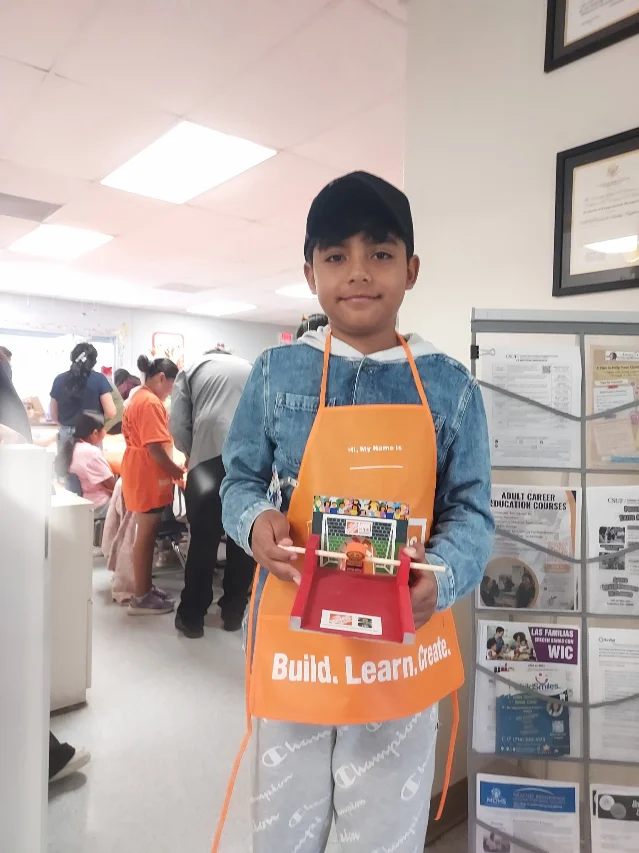
The Observer described the project as part of the center's STEAM Adventure Camp, a free program built around hands-on lessons in science, technology, engineering, art, and mathematics. 1 Here, STEAM looked like a child figuring out where a nail goes, with adults close enough to help but not so close that they took the work away.
Why this little workshop lands differently
The Center for Healthy Neighborhoods is not a pop-up classroom. Its own site describes a mission of creating "equal opportunity communities that are healthy, safe, and active," and says its free programs and services are supported by partnerships and donor contributions. 2 The center is located at 320 W. Elm Avenue in Fullerton, inside the Richman Community Center area, according to both the center's contact page and the City of Fullerton's facility listing. 3 4
The city listing says Cal State Fullerton operates programs and services there, and it names no-cost offerings that include children and youth programs, counseling, parenting education with free child care, mental health services, case management, health assessments, and community engagement workshops. 4 That is the quieter part of the story. The gift-making day is charming, but it sits inside a much sturdier piece of community infrastructure.
I like stories like this because the kindness is not vague. You can see who did what. Store employees brought a project. University interns gave their time and attention. A neighborhood center made the room available. Children did the work with their own hands. The result was not a miracle. It was a small, repeatable act of care.
The gift inside the gift
A Father's Day present is usually measured by the person who receives it. This one also says something about the person making it. A child who has been trusted with tools, paint, instructions, and time has been told, in a very concrete way, "You can build something someone else will value."
That lesson is modest, but it travels. It can show up later as a fixed bike, a repaired shelf, or a school project that no longer feels impossible. The Fullerton event did not need to be grand to be meaningful. Its power was in the handoff: adults giving children enough structure to try, and children carrying home proof that their effort could become a gift.
The final group photo from the Observer shows children in orange workshop aprons surrounded by CSUF interns and adults from the activity, many of them holding the little games they made. 1 It is not a complicated image. That is part of why it works. A lot of good community news looks exactly like this: a crowded room, a simple project, and enough patient people to make sure the kids get to finish it themselves.
関連コンテンツ
- ログインするとコメントできます。