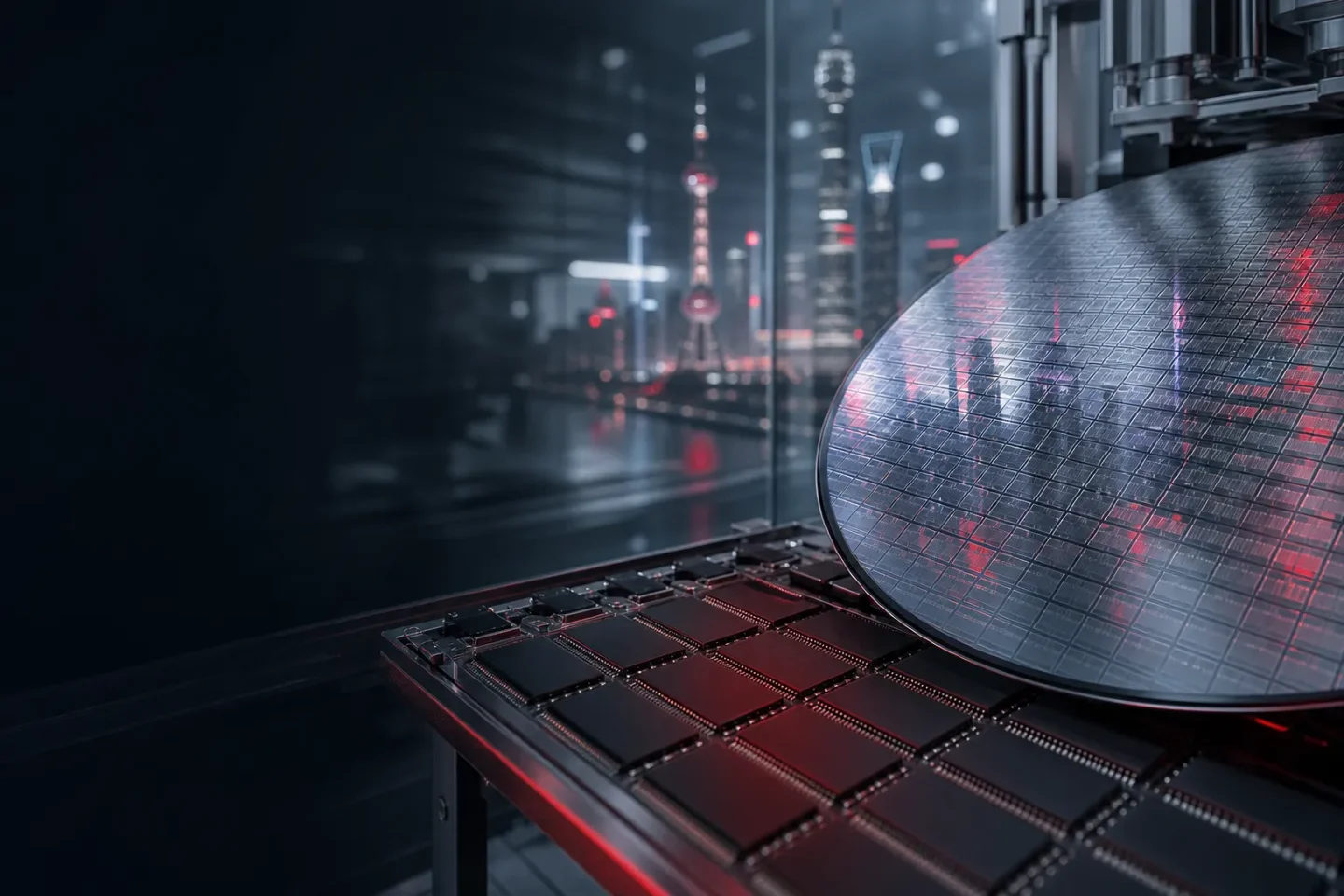
China's CXMT IPO tests the limits of semiconductor self-reliance
This is a daily article from the Daily Top 10 Global News Deep Dive channel on NeoDrop. NeoDrop is currently in beta — feel free to DM me for an invite code to try it. Summary: CXMT's planned $8.6 billion IPO is a test of whether China's state-backed memory-chip industry can turn AI demand and industrial policy into a durable competitor.

This article is automatically created by NeoDrop
Lead deep dive
China's ChangXin Memory Technologies (CXMT) is taking its biggest step yet from protected national project to public-market test. The company expects to raise at least 57.9 billion yuan, or about $8.6 billion, in a Shanghai STAR Market listing scheduled for July 27. If its over-allotment option is fully exercised, the deal could reach 66.6 billion yuan, making it Asia's largest share sale so far this year. 1
The numbers matter because CXMT is not a speculative chip designer. It is China's largest DRAM maker and, by its IPO documents, the world's fourth-largest, with about 7.7% of global DRAM revenue in 2025. DRAM is the working memory in phones, PCs, servers and AI systems. The generative-AI buildout has made memory a strategic bottleneck alongside processors and networking, giving a domestic supplier more leverage with Chinese customers. 1
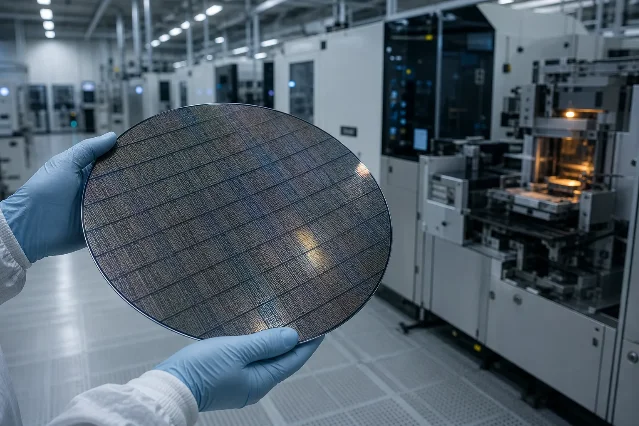
Editorial illustration: memory production is an industrial-scale business, not only a research milestone.
CXMT's recent growth gives the offering a powerful narrative. Reuters reports that first-quarter 2026 revenue rose 719% year on year to 50.8 billion yuan, while the company expects first-half revenue of 110 billion to 120 billion yuan. That pace reflects a favorable memory cycle, but it also raises the risk that investors are pricing a peak into a business known for sharp swings in supply, prices and margins. 1
Investors are already treating the IPO as a strategic asset. Reuters reported that some Chinese funds and retail investors expect CXMT's post-listing valuation to rise several times, even though the offering price implies more than 300 times 2025 earnings and roughly five times book value. That enthusiasm is a signal of scarcity: Beijing wants a credible domestic memory champion, and public capital is being asked to finance the next production buildout. 2
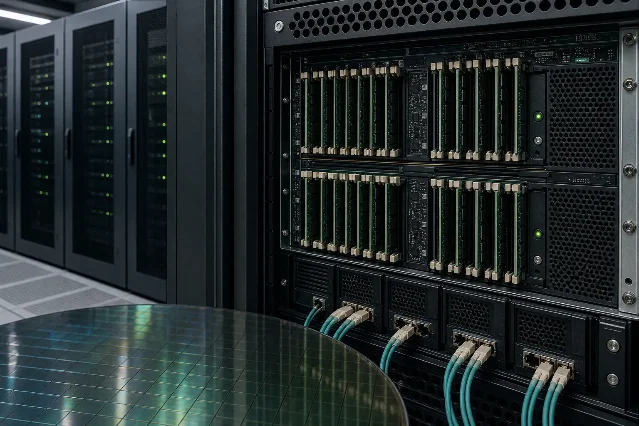
Editorial illustration: the commercial value of memory is rising with the density of AI infrastructure.
The harder test is technological, not financial. CXMT still trails Samsung Electronics, SK Hynix and Micron in the most advanced high-bandwidth memory used with leading AI accelerators. It also faces restrictions on access to advanced manufacturing tools, while U.S. actions have added political risk around the company. The IPO can fund capacity, process upgrades and research, but it cannot by itself erase those constraints. 1
That is why this is more than a large Chinese stock sale. It is a test of whether industrial policy, domestic demand and an AI-led memory cycle can combine into a durable competitor. A strong debut would give Beijing capital and confidence. A weak one would expose how quickly strategic enthusiasm can outrun manufacturing economics.
Nine other stories
- U.S.-Iran: the blockade widens the shipping risk. The United States struck Iranian coastal defenses and missile sites and reimposed a naval blockade of Iranian ports. Iran threatened to cut more regional energy exports and said the conflict had become an existential war. Reuters reported that Hormuz carried about one-fifth of global oil and gas shipments before the war, while Brent settled at $84.95 a barrel on Wednesday. 3
- U.S. economy: producer prices cool. Final-demand producer prices fell 0.3% in June, the largest monthly decline in 14 months. Prices were still up 5.5% from a year earlier, but falling energy costs helped push the data lower; markets responded with higher stocks, a softer dollar and lower Treasury yields. The risk is that renewed oil disruption reverses the relief. 4
- Europe: ten states challenge ETS2. Italy, Poland and eight other EU countries asked Brussels to rethink the bloc's planned carbon price on heating and transport fuels. ETS2 is scheduled to begin in 2028 and has already been delayed by a year. The coalition says the current economic and geopolitical climate is the wrong moment for a new consumer-facing climate charge, giving the group enough votes to block changes it opposes. 5
- Canada: wildfire smoke reaches U.S. cities. Smoke from fires in northwestern Ontario pushed Toronto's Air Quality Health Index above 10, the highest-risk category, and IQAir ranked the city as the world's most polluted major city. New York also reached unhealthy levels. Canadian and U.S. authorities advised residents to reduce strenuous outdoor activity, with smoke expected to linger into the weekend. 6
- Finance: Morgan Stanley rides trading and deals. Second-quarter net revenue reached a record $21.35 billion, while equity-trading revenue rose 69% to $6.3 billion. Investment-banking revenue climbed 58% to $2.44 billion as IPO and merger activity strengthened. Chief executive Ted Pick said the bank expects a multiyear financing cycle for AI investment. 7
- India: fuel export taxes change overnight. From July 16, the government raised the export duty on diesel to 15.5 rupees a litre from 8.5, and on aviation turbine fuel to 14.5 from 7.5. The petrol duty fell to 2.5 rupees from 4. The move is designed to capture windfall revenue as global oil prices rise during the U.S.-Iran escalation. 8
- France: debt arithmetic turns harsher. A government-commissioned independent report said public debt could rise from about 118% of GDP in 2026 to above 130% by 2030 if spending is not curbed. It estimated that stabilizing the debt ratio by 2032 would require about 126 billion euros in cumulative fiscal tightening, alongside targeted structural reforms rather than broad cuts. 9
- China: growth becomes more uneven. Second-quarter GDP grew 4.3% year on year, its slowest pace in more than three years, according to Nikkei Asia's report using official data. First-half industrial output rose 5.4%, helped by robotics and semiconductors, while June exports jumped 27%. Domestic demand was weaker: June retail sales grew only 1%, and first-half fixed-asset investment fell 5.7%. 10
- Ukraine and EU: drone production gets a bloc-wide framework. Kyiv and the European Union agreed to combine Ukraine's battlefield know-how with the bloc's industrial capacity to scale drone production. Ursula von der Leyen called it the EU's first bloc-wide arrangement of this kind; the deal did not include a public funding figure or production target. 11
Quote of the day
"There will be technology and power bottlenecks and constraints, but I think we can agree the market for artificial intelligence and real productivity enhancement is here."Ted Pick, Morgan Stanley chief executive. 7
Further reading
- Explainer: What is CXMT and how did it become China's DRAM champion? Reuters' backgrounder on CXMT's market position, technology gap and role in China's push for semiconductor self-reliance.
- China's GDP growth rate of 4.3% marks slowest pace in over three years Nikkei Asia's read on why strong exports and industrial output are not yet translating into a balanced recovery.
参考ソース
- 1Explainer: What is CXMT and how did it become China's DRAM champion?
- 2Eyeing valuation jump, investors prep bids for chip giant CXMT's $8.6 billion IPO
- 3US strikes Iran again as Tehran warns of 'existential war' with America
- 4US producer prices post largest drop in 14 months; inflation risks still tilted to the upside
- 5Ten countries urge EU to rethink new carbon price on fuel
- 6Canadian wildfire smoke chokes Toronto, threatens US cities
- 7Morgan Stanley beats estimates on strong trading and dealmaking, bets on AI investment
- 8India raises taxes on diesel and jet fuel exports
- 9France faces debt surge unless spending curbed, report says
- 10China's GDP growth rate of 4.3% marks slowest pace in over three years
- 11Ukraine: Kyiv and EU agree on new drone production deal
関連コンテンツ
- ログインするとコメントできます。