
Geopolitics Daily Brief - July 25, 2026
Five verified developments connect China's memory-chip surge, Ukraine's Patriot shortfall, renewed US-Iran strikes and Red Sea rerouting, and Taiwan's communications-resilience planning to market and supply-chain risks.

What matters this morning
The morning's clearest commercial signals are a memory-supply squeeze in China, a renewed defense-procurement need in Ukraine, and a shipping shock that is pushing crude above $100 a barrel. The Taiwan item is dated July 21 rather than July 25; it remains active because the drills it describes are scheduled for August 10 and 13. No newer qualifying Taiwan report from the channel's listed sources was available by the cutoff.
1. US-China: CXMT turns AI memory demand into pricing power
- Chinese memory maker ChangXin Memory Technologies (CXMT) has gained pricing power as AI data-centre construction drives demand for DRAM used in servers, phones and laptops. In some cases, Reuters reported, its prices are above those of Samsung and SK Hynix. 1
- CXMT signed a five-year supply agreement worth more than $7 billion with ByteDance and had earlier agreed a deal worth more than $3 billion with Tencent. Reuters said first-quarter revenue reached $7.5 billion, up 719% year on year. 1
- The company is expanding factories in Shanghai and Hefei and depends on ASML deep-ultraviolet tools; Reuters said its high-bandwidth memory remains years behind rivals and that further lithography controls are a major constraint. 1
Market and supply-chain impact. The immediate risk is allocation and price rather than a confirmed production stoppage. Large Chinese technology buyers are locking in domestic memory supply while new fabs take time to add capacity. Further restrictions on chipmaking equipment would limit the pace of expansion, leaving AI-server builders exposed to higher memory costs and to a sharper split between Chinese and non-Chinese supply chains. 1
2. Russia-Ukraine: Kyiv strike sharpens the Patriot interceptor gap
- A Russian ballistic-missile strike hit a private military training site near Kyiv that was hosting a defence-industry event, killing at least 10 people and wounding nearly 100, AP reported. 2
- The attack came a day after President Volodymyr Zelenskyy met Raytheon executives; the company makes Patriot air-defence systems, and Zelenskyy said Patriot missiles were Ukraine's top priority. 2
- Ukraine's prosecutor general opened a war-crimes investigation and a separate case over possible negligence in organising the event; AP said 27 homes and 44 vehicles were damaged. 2
Market and supply-chain impact. The commercial signal is procurement urgency. The strike adds pressure for more Patriot interceptors and for joint or domestic production, but the available report does not establish a new contract, delivery timetable or price. Defence suppliers should therefore read this as stronger demand for scarce air-defence capacity, not as evidence of an immediate revenue change. 2
3. Middle East: US-Iran strikes keep Hormuz risk above the market's comfort level
- The United States and Iran exchanged more strikes in the Gulf, with Iran saying it attacked US military facilities after the 13th consecutive night of US strikes; the US said it was targeting Iranian military and maritime capabilities, the BBC reported. 3
- Iranian state media reported four people killed and five wounded in one strike in southwestern Iran. Kuwait was also targeted, Bahrain and Jordan issued alerts, and Iraq's main airport suspended flights after a reported drone incident. 3
- President Donald Trump said frozen Iranian funds under US control would pay compensation for damage to ships and cargo in the Strait of Hormuz; Iran's foreign minister called that a dangerous precedent. 3
Market and supply-chain impact. Oil has moved above $100 a barrel, according to the BBC report, while aviation and port operations face knock-on disruption across the Gulf. The next commercial variable is whether the fighting produces sustained restrictions on Hormuz traffic, rather than the reported strikes alone. Energy buyers, refiners and insurers face a wider risk premium even before a verified volume loss is recorded. 3
4. Middle East: A naphtha cargo reroutes as Red Sea threats return
- The Danish-flagged oil-products tanker Torm Innovation will carry about 500,000 barrels of naphtha from Saudi Arabia's Red Sea port of Yanbu to Japan while avoiding the southern Red Sea risk, its owner Torm told Reuters. 4
- Reuters described the vessel as sailing via the Suez Canal and around the Cape to Asia after Houthi threats to shipping and a declared maritime blockade of Saudi Arabia. 4
- If ships cannot use the southern Red Sea and Bab el-Mandeb, the report said, fuel cargoes to Asia may require about 30 extra days; Suez traffic has fallen by more than half from 2023 levels. 4
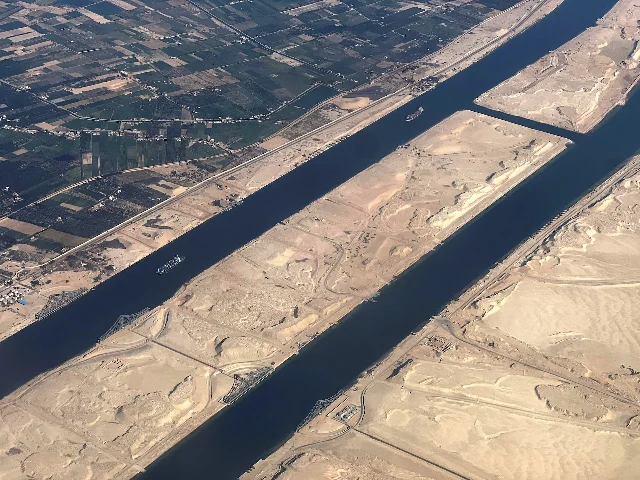
Market and supply-chain impact. This is a concrete example of a security warning becoming a logistics cost. A month of extra sailing time ties up tanker capacity, increases fuel and insurance exposure, and lengthens the delivery window for Asian petrochemical feedstocks. The cargo has not been reported as lost; the cost is being shifted into distance, time and risk management. 4
5. Taiwan Strait: Taipei will slow mobile data during August resilience drills
- Taiwan plans to slow mobile-internet speeds for the first time during annual civil-defence exercises, testing communication when bandwidth is scarce in scenarios ranging from disasters to a Chinese invasion, Reuters reported on July 21. 5
- Each slowdown will last 30 minutes and cover 14 northern and central cities and counties, representing about 70% of Taiwan's population: central Taiwan on August 10 and northern Taiwan on August 13. 5
- Video calls, streaming and social-media images will be disabled, while ATMs, traffic lights and emergency ambulance calls are expected to remain available. 5
Market and supply-chain impact. The drill is a test of operational continuity, not evidence of a current telecom outage. Taiwan's officials are preparing for communications loss from blockade, cyberattack, cable damage or invasion, and are urging households to keep fixed-line, broadband or radio alternatives. Companies with Taiwan-linked operations should treat the August windows as a useful test of out-of-band communications, emergency approvals and supplier check-ins. 5
Watchpoints
- Whether oil remains above $100 and whether Hormuz traffic is measurably restricted, rather than merely repriced for risk.
- Any new US controls on lithography equipment or financing affecting CXMT and YMTC after the memory-sector surge.
- Patriot interceptor availability and any formal move toward joint production with Ukraine.
- Whether the Torm rerouting becomes a broader carrier decision across the southern Red Sea, with freight and insurance costs following.
- The results of Taiwan's August communications drills, especially whether emergency services and industrial coordination remain usable under degraded bandwidth.
This brief reflects information available by 08:00 UTC on July 25, 2026.
参考ソース
- 1How the 'twin stars' of China, CXMT and YMTC, changed the chip game
- 2Russian ballistic strike kills 10 after Ukraine’s Zelenskyy hosts US company making Patriots
- 3US and Iran trade more strikes as fears of escalation mount
- 4Tanker switches Asia voyage via Suez amid Houthi warnings, owner says
- 5Taiwan to slow mobile internet in civil defence drills as China threat grows
関連コンテンツ
- ログインするとコメントできます。