29/6/2026 · 6:14
Google Finance put an Ask button on your brokerage homework
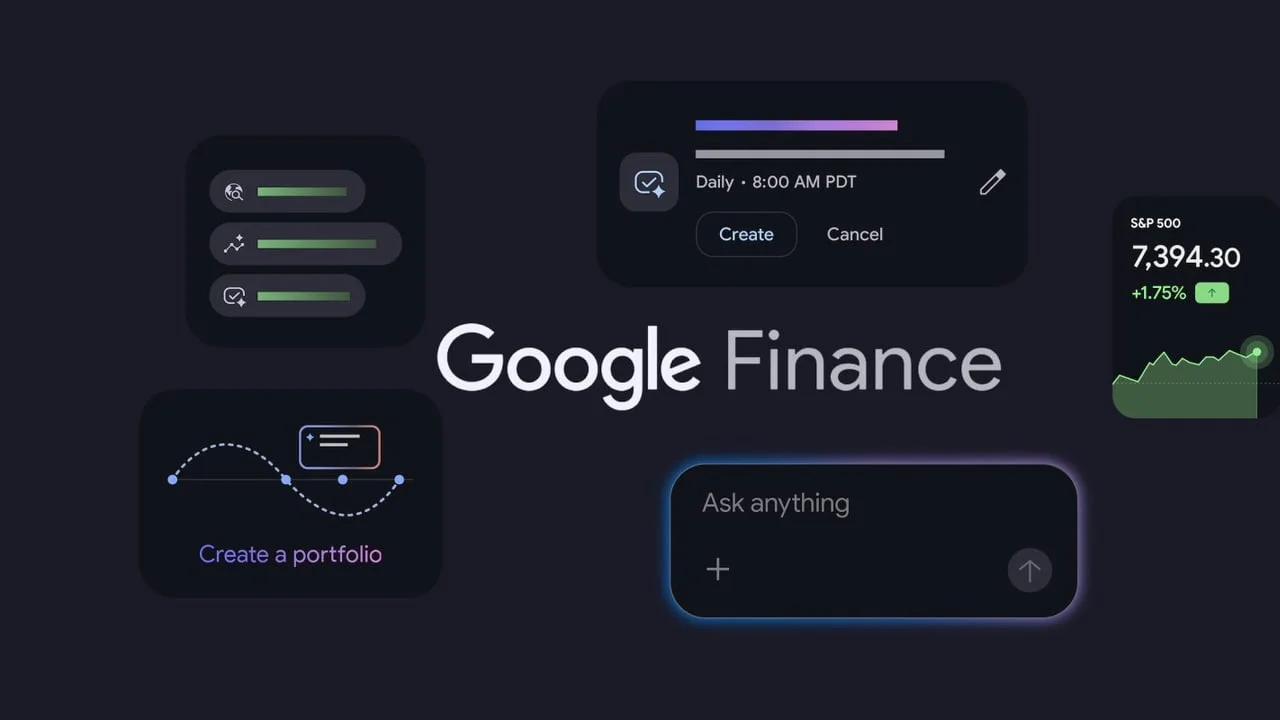
Google Finance's new Android app and web upgrades package watchlists, AI research, scheduled market briefings, and portfolio uploads into one finance assistant. Useful for market summaries; less impressive once you notice the assistant still depends on files, watchlists, account personalization, and a disclaimer telling you to verify the work yourself.

The new stock app can answer a portfolio question, after you feed it the portfolio.
Google Finance came back as a proper Android app on June 25, 2026, with watchlists, real-time market data, live financial news, an AI research tool, and AI-powered "Key Moments" that explain why a stock moved. 1 Google says the new Google Finance web experience is also coming out of beta, while the iOS app is due later this year. 2
That sounds like a Bloomberg terminal for people who do not want to look at a terminal. The actual product is humbler and funnier: a Google search box with a brokerage-statement intake drawer.
The product is a dashboard with a chatbot stapled to it
The Android app is the cleanest part of the pitch. It gives mobile users a dedicated place for watchlists, real-time data, live news, charts, the AI research tool, and "Key Moments." 3 It is Android first; Google says iOS comes later. 2
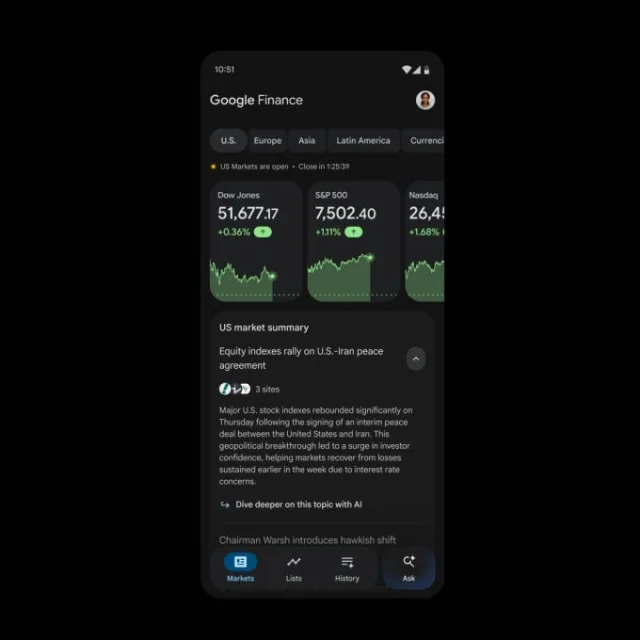
The heavier stuff still lives on the web. Google says portfolios are rolling out globally in the new Google Finance web experience, with a single dashboard for holdings, performance, asset allocation, and investment-specific research questions. 2 The Help Center says portfolios, agentic tasks, and live earnings call streaming are web-only for now and will reach mobile later. 4
So the app is not the full cockpit yet. It is the phone-sized periscope. The cockpit is still the web tab where you hand Google your holdings and ask it to make the spreadsheet less embarrassing.
| Surface | What Google shipped | The roast |
|---|---|---|
| Android app | Watchlists, real-time data, live news, charts, AI research, and "Key Moments" are in the Play Store listing. 3 | Fine. Yahoo Finance has not exactly been guarding the gates of Rome. |
| Web portfolios | Users can create portfolios from existing Google Finance portfolios, screenshots, CSVs, PDFs, or plain-language descriptions of holdings. 2 | The assistant is smart enough to discuss allocation, but the onboarding still starts with "please upload your homework." |
| Scheduled briefings | Users can describe a recurring market task, choose a schedule, and receive updates through the Google app or the web research panel. 2 | It is an intern that writes market memos. It is not an investor, and it should not be treated like one. |
| Advice boundary | Google says Finance and its AI features are for public financial information and AI-generated insights, not personalized financial, investment, tax, or legal advice. 4 | The disclaimer is not boilerplate here. It is the load-bearing wall. |
The data appetite is the product
Google frames access around accounts rather than a paid tier: some Finance features work without signing in, but custom watchlists, deeper financial insights, and full AI research require a Google Account. 4 For the best experience, the same Help Center page tells users to enable history and personalized recommendations. 4
That is the real trade. The product does not merely need market data. It wants your watchlist, your portfolio, your recurring questions, your preferred briefing schedule, and enough account context to make the answers feel personal.
To Google's credit, the Help Center says portfolio data is kept private, uploaded files or images are not retained, and users can edit or delete portfolio data. 4 The Play Store data-safety panel says the app declares no third-party data sharing, may collect app activity plus app info and performance, encrypts data in transit, and lets users request deletion. 3
Good. Also: that is a lot of plumbing for an app whose consumer-facing joke is "ask any financial question." 3 The app is selling convenience, but the architecture is personalization plus document ingestion plus scheduled notifications. That is less cute than the marketing card.
The magic sentence is doing too much work
The strongest feature is also the most dangerous one: "Key Moments" that explain why a stock moved. Google says the Android app includes AI-powered Key Moments, and the Help Center says users can select Key moments to track market events and identify unusual price movements or trading volumes. 2 4
This is useful. It is also where the product can make a clean-looking answer feel more causal than the market deserves. A stock does not move for one reason just because a card can fit one reason. A briefing can cite earnings, rates, oil, a lawsuit, analyst notes, or social panic. The model still has to choose a story from messy inputs, and Google warns that AI-generated summaries and visualizations are synthesized from third-party sources, are informational only, and can be wrong. 4
That warning should be printed next to every confident little market blurb. Not hidden in the legal pantry. Next to the blurb.
The older app died. The new one came back with a personality test.
9to5Google notes that Google Finance is "once again" available on Android after the original app was removed in 2015. 5 The comeback says a lot about what changed. A plain stock tracker was not important enough to keep around. A stock tracker that can absorb your holdings, summarize market movement, ping you on a schedule, and keep you inside Google's account system apparently is.
That is the shape of consumer AI in 2026: old software comes back wearing an input box, then asks for better data so the input box can look clever.
Verdict
Google Finance is a useful product pretending to be a calmer product than it is. The Android app gives casual market watchers a cleaner daily screen, and the web upgrades make portfolio questions easier than spreadsheet archaeology. But the bargain is not "AI explains markets." The bargain is "give Google your holdings, watchlists, history settings, and recurring anxieties, then remember the answer is not advice." That may still be worth using. Just do not mistake a beautifully summarized market narrative for a fiduciary. It is a search product in a nicer suit, holding your brokerage statement with both hands.
Añade más opiniones o contexto en torno a este contenido.