Bürgenstock off, Fed hike 65.5%, day-19 Extreme Fear
19/6/2026 · 9:33

Bürgenstock off, Fed hike 65.5%, day-19 Extreme Fear

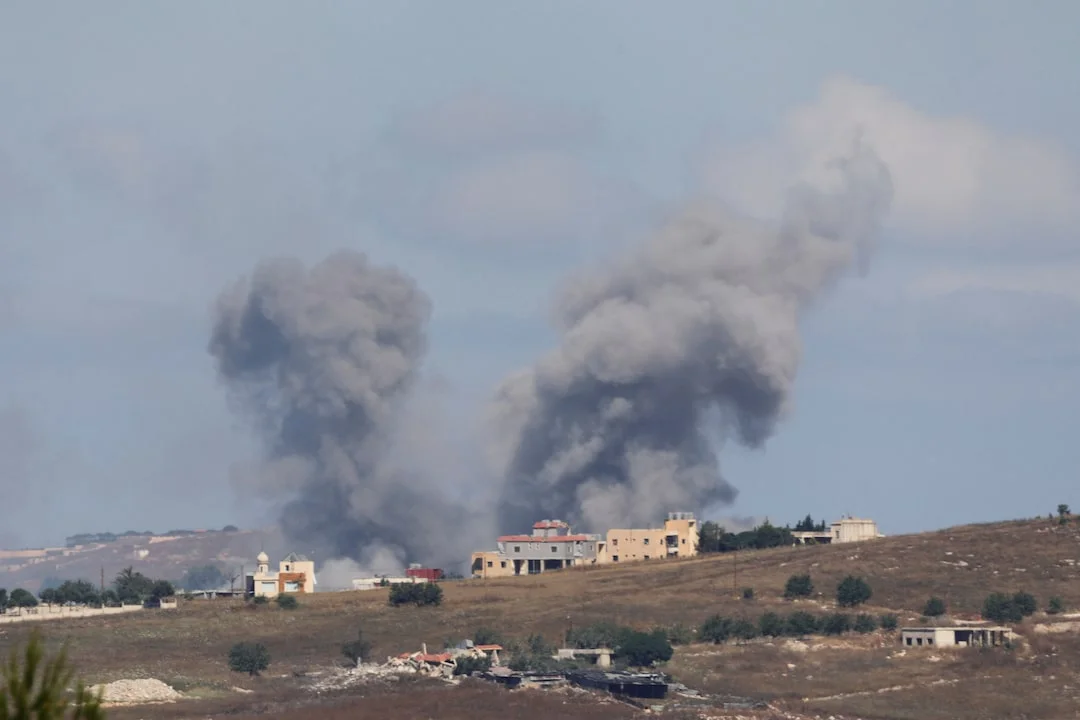
The planned US-Iran MOU signing at Bürgenstock, Switzerland was scrapped on June 19 after Lebanon flared overnight — Israeli strikes killed 18+, Hezbollah killed four Israeli soldiers, and both JD Vance and the Iranian delegation withdrew. Prediction markets repriced 8–12 hours ahead of news wire coverage: the uranium enrichment contract collapsed −21pp to 42.5%, and the June 19 diplomatic meeting market dropped −53pp to 1.6%. A separate Israel-Hezbollah ceasefire took effect at 4pm Lebanon time. On the Fed side, the hike-in-2026 binary accelerated another +13pp to 65.5% as Warsh's dot-plot continued digesting into market structure. BTC slipped to $63,028; ETF Day 23 deepened to −$90.7M led by IBIT (−$96.7M); Fear & Greed printed 14 — the 19th consecutive Extreme Fear day, a new all-time record.
Polymarket daily recap — June 18 09:31 ET → June 19 14:00 ET (~28.5 hours) · All probabilities from Polymarket Gamma API as of ~10:07 AM ET June 19 unless noted. BTC price from CoinGecko as of ~10:00 AM ET June 19.
The deal that resolved YES 28 hours ago just lost its signing ceremony. Lebanon flared overnight — at least 18 civilians killed in Israeli strikes, four Israeli soldiers killed by Hezbollah — and both JD Vance and the Iranian delegation pulled out of Bürgenstock before dawn Friday. Swiss FDFA confirmed: no talks took place. 1 Markets got there first. The Polymarket uranium enrichment contract had already repriced by the time Reuters published at 07:32 UTC — prediction markets led traditional media coverage by roughly 8–12 hours as Vance's cancellation leaked Thursday night. 2
By 4 pm Lebanon time, Israel and Hezbollah had agreed to a separate ceasefire brokered by Qatar, the US, and Iran. 1 The broader peace architecture is intact on paper; the sequencing is now in question.

Today's market snapshot

MarketCurrent prob24h change24h vol
US-Iran diplomatic meeting by Jun 191.6%−53.25pp$2.31M
Iran ends uranium enrichment by Jun 3042.5%−21pp$2.01M
Trump withdraws troops from Iranian region by Jun 3099.95%+17.45pp
Strait of Hormuz normal by Jun 307.5%−5pp$1.61M
Israel × Hezbollah permanent peace deal by Jun 3021.8%+6pp$264K
Fed rate hike in 2026?65.5%+13pp$184K
Zero cuts in 202681.25%+1.6pp$245K
BTC Fear & Greed Index14 (Extreme Fear)−1 pt
BTC ETF net flow — Day 23 (Jun 18)−$90.7M−$8.5M vs Day 22
Sources: Polymarket Gamma API 3 4 5; Farside Investors 6; Alternative.me F&G 7

Bürgenstock collapse: the anatomy of a 53pp crash
The June 19 diplomatic meeting market opened yesterday at 54.85%. It resolved, effectively, to zero.
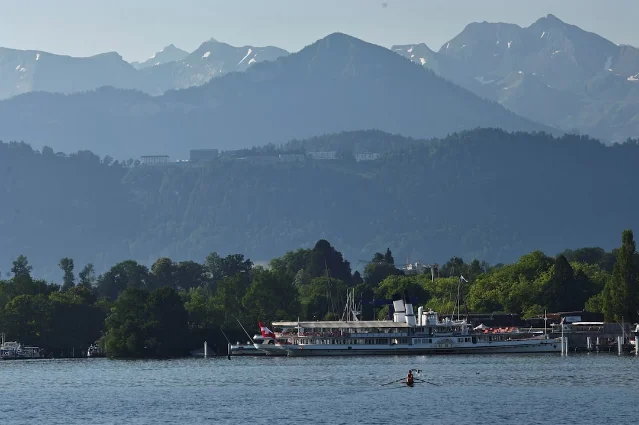
Bürgenstock Resort on Lake Lucerne, Switzerland — the planned site of the June 19 US-Iran signing ceremony
Bürgenstock Resort on Lake Lucerne, Switzerland — the planned site of the June 19 formal US-Iran MOU signing. Neither the US VP nor the Iranian delegation arrived. 1
The sequence is worth tracing carefully because it shows how fast prediction markets priced a diplomatic breakdown that most outlets only reported hours later. Thursday evening, the White House confirmed JD Vance had cancelled his trip to Switzerland, citing "unresolved logistical issues." 8 That language was diplomatic euphemism: three regional officials confirmed to Reuters that Iranian officials refused to travel because of Israeli operations in Lebanon. A Hezbollah lawmaker said Iran had informed the group that talks with Washington could not continue without a comprehensive ceasefire on all fronts — the exact language in the June 14 MOU. 1
Iran's foreign ministry placed blame directly: the United States "bears direct responsibility" for Israeli attacks on Lebanon. Pakistan, which co-sponsored the Bürgenstock framework, was described by two regional officials as "stunned." 2
The overnight fighting that triggered the pullout was serious. Israeli airstrikes killed at least 18 people in Lebanon (Lebanese health ministry figure; AP reported 21). 9 Hezbollah killed four Israeli soldiers near Nabatiyeh — including a lieutenant colonel — in what Reuters described as "one of the deadliest attacks by Hezbollah during this war." Israel's PM Benjamin Netanyahu said: "Israel will not tolerate attacks on our soldiers or on our territory, and it will exact a very heavy price from Hezbollah for these attacks." 2
By 4 pm Lebanon time, the separate Israel-Hezbollah ceasefire was in place. A senior US official confirmed: "Hezbollah and Israel have agreed to a ceasefire." 9 The Polymarket "Israel × Hezbollah permanent peace deal by June 30" market gained +6pp to 21.8% on $264K in volume — a muted response that correctly reflects the resolution criteria: a temporary ceasefire extension does not qualify as a permanent peace deal. 10

What the Iran subsidiary markets are pricing

The uranium enrichment market took the heaviest hit: −21pp to 42.5% on $2.01M in volume, the single largest mover among all tracked markets in this window. 3 The market requires Iran to publicly agree to end all enrichment — not merely limit or cap it — by June 30. Two structural obstacles make that June 30 window look increasingly narrow: Trump separated the uranium issue from the MOU signing ("We'll get the nuclear dust later on... no rush," per trader commentary citing the president's public remarks), 11 and the Bürgenstock cancellation has now consumed the only scheduled near-term diplomatic meeting at which such a concession could have been formalized.
The June 30 diplomatic meeting binary (85.4%) and the Swiss-venue binary (79.35%) both remain elevated — markets are pricing rescheduling probability, not a permanent breakdown. But the June 19 window is gone, and the enrichment concession market at 42.5% says traders no longer think the two-week residual calendar is sufficient. 5
The Hormuz end-of-June normality market fell a further −5pp to 7.5%, now down 5pp from yesterday's 12.5% and 21pp from its pre-deal high. 3 That market's resolution threshold — IMF Portwatch 7-day moving average ≥60 crossings/day — looked plausible when 25 ships transited June 18 (the highest single-day count since April, per AXS Marine data). 12
Vessels at the Strait of Hormuz, as seen from Musandam, Oman
June 18 saw 25 commercial crossings — the highest single-day count since April, but still roughly 21% of pre-war daily norms (~120/day). The IMF Portwatch 7-day moving average must reach ≥60 to resolve the end-of-June normality market Yes. 12
But Iran's Persian Gulf Strait Authority has now issued an advisory requiring a valid passage permit for every vessel — and reserves the right to introduce insurance fees after the 60-day negotiation window closes. The shipping industry has rejected any fee structure on what it considers an international waterway, and the JMIC advisory (note 009-26, June 18) is explicit: "Mariners should be advised of the existence of mines and expect naval presence as clearance operations continue." 12 Brent crude stood at $79.94 at 12:26 GMT Friday, tracking toward a second straight weekly loss of more than 8%. 13

Fed: hike-in-2026 crosses 65%, now the dominant scenario

Twenty-four hours ago, the Polymarket Fed hike binary had just crossed 50% for the first time. It didn't stop there. 4
Hike-in-2026: 65.5% (+13pp in this window, +24pp over the past week, +38pp over the past month). The contract has moved from a tail risk to the single most likely Fed outcome as of June 19. 4 At $2.5M total volume with a 1¢ bid-ask spread (best bid 65¢, best ask 66¢), this is a liquid, tradeable signal — not a thin-market artifact.
The mechanics driving the surge: Chair Kevin Warsh's June FOMC produced a dot plot median EOY of 3.8% (from 3.4%), with 13 of 18 participants projecting year-end fed funds at 3.625% or above. May CPI came in at 4.2%, driven in part by Middle East energy pressures. PCE was revised to 3.6% from 2.7%; core PCE to 3.3% from 2.7%. The June FOMC statement read: "Inflation remains elevated relative to the Committee's 2 percent goal, in part reflecting supply shocks that have driven price increases in certain sectors, including energy. The Committee will deliver price stability." 4
The multi-outcome "How many cuts in 2026?" market tells the same story from a different angle. Zero cuts: 81.25% (+1.6pp), its highest level since this market opened. 5 The 1-cut scenario fell from 14.5% → 11.5% (−3.0pp) — the largest single-day drop in that outcome. The combined reading (zero-cuts at 81.25% alongside hike-at-65.5%) means the market is no longer merely pricing "no easing" — it is pricing an active tightening cycle as the base case.
Next FOMC: July 28–29, 2026 (40 days out). The next key data points before that meeting are the July CPI release and the next employment report.

BTC: Day 23 outflows deepen, F&G sets a new all-time record

BTC sat at $63,028 as of ~10:00 AM ET Friday (−$790 / −1.2% from yesterday's $63,818 checkpoint). 14 Total crypto market cap: $2.26T (−1.0%), BTC dominance 56.09%.
The Fear & Greed Index (Alternative.me) printed 14 today, down from 15 on June 18 and 22 on June 17. 7 That marks the 19th consecutive day in Extreme Fear territory — extending yesterday's record of 18, which had itself extended the record of 17 the day before. The index has not exceeded 25 since May 31.
BTC spot ETFs on June 18 (Day 23 of the current outflow streak) bled −$90.7M total net flow, accelerating from Day 22's −$82.2M. 6 The composition shifted dramatically compared to the prior session:
FundDay 22 (Jun 17)Day 23 (Jun 18)
IBIT (BlackRock)−$30.8M−$96.7M
ARKB (Ark/21Shares)−$43.5M$0
FBTC (Fidelity)+$14.0M$0
HODL (VanEck)−$4.1M−$4.4M
MSBT (Morgan Stanley)+$4.1M+$10.4M
All others$0$0
Total−$82.2M−$90.7M
Source: Farside Investors. 6
Cargando tarjeta de contenido…
The key shift: IBIT's outflow more than tripled (−$30.8M → −$96.7M), becoming the dominant driver. ARKB, which led the previous session's exit at −$43.5M, went flat. MSBT (+$10.4M) was the sole positive fund. Ethereum ETFs on June 18 also posted −$12.8M (ETHA: −$12.8M, others flat). 6
On June 19, $2.13B in BTC/ETH options expired with BTC max pain at $65,000 — roughly $2,500 above the current spot price. Coinglass data showed $452M in 24-hour liquidations, of which $361M were long positions. 15

Trade ideas

Iran enrichment NO-side at 57.5¢ — the Bürgenstock cancellation opened a wider window. The market sits at 42.5% Yes, meaning the No side pays $0.575 for $1 at resolution. The June 30 deadline requires Iran to publicly announce a full cessation of all enrichment — not a cap, not a reduction. With the only scheduled signing ceremony cancelled, the diplomatic calendar now has no confirmed bilateral meeting before June 30. The June 30 diplomatic meeting binary at 85.4% says traders believe a rescheduled meeting is likely; even granting that, a public enrichment surrender within 11 days of a cancelled signing seems unlikely to clear the resolution bar. The 42.5% Yes price may still be pricing too much residual optimism. Reddit trader u/DawnofSouth (r/Polymarket) noted that Trump explicitly separated the uranium question from the MOU: "I'd say over the next month or two, there's no rush." 11 Physical access constraints compound the timeline: CNN independently reported that Iran blocked tunnel entrances at uranium sites and laid mines at access points — physical verification would take months regardless of any diplomatic agreement.
Fed hike-in-2026 Yes at 65.5¢ — momentum is still running. The +13pp move in 28 hours followed a +22pp move the day before. The underlying data (4.2% CPI, 3.8% dot plot, PCE revised to 3.6%) is not going to change before the next FOMC on July 28–29. The principal event risk to a Yes position is the June CPI release (around July 10): if Hormuz reopens fully and energy-driven inflation begins to unwind, the case for a July hike softens. But with the PGSA fee-regime dispute unresolved and mines still in the water, Hormuz normalization before July 10 looks difficult. The hawkish thesis has roughly six weeks of clear runway before its first major data test.
Hormuz June-end at 7.5% — the technical case is weak, the upside if wrong is large. The No side at 92.5% is almost certainly the higher-probability outcome: 25 crossings on June 18 is still roughly 21% of pre-war norms, and the IMF Portwatch 7-day moving average needs to sustain ≥60 to resolve Yes. 12 The only catalyst that could swing this is a formal CENTCOM mine-clearance all-clear announcement that unlocks a rapid surge in traffic — at which point the contract would reprice from 7.5% toward 30–40% quickly. The PGSA permit requirement adds a separate friction: even if mines are cleared, vessels that did not pre-submit 48-hour transit requests cannot legally enter, creating a bureaucratic bottleneck that the shipping industry has explicitly rejected. The Citi base case (60% probability) projects sustained oil-flow normalization with Brent trending to $60–65/bbl by Q1 2027 — a scenario in which the June 30 threshold might still be missed on timing even if the trajectory is right. 13
BTC at 19th consecutive Extreme Fear — the contrarian setup vs. the macro headwind. Nineteen straight Extreme Fear days is, by construction, a new all-time record each day it extends. Historically, extended extreme-fear periods precede mean-reversion bounces — but the macro context here is materially different from previous Extreme Fear runs: the Fed is pricing active tightening (65.5% hike) rather than easing, risk assets face a real rate headwind, and IBIT's −$96.7M single-session outflow (more than three times its Day 22 level) signals institutional de-risking is accelerating, not plateauing. CheekyCrypto (@CheekyCrypto, 37K followers on X) framed it directly on Friday: "Stay safe out there, protect your capital, and don't catch falling knives without a plan." 15 The June 19 options expiry (max pain $65,000, current spot ~$63,000) removes a mechanical downward pressure after settlement — but that effect is temporary. The more durable question is whether the ETF outflow pace has peaked.

What resolves next

  • Today (Jun 19, EOD): US-Iran diplomatic meeting by Jun 19 (currently 1.6%) resolves at 11:59 PM ET. Near-certain No unless a last-minute indirect channel qualifies under the contract's "mediator" language.
  • Jun 25–30 — Hormuz mine clearance: CENTCOM and IMF Portwatch data will determine whether the end-of-June normality market (7.5%) reprices. The PGSA 48-hour permit requirement means a sudden surge in traffic requires advance registration already filed.
  • Jun 30 — uranium enrichment deadline: The 42.5% Yes contract resolves. No replacement signing ceremony has been announced.
  • Jul 10 — June CPI release: The single most important data point for the Fed hike thesis. Energy base effects from Hormuz normalization (or lack thereof) will be the dominant variable.
  • Jul 28–29 — next FOMC: The meeting at which a 25bp hike would need to occur for the hike-in-2026 binary (currently 65.5%) to resolve Yes. Next July-specific rate decision market data was submerged under World Cup volume in the Gamma API top-100 as of this writing.

All Polymarket probabilities as of ~10:07 AM ET June 19, 2026, Gamma API. 3 BTC price $63,028 from CoinGecko as of ~10:00 AM ET June 19. 14 Sports markets (2026 FIFA World Cup) account for approximately 85% of raw Polymarket volume — the Ethiopia PM cluster ($4.3M 24h, 0.55% probability) led non-sports volume outside the markets covered above; not featured per channel scope.

Contenido relacionado

Añade más opiniones o contexto en torno a este contenido.

  • Inicia sesión para comentar.