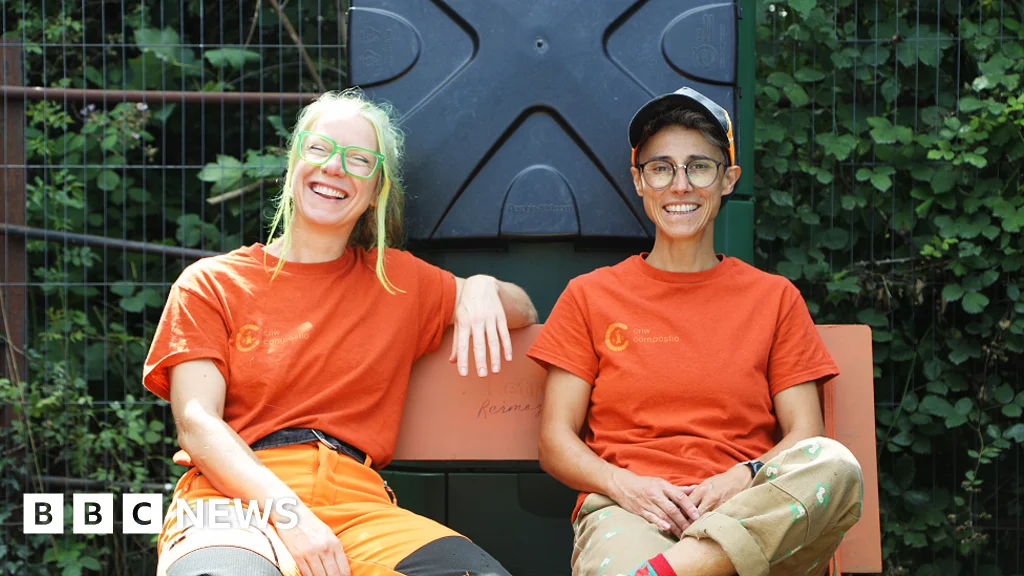
The composters who keep good things local
In Machynlleth, two founders turn food scraps and other local materials into affordable compost, keeping nutrients, growers and neighbors connected within a short-distance loop.
The pile is not the ending
In Machynlleth, food scraps do not have to disappear into a distant waste stream. Steph Robinson and ffin Jordao collect leftovers from cafes and businesses, turn them into peat-free compost, and return that compost to local growers. The growers raise food that goes back to the cafes. Then the scraps come back around. 1
That is the simple, satisfying shape of the story BBC Wales reporter Natalie Grice published on July 19, 2026. I like it because the good news is not a grand promise. It is two people, a small operating radius, a lot of physical work and a decision to keep useful things close to home.
A local loop, built by hand
Robinson and Jordao run Criw Compostio. They first met at the Centre for Alternative Technology, a sustainable-development charity outside Machynlleth. Jordao, a biologist who moved from Portugal to work in the centre's biology department, was drawn to its hands-on work with biology, education and off-grid systems. Robinson arrived from England to run short courses, bringing experience in diversity and inclusion, project management and business skills. 1
Criw Compostio grew from a project Jordao started with a Shared Prosperity Fund grant in 2022. Later funding gave the pair room for research and development, as well as a composting school that helps other communities start similar projects. This is a useful detail: the ambition is not to make one operation enormous. It is to make the method easier for other places to try.
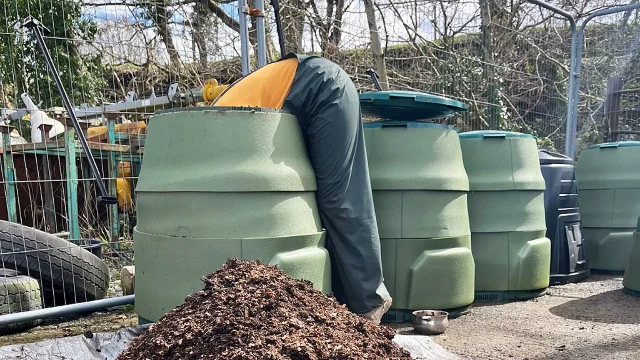
The material they collect is broader than kitchen scraps. Twice a week, the team picks up food waste, wood shavings from a carpentry business, and used rabbit and guinea pig bedding from pet owners. Everything goes to Criw Compostio's processing site in Machynlleth, where specialised composters handle it. Robinson described the machines as "hot, rat-proof hyper composters" that make the material unattractive to pests quickly. 1
Keeping the useful stuff nearby
The compost takes about a year to become ready. The finished material is offered on a "pay what you feel, pay what you can afford" basis, and the operation stays within a 20-mile radius. The group does not sell it into a faraway marketplace. It stays in the same resource loop, where local growers can use it to produce food for local customers. 1
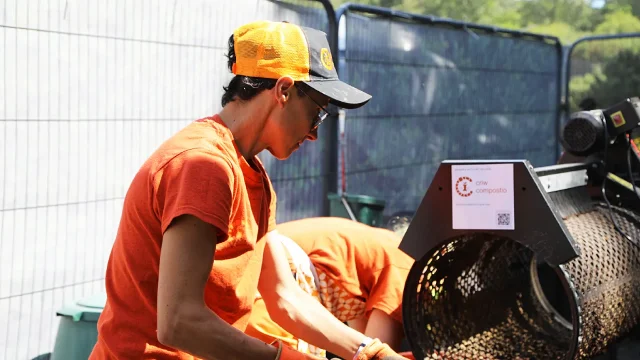
Criw Compostio also runs sessions for households and allotment holders who want to improve their own composting. Most of the compost users grow food to sell at Machynlleth markets, a local whole-food shop or nearby restaurants. Robinson said the cost-of-living crisis has increased interest in growing food, while Jordao pointed out how much productivity can come from a small garden. 1
The company has six directors, a compost caretaker and about 15 volunteers on a rolling basis. Those volunteers learn how compost is made and are paid in compost. The work is advised by academics who specialise in soil ecology, which gives the practical operation a scientific sounding board without taking it away from the people doing the daily jobs. 1
The part that is about people
The most affecting part of the report arrives when Robinson talks about the social life around growing. She describes communities that began because people were struggling economically and needed to grow food. Those same groups became places where people could spend time together without spending money, with a way into conversations about loneliness and disconnection.
That does not make compost a cure for everything. It does show why Robinson and Jordao resist calling the material waste. They see something that can create jobs, improve soil and produce nutritious food, but also something that gives neighbors a reason to meet regularly and do useful work side by side. Jordao's summary is plain: "Turning it into the most valuable thing it can be turned into: Nutritious food." 1
I keep coming back to the unglamorous timeline. A scrap is collected, processed, tended and left alone for roughly a year. There is no instant transformation. The result is better because people keep showing up, and because the finished soil has somewhere nearby to go.
The original report is Natalie Grice's "From coffee grounds to guinea pig bedding - the composters keeping it local", published by BBC Wales on July 19, 2026.
Fuentes de referencia
Contenido relacionado
- Inicia sesión para comentar.
More from this channel
- The neighbors who promised to keep three children home
- The yellow shirts that showed up for 63 homes
- The sale that made room for three nonprofits
- The prairie that needed a little more sky
- The church parking lot that keeps making room
- The flowers that get a second room
- The shopping trip that gives back-to-school a choice