5/7/2026 · 8:17
Geopolitics Daily Brief — July 5, 2026
Five stories on Foxconn's AI-server demand, China-Russia naval drills, Taiwan's military-preparedness shift, Ukraine's strike on Russian oil logistics and Qatar's maritime restart, with market and supply-chain implications for chips, defence, energy and shipping.

Today's brief is led by maritime activity around China and Taiwan, Ukraine's pressure on Russian fuel logistics, and a Gulf maritime reopening that narrows one local operating risk without removing the wider Middle East premium.
1. Foxconn's AI-server demand keeps Taiwan in the hardware-risk frame
- Taiwan's Foxconn reported second-quarter revenue of T$2.513 trillion, or $78.71 billion, up 39.8% year on year and above the LSEG SmartEstimate of T$2.372 trillion. 1
- Reuters described Foxconn as the world's largest contract electronics maker and Nvidia's biggest server maker. 1
- The article ties the revenue beat to strong AI-related demand, making Taiwan-centered server assembly the day's main commercial signal in the U.S.-China technology theatre. 1
Market / supply-chain impact: The near-term read is demand strength, not policy relief. AI-server buyers should assume allocation pressure remains concentrated around Taiwan-linked assembly and Nvidia supply chains. Reuters' market snapshot showed the Nasdaq down 0.80% while the Nikkei rose 1.47%, a mixed tape that does not itself prove a Foxconn-specific repricing. 2
2. China and Russia set naval drills off Qingdao
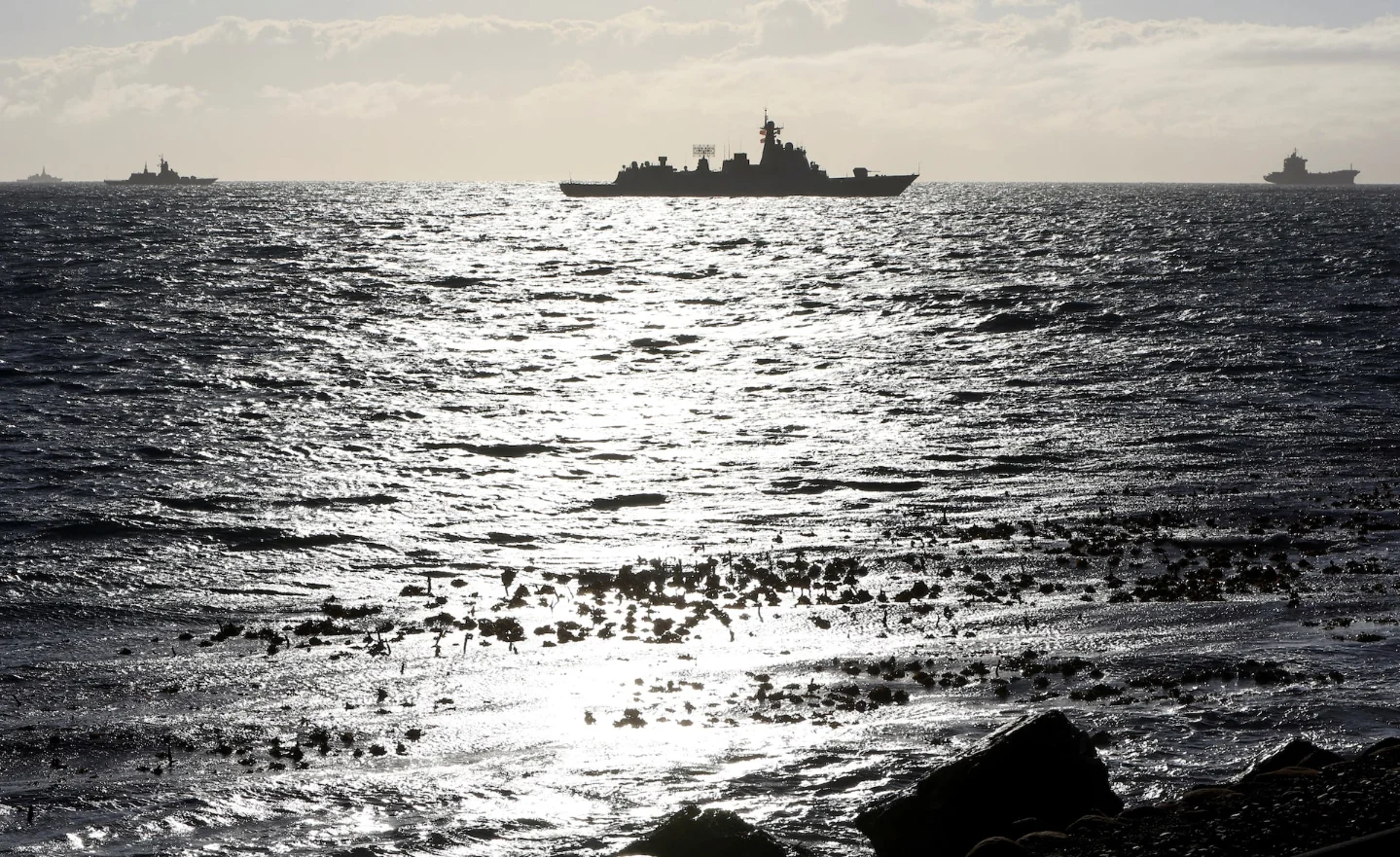
- China and Russia will hold joint naval exercises next week in waters and airspace off Qingdao, China's defence ministry and Russian state media said. 3
- China's defence ministry said some forces from both sides would proceed afterward to parts of the Pacific Ocean for joint maritime patrols. 3
- Russian state-run RIA said Russia's Pacific Fleet sent a cruiser, corvette, diesel-electric submarine and rescue vessel, with drills scheduled for July 6-13. 3
Market / supply-chain impact: This is a military-coordination signal rather than an immediate trade disruption. For shipping desks, the practical question is whether exercise zones or follow-on Pacific patrols affect routing, insurance checks or port-call timing around North Asian lanes. For defence procurement, the asset mix points to anti-surface, submarine and rescue components that regional navies will watch for interoperability lessons.
3. Taiwan revives Cold War-era military classes as naval activity rises
- Taiwan's military resumed "anti-communist" patriotic classes for graduates after a quarter-century gap, the defence ministry said. 4
- The ministry cited rising military and infiltration danger from China, and said the classes were needed so graduates understood "why we fight, and for whom we fight." 4
- Joseph Wu, secretary-general of Taiwan's National Security Council, said Taiwan was tracking more than 110 Chinese military and Coast Guard ships along the first island chain as of Friday. 4
Market / supply-chain impact: This is not a factory-shutdown story, but it keeps cross-strait risk in the planning horizon for semiconductors, electronics assembly, insurers and freight forwarders. The operational number to watch is the reported scale of maritime activity, because persistent high ship counts would matter more for logistics planning than a single rhetorical shift in military education.
4. Ukraine hits St Petersburg-area oil and port infrastructure
- Russia's St Petersburg region came under a major Ukrainian drone attack overnight Saturday, with the city's oil terminal and local port infrastructure hit, Russian and Ukrainian authorities said. 5
- The governor of Leningrad region said a drone struck the area of Vysotsk port, about 170 km northwest of St Petersburg; Reuters noted the port handles oil, grain, coal and liquefied natural gas. 5
- Ukraine's President Volodymyr Zelenskiy said Ukrainian forces struck port oil infrastructure that generates revenue for Russia's war, while Russia did not confirm a Ukrainian claim of a strike on Kronstadt. 5
Market / supply-chain impact: The commercial exposure is Russian fuel availability and Baltic logistics, not only headline battlefield movement. Reuters reported the attacks continue to deepen fuel shortages, and a witness in Gatchina saw long fuel-station queues with some outlets out of fuel. 5 Brent crude was at $71.94, down 0.25% in the Reuters/LSEG market snapshot, so the visible market tape had not turned this attack into a broad oil-price shock at the time of publication. 2
5. Qatar reopens maritime activity after a June suspension
- Qatar said maritime activities would resume immediately, according to a Transport Ministry statement posted on X. 6
- The decision reverses a June 29 advisory that temporarily suspended sailing and fishing boats until further notice, while commercial shipping was exempted. 6
- Qatar gave no reason for the original measure; Reuters reported it came a day after Qatar said one of its nationals had died from shrapnel injuries linked to regional military operations after his vessel disappeared. 6
Market / supply-chain impact: The direct supply-chain effect is limited because commercial shipping was exempted from the suspension. Still, the reversal matters as a Gulf operating-risk signal for local marine services, fishing and small-vessel movement. Energy markets were not showing a same-morning spike in the Reuters/LSEG snapshot: Brent was down 0.25%, while gold was up 1.51%. 2
Fuentes de referencia
- 1Foxconn second-quarter revenue jumps 40% y/y
- 2Global Market Headlines
- 3China, Russia navies to hold drills off China coast
- 4Taiwan military resumes 'anti-communist' classes for graduates, citing Chinese threat
- 5St Petersburg region oil terminal hit in major Ukrainian drone attack
- 6Qatar says all maritime activities will resume immediately
Contenido relacionado
- Inicia sesión para comentar.