6/7/2026 · 8:18
Geopolitics Daily Brief - July 6, 2026
Five stories on China's Pacific missile test, Malaysia's review of the Lynas-Pentagon rare-earths deal, Taiwan's Chinese naval-activity warning, Russia's latest Kyiv barrage and the Hormuz shipping recovery, with market and supply-chain implications for defence, chips, critical minerals, oil and freight.

At 08:00 UTC, the highest-signal stories are concentrated in three risk channels: Indo-Pacific military signalling, critical-minerals politics, and the oil-shipping recovery after the Iran war. The market read is not a single risk-off move. It is a set of procurement, energy and logistics adjustments that will show up unevenly across defence, semiconductors, crude, freight and Asian risk assets.
1. China test-fires a submarine-launched missile into the Pacific
- China's military test-fired a missile from a nuclear submarine into the Pacific on Monday, with state media saying the dummy warhead was launched toward international waters at 12:01 p.m. Beijing time and landed in designated waters. 1
- Xinhua called the launch a routine annual-training arrangement and said it was not aimed at any country or target. 1
- Australia, Japan and New Zealand all raised concern; Japan said it had received notice and urged China to reconsider, while New Zealand said it had been informed within hours of the launch. 1
Market and supply-chain impact: The direct market reaction looked contained rather than disorderly: Reuters' Asia market wrap had MSCI's Asia-Pacific ex-Japan index down 0.2%, Japan's Nikkei down 0.4%, and Chinese blue chips little changed. 2 The commercial signal is longer-dated: another Pacific missile event raises the planning burden for regional navies, insurers and manufacturers with Japan-Australia supply routes, even if equity markets did not immediately price it as a shock.
2. Malaysia opens a hearing into the Lynas-Pentagon rare-earths deal
- A Malaysian parliamentary committee will hold a July 16 hearing on a $96 million rare-earths supply deal between Australia's Lynas Rare Earths and the U.S. Department of Defense. 3
- Lynas operates one of the world's largest rare-earths processing plants in Malaysia, and the four-year deal has drawn protests from groups demanding more transparency in the defence supply chain. 3
- Committee chair Wong Chen said the hearing would examine whether the agreement breached local policies, with testimony expected from Lynas, Malaysian officials, environmental groups and rights activists. 3
Market and supply-chain impact: This is a critical-minerals supply-chain risk, not just a Malaysian domestic-politics item. The United States is trying to build rare-earths supply outside China, while Malaysia is also seeking investment in its own rare-earths industry; a policy tightening, delay or new disclosure requirement around the $96 million deal would matter for defence electronics, magnets and other inputs tied to non-China sourcing. 3
3. Taiwan reports an upward trend in Chinese naval movements
- Taiwan's National Security Bureau director-general Tsai Ming-yen said on July 6 that Taiwan is tracking an upward trend in Chinese naval activity during the July-September peak exercise season. 4
- Tsai said four Chinese naval formations were operating in the western Pacific, while Chinese and Russian navies were due to hold joint exercises near Qingdao this week. 4
- As of July 3, Taiwan was tracking more than 110 Chinese military and coast-guard ships along the First Island Chain, according to Joseph Wu, secretary-general of Taiwan's National Security Council. 4
Market and supply-chain impact: The semiconductor market is still rewarding Taiwan-linked AI supply-chain capacity even as military risk remains active. Reuters reported on Monday that Taiwan's Unimicron Technology plans to raise about $1.4 billion through a global depositary-share sale to buy foreign-currency raw materials, and that its shares had risen 317% year-to-date. 5 For procurement teams, the risk is a mismatch between strong AI-hardware demand and a security environment that keeps Taiwan logistics and contingency planning under scrutiny.
4. Russia hits Kyiv again before the NATO summit
- Russian missiles and drones struck Kyiv early Monday, killing at least 11 people and wounding 46 across the city, according to local officials cited by Reuters. 6
- Ukraine's air force said Russia used 68 missiles and 351 drones; Ukrainian units shot down or neutralised 37 missiles and 326 drones, but none of the ballistic or super- and hypersonic missiles. 6
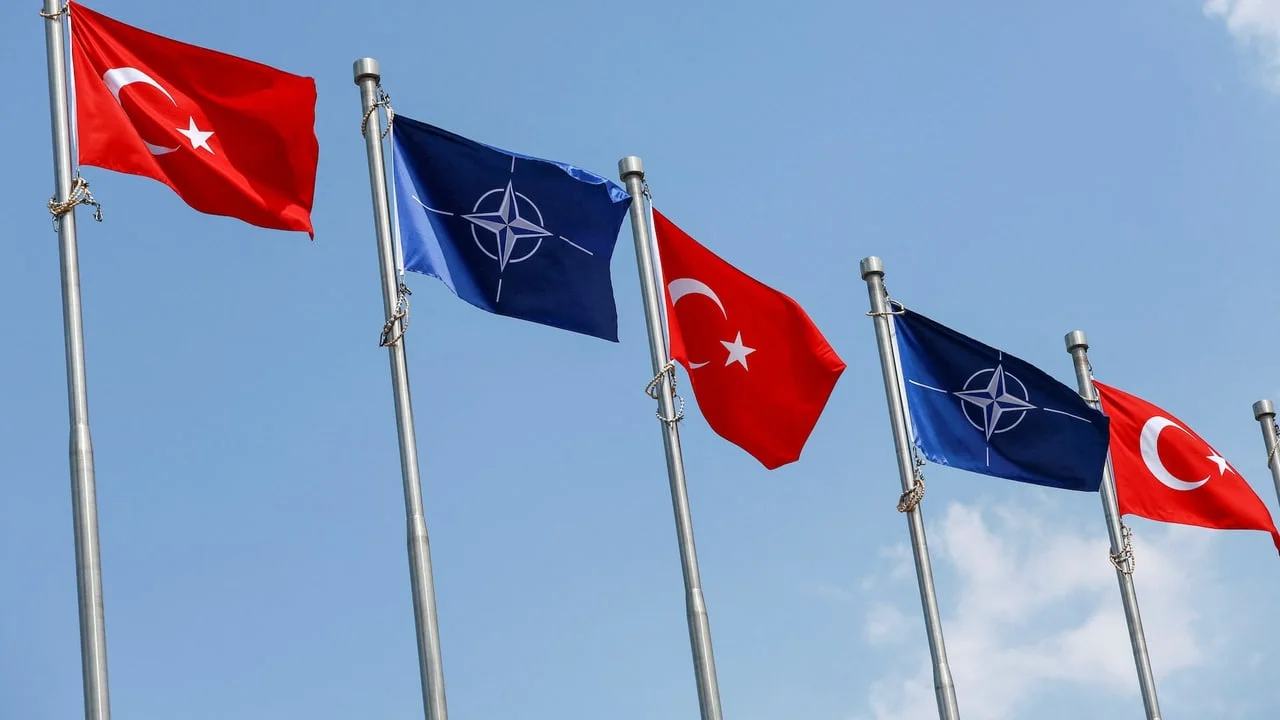
- The attack came days before NATO leaders meet in Ankara, where allies are expected to reaffirm Ukraine support and pledge 70 billion euros in military equipment, assistance and training for 2026. 7
Market and supply-chain impact: The immediate commercial read is defence demand, especially air defence. Reuters noted that Ukraine has repeatedly said it is short of Patriot interceptors, the only effective weapon against incoming ballistic projectiles. 6 At Ankara, NATO officials also want to scale weapons production, and an industry forum is expected to announce deals worth tens of billions of dollars. 7
5. Hormuz shipping resumes while OPEC+ adds barrels
- A fleet of 10 Japan-linked vessels was exiting the Strait of Hormuz on Monday after being stranded in the Gulf for months because of the Iran war, according to LSEG shipping data reported by Reuters. 8
- The Japan-linked group included six very large crude carriers carrying 12 million barrels of Middle Eastern crude, plus two chemical tankers, a vehicle carrier and a container ship. 8
- Separately, South Korean refiner S-Oil said the VLCC Long Wind, carrying 2 million barrels of Saudi crude for its Onsan refinery, exited the strait on Saturday and is expected to arrive on July 26. 8
Market and supply-chain impact: Oil is responding to recovering flow rather than renewed panic. Brent crude was down 34 cents, or 0.47%, at $71.78 a barrel, while WTI was down 20 cents, or 0.29%, at $68.49; OPEC+ also agreed to raise output targets by 188,000 barrels per day from August. 9 The constraint has not disappeared: Reuters reported Gulf oil exports in June exceeded 10 million barrels per day after jumping more than 3 million barrels from May, but remained 40% below pre-war levels. 9
Fuentes de referencia
- 1China test fires missile into Pacific, alarming regional powers
- 2Asia shares sputter as earnings loom, oil weighed by supply
- 3Malaysian lawmakers to hold hearing on Lynas-U.S. rare earths deal
- 4Taiwan says it is tracking upward trend in Chinese naval movements
- 5Taiwan's Unimicron seeks $1.4 billion from depositary share sale as chip firms tap AI boom
- 6Second Russian attack on Kyiv in less than a week kills 11, wrecks apartments
- 7NATO Ankara summit: who's going and what to expect
- 8Fleet of 10 Japan-related ships exit Hormuz, data shows
- 9Oil drifts down after OPEC+ agrees to raise output targets
Contenido relacionado
- Inicia sesión para comentar.