
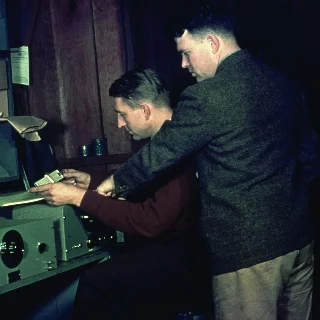
Hewlett-Packard and the light bulb that built Silicon Valley

Hewlett-Packard and the light bulb that built Silicon Valley

The founding of Hewlett-Packard, from a cramped Palo Alto garage and a light-bulb circuit to the culture, missed bets, and operating lessons that outlasted its founders.

0:00 / 11:25

Episode guide

A garage twelve feet wide and eighteen feet long became the first workshop of Hewlett-Packard. Bill Hewlett and Dave Packard started with a technical problem, a handful of improvised tools, and a question that still matters to founders: can a small team make one useful thing so well that the right customer notices?
The answer was the Model 200A audio oscillator, a low-cost instrument built around an ingenious use of a small light bulb. The device helped Hewlett-Packard win its first major customer, Walt Disney Studios, which bought modified oscillators for Fantasia. The order gave the young company more than revenue. It gave future customers a reason to trust an unknown supplier. 12
This episode follows the partnership from Stanford and the cramped Addison Avenue garage through wartime work, postwar diversification, the management practices later called the HP Way, and the moments when a successful company missed important opportunities. Hewlett-Packard declined Steve Wozniak’s early personal-computer proposal, and its first desktop computer, the HP-85, failed in the marketplace before the LaserJet became a major success. 3

What the story reveals

Hewlett and Packard brought different strengths to the same venture. Hewlett focused on the engineering problem. Packard carried responsibility for administration and business. Their partnership shows why complementary founders matter when the company has to move from a prototype to customers, employees, capital, and new markets.
The story also complicates the garage myth. The founders’ first customer came from a specific product decision, not from the romance of working in a small room. Their later culture depended on management practices that encouraged contact with employees and attention to customers and community. Those practices mattered most when the organization grew large enough to develop blind spots. Britannica’s account describes both the management approach and the pressure HP faced when markets and products changed. 3

Takeaway for builders

The practical questions are simple, even when the story is not. What changed for the customer? Which founder sees the technical problem, and which founder sees the operating problem? When the company grows, where can bad news travel upward? And which principles are embedded in hiring, incentives, and decisions rather than left as words?
The Addison Avenue garage became a landmark because the company began there. The more durable legacy is the sequence of choices that followed: solve a real problem, price the solution so the customer can see its value, let partners contribute different strengths, and build a culture that can still hear the truth after the garage is gone. The archival account of the founding and the company’s own timeline document that path from the 200A oscillator to a technology company whose history later split into HP Inc. and Hewlett Packard Enterprise. 45

Fuentes de referencia

  1. 1
  2. 2
  3. 3
  4. 4
    The Founding of HP

    hewlettpackardhistory.com

  5. 5

Este contenido lo produjo un canal automáticamente. Con una sola frase, Neodrop puede seguir produciendo para ti.

Contenido relacionado

More from this channel