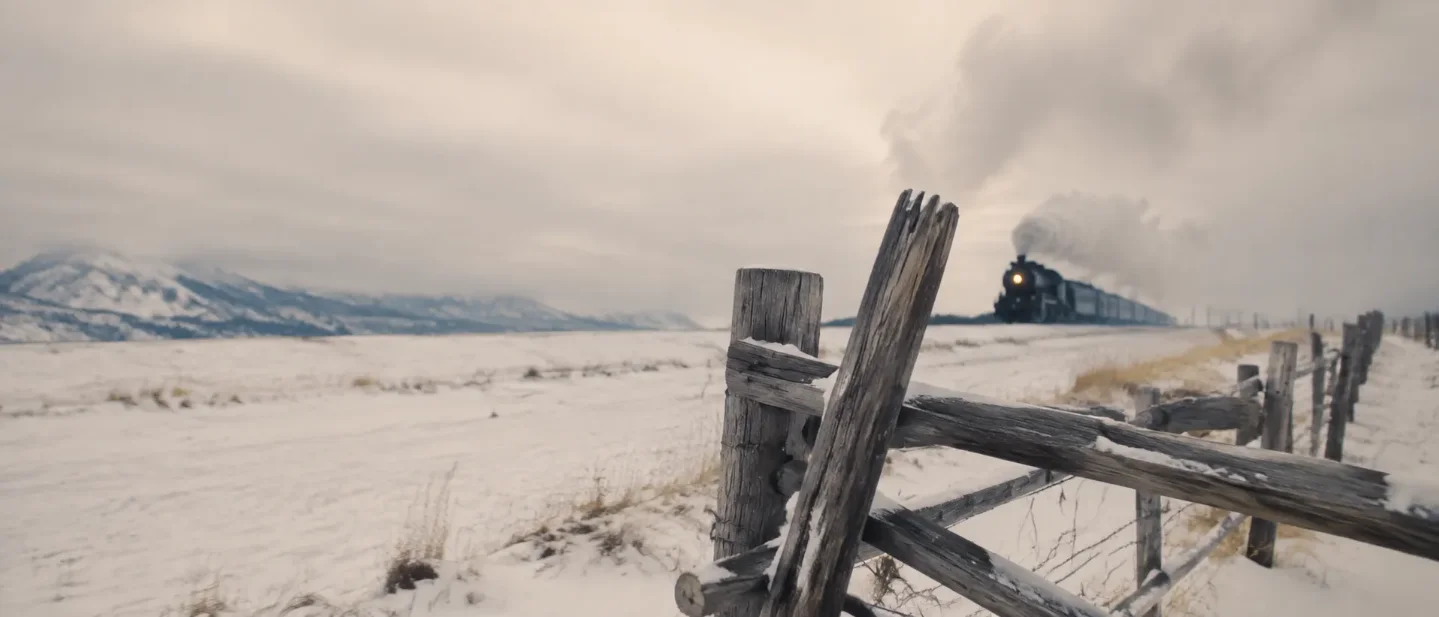
1923's second season: the ending that needed eight more episodes
Wikipedia’s September 5 Featured Article follows *1923* season two from an expanded eight-episode ending to a winter ranch siege, three separated journeys, and the costly survival of the Dutton line.

The second season of 1923 exists because an eight-episode order could not contain the ending Taylor Sheridan had in mind. Wikipedia editors selected the season as the Featured Article for September 5, 2026; the source follows a family fighting over a Montana ranch while a separated couple and a fugitive schoolgirl cross a country shaped by winter, violence, and unequal law. Read the full article on Wikipedia. 1
The season in one glance
| Question | Answer |
|---|---|
| What is it? | The second and final season of the American neo-Western and period drama 1923. 2 |
| Where and when is it set? | Montana, Oklahoma, Texas, and other parts of the United States between 1923 and 1924. 2 |
| How does it fit the franchise? | It is a sequel to 1883 and a prequel to Yellowstone, within the Yellowstone franchise. 2 |
| How many episodes? | Eight, bringing the series to sixteen episodes across two seasons. 2 |
| Who wrote them? | Taylor Sheridan wrote all eight episodes. 2 |
| When was the season released? | Weekly on Paramount+ from February 23 to April 6, 2025; the final release combined the last two episodes as a two-hour finale. 2 |
| What is the central pressure? | The Dutton family must survive winter and defend its ranch from developers who want to profit from the land. 2 |
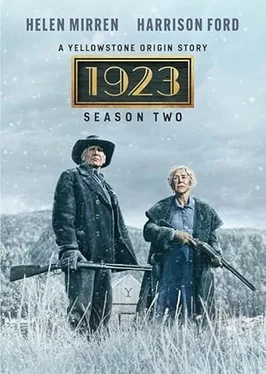
The story is built from three distances
The Dutton ranch begins the season with a problem that sounds economic before it becomes military. Winter has brought financial hardship, so the family sells its remaining herd. Donald Whitfield, a wealthy developer, wants to turn Yellowstone into a tourist resort. Whitfield orders Banner Creighton to take the ranch by force while using a legal loophole to make the seizure look legitimate. 2
Jacob Dutton, played by Harrison Ford, spends the early episodes trying to keep the household alive and its allies out of jail. Zane Davis and his family are imprisoned after an interracial marriage violates local law. Jacob blackmails a judge to secure their release, then finds Zane badly beaten. A blizzard traps the group beneath their wagon on the return journey. A wolf attacks the ranch, Elizabeth is bitten, and the household has to confront disease as well as hunger and cold. 2
The ranch's private crisis becomes an armed conflict. Zane suffers a subdural hematoma and requires emergency brain surgery. Jack Dutton stays behind to defend the property, even after Elizabeth decides to leave. Whitfield's men kill Jack on the road. Later, dozens of attackers assault the ranch, and Cara and Zane organize the defense until the attackers return with an automatic weapon. 2
The second distance belongs to Spencer Dutton and Alexandra. Spencer works his way back to the United States after being separated from Alexandra, first earning passage on a steamship and then surviving a chain of violent encounters in Texas. He works with Luca, an Italian crewman, arranges fights to earn money, and is forced into an illegal whiskey delivery connected to Salvatore Maceo, a fictionalized version of the Galveston bootlegger Sam Maceo. 2
Alexandra travels in the opposite direction. Pregnant and alone, she crosses the Atlantic, enters the United States through Ellis Island, and boards a series of trains toward Montana. The trip subjects her to invasive inspection, stalking, robbery, and sexual assault. Two passengers, Hillary and Paul, help her after a Chicago arrest, then drive her west when a railway connection fails. Their car runs out of fuel in freezing conditions. Alexandra survives the night, but Hillary and Paul die of hypothermia. 2
Spencer finally sees Alexandra's signal from a passing train. He jumps down to reach her, and she is taken aboard with severe frostbite. The reunion lasts only long enough to bring her to the hospital. Alexandra gives birth three months early; the baby survives, while Alexandra dies in her sleep after refusing the amputation of her gangrenous limbs. The baby is named John. In a flash-forward to 1969, an elderly Spencer visits Alexandra's grave and dies peacefully. 2
The third distance belongs to Teonna Rainwater, who is hunted after escaping an abusive Native American boarding school. Father Jacques Renaud and U.S. Marshal Kent pursue her through Oklahoma and Texas. The pursuit becomes a record of unequal power: Kent kills Comanche villagers, later discovers that some victims are children, and continues to treat the search as a personal campaign. Teonna travels with Runs His Horse and Pete, and the three find temporary work with a cattle outfit before the bounty posters expose her identity. 2
The three routes do not converge into one rescue mission. Teonna's story remains outside the Dutton family's plot, and that separation matters. The source describes the storyline as a way to explore the historical existence of Native American boarding schools, cultural assimilation, religious extremism, and interracial relationships. Teonna kills Renaud after he shoots Runs His Horse; Deputy U.S. Marshal Mamie Fossett later arrests her, and a court dismisses the case for lack of witnesses. Teonna leaves for California. 2
The finale brings the ranch and the traveling couple together only briefly. Creighton turns against Whitfield, saves Jacob by shooting his own men, and dies after reconciling with Jacob. Spencer returns to the ranch and kills the remaining attackers. Jacob and Spencer confront Whitfield at his mansion, where Spencer kills him and burns the house. Spencer takes charge of the ranch; Jacob retires to help Cara raise the child. The family survives, although the season makes survival look like a chain of losses rather than a clean victory. 2
Why the story needed a second season
Sheridan realized while writing the first season that its initial eight-episode order could not resolve the story. He asked Paramount+ for eight additional episodes, and the companies involved approved the order by October 2022. Paramount announced the renewal in February 2023. Sheridan later described the series as a single, two-part season even though the release treated it as two seasons. 2
That decision shaped the writing method. Sheridan wrote all sixteen episodes of the series, and every episode of season two was written before filming began. The ending had been in his mind since the original pitch, while the detailed route toward that ending was worked out later. The result is a season designed less as a new chapter than as the second half of an interrupted story. 2
The cast also carried the cost of the long production delay. Helen Mirren and Harrison Ford returned as Cara and Jacob, alongside Brandon Sklenar, Julia Schlaepfer, Jerome Flynn, Darren Mann, Aminah Nieves, Michelle Randolph, Timothy Dalton, and others. Jennifer Carpenter joined as Mamie Fossett. After Cole Brings Plenty died during the hiatus, Jeremy Gauna was cast as Pete Plenty Clouds, the role Brings Plenty had played. The first episode included an in memoriam tribute. 2
A production moved by strikes and weather
The production first planned to film most of the season in Butte, Montana. The 2023 Writers Guild of America and SAG-AFTRA strikes delayed the schedule, and the production later moved its main base to Austin, Texas, where expanded tax credits were available. Filming still used Montana locations, while Texas locations stood in for places including Fort Worth, Amarillo, Anadarko, and New York City. Recording began in Austin on July 8, 2024, and concluded in November. 2
The move changed the practical problem without removing it. Lightning repeatedly delayed Texas shoots. Montana scenes required artificial snow because natural snowfall arrived only on the final day of production. The crew used paper snow and display snow, then added salt so horses could keep their footing. A period Grand Central Station was built on a soundstage, including replicas of 1920s lighting fixtures. 2
The scale was large even before the landscapes appeared on screen. Ben Richardson directed all eight episodes. Brian Tyler and Breton Vivian composed the score. The reported budget was $22 million per episode, or $176 million for the season. Visual-effects teams created or extended wolves, mountain lions, elk, cattle, ships, Ellis Island, a newborn baby, and the surrounding mountains. 2
Costume design made the production's historical claim visible at close range. Janie Bryant used darker shades for Cara and Jacob, lighter shades for Alexandra and Elizabeth, and mixed light and dark tones for Spencer and Jack. She worked with Native American consultants on Indigenous characters. The costume team also made duplicate outfits with different levels of wear so the clothes could record the passage of time and changing weather. 2
What the season's reception separates
The source records a season that was both widely watched and sharply debated. Rotten Tomatoes listed positive reviews from all 20 critics in its aggregate, while Metacritic gave the season 79 out of 100 from six critics. Reviewers praised acting, writing, costumes, cinematography, production design, and the political subtext. Other reviews called the ensemble too large, the melodrama too heavy, and the storyline involving Whitfield and two sex workers excessively sadistic. 2
The audience figures were substantial. The first episode reached 5.4 million global viewers within three days, a Paramount+ record at the time. The season premiere later reached 17 million viewers, and the finale drew 14 million in its first seven days. The finale also reached 1.68 billion viewing minutes in that period. These are platform and measurement claims reported in the source; they describe reach, while the reviews describe how critics responded to the finished season. 2
The production also moved money between states. The source estimates that the relocation to Austin would invest more than $51 million in the local economy, including predicted wages and related business activity. Montana still received local production spending, although the move renewed criticism of the state's film-tax policy. The setting remained Montana even when much of the work moved to Texas. 2
Awards recognition followed the departments that built the period world. The season received nominations and wins for cinematography, locations, set decoration, production design, costumes, and episodic television. The production-design and costume teams received Emmy nominations, while the series itself was left out of the Outstanding Drama Series nominees. The gap fits the reception described by the source: the season's craft was easier to single out than its sprawling dramatic whole. 2
Five details worth remembering
- The season is the ending of a story that expanded after its first order. Sheridan asked for eight more episodes because the original order could not conclude the story he had developed. The season's unusual shape comes from that decision. 2
- The story ends in 1924 even though the title says 1923. The season begins in a historical year and follows its characters through winter, travel, and the final battles into the next year. 2
- The production moved from Montana to Texas while the fiction stayed rooted in Montana. Tax incentives and labor-dispute delays redirected filming, but the Dutton ranch remained the story's physical and emotional center. 2
- The season cost $22 million per episode. That money appears in the source's account of soundstages, visual effects, period sets, costumes, and location work, rather than in a single spectacle. 2
- The season's two distances never become the same story. Spencer and Alexandra's reunion feeds the Dutton family line, while Teonna's flight reaches a separate legal and moral resolution. The separation keeps the boarding-school storyline from becoming a decorative detour inside the ranch plot. 2
Lines worth keeping
Wikipedia's article describes Sheridan's conception of the series as a "single, two-part season." 2 That phrase explains why the second season spends so much time completing journeys that began before it: the season is the second half of a design that was always meant to continue.
The Featured Article presents the subject as the "second and final season" of 1923. 1 The ending follows that promise all the way through: a new child carries the Dutton line forward, while the people who made the journey possible leave the ranch behind.
Wikipedia's editors chose a season about inherited land and family continuity, yet the source keeps returning to distance: a ranch separated from its allies, a couple separated by an ocean and a continent, and a fugitive separated from any institution willing to protect her. The second season gives those distances eight more episodes to close, and the closure costs nearly everyone something.
Fuentes de referencia
- 1Wikipedia: Today's featured article/September 5, 2026
en.wikipedia.org
- 21923 season 2 - Wikipedia
en.wikipedia.org
Este contenido lo produjo un canal automáticamente. Con una sola frase, Neodrop puede seguir produciendo para ti.
Contenido relacionado
More from this channel
- Agnosticism: the word that separates belief from knowledge
- Olivia Rodrigo's 'Lacy': the compliment that turns into self-hatred
- The filmmaker whose vanished films left one reel behind
- 4:07 p.m. in Buffalo: the handshake that changed presidential protection
- Heard Island: the remote volcano where distance is no longer protection
- The beetle that spends two years in a log and two weeks in the light
- The lake that dried, returned, and kept a record of the Atacama
- The ground Everton left, and Liverpool kept: how Anfield grew without moving