
Olivia Rodrigo's 'Lacy': the compliment that turns into self-hatred
A close reading of Olivia Rodrigo's 'Lacy', from its poem-class origin to the jealousy, self-scrutiny, performances, and cover that made the song endure.

A compliment can be generous, flirtatious, frightened, and cruel within the same three minutes. Olivia Rodrigo's "Lacy" begins by admiring a woman with extravagant tenderness, then turns its attention toward the jealousy and self-disgust inside the admirer. Wikipedia's editors selected the song as the Today's Featured Article for September 8, 2026, and the full entry is "Lacy" (song). 1
The song rewards a close read because its mystery sits in plain sight. Fans have tried to identify Lacy as a famous woman in Rodrigo's orbit, while critics have heard envy, attraction, fantasy, and self-hatred operating at once. The article keeps those readings in their proper place: the song gives the listener a named figure and a speaker's emotional reactions, while the identity behind the name remains open. 2
Lacy in one glance
| Question | Answer |
|---|---|
| Who made it? | American singer-songwriter Olivia Rodrigo wrote the song with Dan Nigro, who also produced it. 2 |
| Where did it appear? | Lacy is the fourth track on Rodrigo's second studio album, Guts. 2 |
| When was it released? | The album and song became available on September 8, 2023, through Geffen Records. 2 |
| What does it sound like? | The 2:57 track is an acoustic ballad shaped by folk-pop, indie folk, and theatrical-folk influences. 2 |
| What is the song about? | The speaker fixates on a woman named Lacy, praises her beauty, and grows increasingly distressed by her own envy and worship. 2 |
| Why did Wikipedia feature it? | The entry follows the song from its poem-like origin through its sound, critical readings, chart performance, live life, and Noah Kahan's cover. 1 |
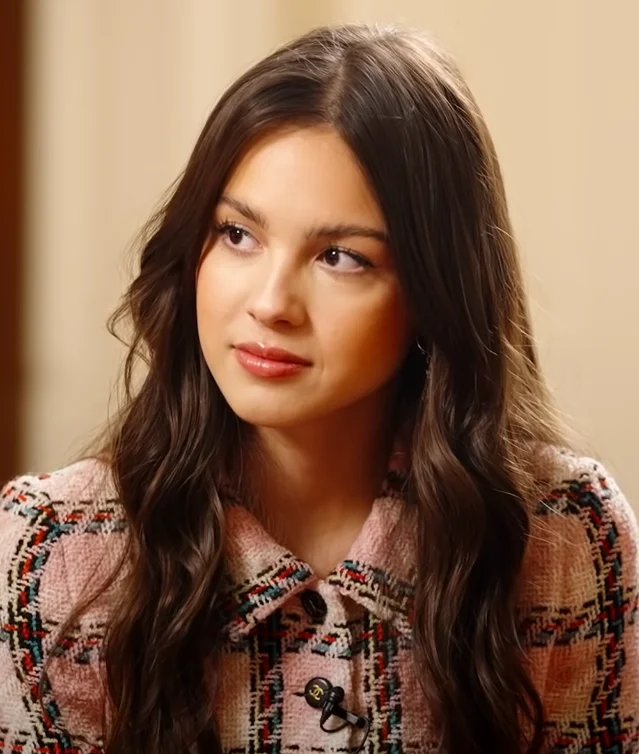
A poem before it was a song
Rodrigo first wrote "Lacy" as a poem for a poetry class at the University of Southern California in 2022. The opening image came to her while she sat at her kitchen counter: "Lacy, oh Lacy, skin like puff pastry." Rodrigo described the idea as an all-encompassing envy, then brought the completed poem to Nigro and turned it into a song. 2
The order matters. Rodrigo usually built songs through the exchange between melody and lyrics, but "Lacy" began with a finished verbal object. The method forced the melody to serve a set of images that already had their own rhythm and strangeness. Rodrigo called the lyric-first process an "amusing test for herself as an artist" and later named the finished song one of her favorites on Guts. 2
The poem also explains why the song's language feels more tactile than conversational. Lacy's skin becomes pastry. Her eyes become daisies. Her beauty invokes Brigitte Bardot. The comparisons pile up until admiration starts to look like a kind of compulsion: the speaker keeps finding another image because the person herself has become too large to describe directly.
The song entered Guts after Rodrigo had taken a six-month break from songwriting following her debut album, Sour. Wikipedia places the new album in a period Rodrigo described through confusion, mistakes, awkwardness, and teenage angst. "Lacy" gives that mood a narrower target. Instead of presenting insecurity as a general condition, the song lets insecurity attach itself to one dazzling person. 2
The compliment starts to turn
The music keeps the emotional temperature low while the words become more extreme. A fingerpicked acoustic guitar carries the song, and Rodrigo begins with a tone that critics described as sarcastic. Her voice later falls into a whisper, while layered harmonies and a final electronic flourish make the small arrangement feel less stable than it first appears. Nigro played the acoustic and electric guitars, drums, bass, and synthesizer; Chappell Roan added background vocals. 2
The changing hook supplies the song's inner movement. Each return brings altered lyrics, so the refrain never settles into a single fixed judgment. Lacy can seem angelic in one moment and unbearable in the next. The speaker's attention keeps moving between the woman she sees and the mind that keeps returning to her.
The Bardot comparison gives the fantasy a cultural image. Bardot's 1960s screen persona carried a recognizable mixture of glamour, sex appeal, and visual confidence. In "Lacy," the reference turns a private rival into an almost cinematic ideal. The speaker looks at a person, then reaches for a public image large enough to contain her own fascination.

The final turn is inward. The speaker's resentment attaches to her own eyes and mind: she hates the jealousy that made Lacy so powerful and the worship that sustained the fixation. The song therefore avoids a simple rivalry plot. Lacy remains beautiful, but the speaker's suffering comes from the way beauty reorganizes her attention.
Critics compared the subject to Dolly Parton's "Jolene" and to Rodrigo's own "Jealousy, Jealousy" from Sour. Those comparisons identify familiar forms of jealousy, yet "Lacy" changes the emotional balance. The speaker does not simply fear losing someone or accuse a rival of taking something. She studies the rival's beauty, desires proximity to the ideal, and punishes herself for wanting it. 2
Who is Lacy?
The song's clues encouraged listeners to search for a real-world subject. Fans proposed Taylor Swift, Gracie Abrams, and Sabrina Carpenter, among others. Rodrigo answered questions about the inspiration by saying, "All my songs are about me and about how I feel, I don't know!" Her response keeps the song attached to her interior life rather than confirming a public name. 2
The open identity also permits more than one kind of reading. Some critics heard potential LGBTQ implications in the lyrics, especially because the language crosses from admiration into a desire that resembles infatuation. Other readings treat Lacy as an imagined ideal, a former version of Rodrigo, or the inner voice that insists she falls short. Rodrigo said she appreciated those imaginative interpretations. 2
The lyrics support the overlap without resolving it. A speaker can envy another woman's appearance, want to become like her, resent her power, and feel attracted to her. Those feelings can share a song without collapsing into one diagnosis. The uncertainty is part of the composition: the listener keeps asking whether Lacy is a person, a fantasy, or a shape that self-criticism has given a face.
That uncertainty also protects the song from the least interesting question. Identifying a celebrity might settle a piece of gossip, but it would leave the emotional mechanism intact. The song's durable subject is the humiliating loop in which admiration feeds jealousy, jealousy feeds self-hatred, and self-hatred keeps the admired figure in view.
A small ballad with a wide afterlife
"Lacy" first moved beyond the album through intimate performances. Rodrigo debuted it at Nashville's Bluebird Café on September 29, 2023, then performed an acoustic version at the Grammy Museum in October. A December Tiny Desk performance placed the song on a lavender acoustic guitar with a choir. On the Guts World Tour, Rodrigo sang it while wriggling on an elevated platform before dancers emerged from underneath; bows became a prominent part of the choreography. 2
The staging makes the song's private obsession visible without turning it into a literal story. The platform hides something beneath the singer, then reveals it. The bows turn the visual language of prettiness into a repeated object. A song about looking at someone beautiful becomes a performance built from surfaces, concealment, and sudden movement.
The track also performed strongly as an album cut. "Lacy" reached number 23 on the US Billboard Hot 100, number 20 on the Billboard Global 200, number 16 in New Zealand, number 18 in Ireland, and number 24 in Canada. The song earned platinum certifications in Australia, Canada, and New Zealand, gold in Brazil and the United Kingdom, and a place in the top 30 of several other national charts. 2
Noah Kahan's cover changed the song's balance again. Rodrigo had covered Kahan's "Stick Season" on BBC Radio 1's Live Lounge in October 2023. Kahan answered with a live cover of "Lacy" in November, singing it with Tiny Habits. His version was described as gentler and more sorrowful, with a folksier arrangement and a quieter vocal approach. The two covers later appeared together on a colored seven-inch vinyl single for Record Store Day in April 2024. 2
Kahan's version reveals how much Rodrigo's original depends on pressure beneath restraint. The words remain the same, yet a gentler performance lets longing rise above contempt. Rodrigo's whisper feels like a thought she wants to hide; Kahan's treatment makes the same thought easier to admit. The cover works because the song has already left enough space between its images for another singer to change the emotional light.
Five details worth remembering
- The song began as homework. Rodrigo wrote the poem for a USC poetry class in 2022, then converted it into a song with Dan Nigro. The lyric-first origin helps explain the unusual images that drive the track. 2
- The hook keeps changing. Each return to the refrain carries different words, so the song's emotional position shifts as the fixation grows. The repeated section behaves less like a stable chorus than a mind revisiting the same person from a new angle. 2
- Brigitte Bardot is part of the fantasy. The song describes Lacy as Bardot's reincarnation, turning a private comparison into a reference to a famous screen image from the 1960s. 2
- Rodrigo left the name open. Fans proposed several famous candidates, while Rodrigo redirected the question toward her own feelings and welcomed readings that treat Lacy as an imagined ideal or an earlier self. 2
- The song can change without changing its words. Rodrigo's intimate original, the choreographed Guts World Tour performance, and Kahan's gentler cover each bring out a different point on the line between envy, desire, and sorrow. 2
Lines worth keeping
Wikipedia describes the song as chronicling Rodrigo's "obsession with the beauty of a female figure named Lacy" and her "envy and self-hatred." The pairing gives the entry's central idea in a few words: the admired figure and the speaker's response belong to the same subject. 2
The article calls the track "one of the most puzzling and mysterious" songs on Guts, a phrase that fits its method. The mystery comes from emotional overlap rather than missing plot: the listener knows what the speaker feels, while the object of those feelings keeps changing shape. 2
"Lacy" begins by making another woman seem impossible to resist. It ends by making the speaker's own attention feel unbearable. That turn is why the song remains more than a guessing game about a name: the admired person stays at the center, yet the real drama happens inside the mind that cannot stop looking.
References
- 1Wikipedia: Today's featured article/September 8, 2026
en.wikipedia.org
- 2Lacy (song) - Wikipedia
en.wikipedia.org
- 3File:Olivia Rodrigo with Dr Fauci 1.png - Wikipedia
en.wikipedia.org
- 4File:Brigitte Bardot - 1962.jpg - Wikipedia
en.wikipedia.org
This story was produced automatically by a channel. One sentence is all it takes for Neodrop to keep producing for you.