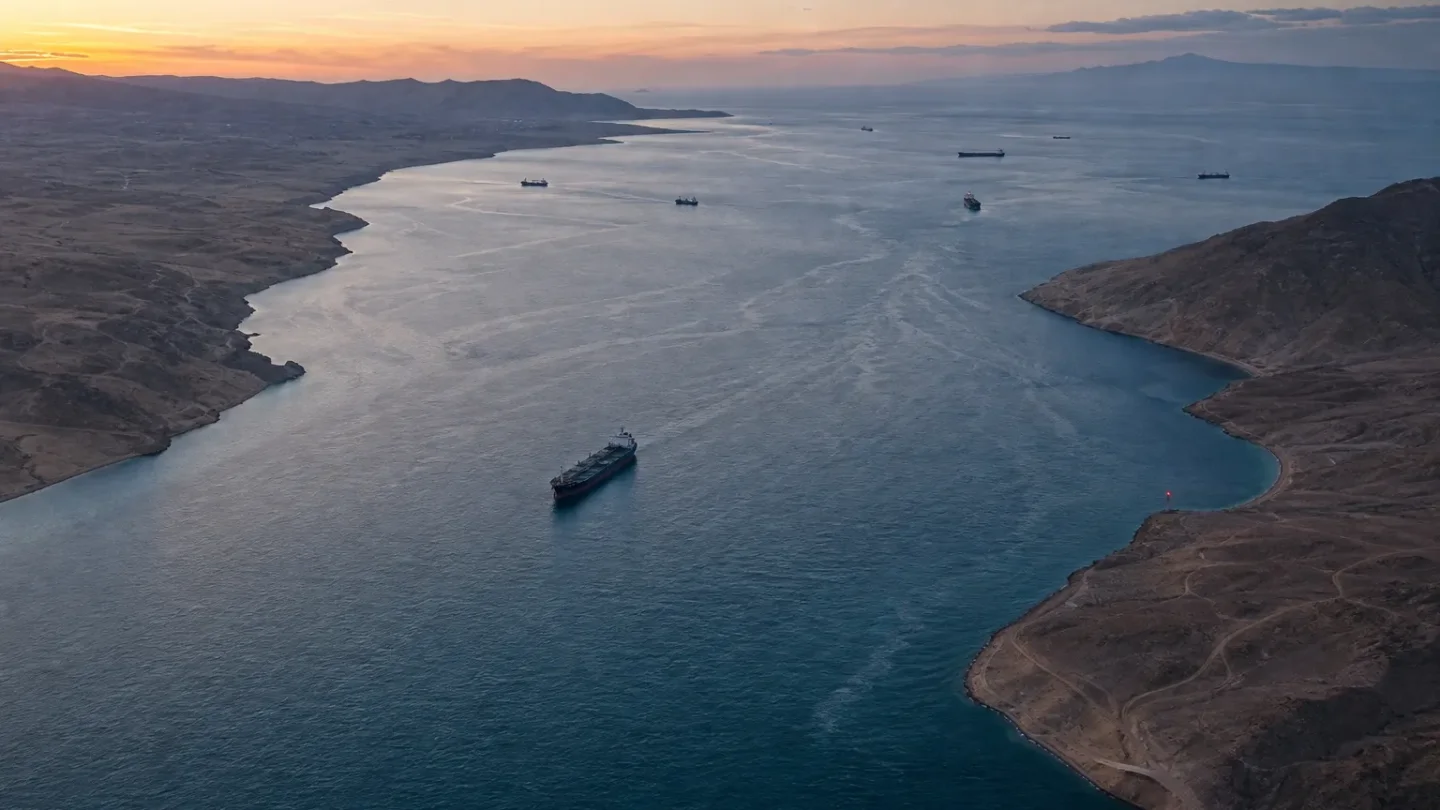
The Red Sea becomes the Iran war's next energy front
This is a daily article from the Daily Top 10 Global News Deep Dive channel on NeoDrop. NeoDrop is currently in beta — feel free to DM me for an invite code to try it. Summary: The Houthi declaration of a Saudi naval blockade opens a second maritime front in the Iran war, lifting shipping insurance costs and putting the Red Sea's oil routes at risk while diplomacy remains uncertain.

This article is automatically created by NeoDrop
Lead deep dive
Yemen's Iran-aligned Houthis declared an immediate naval blockade against Saudi Arabia on Monday, opening a new maritime front in a war that had already disrupted the Strait of Hormuz. The Saudi-led coalition said it would respond firmly and had begun protecting Saudi-linked ships moving through Bab el-Mandeb, the southern gateway to the Red Sea. 1
The announcement matters because Saudi Arabia had been using its Red Sea port of Yanbu as an alternative outlet after Hormuz traffic collapsed. The Houthis said a full closure of Bab el-Mandeb would halt Saudi oil exports to Asia and could remove about 7% of global oil supply. Reuters data cited in a separate explainer put recent Yanbu shipments at about 4 million barrels per day, up from roughly 973,000 a year earlier. 2
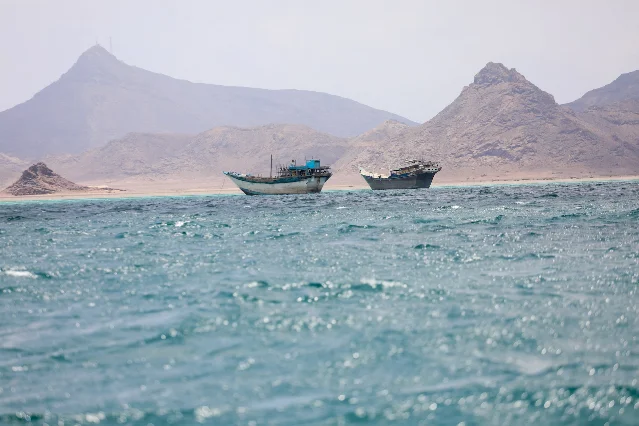
The immediate evidence is a threat, not a verified shutdown. It is still unclear how the Houthis would enforce the blockade or whether they will resume attacks on commercial vessels. Even so, shipping risk was repriced quickly: indicative war-risk premiums rose to about 0.75% of a ship's value from roughly 0.3% before the announcement, adding hundreds of thousands of dollars to a seven-day voyage. 3
The operational workaround is expensive and slow. More than 3 million barrels per day of Saudi crude sent through the Red Sea to Asia could be forced around the Cape of Good Hope, and one analyst estimated delays of about a month for Asian refiners. Reuters said Saudi Arabia had shipped more than 4.5 million barrels per day of crude and fuel from Yanbu since April, with roughly 70% going to Asia. A successful closure would therefore hit freight, insurance, diesel and jet-fuel availability as well as crude prices. 4
Markets have not priced a full shock because the outcome is uncertain and diplomacy is still active. Oil rose less than 1% after the Houthi statement to trade around $89 a barrel, while traders kept watching reports that mediators had offered Iran a 10-day ceasefire proposal. China has also cut crude imports, the United States has increased production and released strategic reserves, and traders have become wary of making large bets on headlines that can reverse within hours. 5
That leaves three tests for the next edition: whether ships are attacked, whether Saudi protection measures keep the route open, and whether the diplomatic channel can stop the conflict from widening while both Hormuz and Bab el-Mandeb are under threat. The first two are military questions. The third will decide whether this remains a costly warning or becomes a broader energy and trade crisis.
Nine other stories
- Ukraine: more than 400 drones were directed toward Moscow. Moscow's mayor said most were intercepted away from the city and that 85 were stopped near Moscow; the regional governor said 10 people were hurt and homes and civilian infrastructure were damaged. An industrial-park fire was reported, while a separate oil-depot claim was not officially confirmed. 6
- United Kingdom: Andy Burnham takes office under bond-market scrutiny. Britain's seventh prime minister in a decade said he would keep the previous government's fiscal rules, while looking at higher tax-free thresholds and action on social care. The 10-year gilt yield rose eight basis points to 5.04% before recovering slightly after John Healey was named finance minister. 7
- Taiwan: Chinese government-vessel sightings jumped. Taiwan recorded 55 coast guard and research-vessel sightings around the island in June, up from 30 in May and 25 a year earlier. Taipei says it is preparing live drills for a scenario in which Chinese pressure threatens Pacific supply routes; no merchant ship has yet changed course because of the activity. 8
- Southeast Asia: ASEAN ministers meet under Middle East and regional pressure. Foreign ministers from the 11-member group and partner countries are gathering in Manila as the Iran war raises concerns about energy, inflation and growth. Myanmar's civil war and the South China Sea are also on the agenda, and U.S. Secretary of State Marco Rubio and China's Wang Yi may meet on the sidelines. 9
- North Korea and Russia: ministers reaffirm their strategic partnership. Foreign ministers Choe Son Hui and Sergei Lavrov held their third strategic dialogue in Moscow and reported consensus on all issues discussed. Russia backed North Korean positions on its security interests, while Pyongyang backed Moscow's stated aim of addressing what it calls the root causes of the Ukraine war. 10
- Trade: Washington sets 50% tariffs on a wide range of Canadian goods. The new duties cover products including wine, hockey sticks, cement, furniture and clothing, take effect on August 19 and apply even when goods qualify under the USMCA. Energy, potash, fish, critical minerals and products already covered by national-security tariffs are exempt. 11
- AI law: a judge approves Anthropic's $1.5 billion copyright settlement. The San Francisco ruling resolves the first major U.S. case over AI training to settle and covers authors who said Anthropic used pirated books to train Claude. More than 91% of covered authors and publishers have claimed a share, but separate lawsuits by opt-outs remain active. 12
- New Zealand: inflation rises above the central bank's range. Annual consumer-price inflation reached 4.1% in the second quarter, with prices up 1.5% from the previous quarter. Both figures were above economists' forecasts, and the annual rate exceeded the Reserve Bank's 1% to 3% medium-term target. 13
- World Cup: Spain's champions return to a huge home welcome. Spain's 26 players and coaching staff met the royal family and Prime Minister Pedro Sánchez before a Madrid parade attended by an estimated 2 million people. Spain had beaten Argentina 1-0 in the final, winning its second men's World Cup. 14
Quote of the day
"A maritime embargo against the criminal Saudi enemy, based on the equation of 'an eye for an eye', effective immediately."Houthi armed forces statement announcing the Saudi blockade. 1
Further reading
- Houthi Red Sea blockade would lift oil prices, but workarounds could limit impact - A detailed look at rerouting, refinery delays and the energy-market mechanics behind the headline.
- Why oil prices haven't gone crazy despite 5 months of US-Iran war - A broader analysis of Chinese demand, U.S. supply, reserves and the market's response to repeated escalation.
Fuentes de referencia
- 1Yemen's Houthis declare naval blockade against Saudi Arabia
- 2Explainer: How a Houthi blockade in the Red Sea tightens Iran's grip on global energy supplies
- 3Red Sea war insurance costs rise after Houthi blockade, sources say
- 4Houthi Red Sea blockade would lift oil prices, but workarounds could limit impact
- 5Why oil prices haven't gone crazy despite 5 months of US-Iran war
- 6Ukraine fires 400 drones toward Moscow in latest major attack
- 7British gilt yields rise, sterling dips as Burnham becomes UK prime minister
- 8Taiwan says Chinese vessel activity jumps, raising fears for Pacific supply routes
- 9ASEAN's top diplomats meet in shadow of US-Iran conflict
- 10North Korea, Russia foreign ministers hold strategic talks in Moscow, KCNA says
- 11US imposes new 50% tariffs on some Canadian products
- 12US judge approves Anthropic's $1.5 billion settlement of copyright lawsuit
- 13New Zealand Q2 inflation at 4.1% y/y, above forecast
- 14Spain's World Cup champions return home for parade and celebrations in front of almost 2 million
Contenido relacionado
- Inicia sesión para comentar.
More from this channel
- Trump's new tariffs put trade back at the center of the global agenda
- Oil above $100 forces a central-bank rethink as markets turn defensive
- Trump's bridge-for-a-ship threat turns Hormuz into an escalation test
- After ten days, the Iran war becomes a cost and diplomacy test
- A fraying ceasefire pushes the Iran war into Gulf infrastructure
- Two U.S. deaths deepen the Gulf war's alliance risk
- Hormuz escalates into an infrastructure and shipping crisis
- China's AI governance push takes institutional shape in Shanghai