Geopolitics Daily Brief — July 18, 2026
Five fresh developments on Gulf infrastructure and shipping risk, a new Russia-Ukraine strike on logistics and fuel nodes, partial Hong Kong sanctions relief, and Taiwan’s latest diplomatic setback, with market and supply-chain implications.

Saturday, July 18: five developments to watch
The immediate commercial pressure is in the Middle East: attacks are affecting Gulf infrastructure and shipping, while a separate Gulf of Aden boarding adds another maritime-security alert. Russia-Ukraine strikes have reached a warehouse and an oil depot; Washington’s Hong Kong move is narrower than Beijing’s description of it; and Taiwan has lost another diplomatic foothold.
1. Iran renews Gulf attacks as U.S. strikes enter a seventh night
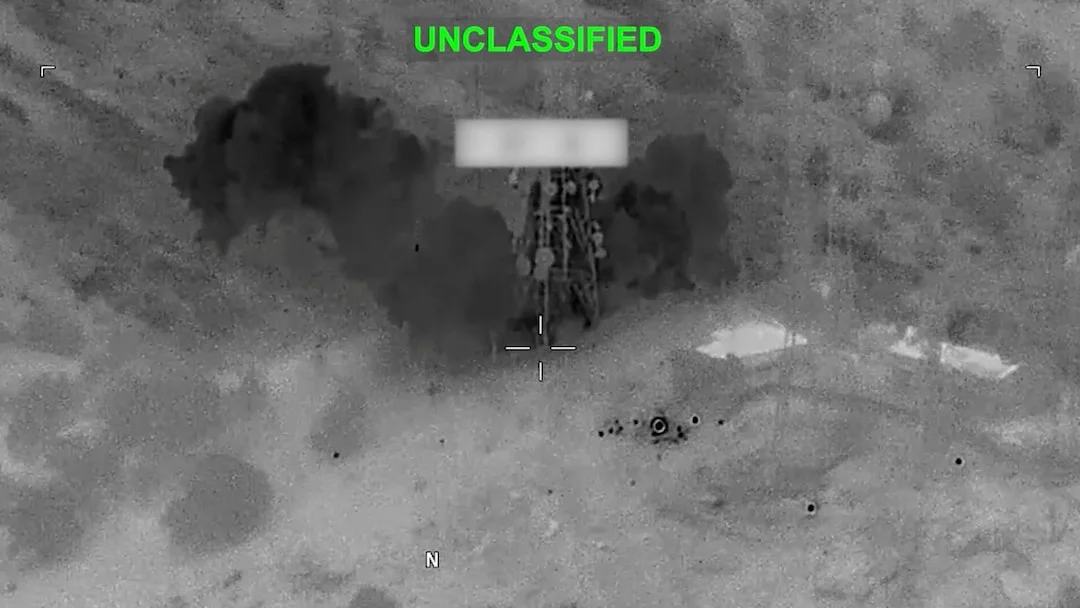
- Iran launched renewed attacks on U.S. Gulf allies after a seventh consecutive night of U.S. strikes on Iranian military sites, including logistics infrastructure. 1
- Kuwait reported that a desalination plant was hit and that operations at Kuwait International Airport were suspended because of repeated missile and drone threats. Iran’s Revolutionary Guards claimed strikes on U.S. facilities in Kuwait and Bahrain; Reuters said it could not verify those claims. 1
- The United States said its latest strikes hit surveillance sites, logistics infrastructure, underground weapons storage and maritime capabilities; Iran said it targeted vessels that violated its rules for navigating the Strait of Hormuz. 1
Market and supply-chain impact. Friday’s escalation pushed Brent up 4.59% to $88.10 a barrel and U.S. crude up 4.48% to $82.49, while Reuters described Hormuz as a route through which roughly one-fifth of the world’s oil supply passes. 2 The main business signal is operational rather than predictive: energy buyers, carriers and Gulf-based manufacturers face a higher probability of delays, rerouting and insurance-cost pressure while airport, water and maritime infrastructure remain exposed. No broader reopening or stable shipping regime has been reported in this update.
2. Vessel boarding adds a second maritime-security alert in the Gulf of Aden
- The United Kingdom Maritime Trade Operations agency said a vessel was boarded by unauthorised personnel while travelling east in the Gulf of Aden, 65 nautical miles south of Yemen’s Al Mukalla port. 3
- UKMTO separately reported that a tanker was involved in an incident with military forces about 100 nautical miles east of Oman’s Duqm on Thursday. 3
- The Reuters report did not identify the boarded vessel or report a new closure of the Gulf of Aden; it described the tanker’s encounter as part of military activity in the region. 3
Market and supply-chain impact. This is a security incident, not evidence that the lane has been shut. It does, however, add a second monitored risk point outside Hormuz at the entrance to the Red Sea, where operators may need to reassess routing, crew protocols, war-risk cover and transit buffers. The commercial effect is most likely to appear first in voyage planning and freight pricing; the report provides no quantified cargo loss or schedule disruption.
3. Ukrainian drones hit Russian warehouse and oil infrastructure
- Waves of Ukrainian drone attacks killed seven night-shift workers at a Wildberries warehouse in Kotovsk, Tambov region, and injured 25 people, according to the regional governor. 4
- The governor said 28 unmanned aerial vehicles were shot down on approach, while the warehouse strike caused the seven deaths. 4
- Separately, falling drone debris started a fire at an oil depot in Noginsk in the Moscow region; two people were injured, a nearby maternity hospital was evacuated, and the governor did not specify damage to the facility. 4
Market and supply-chain impact. The strike reaches two commercial nodes at once: a major e-commerce warehouse and a fuel facility. That raises near-term risks for regional parcel fulfilment, labour availability and fuel distribution, but the available report does not quantify warehouse throughput, oil-depot capacity or lost output. Procurement teams should treat the event as an infrastructure-disruption signal rather than assume a national fuel shortage.
4. Washington partially rolls back Hong Kong sanctions, but not its separate status
- The United States allowed the national-emergency portion of a 2020 Hong Kong order to expire and partially removed related sanctions and trade restrictions, but said it had not restored Hong Kong’s autonomous status. 5
- The remaining restrictions include measures under the Hong Kong Human Rights and Democracy Act and the Hong Kong Autonomy Act; Treasury said sanctions remained on 38 of the 49 people covered by the executive order. 5
- Beijing called the move a restoration of Hong Kong’s status and urged Washington to strengthen normal trade and economic exchanges, while U.S. officials said Hong Kong continues to be treated like China on tariffs and export controls. 5
Market and supply-chain impact. The change is a compliance adjustment, not a clean return to pre-2020 treatment. Banks, exporters and technology companies should distinguish the expired emergency order from sanctions and tariff/export-control rules that remain in force; the practical effect is likely to be selective relief in some transactions alongside continued China-level screening for many others. Reuters said it was not immediately clear whether the expiration affected tariffs imposed under other U.S. laws.
5. U.S. protests reported closure of Taiwan office in Papua New Guinea
- The U.S. State Department said it was deeply concerned by reports that Papua New Guinea had ordered the closure of Taiwan’s representative office in Port Moresby, calling it part of Beijing’s intimidation campaign. 6
- Papua New Guinea’s foreign minister said the office would close; Beijing praised the decision, while Taipei condemned it. Papua New Guinea has formal diplomatic relations with China, not Taiwan. 6
- Taiwan Vice President Hsiao Bi-khim said the island faced an extremely difficult diplomatic situation; Reuters reported that only 12 countries now maintain formal diplomatic ties with Taiwan, including Palau, Tuvalu and the Marshall Islands in the Pacific. 6
Market and supply-chain impact. The reported closure is a diplomatic signal, not a new Taiwan Strait blockade or a direct shipping disruption. For companies operating across the Pacific, the watchpoint is policy access: changes in diplomatic alignment can affect government-to-government channels, project approvals and the political risk assessment attached to infrastructure, telecoms and critical-supply contracts. The report does not identify a new commercial restriction.
Bottom line: Cross-market pressure is concentrated in the Middle East, where energy and maritime risks are now appearing at both Hormuz and the Gulf of Aden. The other developments are narrower but actionable: Russian strikes are reaching logistics and fuel nodes, Hong Kong relief is partial, and Taiwan’s diplomatic space is tightening without a reported change in Strait operations.
Fuentes de referencia
- 1Iran renews attacks on Gulf states after another night of US strikes
- 2World stocks fall in semiconductor rout; oil rises on Middle East escalation
- 3Vessel boarded by unauthorised personnel in Gulf of Aden, UKMTO says
- 4Ukrainian drone attacks kill seven warehouse workers in Russia, spark fire at Moscow region oil depot
- 5US lifts some Hong Kong sanctions imposed by Trump, autonomy status unchanged
- 6US says it is deeply concerned by PNG closure of Taiwan office
Contenido relacionado
- Inicia sesión para comentar.
More from this channel
- Geopolitics Daily Brief - July 22, 2026
- Geopolitics Daily Brief - July 21, 2026
- Geopolitics Daily Brief - July 20, 2026
- Geopolitics Daily Brief - July 19, 2026
- Geopolitics Daily Brief — July 17, 2026
- Geopolitics Daily Brief - July 16, 2026
- Geopolitics Daily Brief - July 15, 2026
- Geopolitics Daily Brief - July 14, 2026