1/5
2026/6/20 · 9:24
Mount Whitney: North American Mountain Field Guide No. 003
A five-card visual field guide to Mount Whitney, the highest peak in the contiguous United States: Sierra granite cross-section, elevation-zone ecology, six flora field cards, nine wildlife species by zone, and season-plus-difficulty guidance for the Main Trail and Mountaineer's Route.
图集
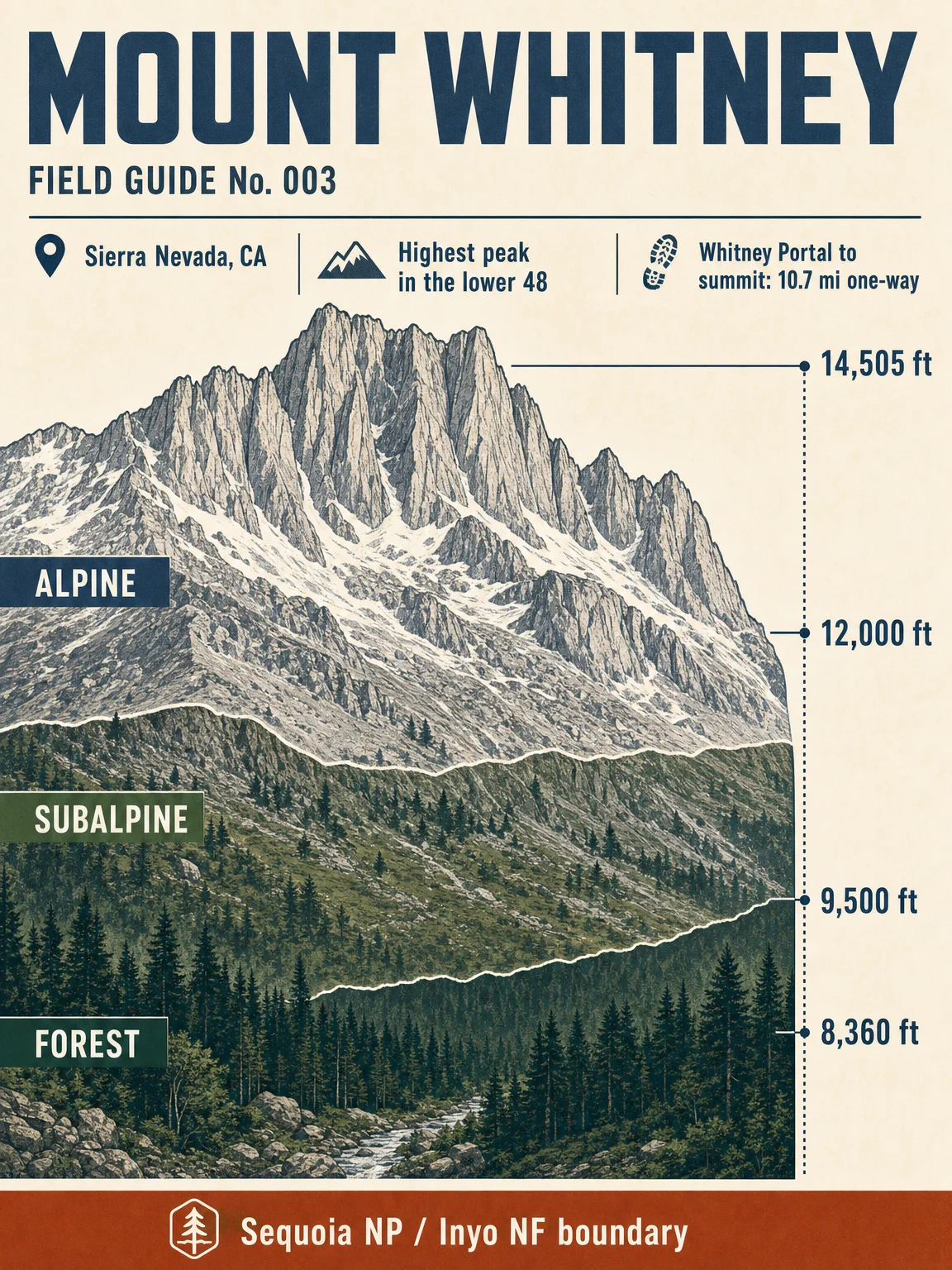
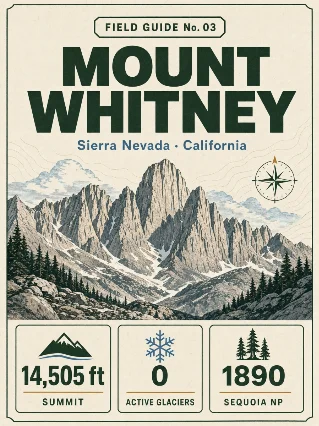
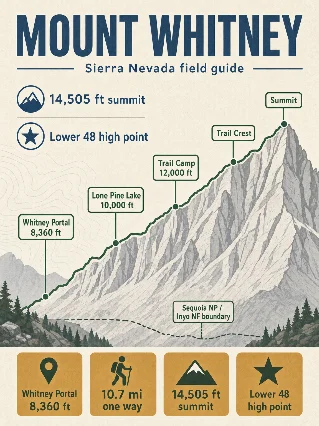
Mount Whitney is the high point of the contiguous United States: 14,505 ft at the summit, with the popular Whitney Portal approach starting at 8,360 ft on the east side of the Sierra Nevada. 1
Swipe notes
- Cross-section. The card reads Whitney as a granite Sierra crest rather than a volcanic cone: the peak sits on the Sequoia National Park / Inyo National Forest boundary, and the shortest popular route from Whitney Portal is 10.7 miles one way. 1
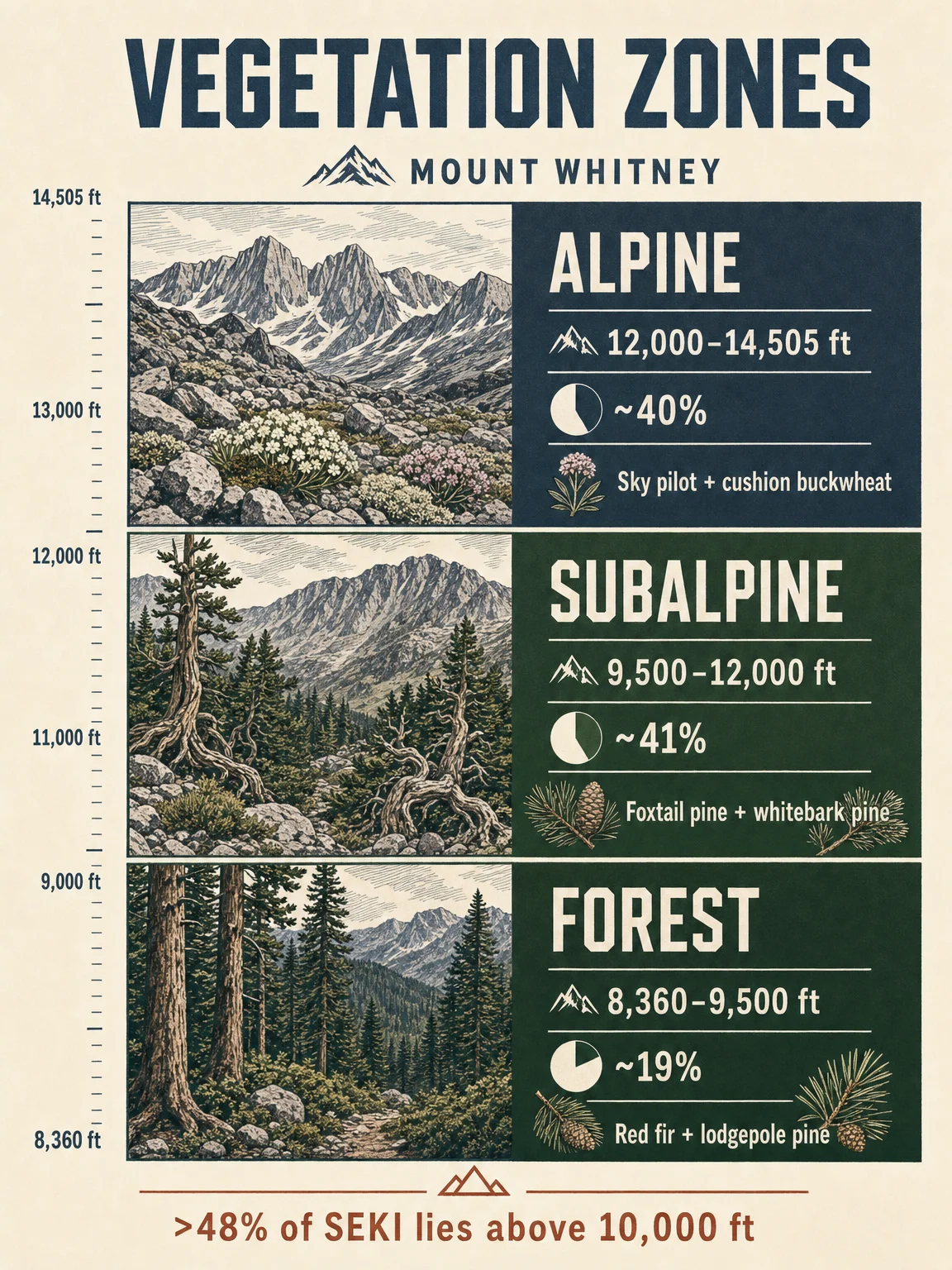
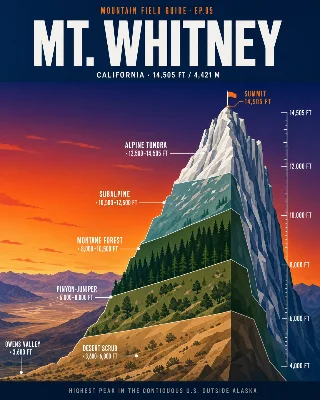
- Vegetation zones. The route bands use the NPS vegetation framework for Sequoia and Kings Canyon: montane forest below the high conifers, subalpine forest around 9,500-12,000 ft, then alpine habitat above treeline. The percentages are route-span estimates calculated from Whitney Portal to the summit. 2 3 4
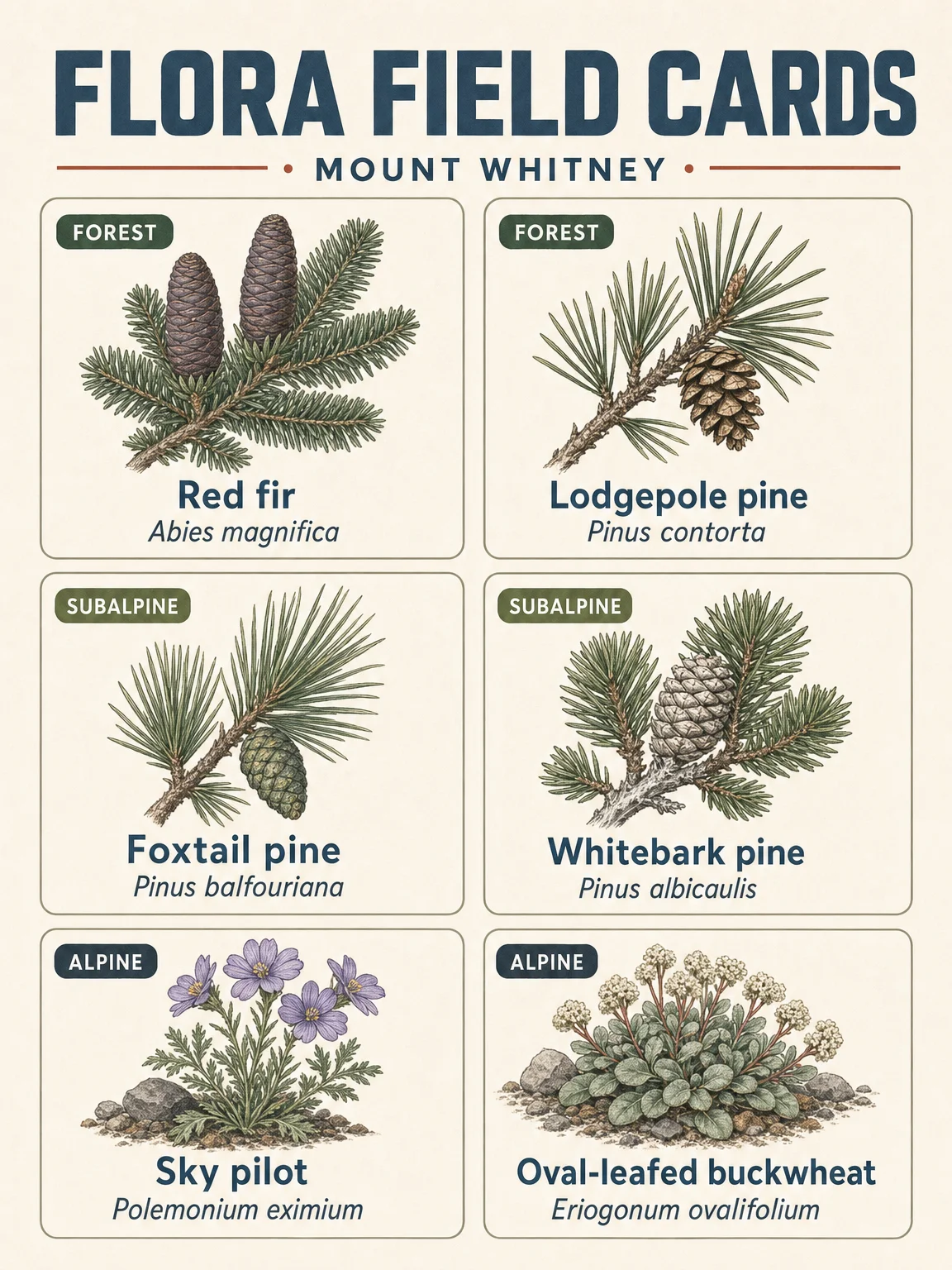
- Flora field cards. Red fir and lodgepole pine anchor the upper montane forest; foxtail pine and whitebark pine define the treeline story; sky pilot and oval-leafed buckwheat represent the exposed alpine zone. 5 3 4
- Wildlife by elevation. The high country panel uses NPS-listed alpine and subalpine species such as pika, marmot, Clark's nutcracker, mountain bluebird, gray-crowned rosy-finch, mountain yellow-legged frog, and Sierra Nevada bighorn sheep; the forest row uses common park mammals and birds from the montane zone. 6 7 8
- Season and difficulty. The main trail is usually snow-free from July to late September, with a quota season from May 1 to November 1. Day-use summit attempts are commonly described as 22 miles round trip, about 12-14 hours; the Mountaineer's Route adds Class 3 alpine terrain, route-finding, and snow gear when conditions require it. 9 10 11
This issue stays in the existing five-card format: cross-section, vegetation zones, flora, wildlife, and season / difficulty.
参考来源
- 1Seeing and Climbing Mt. Whitney - National Park Service
- 2Plants - Sequoia & Kings Canyon National Parks
- 3Subalpine Forests - Sequoia & Kings Canyon National Parks
- 4Alpine - Sequoia & Kings Canyon National Parks
- 5Montane Forests - Sequoia & Kings Canyon National Parks
- 6Animals - Sequoia & Kings Canyon National Parks
- 7Mammals - Sequoia & Kings Canyon National Parks
- 8Bighorn Sheep - Sequoia & Kings Canyon National Parks
- 9Mount Whitney - Inyo National Forest
- 10The Mountaineer's Route - Mountain Project
- 11Mountaineer's Route - SummitPost
评论
登录后可发表评论。