1/7
2026/6/15 · 14:03
Fragrance / Parfum: Handle With Caution
That one word on your label can hide up to 3,000 chemicals. Here is what the research actually says about Fragrance / Parfum, why the US has no disclosure rule, and when to worry.
图集
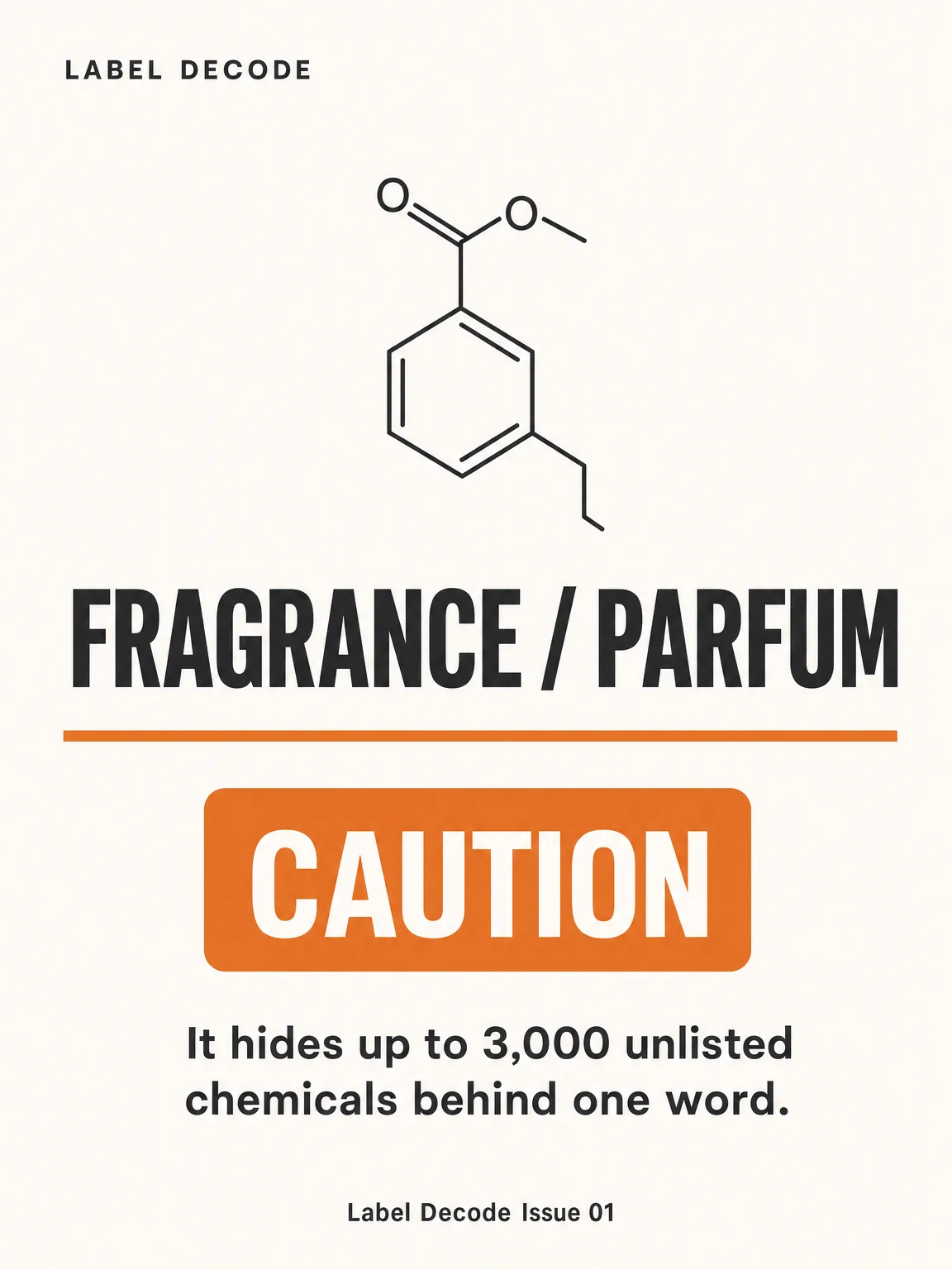
Behind that single word on your label sits a legal black box containing up to 3,000 possible chemicals -- with zero individual disclosure required in the US.
Card 1 -- Verdict: CAUTION. The word "Fragrance" or "Parfum" on any North American product label is a trade-secret umbrella term. Brands are not required to list what is inside it.
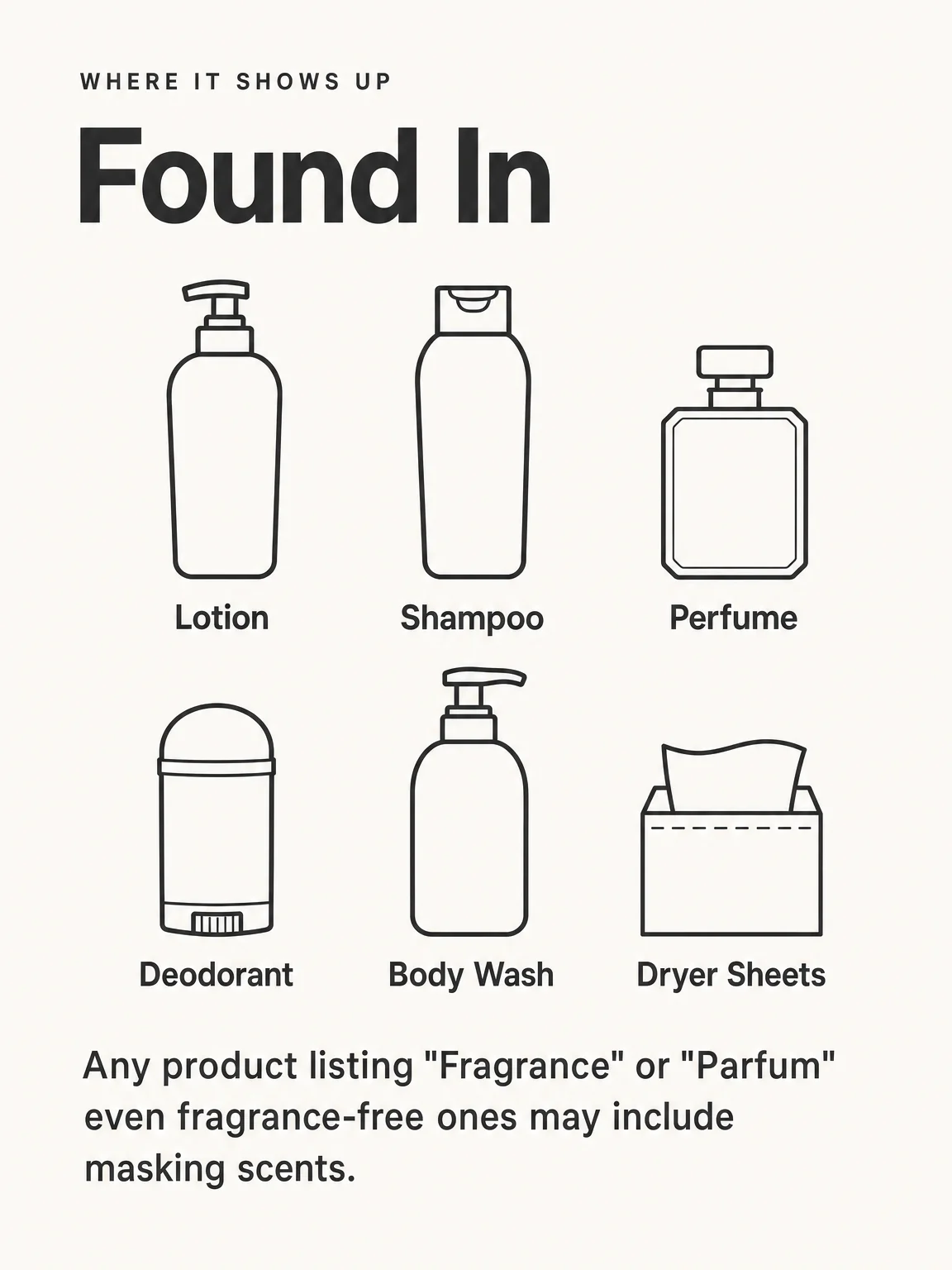
Card 2 -- Where It Shows Up: Lotions, shampoos, conditioners, perfumes, deodorants, body washes, dryer sheets, candles, and cleaning products. Even products labeled "unscented" may contain masking fragrances listed as "Fragrance."
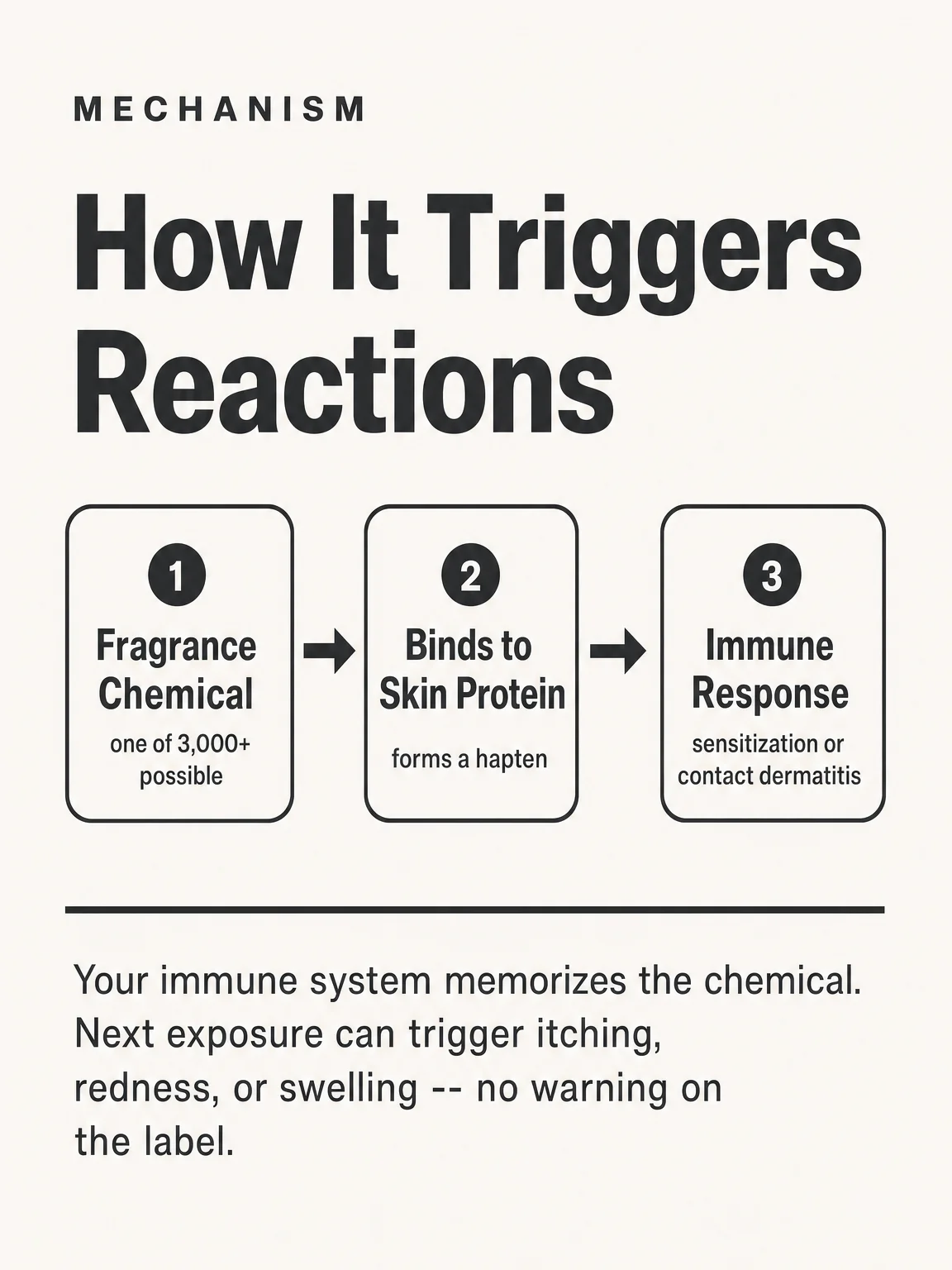
Card 3 -- Mechanism: Certain fragrance chemicals bind to skin proteins and form haptens -- small allergen molecules your immune system can memorize. On re-exposure, that memory triggers contact dermatitis: redness, itching, or swelling. Oxidized terpenes (like limonene and linalool breaking down in air) are the most common offenders.
Card 4 -- Evidence Tier: Human study (confirmed). The EU Scientific Committee on Consumer Safety (SCCS) 2012 opinion identified 26 fragrance substances as established contact allergens in humans, with 100 additional candidates flagged. Patch-test prevalence: 4.5--14.8% of consecutive dermatology patients reacting to Fragrance Mix I. Evidence for endocrine disruption (phthalates sometimes hidden under "Fragrance") is animal/in-vitro as of 2024; not confirmed in humans at typical exposure levels.
Card 5 -- The Regulatory Gap: Canada amended its Cosmetic Regulations in February 2023 requiring individual fragrance allergen disclosure on labels by August 1, 2028. The US has no equivalent rule in effect as of June 2026. The FDA's Modernization of Cosmetics Regulation Act (MoCRA, 2022) directed the FDA to propose allergen labeling, but a finalized rule has not been published.
Card 6 -- Verdict: CAUTION. Fine for most people with no known skin sensitivity. If you have a history of contact dermatitis, eczema, or fragrance allergy, treat "Fragrance" as a flag and patch-test or avoid. Not medical advice -- consult a dermatologist for confirmed fragrance allergy.
Card 7 -- Safer Swap: Look for "Fragrance-Free" (not "unscented"), brands that fully disclose fragrance ingredients (some use EWG Verified or Clearya), or products that list individual botanical sources (e.g., "linalool [from lavender]"). Disclosed ingredients still carry allergy risk but give you something to check.
Sources: Uter W et al., Contact allergy to fragrances, Allergologie Select, 2017. SCCS/1459/11, EU SCCS, July 2012. Canada Gazette Part I, Feb 11 2023. FDA MoCRA 2022. As of June 2026.
Not medical advice. This post does not diagnose, treat, or prescribe. Official warnings: Canada requires fragrance allergen disclosure by 2028; US has no equivalent rule as of this issue.

评论
登录后可发表评论。