2026/7/5 · 23:10
Lesson 1: Why invest at all?
Start with the reason investing exists: prices rise over time, and compounding lets small regular amounts work like a snowball. This first lesson explains both ideas in plain English before touching stocks or brokerage apps.

Most people think investing starts with a stock chart. It does not.
It starts with a quieter problem: the dollars in your checking account can slowly buy less stuff, while dollars that are put to work may have a chance to grow. That is the whole reason investing exists.
Education, not investment advice: this lesson explains the idea. It does not tell you what to buy, when to buy, or whether any investment is right for you.
Lesson 1: why invest at all?
Think about a grocery bag.
If $50 buys one full bag today, but prices rise over time, that same $50 may buy a slightly lighter bag later. The Bureau of Labor Statistics says its CPI inflation calculator uses the Consumer Price Index for All Urban Consumers, a measure of price changes for goods and services bought by urban households.1
That shrinking grocery bag is the everyday version of inflation: prices rise, so each dollar may buy less than it used to.
Investor.gov calls this purchasing power, meaning the amount of goods and services a unit of money can buy after inflation is considered.2 Plain English: purchasing power is what your money can actually do at the store, not just the number printed on the bill.
Saving money still matters. A savings account is often a good place for short-term goals or emergency money, and Investor.gov notes that bank or credit union savings accounts are typically federally insured.3 But long-term goals have a different problem. If the goal is years away, your money may need to grow enough to keep up with rising prices.
That is where investing enters the picture.
The lunchbox metaphor
Imagine packing lunch for a long road trip.
Cash is like the sandwich you already made. You know what you have. It is useful, especially if you need it soon. But it will not multiply in the cooler.
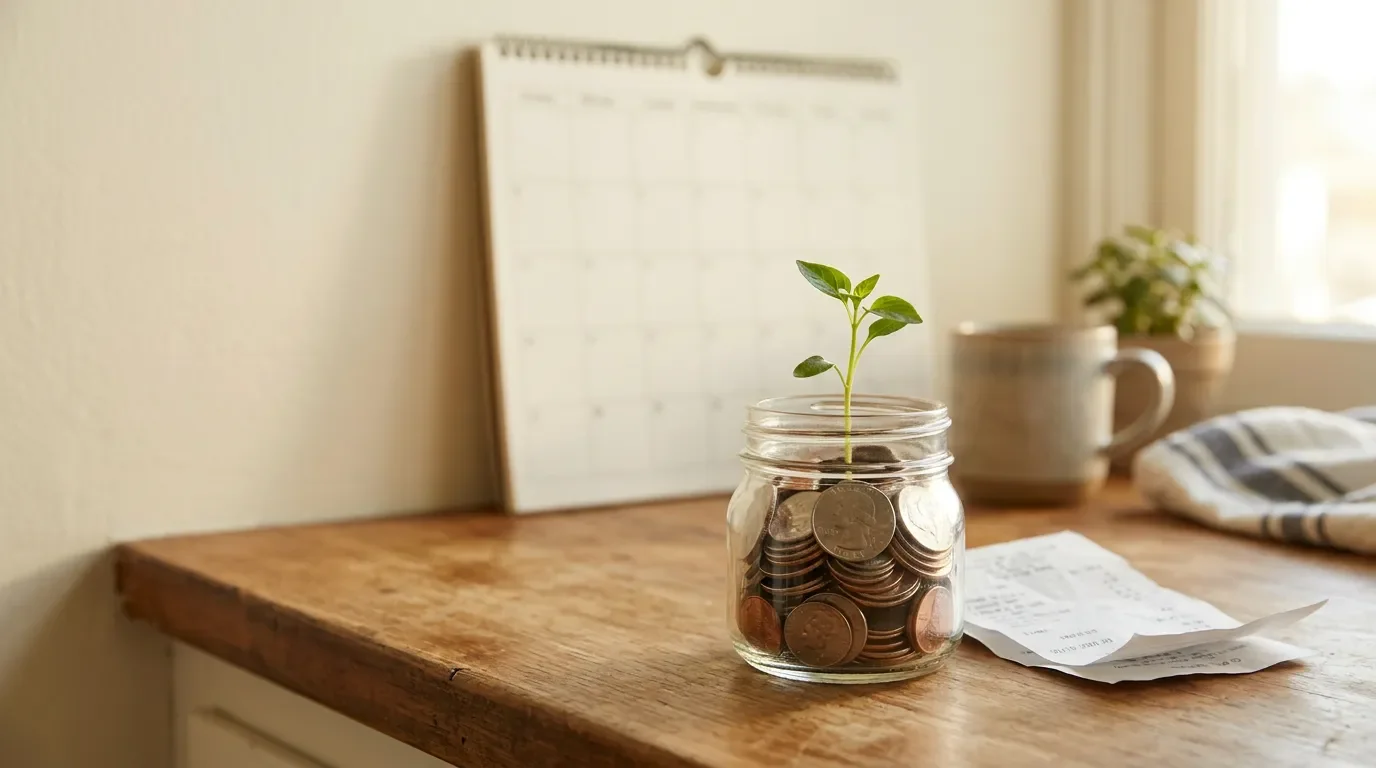
Investing is more like planting a small tomato seed before the trip and giving it time. The seed might not grow perfectly. It might have bad weather. But if it does grow, it can produce more tomatoes than you started with.
Investor.gov defines investing as putting money into assets such as stocks or bonds, often through a brokerage or advisory account, with the expectation of making a return over time.3 A return is the money an investment makes or loses. It can come from the investment becoming worth more, or from payments like interest or dividends.3
That last phrase matters: "or loses." Investor.gov is blunt that all investments involve risk.3 Investing is not a magic machine. It is a trade: you accept uncertainty today because you want a chance at growth over time.
The snowball part
The second reason people invest is compounding.
Compounding means growth can start earning growth of its own. Investor.gov explains compound interest as "the interest you earn on interest." In its simple example, $100 earning 5% becomes $105 after one year, then $110.25 after the second year because the first year's $5 also starts earning money.4
A kitchen version: you make sourdough starter. At first it is just a small jar. You feed it, wait, and part of yesterday's starter helps create tomorrow's starter. The growth comes from the base plus what the base already produced.
Investor.gov gives the long-term punchline: in that same $100-at-5% example, with no extra money added, the amount would be more than $162 after 10 years and almost $340 after 25 years.4 The point is not that you will earn exactly 5%. The point is that time changes the math.
Fidelity makes the same distinction in beginner language: compound returns include more than bank-account interest, because investment growth can also come from dividends and capital gains.5 A dividend is a cash payment some companies make to shareholders. A capital gain is when you sell an investment for more than you paid. Both are future lessons. For now, just remember: compounding is growth building on earlier growth.
Why the first trade can wait
If you have never invested before, the app screen can make it feel like the first decision is "Which ticker do I tap?" A ticker is the short letter code used to identify a stock, like AAPL for Apple or MSFT for Microsoft. Those are examples only, not recommendations.
The better first question is: what job am I asking this money to do?
Money for rent next month has a short job. It probably should not be exposed to market swings. Money for a goal decades away has a different job. It may have more time to ride through ups and downs.
FINRA tells beginners to set investment goals, know their time frame, be patient, and educate themselves before investing.6 That is not exciting, but it is the foundation. The goal comes before the product.
So Lesson 1 is not "buy stocks." Lesson 1 is this:
Investing is the tool people use when they want money to have a chance to grow over time. Inflation is the reason standing still can be costly. Compounding is the reason starting small can still matter. Risk is the price of admission.
Recap
- Inflation means prices rise over time, so a dollar may buy less later.
- Purchasing power means what your money can actually buy.
- Investing means putting money into assets with the hope of earning a return over time.
- Return means what an investment gains or loses.
- Compounding means growth can start earning growth of its own.
- Investing involves risk, so this curriculum will build slowly before any first trade.
Next lesson: what a stock actually is. The metaphor will be simple: owning a stock is less like betting on a scoreboard and more like owning a tiny slice of a business.
相似内容
- 登录后可发表评论。