2026/6/21 · 8:27
Intel’s AI comeback pitch starts with organizational repair
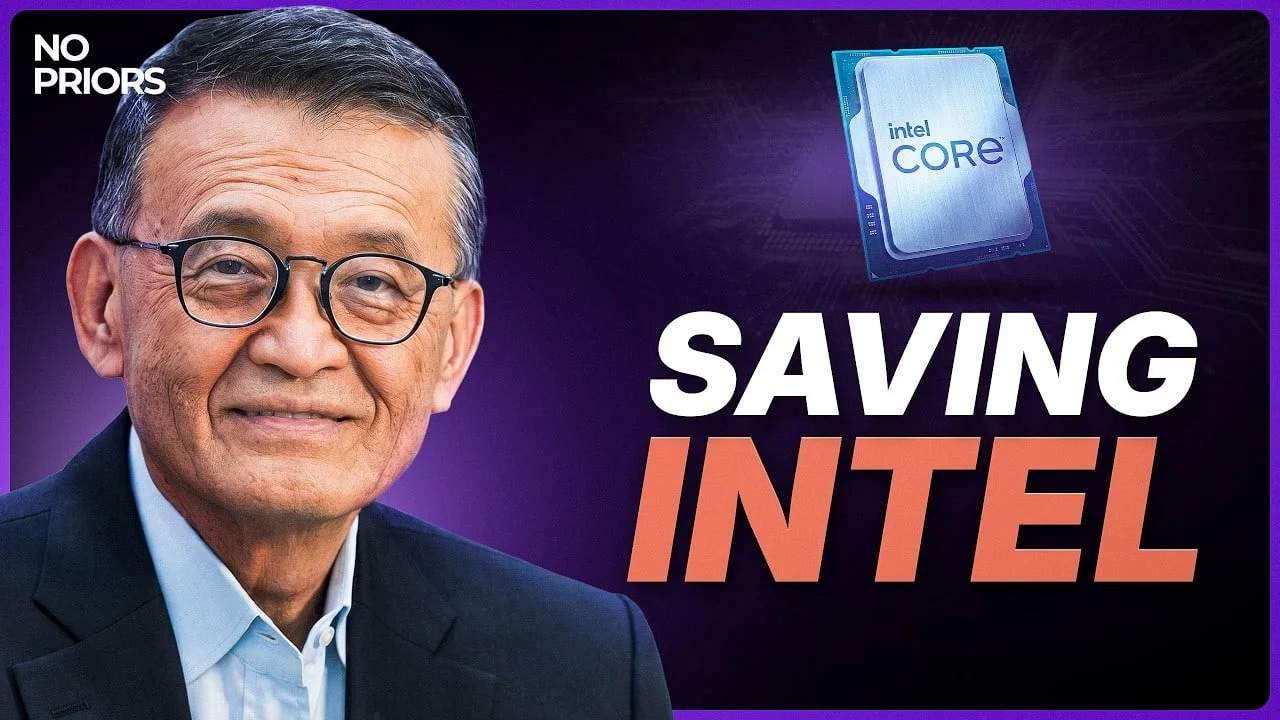
Lip-Bu Tan’s No Priors interview frames Intel’s AI opening less as a single-chip race with Nvidia and more as a turnaround problem: culture, customer trust, balance-sheet repair, foundry execution, and inference-era CPU demand. This article distills the episode’s main argument and the execution questions that will decide whether Intel’s story becomes more than rhetoric.

The sentence that matters in Lip-Bu Tan's No Priors interview is not a promise that Intel can out-GPU Nvidia. It is a quieter claim: Intel's opening in the AI cycle depends on fixing how the company decides, listens, funds, and packages compute before it can credibly sell a new technology story. In the June 18 episode, Tan describes Intel as both a turnaround company and national infrastructure, with AI creating demand for CPUs, foundry capacity, advanced packaging, and a more resilient semiconductor supply chain. 1
正在加载内容卡片…
The turnaround starts with why Tan took the job
Tan frames the Intel job as a late-career obligation rather than a standard CEO opportunity. Asked why he accepted what the hosts call one of the hardest jobs in technology, he says he was 66 and could have retired, but Intel was an iconic company that mattered to the semiconductor ecosystem and to the United States. 1 That framing matters because it turns Intel from a normal corporate recovery into something closer to an infrastructure project: if Intel fails, the problem is not only one company's market share, but the concentration and fragility of the systems that make advanced compute possible.
His background explains why he keeps returning to culture and customers rather than starting with a chip roadmap. Intel's official biography says Tan became Intel's CEO and joined its board in March 2025; it also points to his earlier 12-year run as CEO of Cadence, where he led a reinvention and customer-centric cultural transformation that more than doubled revenue and expanded margins. 2 In the interview, Tan treats that Cadence experience as the model for Intel: start with customer trust, simplify the product line, and make engineering problems visible to the CEO instead of burying them in process.
Culture is not a soft issue here
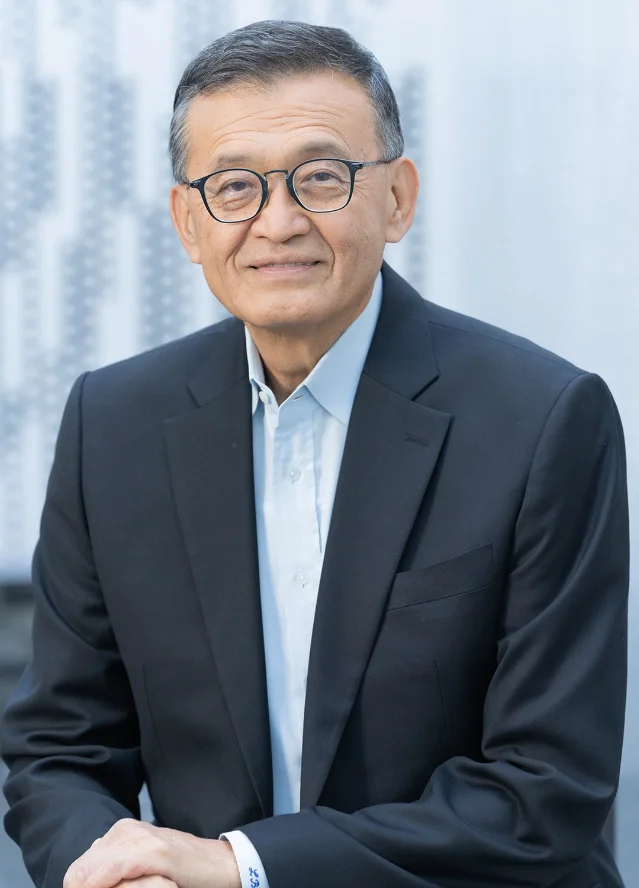
Tan's most concrete operating diagnosis is cultural. He says that in his first 14 months, the work was to increase accountability, speed up decision-making, listen to customers, and remove layers of meetings that slow the company down. 1 He also says that from day one, all engineering reported to him because, as an engineer, he wanted to know what went wrong and what needed correction. 1
That is not motivational filler. For a foundry, customer trust is the product. Tan spells this out when he talks about yield, defect density, cycle time, IP blocks, and reliability. A customer moving wafers to Intel is not buying a nice benchmark; it is risking a revenue miss if the manufacturing partner cannot deliver. 1 That makes accountability operational rather than aesthetic. The customer has to believe the roadmap, but also the escalation path when something goes wrong.
His repeated phrase is basically: crawl, then walk, then run. In practice, that means strengthening the balance sheet, focusing on products, simplifying the product line, and only then trying to regain leadership. 1 It is an anti-turnaround-slogan: Intel cannot narrate itself back into competitiveness before customers see execution.
The AI thesis is about inference, not only training
The most interesting part of Tan's AI argument is where he places Intel's opening. He acknowledges Nvidia's dominant position in training, but argues that agentic AI and inference are increasing demand for CPUs. In the transcript, he contrasts the training-heavy CPU-to-GPU mix with a future where orchestrating agents and reinforcement-learning-style workflows makes CPU performance more important. 1
That claim should be read carefully. It is not a guarantee that Intel wins the AI platform. It is a narrower thesis: as AI workloads spread from centralized training clusters into applications, agents, edge devices, robotics, and enterprise systems, more of the system-level bottleneck may sit outside the accelerator itself. Tan points to CPUs, XPUs, advanced packaging, foundry capacity, and full-stack systems as pieces Intel can assemble for purpose-built silicon across different workloads. 1
That is why the interview spends so much time on manufacturing, packaging, and supply chains. If inference and physical AI create more diverse deployment environments, the winner may not be the company with one chip, but the company that can coordinate silicon, packaging, software, racks, and customer-specific constraints.
Industrial policy is part of the operating model
Tan is unusually explicit that Intel's balance sheet and foundry ambitions depend on capital sources beyond ordinary product revenue. He says the U.S. government became a large shareholder, compares that support to the role of governments in Taiwan, Japan, and Singapore, and describes semiconductor manufacturing as infrastructure that needs public backing. 1 The episode description also notes investments or support from Jensen Huang's Nvidia, SoftBank, and the U.S. government as part of Tan's strategy to strengthen Intel's balance sheet. 1
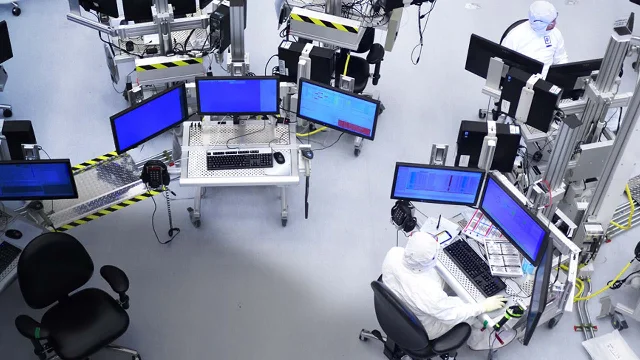
This is where the interview becomes less like a normal CEO podcast and more like a semiconductor policy briefing. Tan argues that advanced manufacturing in the United States is critical because companies cannot depend on one or two players in one or two geographies. 1 He also lists bottlenecks that are not purely about transistor scaling: power constraints, helium, memory shortages, advanced packaging, new materials, and the multi-year lag required to add fab capacity. 1
The implication is blunt. Intel's AI comeback is inseparable from supply-chain redundancy and state-supported capital intensity. If that sounds uncomfortable in American business culture, Tan's point is that the industry already operates this way globally. The question is not whether industrial policy touches semiconductors, but whether the U.S. version can produce customer-trusted manufacturing rather than just subsidized capacity.
The investor lens: plans change, bottlenecks matter
Tan's venture-capital perspective gives the conversation its most useful filter. He says he looks first for the bottleneck a company is trying to solve, whether the problem is real, and whether customers are actually crying for it. 1 He applies that logic across interconnect, photonics, EDA, power management, materials, and packaging. The point is not that every semiconductor startup should chase AI demand. It is that AI exposes bottlenecks across the stack, and each bottleneck can create a company if the customer pain is sharp enough.
His rule for teams is equally revealing: in his experience, nine out of ten companies he invests in change their business plan halfway through because the market changes. 1 That is why he prefers teams over a single founder and adaptability over static conviction. Applied back to Intel, it means the roadmap is less important than whether the organization can keep changing as AI workloads, supply constraints, and customer requirements shift.
What to watch after the podcast
The interview gives Intel a coherent comeback theory, but not proof. The proof will be more prosaic: fewer products, clearer customer wins, stronger CPU and software architecture, better foundry yield, credible advanced packaging, and evidence that Intel can serve AI applications where compute moves closer to the edge or the device. Tan says the game is not over because training is only one part of the AI cycle; agents, physical AI, edge systems, and application-specific compute may open additional lanes. 1
The right takeaway, then, is not that Intel has solved its AI problem. It is that Tan is defining the problem differently. He is not pitching a single product miracle. He is arguing that Intel has to become faster, more customer-trusted, better capitalized, and more useful across the full compute stack. If those changes show up in customer behavior, the podcast will look like an early statement of strategy. If they do not, it will remain a thoughtful explanation of why the turnaround was hard.

围绕这条内容继续补充观点或上下文。