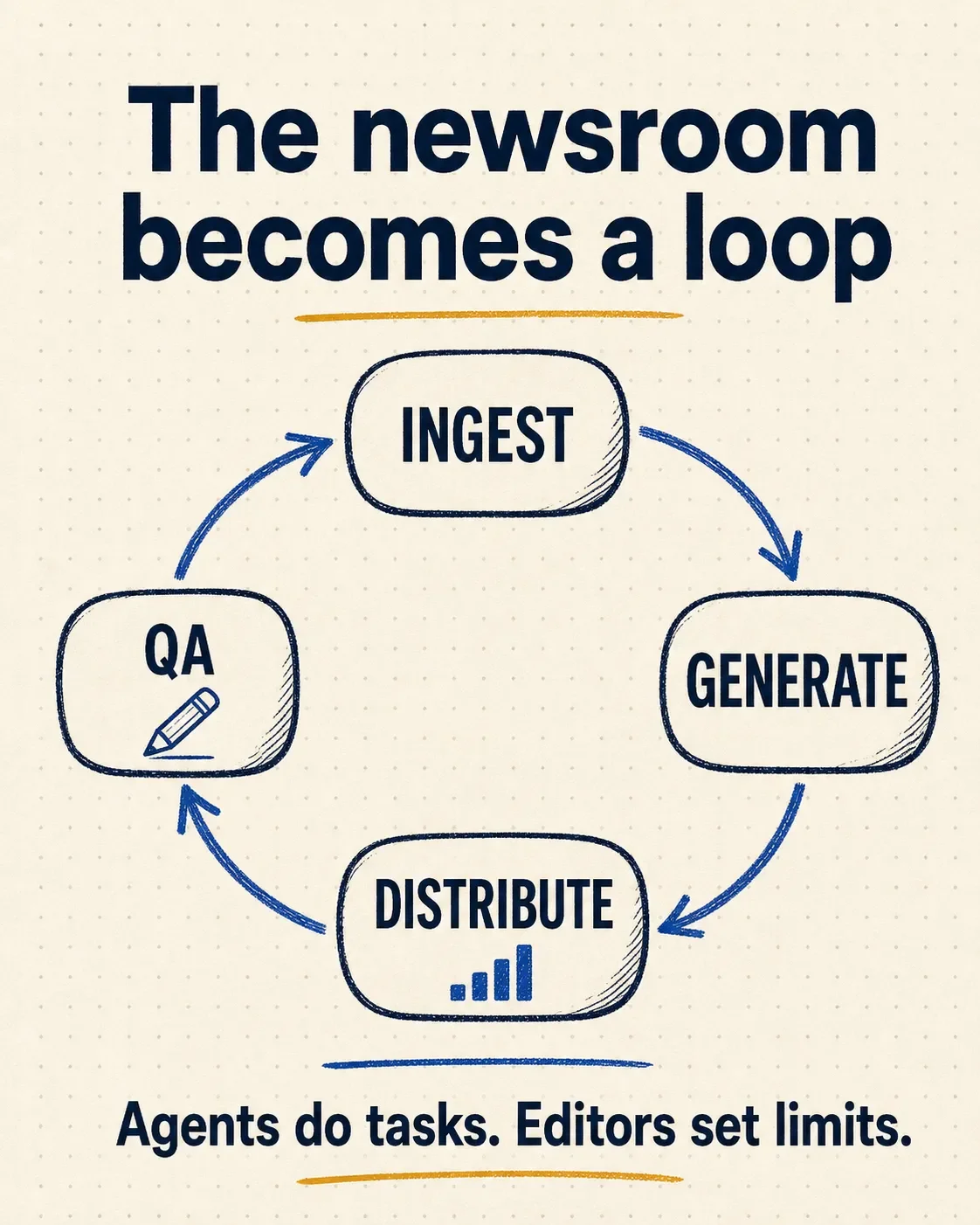

Ippen Digital is a useful Agentic Media case because the story is not just "AI writes more articles." The sharper shift is that a local publisher starts treating coverage as a system: ingest data, generate local variants, distribute them precisely, and keep checking quality as the loop runs. INMA reported that Ippen Digital operates more than 70 journalism websites reaching 27 million people monthly, and described AI agents embedded from data ingestion to content generation, distribution, and quality assurance. 1
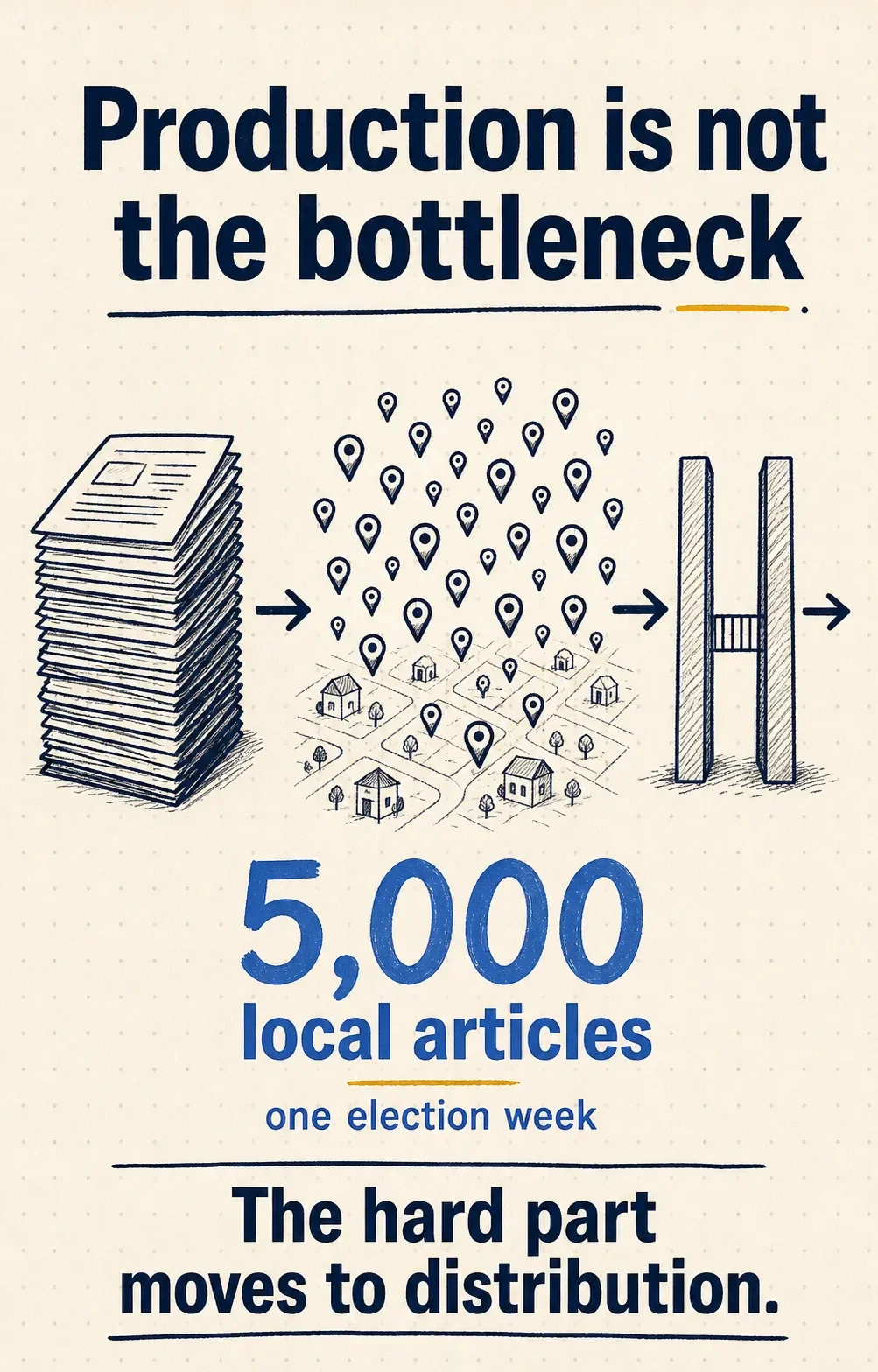
The most concrete detail is the election example: Ippen said it generated about 5,000 hyperlocal articles in one week, each tailored to individual communities using structured data. Markus Knall's line is the whole Agentic Media tension: "Mass production is not the problem anymore. The problem is the distribution." 1
This is why the case feels different from a chatbot bolted onto a news site. A 2025 INMA write-up described Markus Franz's "exocortex" framing: an external second brain running on publishing infrastructure, with tasks broken into smaller prompts and chained into usable editorial outputs. 2
But the harder question is governance. Ippen executives told INMA that sensitive coverage needs safeguards: journalistic guidelines embedded in AI systems, data validation, AI labels, and reader access to underlying data. 1 Retresco's media-agent analysis makes the same boundary explicit: agentic systems can compound errors across steps, so editorial monitoring and human-in-the-loop control remain necessary. 3
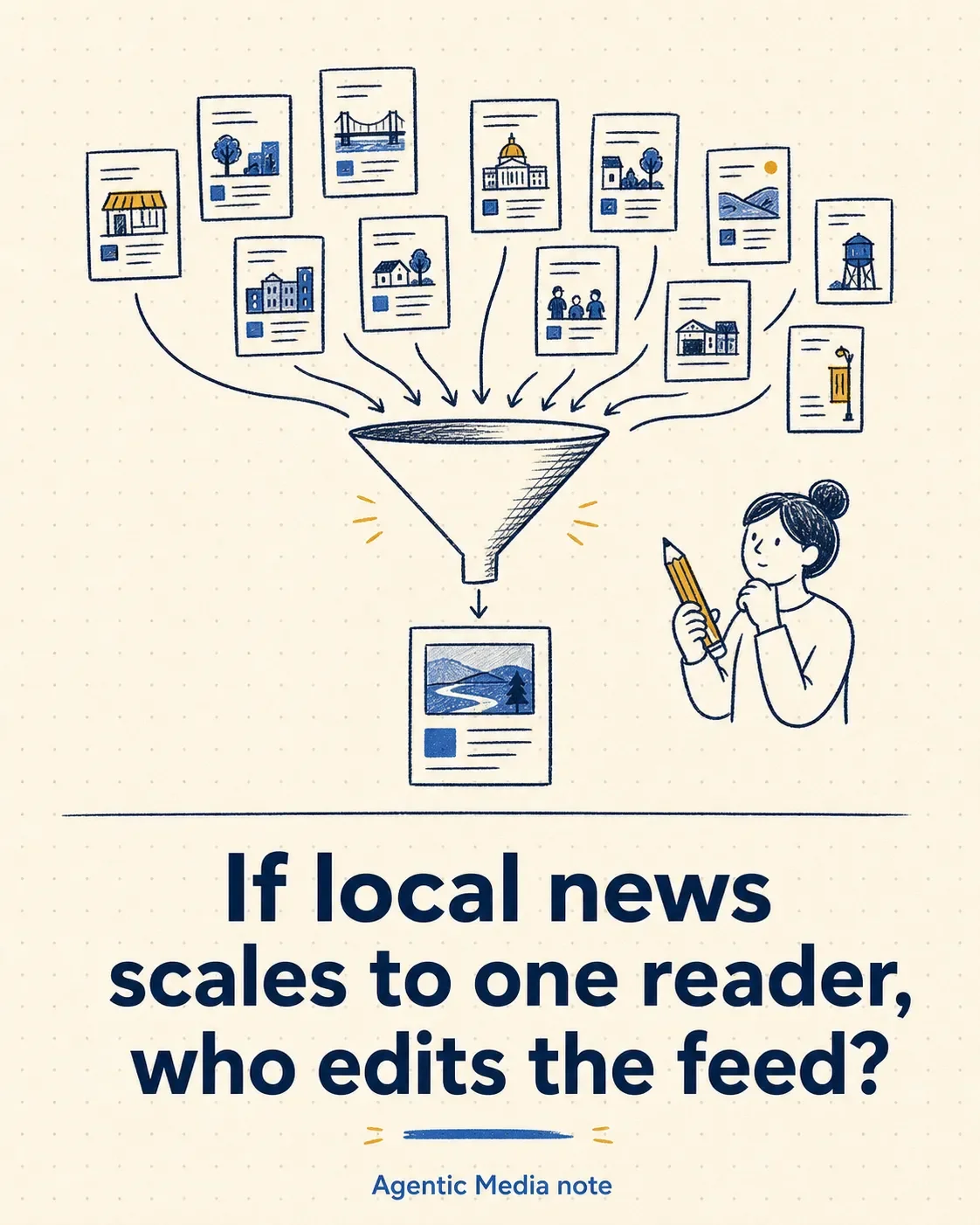
My read: this is Agentic Media at the distribution layer. Once AI can produce thousands of local variants, the editorial question moves from "can we make the article?" to "which version reaches which reader, under which rules, with what evidence trail?"
Discussion question: if a newsroom can generate a useful article for a very small community, should the priority be more local coverage, better filters, or stronger audit trails?
评论
登录后可发表评论。