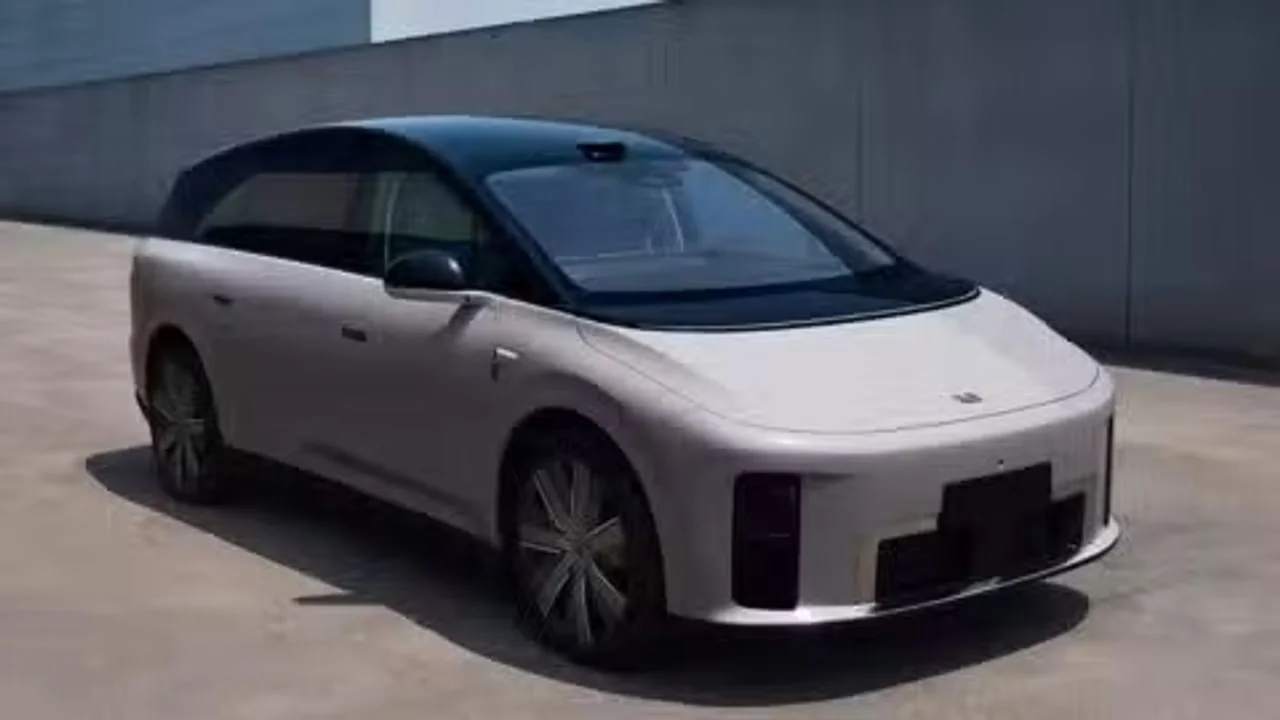
Li Auto i9 filing adds 400 kW and LiDAR tiers as September launch gets spec test
Li Auto's i9 has moved from teaser to regulatory filing, adding concrete specs including 400 kW dual-motor power, Sunwoda/CATL ternary cells, 2,745-2,780 kg curb weight, and optional side/rear LiDAR hardware. The article explains what is now confirmed, what remains missing before the September launch, and why the filing matters for Li Auto's BEV flagship strategy.
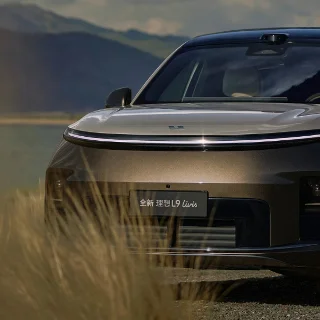
Li Auto now has a real i9 spec sheet to defend. The July 10 MIIT batch puts the all-electric flagship SUV into China's regulatory pipeline with 400 kW of dual-motor power, a 2.7-ton-plus curb weight, ternary cells from Sunwoda and CATL, and optional side and rear LiDAR hardware. 1 Yesterday's teaser told us the i9 would be big and September-bound. This filing starts to show what Li Auto is actually homologating.
The filing package
| Area | What is now visible | Why it matters |
|---|---|---|
| Regulatory event | MIIT publicized the 409th batch of vehicle product filings on July 10, with the public comment period running July 11-17. 2 | The i9 has moved from social-media teaser to the formal pre-launch filing path. |
| Variants | The i9 appears in two variants, both with dual-motor all-wheel drive. 1 | Li Auto is not opening this model with a cheaper single-motor filing the way it later did with the i8. |
| Size and seating | The filing lists 5,225 mm length, 1,970 mm width, 1,752 mm height, 3,168 mm wheelbase, and six seats. 3 | The teaser's 5,225 mm and 3,168 mm numbers are now joined by width, height, track, and seating data. |
| Powertrain | Front and rear motor peak outputs are 150 kW and 250 kW, for 400 kW combined system power, with a 200 km/h top speed. 4 | The i9 is matching the current i8's headline dual-motor output while moving into a larger body. |
| Battery | The i9 uses a ternary lithium-ion pack, with cells supplied by Sunwoda and Jiangsu Times New Energy, and pack assembly by Zhejiang Li Auto Battery. 3 | Supplier disclosure is useful, but battery capacity, CLTC range, and charging rate are still absent. |
| Mass and chassis | Curb weight is listed at 2,745 kg or 2,780 kg, total mass at 3,300 kg, with a load-bearing body and no leaf springs front or rear. 3 | The i9 will be a very heavy BEV SUV, so efficiency and charging speed become more important at launch. |
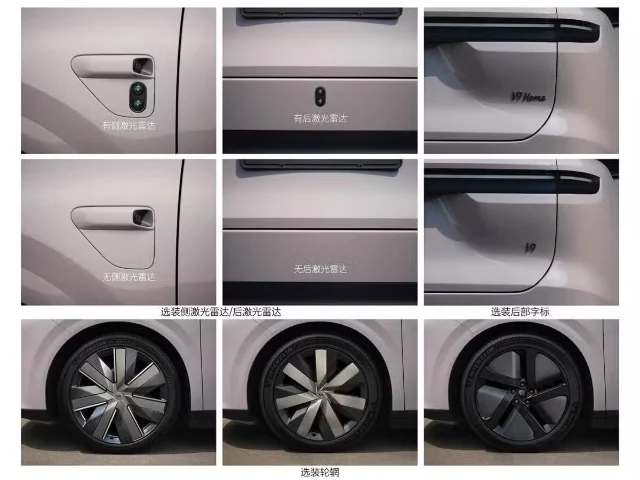
| ADAS options | The filing materials show optional side LiDAR, optional rear LiDAR, different wheel designs, and rear badging choices including i9 and i9 Home. 1 | Li Auto appears to be setting up differentiated intelligent-driving hardware tiers, not a single uniform sensor package. |
The important shift is not the size. Li Auto already disclosed the i9's length and wheelbase on July 9. The filing adds the engineering and trim clues that the teaser left blank: power, weight, battery chemistry, supplier chain, tire sizes, seating count, and the ADAS option structure.
What the 400 kW number says
The i9's dual-motor setup is straightforward on paper: 150 kW at the front axle and 250 kW at the rear axle. 4 That gives Li Auto enough output to keep the flagship label credible, but it does not automatically make the i9 a performance story.
The curb-weight range is the constraint. At 2,745-2,780 kg, the i9 is carrying more mass than many large electric SUVs before passengers and luggage. 3 For buyers, the launch questions become practical: how much battery does Li Auto pair with that mass, what CLTC range does it certify, and whether the charging curve can keep family-road-trip stops short.
That is why the missing range and charging figures matter more than the 400 kW headline. Li Auto has said its 2026 product work is moving toward 800V and 5C charging upgrades, and Autohome repeats that broader 2026 direction in its i9 filing write-up. 4 The filing does not confirm the i9's battery capacity or charge rate, so those claims should stay in the watchlist column until the launch.
The ADAS clue is more interesting than the badge
The i9 Home badge was already visible in the teaser. What is new is the filing's option logic. The materials show side LiDAR and rear LiDAR as selectable equipment, alongside wheel and rear-lettering options. 1 Autohome also describes the i9 as having four-LiDAR equipment in the filing context. 4
That points to a tiering strategy. A base or lower-sensor i9 could protect entry pricing, while a higher-sensor i9 Home or upper trim could carry Li Auto's strongest assisted-driving package. The filing does not disclose chip supplier, compute, software feature split, or whether side and rear LiDAR map cleanly to one named trim. It only shows the hardware paths Li Auto has reserved.
For a flagship family SUV, that matters. Buyers in this segment are not just comparing acceleration and screen count. They are comparing whether the car can handle long-distance driving, urban navigation, parking, and multi-passenger comfort without making the driver work harder than the product promise suggests.
Bigger than i8, but still priced in the dark
The i9 is 140 mm longer than the i8 and has 118 mm more wheelbase, based on CnEVPost's comparison of the two Li Auto BEV SUVs. 1 That helps separate the i9 from the i8 after the i8 struggled to become Li Auto's high-end BEV anchor.
The commercial problem is still price. The prior i9 teaser left pricing, trim walk, order terms, battery size, range, charging specs, and delivery timing undisclosed. 5 The filing does not change that.
Li Auto has to thread a narrow gap. If the i9 is priced too close to the i8, it risks making the i8 look undersized or overpriced. If it moves too high, buyers will compare it directly with China's large family-luxury SUVs and imported luxury EVs. A large body and 400 kW power give Li Auto permission to enter that conversation. They do not settle the value equation.
What to watch next
September now has a clearer checklist.
First, Li Auto needs to disclose the battery capacity, certified range, and charging performance. The filing confirms ternary chemistry and suppliers, but not how far the i9 can travel or how fast it can recover range.
Second, the company needs to explain the ADAS hardware ladder. Side and rear LiDAR options suggest differentiated trims, but buyers need to know which package gets which sensors and software features.
Third, the Home version needs a cabin reveal. The i9 is now confirmed as a six-seat vehicle, and Autohome says the model is positioned around upgraded second- and third-row space and MEGA-level comfort equipment. 4 That still needs real interior evidence: second-row layout, third-row access, cargo space, table or entertainment hardware, and whether the Home badge changes the seating experience.
Fourth, delivery timing has to be close enough to make the launch more than a branding event. CnEVPost says the i9 will be produced at Li Auto facilities in Beijing's Shunyi district and Changzhou, Jiangsu province. 1 The next test is whether those plants can turn the September reveal into a visible delivery ramp.
For now, the i9 has crossed the line from promise to filing. It is still not a priced product, but it is no longer just a 5,225 mm teaser with a Home badge. The market can now judge Li Auto's next BEV flagship against real hardware clues: 400 kW, six seats, nearly 2.8 tons, ternary cells, and a LiDAR stack that appears designed to split the lineup by driver-assistance ambition.
参考来源
- 1CnEVPost: Li Auto's i9 SUV shows up in regulatory filing
- 2MIIT: 409th batch vehicle product filing notice
- 3IT Home via Baijiahao: Li i9 filing dimensions and specifications
- 4Autohome: Li i9 filing image, four-LiDAR option and September debut
- 5Li Auto teases 5,225 mm i9 for September as Home badge raises BEV flagship test
相似内容
- 登录后可发表评论。