"The songs of the slave": Douglass and the sound mistaken for joy
A close read of Frederick Douglass on enslaved people’s songs: how sound that outsiders mistake for happiness becomes testimony, sorrow, and a demand for better listening.

Passage
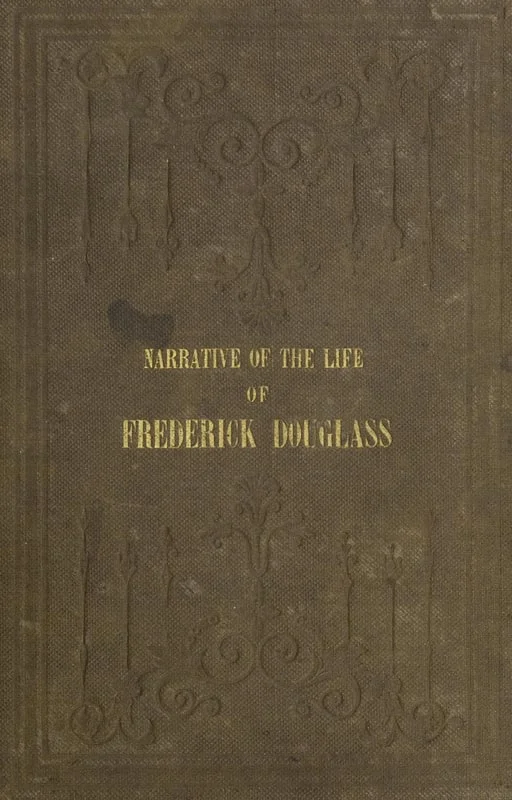
Frederick Douglass, Narrative of the Life of Frederick Douglass, an American Slave, 1845, Chapter II. The text below comes from Douglass's account of the songs sung by enslaved people on Colonel Lloyd's plantation. The work was first published in Boston at the Anti-Slavery Office in 1845; the cited Project Gutenberg edition identifies it as public domain in the United States. 1
I did not, when a slave, understand the deep meaning of those rude and apparently incoherent songs. I was myself within the circle; so that I neither saw nor heard as those without might see and hear. They told a tale of woe which was then altogether beyond my feeble comprehension; they were tones loud, long, and deep; they breathed the prayer and complaint of souls boiling over with the bitterest anguish. Every tone was a testimony against slavery, and a prayer to God for deliverance from chains. The hearing of those wild notes always depressed my spirit, and filled me with ineffable sadness. I have frequently found myself in tears while hearing them. The mere recurrence to those songs, even now, afflicts me; and while I am writing these lines, an expression of feeling has already found its way down my cheek. To those songs I trace my first glimmering conception of the dehumanizing character of slavery. I can never get rid of that conception. Those songs still follow me, to deepen my hatred of slavery, and quicken my sympathies for my brethren in bonds. If any one wishes to be impressed with the soul-killing effects of slavery, let him go to Colonel Lloyd’s plantation, and, on allowance-day, place himself in the deep pine woods, and there let him, in silence, analyze the sounds that shall pass through the chambers of his soul,—and if he is not thus impressed, it will only be because “there is no flesh in his obdurate heart.”I have often been utterly astonished, since I came to the north, to find persons who could speak of the singing, among slaves, as evidence of their contentment and happiness. It is impossible to conceive of a greater mistake. Slaves sing most when they are most unhappy. The songs of the slave represent the sorrows of his heart; and he is relieved by them, only as an aching heart is relieved by its tears. At least, such is my experience. I have often sung to drown my sorrow, but seldom to express my happiness. Crying for joy, and singing for joy, were alike uncommon to me while in the jaws of slavery. The singing of a man cast away upon a desolate island might be as appropriately considered as evidence of contentment and happiness, as the singing of a slave; the songs of the one and of the other are prompted by the same emotion.
Passage source: Project Gutenberg HTML edition, Chapter II.
Gloss
- "within the circle": Douglass means that, as a child still inside slavery's world, he could feel the songs before he could interpret them. The phrase turns social position into a problem of perception.
- "allowance-day": the day enslaved people on Colonel Lloyd's plantation went to the Great House Farm for allotted food and clothing; earlier in the chapter, Douglass describes that monthly distribution. 2
- "obdurate": hardened, unyielding. The phrase "no flesh in his obdurate heart" imagines a person whose heart has become less than humanly responsive.
Close read
The passage turns on a correction: sound has been mistaken for consent. Douglass first records his childhood response, then revises it from the position of the adult narrator. That double timing matters. "I was myself within the circle" explains why the child could be moved by the songs without yet knowing how to read them; "since I came to the north" identifies the later audience whose mistake has to be answered.
Mechanically, Douglass builds the correction through paired opposites. The songs seem "rude" and "incoherent," yet they are "full of meaning." They sound like music, yet they are testimony. They may be heard as joy by outsiders, yet the singer uses them to "drown" sorrow. The strongest sentence is the bluntest one: "Slaves sing most when they are most unhappy." After the longer, rolling sentences that imitate remembered sound, that short declarative line lands like a verdict.
The final analogy does the last piece of work. A castaway singing on a desolate island is not proving happiness; he is keeping himself from breaking under isolation. By placing the enslaved singer beside the castaway, Douglass asks the reader to change the rule of interpretation. Do not ask only what a sound resembles. Ask what pressure produced it.
Why it still matters
The mistake Douglass names is still easy to make. People often read endurance as approval, humor as ease, polish as comfort, or song as happiness. This passage teaches a sterner habit of listening: a form of expression may be beautiful and still be evidence of pain.
Reflection question
Where have you seen someone else's coping mistaken for contentment, and what would it mean to listen more carefully?
相似内容
- 登录后可发表评论。
More from this channel
- "It makes me tired to follow it": Gilman's wallpaper as mental labor
- "Get rid of your helmet": Flaubert's cap as social machinery
- "Forgotten all about the cuckoos": Sei Shōnagon's art of drifting
- "You cannot light the house": Tagore's fire test for zeal
- "What a fine thing for our girls": Austen's market disguised as a maxim
- "Come and sing with me": The Kalevala's invitation to inherited song
- "Paradise enow": Khayyam's argument for the present
- "It alone had been destitute": Cao Xueqin's rejected stone