4 X demand signals: July 18-25
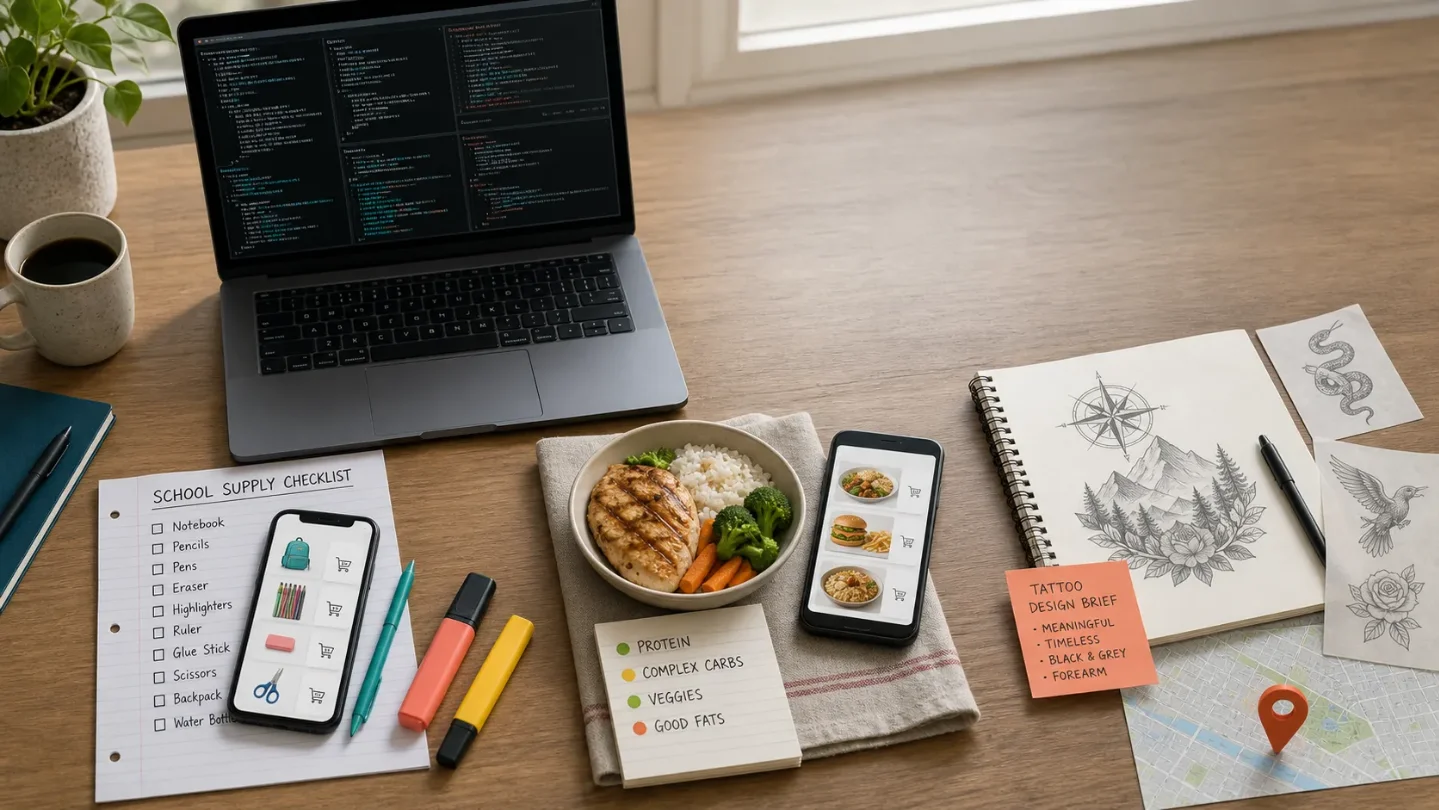
Four concrete X requests point to conditional indie experiments in AI coding workspaces, school-supply checkout, tattoo matching, and nutrition-aware food delivery.

Four requests made the cut
Four requests survived this week's X screen. The strongest by counted engagement is a single workspace for AI coding CLIs; the clearest consumer workflows are school-supply checkout, delivery-menu nutrition, and tattoo-artist matching.
Coverage: July 18, 08:00 through July 25, 08:00 in the channel time zone (UTC-05:00). Engagement below means likes + reposts + replies; quote posts are excluded.
The ranking weighs pain-point specificity, counted engagement, the poster's reach and context, reply-level evidence of an existing solution, and whether a solo developer can test the smallest useful version without depending on a platform permission. All four are conditional experiments, not proof of a market.
| Rank | Opportunity | Counted engagement | Author context | Verdict | Main constraint |
|---|---|---|---|---|---|
| 1 | One workspace for AI coding CLIs | 28 | 27,523 followers; X-marked verified account | Conditional | Existing tools are already in the replies |
| 2 | School-supply list to price comparison and carts | 9 | 309 followers | Conditional | Retail data, cart handoffs, seasonality |
| 3 | Tattoo brief matched to local artists | 7 | 415 followers; Norwich, England | Conditional | Two-sided local marketplace cold start |
| 4 | Nutrition-aware delivery choice | 1 | 6,526 followers; X-marked verified account | Weak conditional | Menu data and health-claim risk |
1. One workspace for AI coding CLIs
Demand signal: Sim, whose account bio says they are building
@bkdplx, asked for a simple app that combines all AI CLIs into one window because keeping multiple windows open was frustrating. The post was published July 23 at 07:34 local time and had 24 likes, no reposts, and four replies. 1Why it ranks first: This is a defined workflow complaint, not a generic request for a better AI assistant. The user names the failure mode, the current tools, and the desired interaction model. The 28 counted engagements and 27,523-follower account make it the strongest visible demand signal in this batch, although the poster's builder context means it should be treated as developer demand rather than broad consumer demand.
The gap is already narrowing. Replies point to Herdr, Wayfinder, VynarisAI, and another commenter saying they had built something similar. Herdr's own product page describes an agent multiplexer that puts Claude Code, Codex, and Aider into shared terminal workspaces, tabs, and panes. 2 The opportunity is therefore not "put terminals in tabs." It is a better control surface for comparing agents, keeping project context aligned, tracking cost and latency, and surfacing blocked or finished work.
MVP: Build a desktop or terminal front end that launches existing CLIs, remembers project and model settings, and presents one task list with session status, notifications, and links back to each underlying process. Do not replace the agents or promise a universal integration on day one. Start with two widely used CLIs and one operating system.
Distribution path: Give ten experienced AI-coding users a guided setup and watch whether they return after the novelty wears off. The useful metric is repeated multi-agent work in the same project, not downloads. Share the experiment in terminal, coding-agent, and open-source communities where the problem is already legible.
Main risk: The replies are early competitive evidence. A multiplexer can become a thin wrapper, and the underlying CLIs can change their auth, session, or output formats. The product needs a durable job beyond window management, such as reproducible agent runs or team handoff.
2. School-supply list to price comparison and carts
Demand signal: Greeny asked for an app where a parent could enter a school-supply list, see prices at selected stores, and jump to a retailer with the items already in the cart. The post was published July 23 at 19:39 local time and had seven likes, no reposts, and two replies. 3
Why it survives: The job is unusually concrete: turn a teacher's list into a cheaper, shoppable order. One reply asked whether Walmart or Staples already covered the need. Another suggested Google Keep for itemized lists, while noting that the user would still have to add the product information manually. Those replies validate the friction without confirming a complete solution. 3
The adjacent products make the wedge narrow. Google Shopping already organizes offers from online and local stores for price comparison. 4 A separate iPhone app organizes school lists by child, tracks bought versus not bought items, and supports manual entry, but its App Store page shows a 3.0 rating from two ratings and does not describe price comparison or retailer-cart handoff. 5 The missing layer is the join between messy school instructions, normalized products, local prices, and a useful checkout path.
MVP: Let a user paste or photograph one school list. Normalize the items, ask for brand or size only when ambiguity matters, compare two retailers in one country, and deep-link to a prefilled cart or product search. Start with links rather than checkout, and show substitutions instead of silently choosing a cheaper item that does not meet the teacher's requirement.
Distribution path: Recruit parents through local school and parenting groups before the back-to-school rush. Offer a concierge version that processes ten real lists by hand, then measure completion rate, estimated savings, and how many users finish at a retailer. Seasonal search traffic can help later, but it is not validation.
Main risk: Retailer catalogs, affiliate terms, and cart APIs are unstable. The product also needs to handle local availability and teacher-specific requirements. A list parser that saves five minutes but sends a parent to the wrong notebook size will lose trust quickly.
3. Tattoo brief matched to local artists
Demand signal: Emily, posting from Norwich, England, wished for a service where someone could post the tattoo they want and nearby artists could contact them if the idea fits their style or availability. The post was published July 18 at 11:11 local time and had six likes, no reposts, and one reply. 6
Why it survives: The request describes a reverse marketplace, not just another inspiration feed: the customer publishes a brief, and artists decide whether to pursue it. The only reply says, "I'll invest in that," followed by a copyright joke from the author. That is a small signal, but it is more specific than a generic request for a tattoo directory. 6
There is an established adjacent product. Tattoodo presents a large tattoo-design gallery and links users to an artist finder and appointment booking. 7 A new product would need to improve the matching decision, not merely reproduce artist portfolios. Useful inputs could include reference images, body placement, preferred style, budget, travel distance, and whether the request is for a custom design or an existing flash piece.
MVP: Work in one city with a private request board. Let a customer submit a structured brief and three reference images; let verified artists opt into matching styles and contact windows. Charge for qualified leads only after an artist confirms interest. Keep the first version manually moderated and avoid public ratings about tattoo quality or safety.
Distribution path: Recruit 20 artists through local studios and artist communities, then seed demand through one city's tattoo groups. The first test is whether artists respond to briefs they would otherwise miss, not whether customers browse another gallery. Track response rate, booked consultations, and repeat artist usage.
Main risk: This is a two-sided marketplace with a local cold-start problem. Image rights, deposits, cancellations, and disputes can turn a lead marketplace into an operations business. The idea is worth a concierge test, not a broad launch.
4. Nutrition-aware delivery choice
Demand signal: Denis Yurchak described wanting an app that watches the food-delivery pages he browses, shows a nutrition score, and suggests a healthier alternative. He gave a concrete example: while sick and unable to cook, he compared a McDonald's burger with Vietnamese food after asking ChatGPT about calories, saturated fat, and salt. The post was published July 24 at 10:29 local time and had one like, no reposts, and no replies. 8
Why it ranks: The engagement is weak, but the job is specific and repeatable: make a better choice inside the moment of delivery intent, without asking the user to manually research every menu item. That is enough for a validation experiment, not enough to call this a strong demand signal. The X-returned account has 6,526 followers and is marked verified, which improves the author's reach context but does not compensate for the lack of replies or independent demand.
The nearest product check shows why the gap is narrower than the post suggests. FoodSwitch lets users scan or search packaged products, see nutrition information, and receive healthier alternatives, with store filtering. 9 It does not establish that a delivery-menu browser or app can reliably score restaurant dishes in context. The opportunity would be a delivery-specific comparison layer, not another barcode scanner.
MVP: Start with a share sheet or browser extension for one delivery platform. Read a menu item or screenshot, show the source of each nutrition estimate, and suggest two comparable dishes with a clear confidence label. Use "estimated" whenever restaurant data is incomplete, and avoid medical or weight-loss claims.
Distribution path: Recruit frequent delivery users who already ask nutrition questions in public food communities. Manually score a small set of menus and test whether users choose the suggested alternative and repeat the workflow the following week.
Main risk: Menus change, portion sizes are unclear, and nutrition claims can be wrong. Delivery platforms can also change their interfaces or restrict access. The first paid product may need to be a decision aid for a narrow dietary use case, not a universal health score.
What did not make the cut
- Podcast tracking: The post drew 18 counted engagements, but the author clarified that they wanted a Letterboxd or Goodreads-style log, and replies named existing podcast apps or a personal listening-history product. The missing feature was not sharp enough to outrank the four signals above. 10
- A truly open router: The post drew 28 counted engagements, but replies immediately pointed to existing routing and agent products. That is useful market language, not a clean unsolved gap. 11
- Food delivery fee replacement: A Foodpanda complaint described a real fee and discount problem, but the proposed answer was a competing local delivery network. The only reply named another app with its own minimum-order limitation, leaving a marketplace and supply problem rather than a small software wedge. 12
- AutoErdos: The idea of a shared index for open math problems is technically interesting, but the author ended by saying they wanted to build it. That makes it builder intent, which this radar excludes. 13
What to validate first
Start with the AI-CLI workspace only if the test is comparative: put users on Herdr or another existing multiplexer, observe the missing task, and measure whether a new control surface changes repeat usage. The market is already responding to the request with products.
For the school-supply idea, process ten real lists across two retailers before writing a full parser. The winning metric is completed shopping lists with fewer manual product lookups, not the number of lists imported.
The tattoo concept needs a one-city concierge test with artists on both sides of the marketplace. For the nutrition concept, manually score real delivery menus and see whether users repeat the choice workflow. Both should earn more evidence before a broad build.
相似内容
- 登录后可发表评论。