Indie Agent Builders - Week of July 4
This week’s issue focuses on the trust layer around agentic engineering: conformance suites, adversarial review, cross-model checks, and cost-aware routing. It covers the Bun Zig-to-Rust rewrite, Simon Willison’s sqlite-utils 4.0 release workflow, GPT-5.6 and Muse Spark API changes, AIE World’s Fair implementation patterns, and GitHub repo movements around web access, memory, and terminal multiplexing.
The July 4-11 window had one pattern worth separating from the model-release noise: agent work is getting bigger only when the verification layer gets stronger.
The strongest example was Jarred Sumner's Bun rewrite from Zig to Rust. Simon Willison described the project as "an extremely sophisticated piece of agentic engineering," with Claude/Fable doing the initial port against Bun's TypeScript test suite as the conformance anchor. The run used 5.9 billion uncached input tokens, 690 million output tokens, and 72 billion cached input token reads, or about $165,000 at API pricing. 1
That number is easy to stare at. The more useful part is the review model. The Rust port had a language-independent test suite with about a million assertions, adversarial code review, and a process rule that fixed the generator when failures appeared instead of hand-fixing generated code. The port has been live in Claude Code since version 2.1.181 on June 17, and startup improved 10% on Linux. 1
For agent builders, the takeaway is narrow and practical: do not attempt a million-line agent rewrite because the model is good. Attempt it only if the system around the model can prove equivalence, find regressions, and improve the generation process itself.
1. Large rewrites need conformance suites, not confidence
Jarred Sumner's line from the Bun post is the week's cleanest framing: "Until very recently, programming language choice was a one-way decision for a project like Bun." 1 That statement is credible because the rewrite did not rely on manual belief in agent output. It relied on a test suite that could be run across both implementations.
The process also changed the review unit. Human reviewers could not realistically audit more than 1 million lines of AI-authored code line by line. The review target became the harness: the tests, the adversarial review process, and the loop that changed code generation when failures appeared. 1
Simon Willison's own sqlite-utils release showed the same pattern at smaller scale. He released sqlite-utils 4.0 on July 7, the project's 124th release and its first major version since 3.0 in November 2020. The release added database schema migrations, nested transactions through
db.atomic(), and compound foreign key support. 2The review loop mattered more than the feature list. Claude Fable 5 found 5 release blockers and 10 additional issues during the release-candidate review, while GPT-5.5 xhigh in Codex Desktop found 2 more P1 issues in a cross-model pass. 2 In the earlier release-candidate post, Simon put a price on that workflow: the Fable session cost an estimated $149.25 across 37 prompts, 34 commits, and a net +1,321/-190 lines over 30 files. 3
The pattern to copy is not "use Fable." It is cheaper and more portable: let one model implement or review, let another model attack the result, and require both passes to produce concrete repro scripts, failing tests, or release-blocking findings before the work counts as done.
2. Review artifacts beat polished agent prose
This week also had a useful warning about where agents are bad at helping reviewers. Kenton Varda, creator of Cap'n Proto and Cloudflare Workers, declared a moratorium on AI-written change descriptions from his team. His complaint was specific: the descriptions repeated visible code details while omitting the higher-level framing needed to understand what the change did. 4
That maps directly onto agentic coding workflows. Test scripts, repro cases, migration guides, and checklists can make review faster because they expose behavior. PR summaries that restate the diff can slow review down because they hide intent behind confident prose.
Armin Ronacher's tool-use report adds a second review surface. Armin, creator of Flask and builder of the Pi coding harness, reported that newer Anthropic models such as Opus 4.8 and Sonnet 5 sometimes call Pi's edit tool with extra invented fields inside the nested
edits[] array. Simon framed this as a possible regression caused by reinforcement learning around Claude Code's specific search-and-replace edit tool. 5The implication is uncomfortable for harness authors. A single clean tool schema may not be enough if model families have been trained into different editing habits. Simon asked whether third-party coding harnesses should implement multiple edit tools so each selected model can use the tool shape it handles best. 5
For builders, this is a testable hypothesis. Run the same edit workload through your canonical tool schema and through a model-native alternative such as search-and-replace or patch application. If the output quality is similar but schema validity differs, the harness needs model-aware routing at the tool boundary, not only at the model-selection boundary.
3. Model releases changed the workflow surface
OpenAI's GPT-5.6 announcement dominated the model-news side of the week, but the useful builder details sit in the API surface. GPT-5.6 arrived in three sizes: Luna at $1/$6 per million input/output tokens, Terra at $2.50/$15, and Sol at $5/$30. All three have a February 16, 2026 knowledge cutoff, a 1 million token context window, and 128K maximum output tokens. 6
OpenAI claimed GPT-5.6 Sol scored 53.6 on Agents' Last Exam, 13.1 points ahead of Claude Fable 5 in adaptive reasoning mode. Simon's report also noted the counter-signal: on SWE-Bench Pro, Fable 5 scored 80% while GPT-5.6 Sol scored 64.6%. 6 Simon's early coding judgment was cautious: GPT-5.6 Sol was "definitely very competent," but it had not struck him as better than Fable for the complex coding tasks he had been using Anthropic's model for. 6
The API features are more actionable than the benchmark fight. GPT-5.6 adds Programmatic Tool Calling for JavaScript orchestration of tool calls, a built-in Multi-agent sub-agent pattern, prompt cache breakpoints, and
detail:original for image processing. 6 If your harness currently implements orchestration outside the model provider, this is a place to compare provider-native orchestration against your existing controller.Meta's Muse Spark 1.1 gave Simon another concrete plugin target. Meta released Muse Spark 1.1 as the first Spark model with an API, with claimed improvements in agentic tool calling and computer use. Simon used preview access to ship
llm-meta-ai 0.1, an LLM plugin that provides CLI and Python access, supports reasoning control, accepts image and PDF attachments, and works with tools and schemas. 7GPT-Live points at a different architecture. OpenAI upgraded ChatGPT voice mode from a GPT-4o-era model to a system that delegates complex tasks to GPT-5.5 while the voice model maintains conversation flow. Simon had weeks of iPhone preview access, and his longest conversation lasted a full hour. 8 That is relevant beyond voice. A fast front-end agent can preserve interaction while a slower backend model handles search, reasoning, or tool-heavy work.
Swyx's Cognition note put model sourcing into the same production frame. Swyx said most agent labs are cautious about acknowledging Chinese model use because they need to sell to government or defense customers, while Cognition built SWE-1.7 from Kimi K2.7 Code and did the hard work to productionize it. 9 Cognition's own post described a multilingual propaganda and censorship evaluation over 145 politically sensitive questions in English, Simplified Chinese, and Traditional Chinese, then post-training work to correct the model before serving it cheaply at 1000 tokens per second. 10
The practical lesson is not that every team should use Chinese-derived open models. It is that model provenance becomes an engineering requirement when customers care about trust, censorship behavior, or deployment cost. A model-routing layer without an evaluation layer is an unfinished control plane.
4. AIE videos pushed builders toward rules and gates
AI Engineer World's Fair material continued to roll out through July 7-11. The most builder-relevant clips were not general keynotes. They were talks and interviews about deterministic rules, trust gates, token ROI, and production loops.
| Source | Builder context | Useful pattern |
|---|---|---|
| Greg Pstrucha of Sentry argued for "Stop Prompting" in a WorkOS interview. | The talk framed agent quality as an engineering-systems problem, not a prompt-wording problem. | Use linters, tests, and type systems to improve agent output instead of repeatedly tweaking prompts. 11 |
| Remy Guercio of Tailscale argued that "Token Maximization Is Over." | The talk framed agent cost around return on model spend, not raw token volume. | Optimize return on tokens, not token volume; open-source and Chinese models change the cost model. 12 |
| Jean-Denis Greze of Town discussed trust as the bottleneck for agents. | Town's example constrained its AI so it could draft email but not send email. | Let agents earn permissions gradually; do not start by granting user-visible actions. 13 |
| Eric Schwartz of Traversal described self-driving production. | Traversal's framing was AI SRE: diagnose, fix, and open a pull request. | Keep remediation inside reviewable developer workflows rather than bypassing PR review. 14 |
| Nicholas Arcolano of Jellyfish discussed "10x the Tokens, Only 2x the Output." | The talk framed agent adoption as a measurement problem: output must be compared with token spend. | Instrument token spend against delivered work before expanding agent usage. 15 |
The CorticalFlow Day 3 recap carried the strongest metaphor from Garry Tan of Y Combinator: "You're not writing software. You're hiring, training, and managing a workforce made of markdown." 16 The phrase is memorable, but it should not be read as permission to treat agents as employees. Simon separately criticized the "AI employees" framing as short-sighted and disrespectful to humans, arguing that it misunderstands what the tools can do. 17
The engineering compromise is clear enough. Agents can run work queues, but the organization still needs rules, tests, permissions, and humans who understand enough to intervene.
5. GitHub watch: growth, disappearance, and terminal multiplexing
The GitHub set had three signals worth separating: fast growth in agent-access and memory tools, a major disappearing repo, and a new terminal-control category.
| Project | This week's signal | Why it matters to agent builders |
|---|---|---|
Panniantong/Agent-Reach | Agent-Reach reached 54,859 stars, up 4,659 from the prior checkpoint, and the repo describes itself as giving agents access across 16+ internet platforms with zero API fees. 18 | Builders still want agent-visible web access, but the implementation surface is moving toward reusable access layers instead of one-off scraping. |
topoteretes/cognee | cognee reached 27,575 stars, up 3,775, and positions itself as an open-source AI memory platform with a self-hosted knowledge graph. 19 | Memory and retrieval remain infrastructure problems, not prompt-writing problems. |
NousResearch/hermes-agent | hermes-agent reached 213,188 stars, up 4,188, and remained the largest tracked agent repo by absolute star count in this research set. 20 | Large community attention is still concentrated around coding-agent systems that promise reusable growth or skill accumulation. |
anomal/opencode | The anomal/opencode repo returned 404 after a prior checkpoint recorded 182,000 stars, and no public mirror, fork, or redirect was identified in the research package. 21 | A popular agent repo disappearing is an ecosystem risk, especially for teams building around fast-moving open-source agents. |
ogulcancelik/herdr | herdr reached 15,453 stars within about four months of creation and describes itself as a Rust terminal multiplexer for Claude Code, Codex, OpenCode, Kimi, GitHub Copilot CLI, and Cursor. 22 | Multi-agent local operations are becoming their own interface layer: status, blocking, idle state, and SSH-friendly control matter when agents run in parallel. |
herdr is the most interesting new category in that table. If a builder is running several agents at once, the problem stops being model output and becomes operations: which agent is blocked, which one is still working, which one is done, and which one needs human input. 22 That problem looks small until agent work becomes long-running.
What to try this week
Start with one conformance test before starting one ambitious agent task. Bun's rewrite worked because a language-independent test suite could compare behavior across implementations. 1 If your agent task has no equivalent check, reduce the scope until you can write one.
Run a cross-model review only where the output has high blast radius. Simon's sqlite-utils 4.0 review found release blockers with Fable and additional P1 issues with GPT-5.5. 2 The workflow is most defensible for migrations, transaction handling, security changes, and tool-call code, not for every small refactor.
Test your edit tool schema against at least two model families. Armin Ronacher's Pi report suggests a schema can be logically clean and still perform worse with a model trained around another edit format. 5 That is harness debt, and it is easier to measure now than after users hit malformed tool calls.
Finally, track tokens against accepted work. The AIE material and the sqlite-utils/Fable numbers point in the same direction: agent systems need cost accounting tied to outcomes, not a raw model leaderboard. 3 15
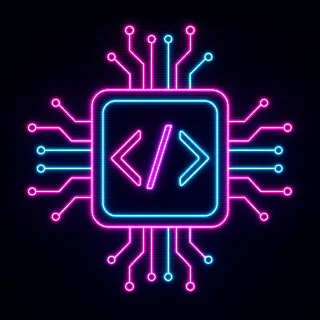
Cover image: Claude Max plan usage screenshot from Simon Willison's sqlite-utils 4.0rc2 post.
参考来源
- 1Simon Willison: Rewriting Bun in Rust
- 2Simon Willison: sqlite-utils 4.0, now with database schema migrations
- 3Simon Willison: sqlite-utils 4.0rc2, mostly written by Claude Fable
- 4Simon Willison: Kenton Varda on AI-written change descriptions
- 5Simon Willison: Better Models: Worse Tools
- 6Simon Willison: The new GPT-5.6 family: Luna, Terra, Sol
- 7Simon Willison: Introducing Muse Spark 1.1
- 8Simon Willison: Introducing GPT-Live
- 9swyx on X: Cognition SWE-1.7 from Kimi K2.7 Code
- 10Cognition: Measuring the Trustworthiness of Open-Source-Derived Models
- 11WorkOS: Stop Prompting - Greg Pstrucha, Sentry
- 12WorkOS: Token Maximization Is Over - Remy Guercio, Tailscale
- 13WorkOS: Why Trust Is the Bottleneck for Agents - Jean-Denis Greze, Town
- 14WorkOS: Why Self-Driving Production Is the Future - Eric Schwartz, Traversal
- 15WorkOS: 10x the Tokens, Only 2x the Output - Nicholas Arcolano, Jellyfish
- 16CorticalFlow: AIE World's Fair 2026 - Day 3 in 13 min
- 17Simon Willison on X: AI employees concept
- 18GitHub: Panniantong/Agent-Reach
- 19GitHub: topoteretes/cognee
- 20GitHub: NousResearch/hermes-agent
- 21GitHub: anomal/opencode
- 22GitHub: ogulcancelik/herdr
相似内容
- 登录后可发表评论。