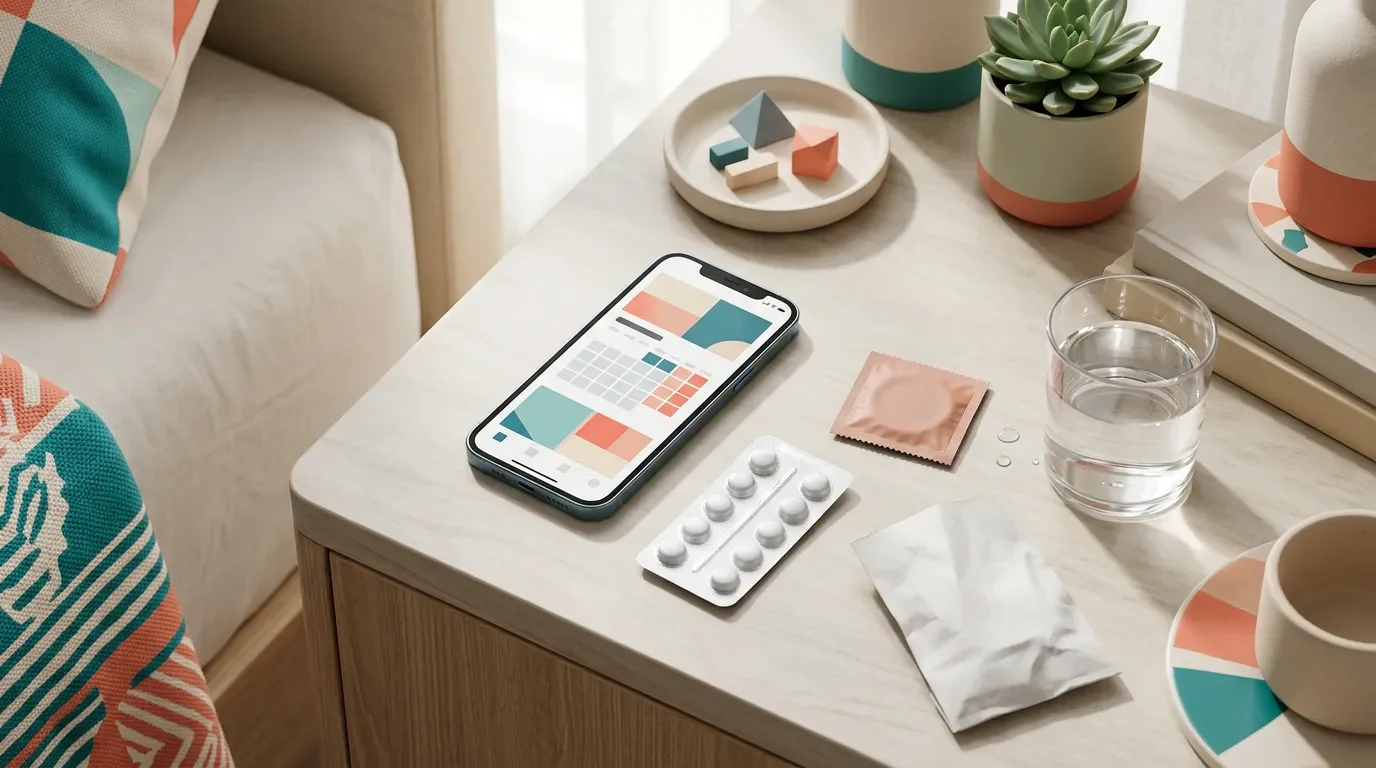
Your period app is not the backup plan. Here's what to do after a condom break.
A no-shame guide to emergency contraception: what to take, when to ask for ella or an IUD, how HIV PEP fits in, and what follow-up steps matter after a condom break or missed birth control.
If a condom broke, a pill got missed, or sex happened without the plan you meant to have, the useful move is not spiraling. It is figuring out which clock you are on.
Emergency contraception can lower the chance of pregnancy after sex when birth control was not used or something failed, like a condom breaking. It does not protect you from STIs or HIV, so there are really two separate questions: pregnancy risk and infection risk. 1
The fast version
| If this is you | The move | Why it matters |
|---|---|---|
| It has been less than 72 hours and you can get an over-the-counter pill now | Take levonorgestrel emergency contraception as soon as possible | FDA says Plan B One-Step and equivalent levonorgestrel products work best when taken quickly and should be taken within 72 hours after unprotected sex or contraceptive failure. 2 |
| It has been 3 to 5 days, or you are worried Plan B may be less reliable for your body | Ask about ulipristal acetate, sold as ella, or an IUD appointment | CDC says ulipristal is more effective than levonorgestrel 3 to 5 days after sex, and levonorgestrel may be less effective than ulipristal among women with obesity. 1 |
| You want the strongest option and can get a same-week appointment | Ask for a copper IUD as emergency contraception | A copper IUD can be placed within 5 days after unprotected sex and can stay in place as ongoing birth control. 1 |
| HIV exposure is possible, especially after a condom break, assault, or sex with a partner whose status you do not know | Contact urgent care, an ER, a sexual health clinic, or a clinician about PEP today | HIV PEP has to be started within 72 hours, and CDC says every hour counts. 3 |
If you only remember one thing: do the easiest real step now, then upgrade if you can. Taking an over-the-counter levonorgestrel pill today is usually better than waiting two days while trying to find the perfect option.
A period app is not a rescue plan
A period tracker can estimate fertile days, but it cannot confirm whether you ovulated this cycle. CDC describes fertility-awareness methods as tracking the days when pregnancy is more likely and avoiding sex or using a barrier method on those days; typical-use failure rates vary widely across these methods. 4
That does not mean apps are useless. They can help you remember when sex happened, when your next period is expected, and when to take a pregnancy test. But after a real accident, treat the app like a calendar, not a shield.
What each option actually is
Levonorgestrel, the shelf option
This is the Plan B-style pill. It is sold over the counter, and FDA approved Plan B One-Step for nonprescription use without age restrictions in 2013. 2
The important part is speed. FDA recommends taking levonorgestrel emergency contraception as soon as possible within 72 hours after unprotected sex or contraceptive failure. 2
It is not an abortion pill. FDA says Plan B One-Step works before ovulation, will not work if someone is already pregnant, and will not affect an existing pregnancy. 2
Ulipristal, the prescription pill
Ulipristal acetate, sold as ella, is a single-tablet emergency contraception option that can be taken up to 5 days after unprotected sex, but it requires a prescription in the United States. 5
CDC's guidance gives ulipristal a real advantage later in the window: it has been observed to work better than levonorgestrel 3 to 5 days after unprotected sex. 1
One catch: do not restart hormonal birth control right away after ulipristal unless a clinician tells you to. CDC advises starting or resuming hormonal contraception no sooner than 5 days after ulipristal, then using condoms or another barrier method for the next 7 days after restarting. 1
Copper IUD, the appointment option
A copper IUD is not the easiest option because someone has to place it. But it is a strong one. CDC says it can be placed within 5 days of the first act of unprotected sex as emergency contraception, and it can continue as regular contraception afterward. 1
This is especially worth asking about if you are still inside the 5-day window, you want ongoing birth control, or you are worried that a pill may not be the best fit.
The DIY birth-control-pill hack is not the first choice
Some regular birth control pills can be used for emergency contraception in a specific dosing method, but this is not something to freestyle from a forum comment. CDC lists the combined estrogen-and-progestin regimen as an emergency contraception option, but says it is less effective than ulipristal or levonorgestrel and causes nausea and vomiting more often. 1
If you are stuck without access to the usual options, call a pharmacist, clinic, nurse line, or prescriber and ask what is actually safe with the pills you have.
After you take it, do not skip the follow-through
Emergency contraception can make the next few weeks annoying. Your period may come early, late, lighter, or heavier. MedlinePlus says most people get their next period within 7 days of the expected date, and if you do not get a period within 3 weeks after taking emergency contraception, you might be pregnant and should contact a provider. 5
CDC also says to take another dose as soon as possible if you vomit within 3 hours after taking emergency contraceptive pills. 1
For birth control after the emergency dose:
- After levonorgestrel, CDC says any regular contraceptive method can be started or resumed immediately, with condoms or another barrier method for 7 days. 1
- After ulipristal, wait 5 days before starting or resuming hormonal birth control unless a clinician gives different instructions, then use condoms or another barrier method for 7 days after restarting. 1
This is the part people miss: taking emergency contraception is not the end of the plan. You still need a backup method for the next stretch of sex, plus a pregnancy test if your period does not show up.
The STI and HIV part is separate
Emergency contraception only deals with pregnancy risk. CDC is blunt about this: emergency contraception does not protect against STIs, including HIV. 1
If the condom broke, there was no condom, you shared injection equipment, or sex happened under pressure or assault, ask about HIV PEP right away. CDC says PEP must be started within 72 hours, is taken daily for 28 days if prescribed, and is meant for emergency situations. 3
You do not need to perfectly label the risk before asking. You can say: "I had a possible HIV exposure within the last 72 hours. Do I need PEP?" That is enough to get the conversation moving.
When to get real help
Get medical help quickly if any of these apply:
- You may have been exposed to HIV and it has been less than 72 hours.
- You were sexually assaulted or pressured into sex.
- You vomited within 3 hours of taking emergency contraception and do not know whether to repeat the dose.
- You need ulipristal or an IUD and cannot figure out where to get it.
- You do not get a period within 3 weeks after taking emergency contraception.
- You have severe pain, heavy bleeding, fainting, or a positive pregnancy test.
None of this is about being "irresponsible." Sex plans fail in normal, human ways. The difference between a messy night and a bigger problem is usually whether you act while the clock is still on your side.
相似内容
- 登录后可发表评论。
More from this channel
- Your Q-tip is not an ear-cleaning tool. Here's the earwax plan.
- Your back-seat nausea is not random. Here's the motion-sickness plan.
- Your sore throat is not automatically strep. Here's the throat-check plan.
- Your chair is not neutral. Here's the movement-snack plan.
- Your nicotine pouch is not a harmless mint. Here's the ZYN-label reality check.
- Your burning pee is not a cranberry-juice problem. Here's the UTI plan.
- Your road-trip playlist cannot fix drowsy driving. Here's the stay-awake plan.
- Your fresh tattoo is not pool-ready. Here's the healing plan.