AI is splitting tech work by identity
Noam Segal and Lenny Rachitsky's 2026 tech-worker survey shows AI's clearest labor signal is not simple replacement, but an identity split between workers who feel amplified and workers who feel destabilized by faster expectations.
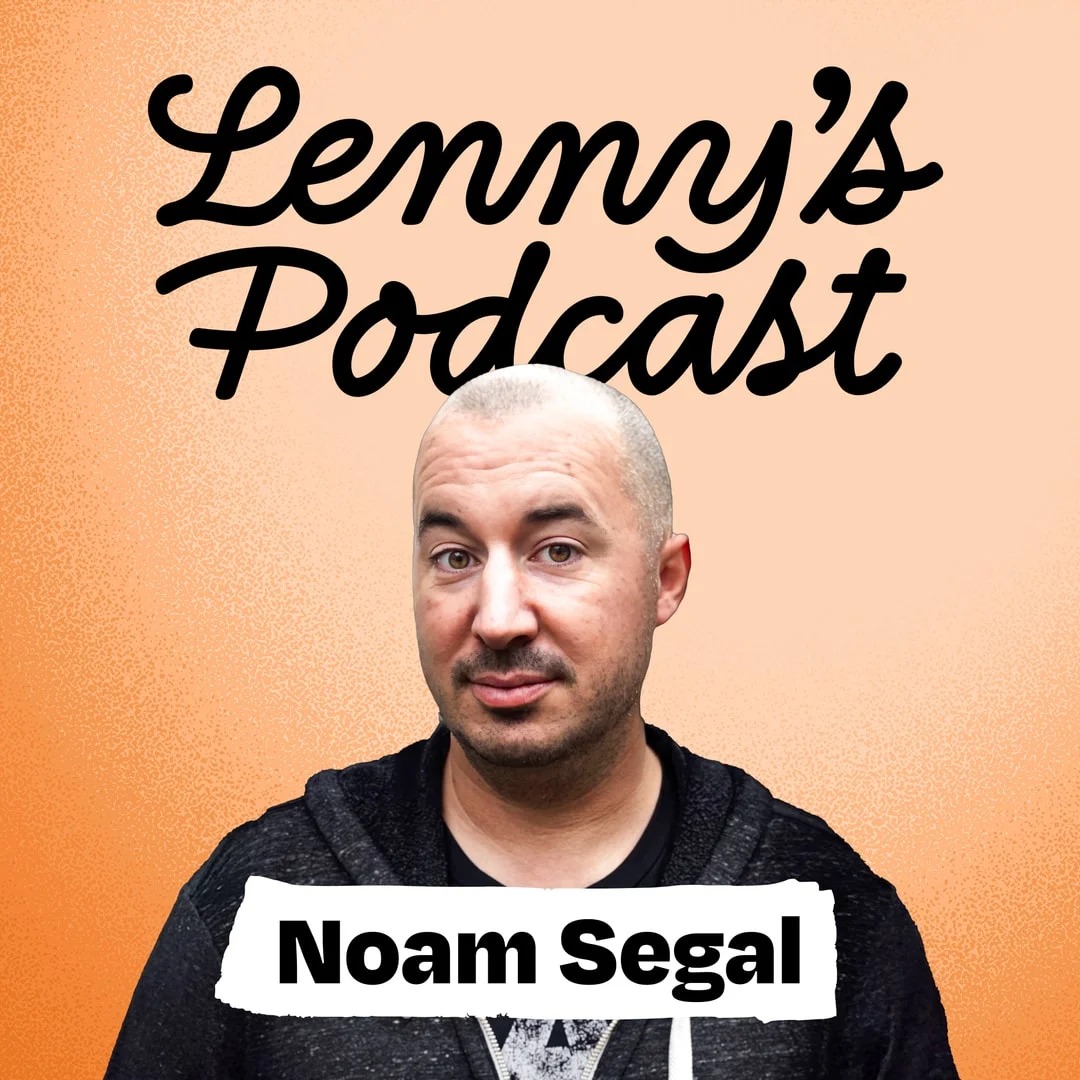
Noam Segal's sharpest point is that AI is not creating one tech workforce. It is creating two. In Lenny Rachitsky's conversation with Segal, the 2026 Tech Worker Sentiment Survey becomes less a story about job replacement than a story about professional identity: whether AI makes someone feel more capable, or makes the floor under their role feel unstable. 1
正在加载内容卡片…
Segal is not just commenting from the outside. The episode frames him as a longtime research leader across Airbnb, Meta, Twitter, Zapier, Intercom, and Figma, and as Lenny's partner on the annual Tech Worker Sentiment Survey. The 2026 survey captured responses from thousands of workers across product, engineering, design, research, marketing, data, and sales. 2
The useful question is no longer "what do you do?"
The survey's most revealing question is not whether someone uses AI. Almost everyone does. It asks how AI has shifted the way respondents see themselves professionally. The split is stark: 49.0% said AI made them feel "amplified," 27.4% said their role felt "redefined," 13.9% said they felt "destabilized," 5.0% said they felt "diminished," and only 3.2% said AI had not changed their professional identity. 3
That identity answer predicts the rest of the emotional map. The survey article says AI-identity stance was the strongest predictor of career optimism and willingness to recommend one's field, stronger than role, level, and company size combined. The gap between the "amplified" and "diminished" groups on optimism was roughly three times the size of the founder effect the researchers had found elsewhere in the dataset. 3
That is why the episode feels more useful than a generic AI-and-jobs debate. It does not ask whether PMs, designers, engineers, or researchers survive as categories. It asks whether the person inside the category still recognizes the source of their value. For the amplified worker, AI turns latent ideas into artifacts. For the destabilized worker, the same tool blurs authorship, judgment, and the boundaries of the job.
The productivity win has a hidden invoice
The most uncomfortable result is that workers are not rejecting the tools. At the individual level, the survey says 82% of respondents believe AI is already making them at least moderately better at their jobs, and 49.4% say "very much" or "extremely." 3
But in the open-ended answers, "better" often means faster rather than sharper. The survey quotes one respondent saying, "I can do more, faster, but not better." Another said, "I'm amplified, but my brain is rotting, and my work feels worse." 3
Segal's episode turns that into the central labor problem. The fear is not mainly that AI takes a job away tomorrow. The survey says only 22% of respondents worry about "losing my job to AI." Far more worry about being expected to do more for the same pay (51%), being trapped in an unsustainable pace (46%), and seeing the quality of their work go down (41%). 3
That is a more precise diagnosis than the usual replacement story. AI does remove tasks, but the saved time does not necessarily become slack, learning, or better craft. It often becomes the new baseline. A person who used to ship one strong artifact now has to ship three. A team that used to prototype selectively now prototypes everything. The output curve bends upward, and the worker absorbs the difference.
Burnout is rising even while the work is still fun
The survey's burnout numbers explain why this is not a simple doom story. Significant burnout rose from 44.7% in 2025 to 55.7% in 2026, while career optimism fell from 54.8% to 48.7%. Yet job enjoyment held up: 42.6% said they enjoy their work "very much" or "extremely," and another 36.7% said they enjoy it "moderately." 3
That combination matters. People can like the work and still be worn down by the pace. They can feel excited by a tool and still resent the expectations it creates. In the episode, Segal and Rachitsky describe a workforce carrying mixed emotions rather than one stable mood. The survey article backs that up: 77% of respondents selected at least one positive and one negative emotion about AI, and the average respondent selected more than five emotions. 3
That is the phrase Nikhyl Singhal gave them: "smiling exhaustion." It is not the old burnout of slow bureaucracy. It is burnout with agency, tools, demos, and a sense that the playground never closes. 3
The ladder is breaking below senior workers
One of the episode's harsher findings is that tech workers are not recommending their own path to newcomers. The survey asked an NPS-style question: how likely are you to recommend a career in your role to a friend starting out today? More than half of working tech professionals would actively steer a newcomer away, producing an average score of -39. 3
That result is not evenly distributed. Founders are closest to neutral, while designers and researchers are the least likely to recommend their field. Seniority matters too: senior and staff-level individual contributors were especially negative, while VPs and founders were less negative. 3
The worrying interpretation is that people who already climbed the ladder can still use AI to protect or extend their advantage. They have context, taste, networks, and enough domain judgment to use AI as leverage. The junior worker needs the ladder itself: smaller tasks, feedback loops, mentorship, and chances to build judgment before being measured against AI-accelerated output. If those rungs disappear, the profession can look safe for incumbents and hostile to entrants at the same time.
That is why the episode's advice to early-career workers is not just "learn the tools." Segal and Rachitsky emphasize finding strong mentorship, choosing environments where managers invest in development, and being deliberate about where AI helps rather than trying to become an everything-generalist overnight. 1
Managers are the intervention, not an HR footnote
The survey's most actionable result is almost old-fashioned. Manager quality remains one of the strongest drivers of burnout, job enjoyment, optimism, and retention. Workers with extremely effective managers reported roughly 65% higher job enjoyment and much lower burnout than workers with ineffective managers. Yet only 25.5% rated their manager as highly effective, while 36.5% rated theirs ineffective. 3
That finding changes the practical readout of the episode. If the AI transition is partly an identity shock, then management is not just task allocation. It is the place where scope, pace, expectations, learning, and psychological safety get negotiated. A good manager can help decide which tasks should be automated, which skills still need deliberate practice, and when faster output is quietly turning into lower-quality work.
The opposite is also true. A weak manager turns AI into pressure without interpretation: use the tools, ship more, keep up, explain less. That is exactly the squeeze workers are naming.
The real lesson for AI teams
Segal's survey does not say AI is bad for tech work. It says the benefits are uneven and the cost shows up inside people before it shows up in headcount charts. The amplified worker gets reach. The conflicted worker gets power and anxiety. The disoriented worker loses the shape of the role. The resentful worker sees a mandate dressed up as progress.
For AI practitioners, that is a useful warning. Adoption is not just a tooling problem. It is an operating problem: define the work AI should speed up, protect the judgment humans still need to build, and stop treating every productivity gain as an excuse to raise the baseline immediately.
The episode's most durable claim is that the AI labor story is not only about replacement. It is about compression. More output, same pay. More tools, less time to think. More capability, less confidence in the path for the next person. That is the split the survey makes visible, and it is the one managers and teams can actually do something about.
相似内容
- 登录后可发表评论。
More from this channel
- Open weights are turning model choice into an ownership question
- AI engineering is moving from agents to the control layer
- AI risk debates are becoming more useful
- AI's price war is moving below the model
- Booking thinks AI travel agents need an operating stack
- Mosseri thinks AI makes taste more valuable
- Modal thinks agents need a different cloud
- Claude's workspace turns interpretability into debugging