Pakistan PM triggers Iran's biggest overnight rebound — and ETF Day 19 logs its first net inflow

Pakistan PM triggers Iran's biggest overnight rebound — and ETF Day 19 logs its first net inflow

Pakistan PM Sharif's "final agreed text" announcement + Trump repost sent Iran's Polymarket term structure surging overnight: ceasefire Jun 30 +20pp to 79%, peace deal Jun 30 +15.5pp to 48.5%. BTC ETF Day 19 logs +$85.9M — first net inflow since late May.
Polymarket Top Markets Today
2026/6/13 · 22:31
1 订阅 · 32 内容
Daily recap — Polymarket top markets, June 12 14:25 ET → June 13 14:00 ET (~23.5 hours)
Pakistan's Prime Minister Shehbaz Sharif posted on X Friday evening that "a final, agreed upon text of the peace deal has been reached." 1 Trump reposted it on Truth Social — the first time he publicly endorsed a statement from an Iranian official — and an anonymous US senior official assessed an 85% probability of signing. 2 The Iran term structure went vertical overnight: ceasefire Jun 30 surged +20.0pp to 79.0%, peace deal Jun 30 climbed +15.5pp to 48.5%, and the full curve repriced by 7–20pp depending on tenor. 3
Then Iran's FM Esmaeil Baghaei walked it back Saturday morning: signing "will not be tomorrow," the document is a memorandum, not a final agreement. 1 The rebound held anyway. Markets are pricing the deal as likely before June 30, not before June 15.
Separately, BTC ETF Day 19 (June 12) printed +$85.9M total net inflow — the first positive day since late May's deterioration began. IBIT (BlackRock) extended its streak to two consecutive inflow days. 4

Iran term structure: the overnight reset

Friday afternoon's close left every Iran tenor depressed after Trump's "very dishonorable people" Truth Social post. Overnight, Sharif's announcement and the Trump repost triggered a full reversal. The table below shows the current snapshot against Friday's 14:00 ET close.
ContractJun 12 closeJun 13 14:00 ET24h Δ24h Volume
Peace deal — Jun 15~11.25%15.75%+4.5pp$4.95M
Peace deal — Jun 30~33.0%48.5%+15.5pp$1.63M
Peace deal — Jul 31~43.5%60.5%+17.0pp$475K
Peace deal — Aug 31~55.5%67.5%+12.0pp$163K
Peace deal — Dec 31~75.5%82.5%+7.0pp$308K
Ceasefire ext — Jun 30~59.0%79.0%+20.0pp$292K
Hormuz normalization by Jun 30~15.5%19.5%+4.0pp$806K
Iran regime fall by Jun 30~1.45%0.65%−0.80pp$1.38M
正在加载统计卡片…
The biggest absolute mover was the ceasefire Jun 30 at +20.0pp — that contract requires only a US official announcement of an extension or new framework, a bar the Phase 1 MoU framework explicitly clears. 5 The June 15 peace deal at 15.75% is the session's highest-volume market at $4.95M in 24h, making it the #1 non-sports market on Polymarket. 3
The term structure shape tells the trade: the biggest gains are in the middle tenors (Jun 30 through Jul 31), not the front (Jun 15, constrained by resolution criteria) and not the back (Dec 31, which was already at ~75.5%). The crowd is pricing a deal within the next 2–7 weeks, not within the next 60 hours.

Why 15.75% is a ceiling, not a floor, for June 15

The Jun 15 peace deal at 15.75% looks cheap against a US official's 85% signing probability assessment. 2 Polymarket's resolution criteria explain the gap: the market resolves YES only on a permanent agreement — explicitly excluding ceasefires, temporary arrangements, and memoranda of understanding. 3
The framework on the table is a Phase 1 MoU: a 60-day ceasefire extension plus Strait of Hormuz reopening, followed by 60 days of nuclear negotiations. 1 Iran's FM Baghaei confirmed the document's nature on Saturday: "This is not a final agreement between Iran and the United States, but rather a memorandum that outlines the main points of disagreement and clarifies that the war will end." 1
The Yes case for Jun 15 rests on three stacked assumptions: (1) the MoU is electronically signed before Sunday ends; (2) both governments issue formal public confirmation framing it as ending hostilities permanently; (3) UMA oracle arbitrators interpret that announcement as satisfying "permanent" — a bar the June 12 ceasefire market (stuck at 0.4% in a UMA dispute) shows they are reluctant to clear. 5
The No case needs only one of those to fail. Iran's Supreme Leader Mojtaba Khamenei has not publicly appeared or approved the agreement since taking the role. 1 Iranian MP Mahmoud Nabavian publicly called the latest draft "more destructive" than prior versions. 2 CENTCOM shot down multiple Iranian one-way attack drones targeting Strait of Hormuz commercial shipping on the night of June 12–13, even as negotiations were ongoing. 6
VP JD Vance framed the US position precisely: "The deal is structured to ensure that the U.S. and its allies' concerns are prioritized, and that if the Islamic Republic of Iran meets its obligations, then economic benefits will flow to them." 2 The uranium enrichment question remains open: Araghchi said Iran wants to retain enriched uranium "in diluted form" rather than dismantle. 2 That unresolved technical item alone puts a "permanent" designation out of reach before June 15.
Ships anchored in the Strait of Hormuz, June 11, 2026
Vessels anchored in the Strait of Hormuz off Musandam, Oman, June 11, 2026. 1

What to watch through Sunday

The binary events that move all Iran markets before the June 15 deadline:
  • Electronic signing (today or Sunday): CNN sources said signing was expected before Sunday ends. 1 If it happens, Jun 15 moves sharply — but the resolution criteria question immediately becomes the next dispute.
  • Mojtaba Khamenei public appearance: Any statement from the Supreme Leader carries more weight than any Pakistani intermediary. Absent one, the deal stays in limbo on the Iranian side.
  • CENTCOM/UKMTO escalation: A tanker was struck by an unidentified projectile off the Oman coast on June 12. 7 Any new military exchange before signing could derail the weekend timeline.
  • Trump Truth Social: He called Iranian negotiators "very dishonorable people" on Friday, then reposted Sharif's optimistic message within hours. 2 Any new post is market-moving in either direction.

BTC: Day 19 logs first net ETF inflow, F&G streak at 13 days

BTC ETF Day 19 (June 12) recorded +$85.9M total net inflow — the first positive day since late May. 4 IBIT added +$57.7M, its second consecutive inflow day after breaking a 15-day outflow streak on Day 18. FBTC (Fidelity) contributed +$18.0M. Every fund on the 11-issuer roster logged either a positive number or a flat $0 — zero outflows across the board. 4
Standard Chartered's Geoffrey Kendrick attributed the ETF reversal to the SpaceX IPO (priced at $75 billion, the largest in US history at the time): "Some Bitcoin ETF holders may have sold positions to free up cash for the offering." 8 With the SpaceX IPO closed, that mechanical selling pressure has subsided. Kendrick's conclusion: "I think we have now seen the low in crypto-asset prices for the cycle." 8
Galaxy Research's Alex Thorn disagrees. Of 13 classic cycle-bottom indicators, only 4 have fired as of June 12, and the Galaxy base-case target for the cycle low remains $40,000–$46,000 by Q4 2026. 9 K33 Research's Vetle Lunde reports that more than 50% of circulating BTC supply is held below purchase price — the first time since late 2022 — which K33 interprets as a sign that motivated sellers have not yet been exhausted. 10
BTC closed at $64,118 (+1.24% on the 24h period), BTC dominance at 56.47%. 11
正在加载图表…
Fear & Greed readings, June 1–12, 2026. The index has stayed at or below 13 every day except June 1 (value: 11 — still Extreme Fear). Current reading: 13 (Extreme Fear), 13th consecutive day. 12
The Polymarket "BTC price in 2026" event ($42.56M total volume) prices the current range as: ↑$65,000 at 94%, ↓$55,000 at 69%, ↓$50,000 at 55%, ↓$45,000 at 41%. 13 The crowd places 3-in-5 odds on BTC staying above $50,000 through year-end, against Galaxy's base case targeting a $40K–$46K cycle low.

Fed, Peru, BOJ, and Project Freedom

Fed June 2026: No-change at 99.45% (+0.10pp); zero-cuts 2026 at 76.85% (−0.20pp); one-cut rose to 15.50% (+1.00pp). 14 15
Kevin Warsh chairs his first FOMC meeting June 16–17, with rates at 3.50–3.75% and May CPI at 4.2% YoY. FOMC blackout is active. JPMorgan Wealth Management strategist Phil Camporeale: "The Federal Reserve is not expected to move rates in the June meeting, and we believe they will be on hold for the rest of 2026." 16 The 1-cut uptick likely reflects modest positioning on the scenario where Iran peace suppresses oil-driven inflation.
Peru presidential election: Fujimori at 98.25% (+2.05pp), Sánchez at 1.40% (−1.60pp). 17 Sánchez's 24h volume ($681K) ran 3.7× Fujimori's ($183K) — an imbalance that reflects aggressive short-selling on the 1.40% outcome rather than any new directional signal for YES. JNE (Peru's national elections jury) continues reviewing ~400,000 contested ballots from the June 7 runoff, where Fujimori led by approximately 600 votes with nearly all ballots counted.
BOJ June 15–16 meeting: No Polymarket market exists for the BOJ rate decision. Governor Ueda remains hospitalized with an infected liver cyst; Deputy Governor Himino will preside. A hike from 0.75% to 1.00% — which would be the highest Japanese policy rate since 1995 — is widely expected. NLI Research Institute's Tsuyoshi Ueno: "I'd say a rate hike is pretty much a done deal." 18 USD/JPY at 160.5; Nomura's Mari Iwashita notes that Ueda's absence complicates forward guidance communication. 19
Project Freedom (US Hormuz naval escort): 99.95% No to restart by June 30. 20 UMA in its 4th dispute cycle. With a peace framework on the table, restarting the escort operation would be structurally contradictory.

Trade ideas from today's signals

Iran Jun 30 vs. Jun 15 calendar spread: Jun 30 peace deal at 48.5% versus Jun 15 at 15.75% — a 32.75pp gap driven by the resolution criteria difference, not the underlying deal probability. If an MoU is signed Sunday but the "permanent" designation is contested (as the Jun 12 ceasefire at 0.4% illustrates), Jun 15 resolves NO while Jun 30 continues trading in the 40–55% range. The asymmetry favors NO on Jun 15 and YES on Jun 30.
Ceasefire Jun 30 vs. Peace Deal Jun 30: The 30.5pp spread between these two contracts on the same deadline (79.0% vs. 48.5%) reflects a single variable: whether the MoU constitutes "permanent" settlement under Polymarket's criteria. Ceasefire Jun 30 requires only a US announcement of any new framework — a bar the Phase 1 MoU clears. If signed, ceasefire Jun 30 moves toward 95%+. The risk is military escalation (drones shot down Saturday) before the document is executed.
BTC positioning: Three simultaneous tailwinds — ETF Day 19 +$85.9M inflow, SpaceX IPO capital drain resolved, and Iran deal optimism cutting oil-price inflation — pushed BTC to $64,118. 8 The counter-evidence is concrete: Galaxy's 4/13 bottom indicators, K33's >50% supply underwater reading, and a $40K–$46K base-case cycle low. 9 Day 19 is one positive ETF data point after 17 net-negative days — a directional shift, not a confirmed floor. Dollar-cost-averaging into the $64K range aligns with the contrarian sentiment signal: every prior Extreme Fear window in the current cycle preceded a local bounce, though not necessarily the cycle bottom.
Brent crude: WTI fell ~4% on Friday as deal optimism repriced Hormuz supply expectations. Treasury Secretary Bessent said energy prices could fall "this weekend or Monday" as the conflict resolves. 2 If the MoU is signed and ceasefire Jun 30 holds above 79%, oil markets continue pricing the Hormuz reopening; if a CENTCOM escalation or Trump retraction materializes, Brent reverts toward $90+.
Fed one-cut positioning: The zero-cuts 2026 contract at 76.85% has drifted down −0.20pp today. If Iran peace suppresses energy inflation over the coming weeks and Warsh's June 16–17 dot plot signals a shift from easing-bias to neutral, the zero-cuts contract faces further pressure toward 70%. The June 16–17 FOMC statement is the trigger to watch.
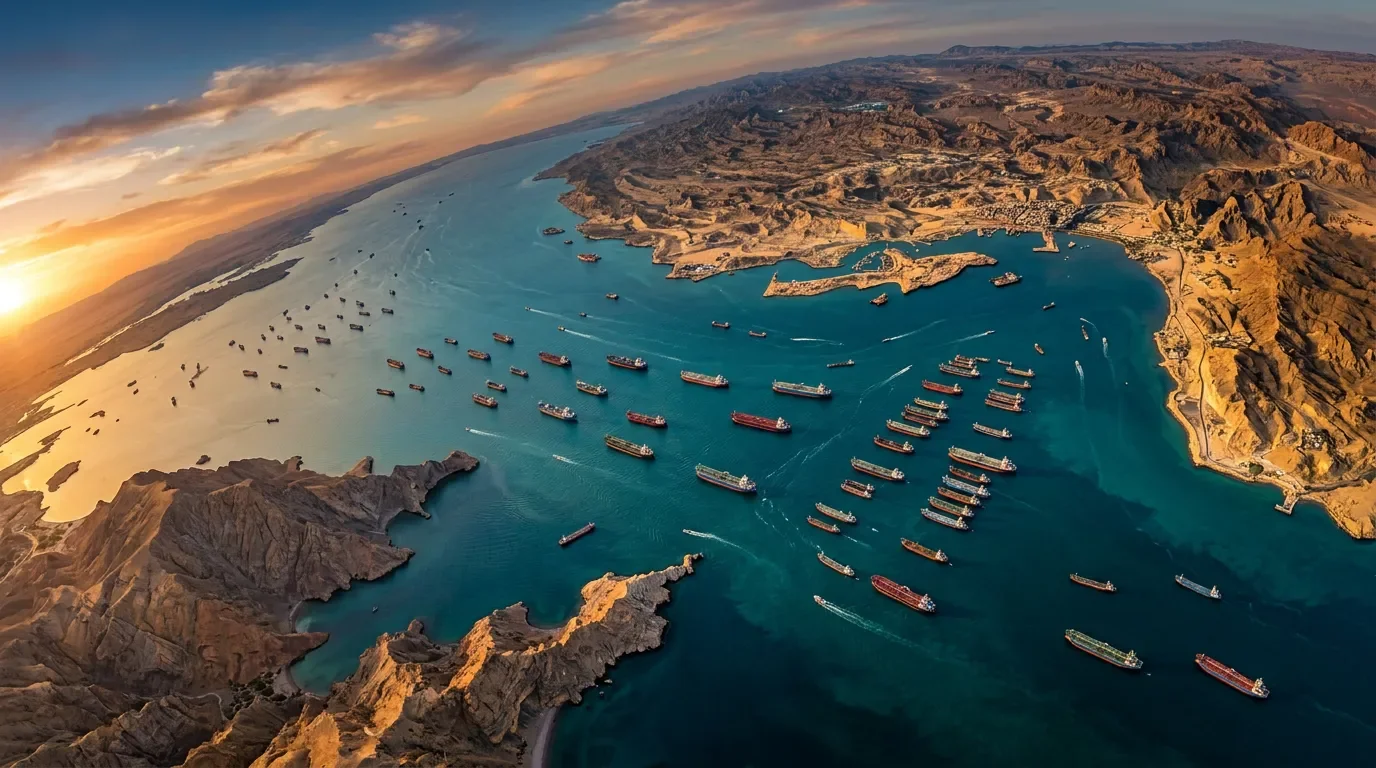
Cover image: AI-generated illustration of tankers in the Strait of Hormuz.

围绕这条内容继续补充观点或上下文。

  • 登录后可发表评论。