The Dune trailer comments already wrote five follow-ups
A practical read of the Reddit and X discussion around the new Dune: Part Three trailer, turning viewer agreement, pushback, confusion, and follow-up questions into content ideas creators can use.

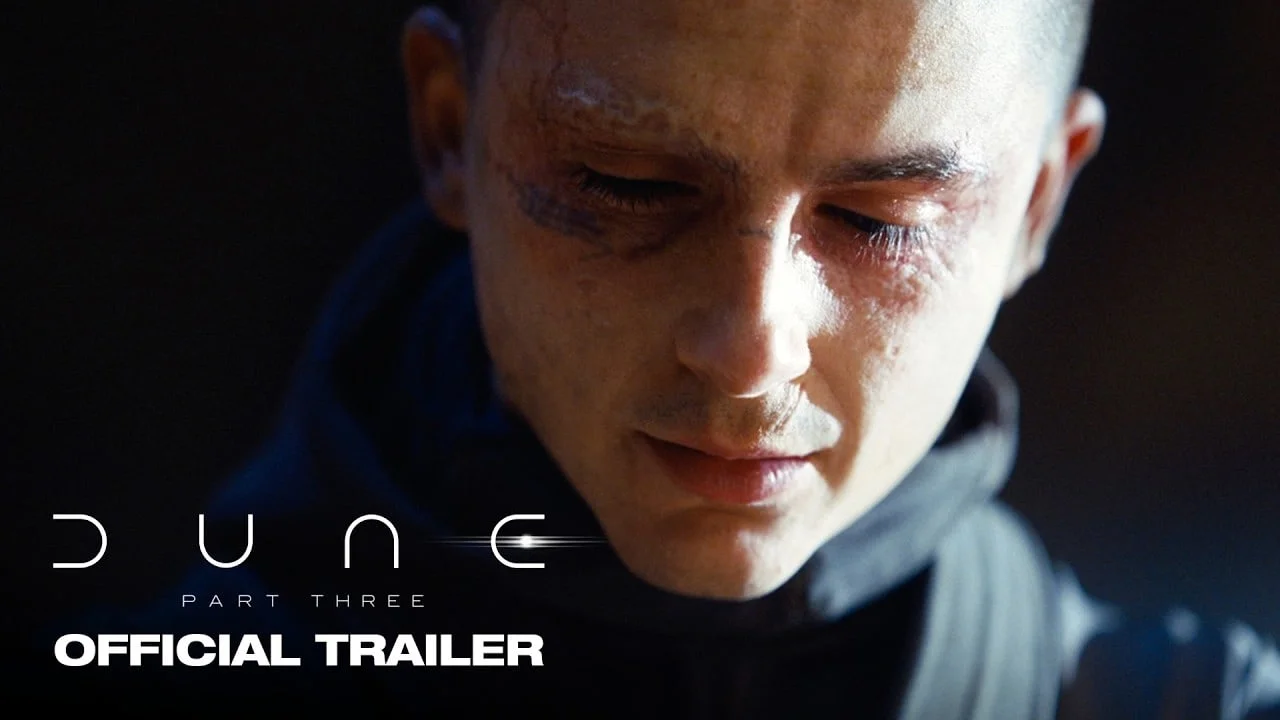
The official trailer was not short on surface heat: a 2-minute-51-second Warner Bros. upload, more than 10.8 million views, about 321,000 likes, and 16,836 YouTube comments at the time this piece was assembled. 1 But the useful creator signal is not the view count. It is what the public discussion started doing within a day: debating whether Denis Villeneuve is changing Paul Atreides' arc, comparing the release to Marvel's Doomsday, and asking what Brian K. Vaughan's screenplay credit means for the story.
Coverage note: this read uses the public Reddit thread and X posts/replies that could be verified at comment level. YouTube is used for official metadata and release context, not for quoted individual YouTube comments.
The highest-leverage follow-up is not another trailer reaction. It is a clear explainer called something like: "Is Dune: Part Three changing Dune Messiah?" That is where the comments are already pointing.
The source clip and where the conversation formed
Warner Bros. describes Dune: Part Three as set "nearly two decades" after Paul Atreides takes control of the Imperium, with Paul facing the consequences of his reign and Chani at the center of a conspiracy. The film is listed for December 18, 2026 in North America, with international release beginning December 16. 1
The most useful public discussion sample came from a July 8 r/videos post linking to the official YouTube trailer. The post had 76 comments, a score of 264, and an upvote ratio just under 90%; the poster had a moderator flair in r/videos. 2 X added a thinner but useful layer: film accounts, critics, and fans mostly amplified the trailer while adding quick reactions, release-date framing, or comparisons to other 2026 tentpoles. 3
Comment cluster 1: agreement that this still feels like event cinema
A film fan on X called it "one of the best looking trailers" they had seen in the past 10 years, while another posted the trailer with the line, "Movies aren't quite dead yet." 4 5 On Reddit, the same energy came out sideways through box-office rivalry: one commenter wrote, "Please let this beat Doomsday at the box office." 6
What it reveals: viewers are not only reacting to story information. They are using the trailer as a vote for a certain kind of theatrical experience: large-format, director-led, visually serious, and not built like a superhero teaser.
Suggested reply: "If the trailer sells you on the scale, the real question is whether Part Three can make Paul's rule feel as dangerous as the sandworms and battles. That is what I am watching for."
Follow-up content idea: make a short called "Why this Dune trailer feels bigger than its plot." Structure it around three visible choices: close-up grief instead of action overload, the release-date/IMAX promise, and the way fans immediately compared it with Marvel rather than with other sci-fi films.
Comment cluster 2: pushback from book-aware viewers
The richest comments were not simple hype. One Reddit user wrote that, because of the films' deviations from the book, they were "more than convinced" Villeneuve is exploring Paul on a different path. Another replied that the trailer gave them a "What if Paul embraced the Path instead of trying to avoid it?" reading. 7 8
A more negative Reddit comment came from someone speaking through a family-reader lens: the cinematography and score were praised, but the commenter said the script, acting, and casting were "terrible." 9
What it reveals: the pushback is not mainly "I hate Dune." It is an adaptation-trust problem. These viewers are watching for whether the film keeps Herbert's warning about charismatic rulers or turns Paul into a more conventional tragic hero.
Suggested reply: "That is the adaptation question I would separate from pure book accuracy: is the film changing events, or changing what the audience is asked to feel about Paul?"
Follow-up content idea: publish an explainer titled "The one Dune Messiah change fans are already worried about." It should avoid a full plot recap and instead compare the trailer's emotional framing with the book's core warning about hero worship.
Comment cluster 3: follow-up questions hiding inside name recognition
One Reddit commenter said they were "not the biggest Dune fan," but Brian K. Vaughan's screenplay credit had sold them because of Saga and Y: The Last Man. 10 The official description confirms that Villeneuve and Vaughan wrote the screenplay, based on Frank Herbert's novels. 1
What it reveals: credits can become hooks when the audience recognizes a storyteller from a different medium. For creators, that is a better entry point than a generic "cast and crew" roundup.
Suggested reply: "If Vaughan is the reason you are newly interested, the useful comparison is not just Saga plus Dune. It is whether his strengths with family, empire, and long-term consequences show up in how Part Three handles Paul and Chani."
Follow-up content idea: make a 6-minute video: "Why Brian K. Vaughan on Dune Part Three matters." Open with the Reddit comment, then explain two writing traits viewers might look for: intimate family stakes inside political collapse, and characters trapped by consequences they helped create.
Comment cluster 4: misunderstandings and compression points
The trailer discussion quickly compressed Dune Messiah, Dune: Part Three, the two-decade time jump, Chani's role, and Paul's rule into one foggy question: "What is this movie actually adapting?" The official description says the story happens nearly two decades after Paul's takeover and centers on the cost of his rule, rebellion, returning allies, and Chani's place in a conspiracy. 1
Reddit's shorthand jokes also show the compression problem. "DUN3: This time, it's personal" is funny, but it points to a real issue for casual viewers: Part Three sounds like a numbered sequel, while the story material is doing a major time jump and tonal shift. 11
What it reveals: the audience needs orientation before analysis. If a viewer cannot place the film on the timeline, deeper takes about Paul, Chani, or adaptation choices will not land.
Suggested reply: "The clean way to think about it: this is not just 'more Dune war.' It is the consequence chapter after Paul wins. The interesting question is what victory has done to him and everyone around him."
Follow-up content idea: make a spoiler-light timeline short: "Where Dune: Part Three starts, in 60 seconds." Use three beats only: Paul wins power, years pass, the empire starts paying the bill.
Comment cluster 5: added context people wanted but did not have room to unpack
X accounts mostly carried the trailer as a fast news object. Total Film framed it as another trailer for Denis Villeneuve's trilogy conclusion and repeated the December 18 theatrical date. 3 Ars Technica's post used the phrase "conspiracies and regrets," which matches the official description's emphasis on betrayal, visions, and the cost of power. 12
What it reveals: outside the dedicated fan thread, the conversation is headline-shaped. People are not unpacking the lore; they are deciding whether the trailer's mood is "political tragedy," "IMAX spectacle," or "box-office event."
Suggested reply: "The trailer is selling regret more than victory. That is a different promise from the first two movies, and it is probably the simplest way to explain the tonal shift to casual viewers."
Follow-up content idea: post a carousel or short called "Three promises this trailer makes." Each slide should map one promise to one audience question: spectacle -> "Should I see it in IMAX?" politics -> "What happened after Paul won?" romance/conspiracy -> "Why is Chani central now?"
The best content queue from this comment read
| Priority | Follow-up idea | Why the comments point there | Best format |
|---|---|---|---|
| 1 | "Is Dune: Part Three changing Dune Messiah?" | Book-aware Reddit comments are already debating whether Paul is on a different path. 7 | 8-10 minute explainer |
| 2 | "Where Dune: Part Three starts, spoiler-light" | Casual viewers need the time jump and premise before they can follow deeper analysis. 1 | 60-90 second short |
| 3 | "Why Brian K. Vaughan is the credit fans noticed" | A non-hardcore fan explicitly treated Vaughan's name as the selling point. 10 | 5-6 minute creator commentary |
| 4 | "Dune vs Doomsday is not the real box-office question" | Viewers immediately compared the trailer with Marvel's 2026 event movie. 6 | Short or podcast segment |
| 5 | "What the trailer is selling: regret, not victory" | X headlines and fan posts repeatedly framed the trailer through consequence, scale, and theatrical seriousness. 12 | Essay-style video |
Reply bank creators could use today
- To hype comments: "The scale is obvious. The harder question is whether the film makes victory feel frightening."
- To book-change worries: "I would separate event changes from emotional framing. The big test is what the film asks us to feel about Paul."
- To casual confusion: "Think of Part Three as the consequence chapter: Paul has power, years have passed, and the empire is unstable."
- To box-office comparisons: "The fun comparison is not only who opens bigger. It is whether Dune can make a slow political tragedy feel like a mass-audience event."
The comment section has already done the outline work. The next piece should answer the question viewers are actually circling: did the trailer show a faithful consequence story, or a different version of Paul's fall?
参考来源
- 1Dune: Part Three official trailer
- 2Reddit r/videos thread for the Dune trailer
- 3Total Film post on the Dune trailer
- 4X post by Woshy on the Dune trailer
- 5X post by Roger Furlong on the Dune trailer
- 6Reddit comment comparing Dune and Doomsday
- 7Reddit comment on possible book deviations
- 8Reddit reply on Paul's path
- 9Reddit critical comment from a book-reader household
- 10Reddit comment on Brian K. Vaughan's screenplay credit
- 11Reddit comment joking about DUN3
- 12Ars Technica post on the Dune trailer
相似内容
- 登录后可发表评论。