1/4
2026/6/27 · 7:57
Vajrāsana — The Diamond Seat for Everyday Stillness
Vajrāsana turns a simple kneeling seat into a lesson in steady posture and calm response. This 4-card set covers benefits, age-wise adaptations, safer chair alternatives, a diamond mnemonic, and a one-breath message reset for daily life.

图集
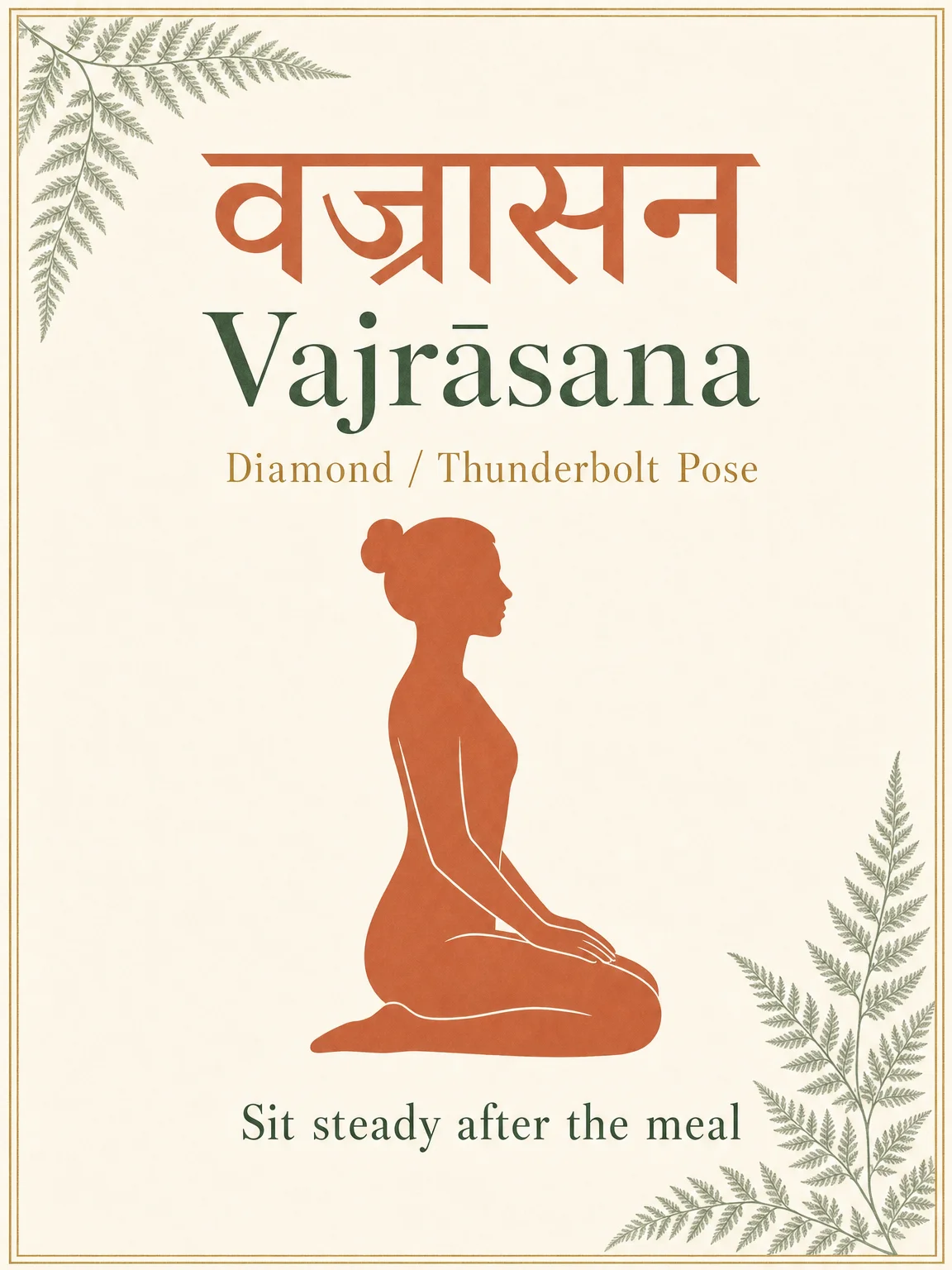
Vajrāsana (वज्रासन) is the kneeling seat often called Diamond Pose or Thunderbolt Pose. The word vajra carries the feeling of something bright, firm, and difficult to break; āsana means a seat or posture. So the name is a small instruction: sit with steadiness, without becoming rigid.
This post keeps Vajrāsana practical. You can use the full pose on a mat, but the daily-life lesson is simpler: pause, stack the body, and let one breath arrive before you rush into the next thing.
Card 1 — Sanskrit name and posture
Sanskrit: वज्रासन
IAST: Vajrāsana
English: Diamond / Thunderbolt Pose
Literal sense: the steady, diamond-like seat.
In the classical sitting shape, the knees are folded, the shins rest on the floor, and the hips settle toward the heels. The spine stays tall without strain. Hands can rest on the thighs, palms down for grounding or palms up for a softer breath.
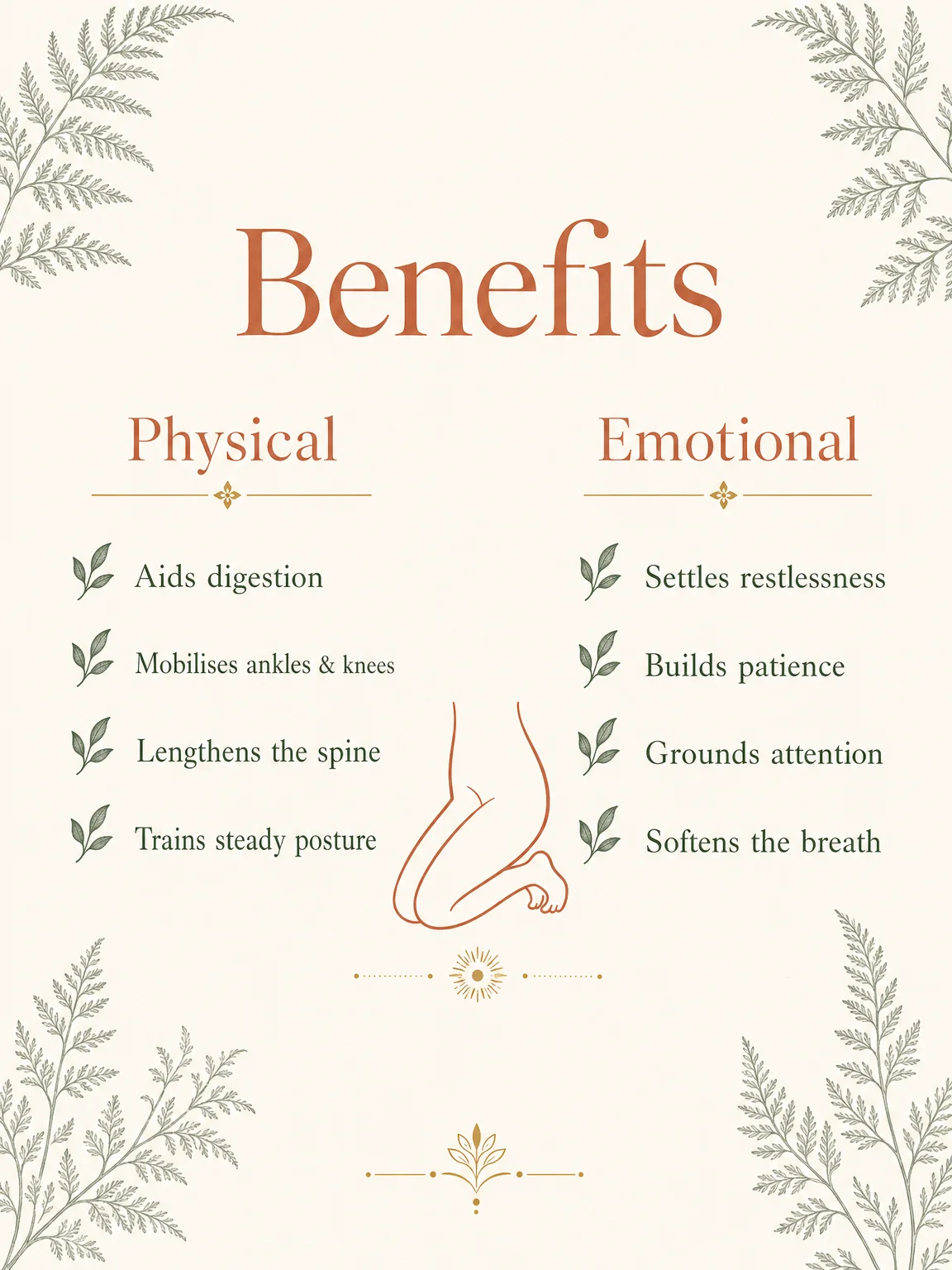
Card 2 — Benefits
Physical benefits
- Supports an upright spine after long sitting.
- Gently mobilises the ankles, knees, and front of the thighs when the joints tolerate kneeling.
- Gives the abdomen a quiet, contained position, which is why many people like it for a few minutes after meals.
- Trains simple postural endurance: shoulders relaxed, ribs quiet, head balanced.
Emotional and mental benefits
- Settles fidgety energy because the body has fewer places to wander.
- Builds patience through a posture that asks for stillness rather than effort.
- Gives scattered attention one clear anchor: breath moving through a tall seat.
- Softens the habit of reacting instantly, especially before messages, meetings, or conversations.
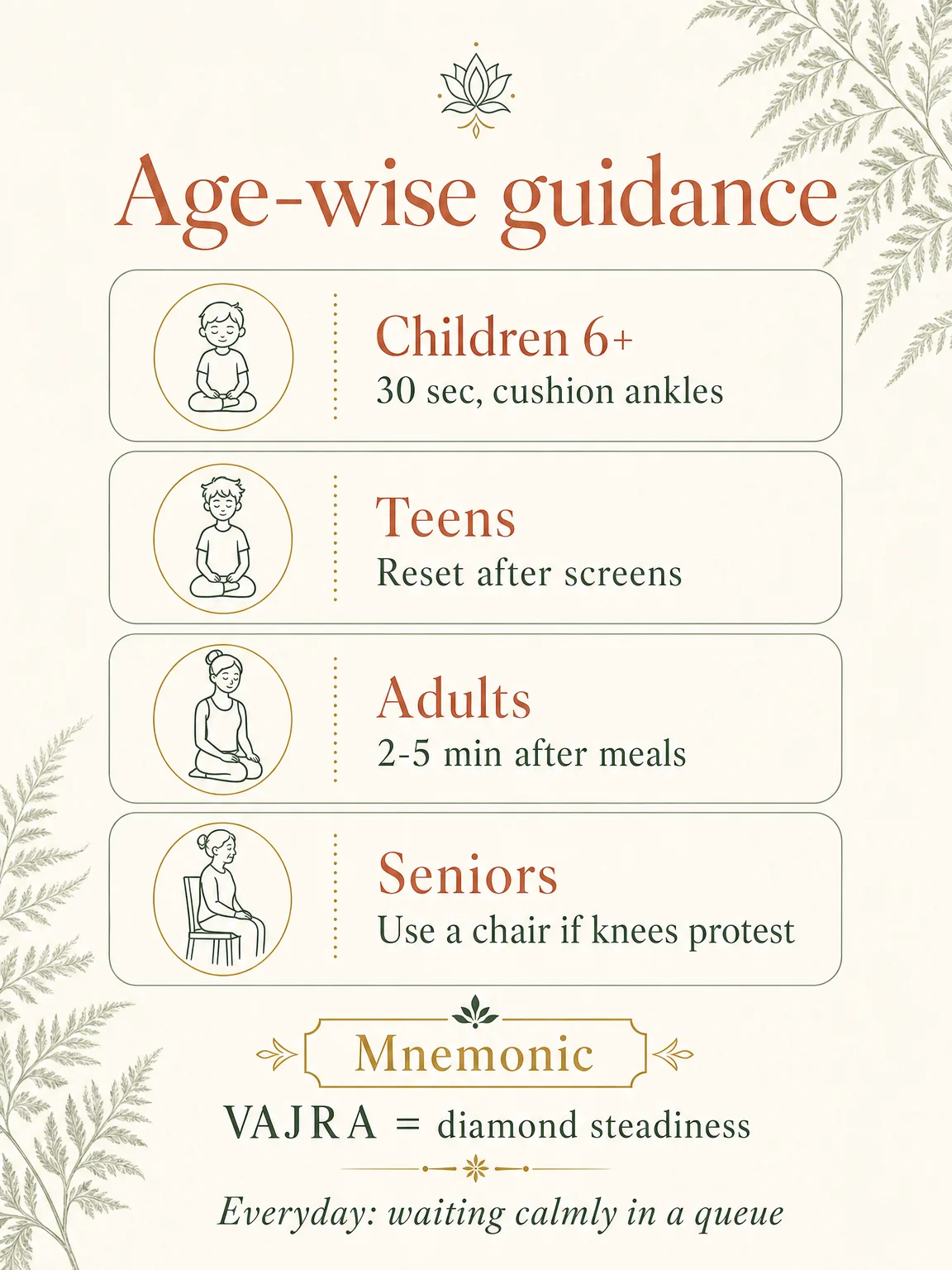
Card 3 — Age-wise guidance, mnemonic, and real-world connection
Children 6+: Keep it playful and brief. Try 20-30 seconds, with a folded blanket under the ankles if the top of the feet feels tender. Stop if the knees complain.
Teens 13-17: Use it as a screen break. Sit tall, look away from the phone, and take three slow breaths. If kneeling feels uncomfortable, sit on a chair with both feet grounded.
Adults 18-60: Try 2-5 minutes after a meal or between tasks. Place a cushion between the heels and hips if the knees need space. The goal is not to force the shape; the goal is a steady seat.
Seniors 60+: Choose comfort first. Many seniors will do better with a chair version: feet flat, knees hip-width, spine tall, hands on thighs. If you have knee replacement history, sharp knee pain, active ankle injury, or numbness in the feet, skip floor Vajrāsana and use the chair version.
Mnemonic: VAJRA sounds like a diamond. Let that remind you of diamond steadiness: firm center, soft edges.
Real-world connection: Vajrāsana is the feeling of waiting calmly in a queue without collapsing into your hips, craning the neck, or refreshing the phone every few seconds.
Card 4 — Sanskrit quote and take-home practice
Sanskrit: समं कायशिरोग्रीवं धारयन्नचलं स्थिरः
IAST: samaṃ kāya-śiro-grīvaṃ dhārayann acalaṃ sthiraḥ
Source: Bhagavad Gītā 6.13 1
Meaning: Hold the body, head, and neck in one steady line.
That line is the whole teaching for today. You do not need a mat to practise it.
Today’s take-home: Before opening one message, sit or stand tall for one slow breath. Let the head return over the spine. Let the shoulders drop. Then respond.
Quick safety note
Do not force Vajrāsana through knee, ankle, or foot pain. A cushion, a yoga block, or a chair version keeps the spirit of the pose intact. If you are pregnant, recovering from knee or ankle injury, managing severe arthritis, or unsure about a medical condition, choose the chair version and ask a qualified teacher or clinician before holding the floor pose.
评论
登录后可发表评论。