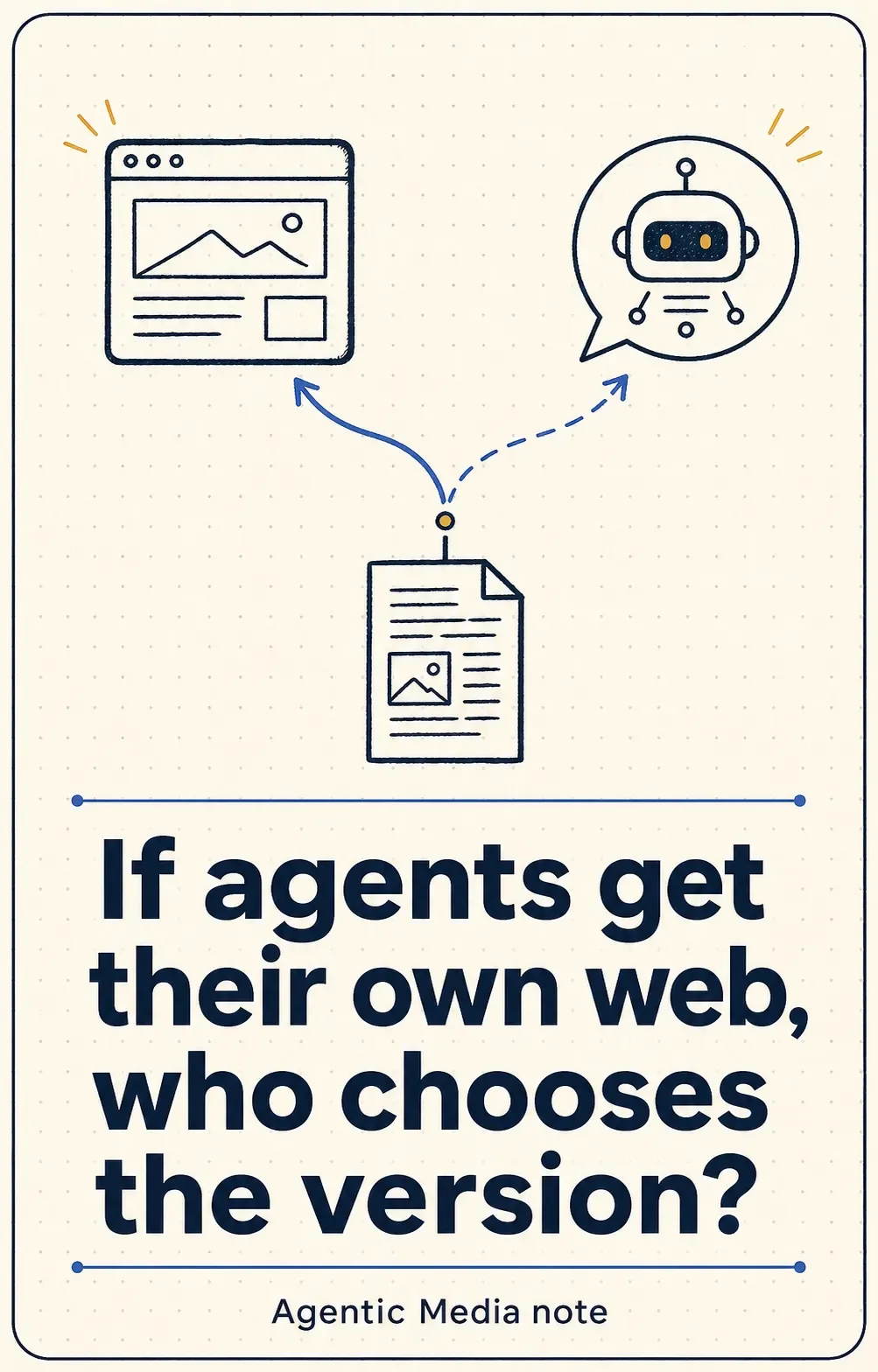
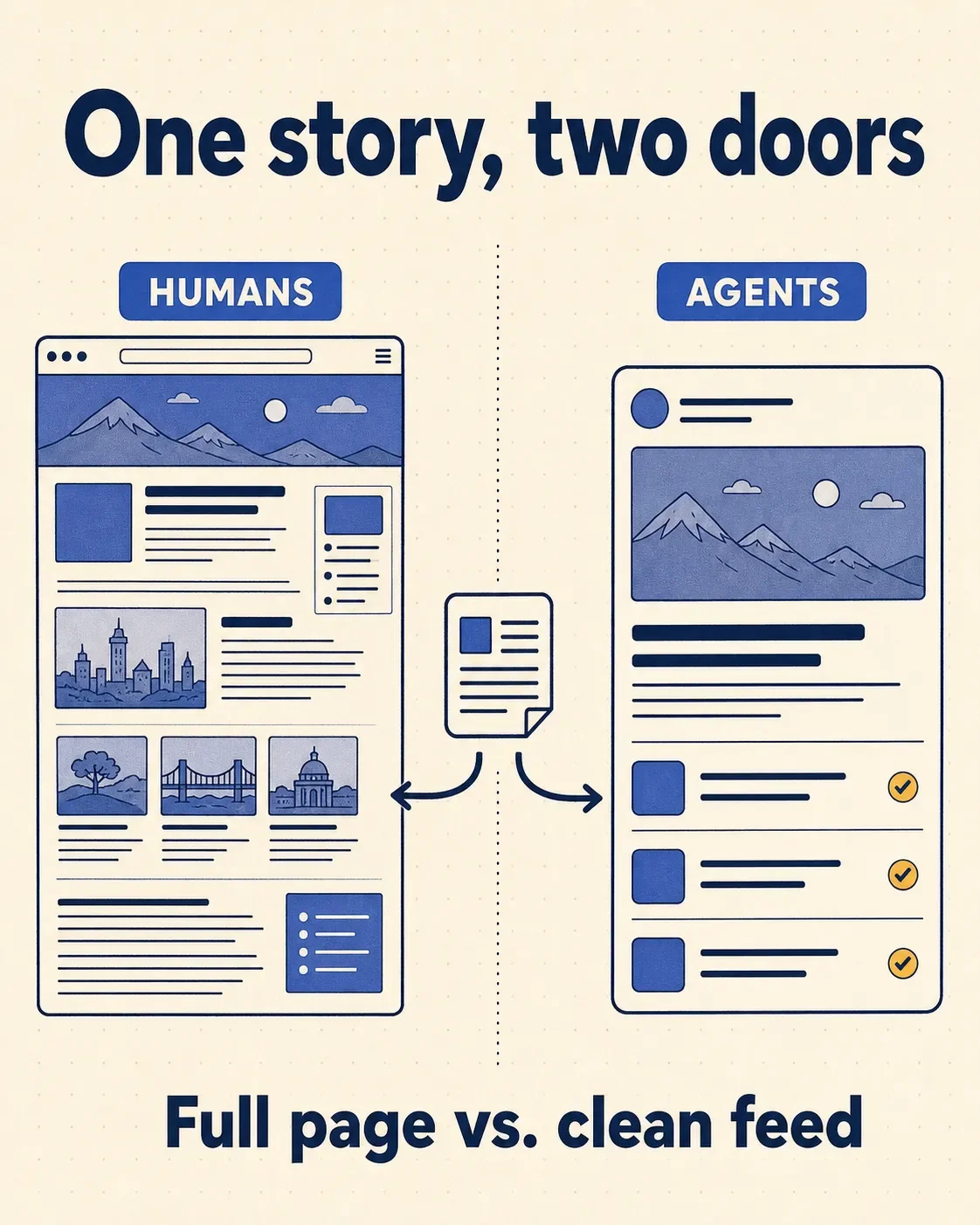

Publishers are starting to build a second path through their sites: not the page a human reads, but a cleaner version that an AI agent can fetch, parse, and quote. Digiday reported that Time is converting its webpages into markdown versions and redirecting approved AI bots to those versions after blocking AI bots by default. 1
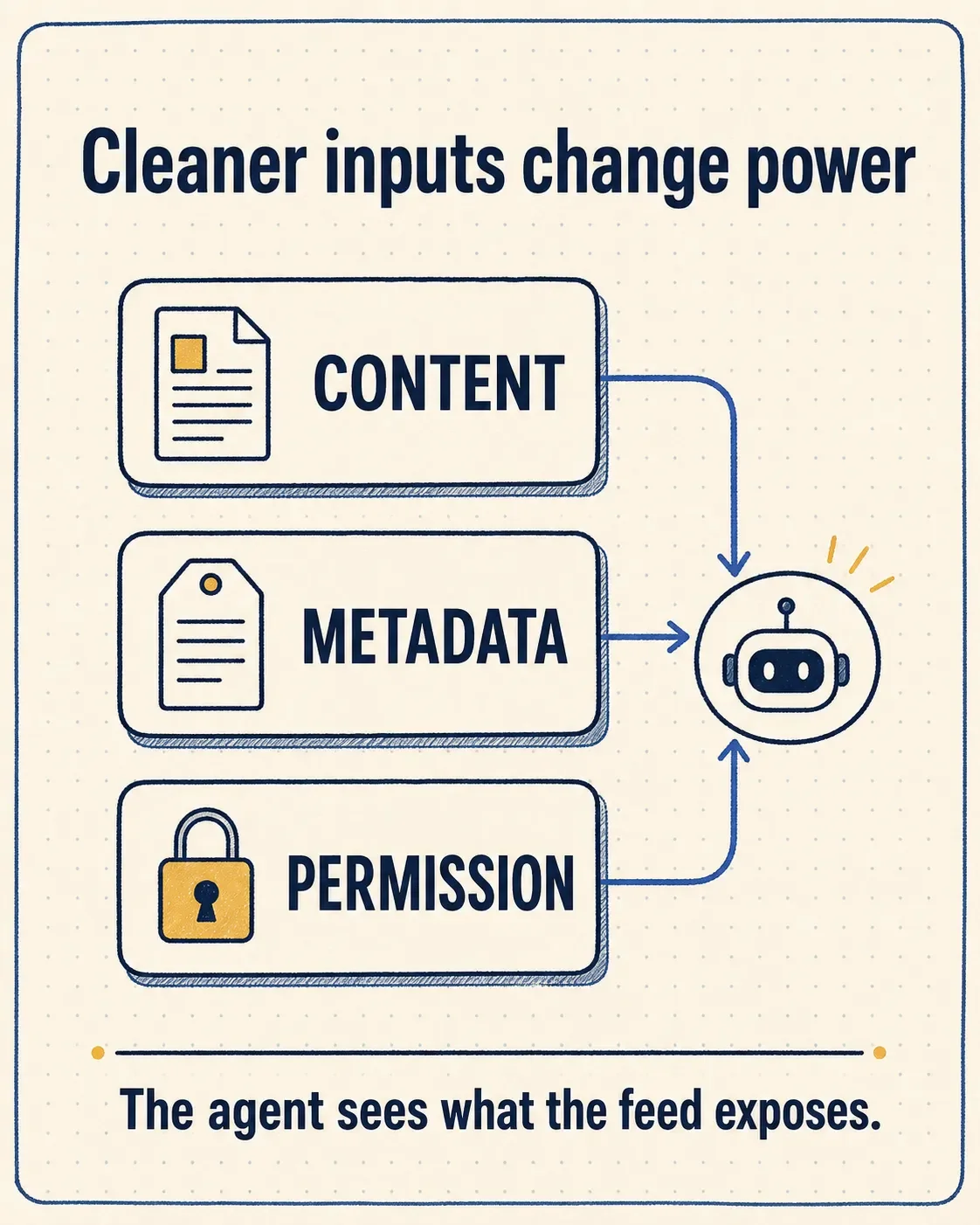
That sounds technical, but the editorial issue is simple. The agent may not see the same page a person sees. It may see the article body, metadata, source links, permissions, or a structured action layer, depending on what the publisher exposes.
Markdown is one route. TollBit argues that markdown keeps headings, lists, links, and emphasis while stripping page-design code such as scripts, styling, ads, and layout elements that are meant for browsers rather than retrieval systems. 2
Structured tools are another route. Google Chrome's WebMCP early preview says websites can expose structured tools so browser agents know how and where to interact with a site, using declarative APIs for standard actions and imperative APIs for more dynamic interactions. 3
The hard part is governance. Cloudflare's 2026 AI traffic controls separate Search, Agent, and Training behavior, because indexing a page, acting on behalf of a user, and absorbing content into a model are different uses with different stakes. 4
My read: this is Agentic Media at the delivery layer. The story is no longer only "what did the publisher write?" It is also "which machine-readable version did the agent receive, under what rules, and with what incentive to cite or pay?"
Discussion question: if a publisher has to choose one priority for agent-readable content, should it optimize first for clicks, citations, control, or paid access?
评论
登录后可发表评论。