2026/6/27 · 12:23
Cocaine in the coffee bags
A daily customs seizure digest led by cocaine hidden in coffee and chocolate packaging, with frozen-berry cargo and snack-box cash close behind.
The most shareable customs story of the day began with grocery props: coffee bags and chocolate packaging that Thai officials said were hiding more than 12 kg of cocaine at Bangkok's Suvarnabhumi Airport. 1
The cases below do not have much in common on paper. One is an airport drug case, one is refrigerated sea freight, and one is cash at a land border. The common trick is simpler: make the container look like something nobody wants to unpack.
1. Coffee bags, chocolate wrappers, and 12 kg of cocaine
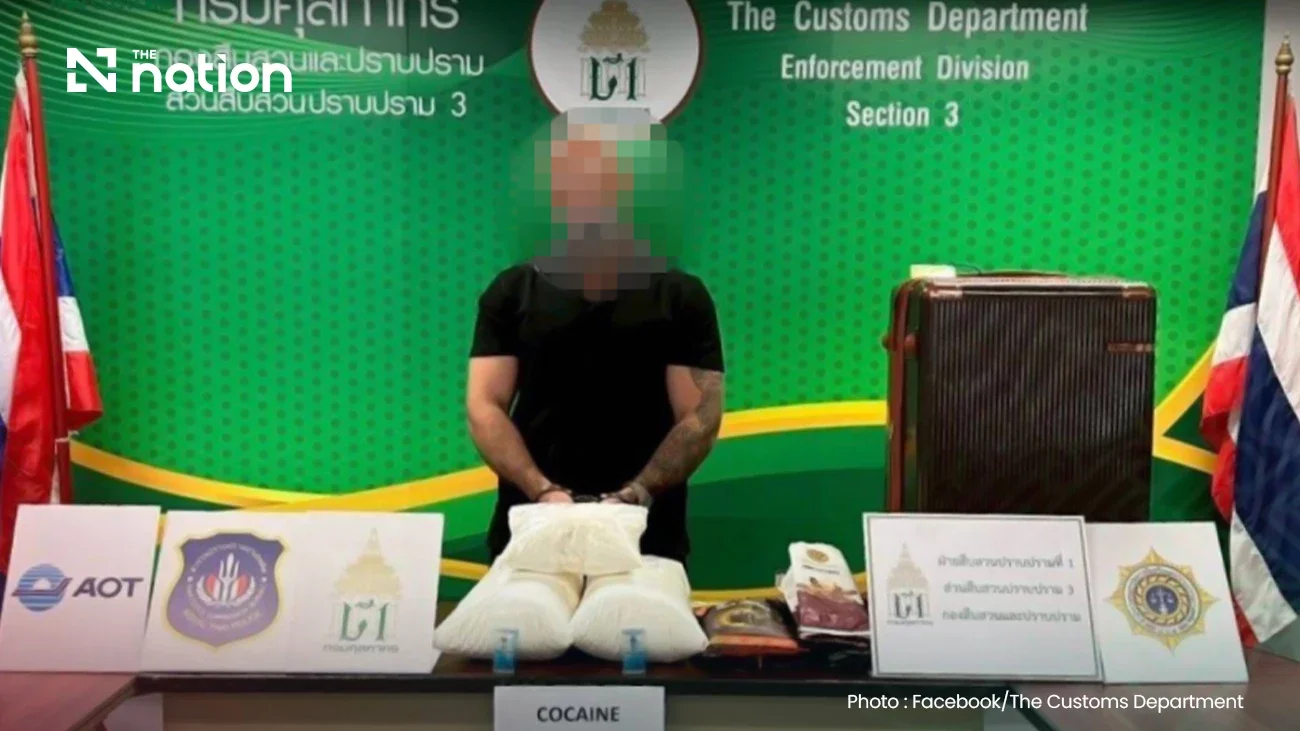
Thai Customs arrested a Turkish male passenger at Suvarnabhumi Airport after he arrived from São Paulo/Guarulhos International Airport in Brazil on June 25. Officers found more than 12 kg of cocaine hidden in coffee bags and chocolate packaging, with an estimated value of about 36 million baht. 1
The tactic was ordinary on purpose. Coffee and chocolate already belong in luggage, and both can plausibly explain smell, bulk, and packaging. The oddity is scale: once the coffee bags become the main cargo rather than a souvenir, the disguise starts acting like a label.
Thai Customs Director-General Phantong Loykulnanta said the case reflected continued attempts by transnational crime groups to use international air routes to bring drugs into Thailand. 1 The suspect faces allegations under Thailand's Customs Act B.E. 2560 and Narcotics Code, with a possible maximum penalty of 15 years' imprisonment, a 1.5 million baht fine, or both, according to the same account. 1
The broader Thai Customs numbers add one useful caution. From October 1, 2025 through June 25, 2026, the agency reported 214 drug cases involving 53 suspects and seizures valued at more than 692 million baht; postal and courier parcels accounted for 76.6% of those cases. 1 This airport case was dramatic, but Thailand's own figures point to a less cinematic channel: parcels.
2. Frozen berries, 110 bricks, and a public appeal
Australian Border Force, Australia's border-control agency, began examining a refrigerated container at Sydney's Port Botany on June 24 after it arrived from Santiago, Chile. AFP investigators later removed 110 compressed white-powder bricks, each weighing 1 kg, and preliminary testing returned a positive result for cocaine. 2
The container was carrying frozen berries and was due to be transported to Sydney's north-west, according to the Australian Federal Police, Australia's federal criminal-investigation agency. AFP estimated the 110 kg cocaine seizure at about AU$36 million and said on June 27 that investigators were seeking public help to identify the group responsible for the attempted importation. 2
This concealment method did not depend on a passenger acting casual at a counter. It used the routine rhythm of refrigerated trade. Frozen food gives a container a reason to be sealed, cold, heavy, and headed inland. That makes inspection less theatrical and more forensic: find the wrong packages among the right cargo.
AFP Acting Detective Superintendent Aaron Burgess said criminal networks trying to import harmful drugs into Australia have "no regard for the devastation these substances cause to individuals, families and communities." 2 ABF Acting Superintendent Noleen Shankar said cocaine seizures at Australia's border had increased by 23% compared with the same time last year. 2
3. Snack boxes with 23 million baht inside
At the Mae Sai border crossing in Chiang Rai province on the Thai-Myanmar border, Thai Customs stopped a white four-door Toyota with Myanmar plates on June 23 and found 23.023 million baht in cash hidden inside two cardboard boxes labeled as snacks. 3 The driver was identified as Maung, a 31-year-old Myanmar national. 3
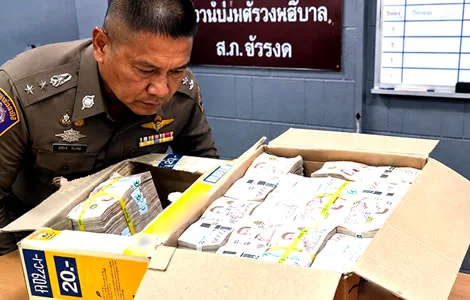
The packing list was almost too tidy. One box labeled for fish snacks held 17 bundles of 1 million baht each, all in 1,000-baht notes; the other box, labeled for potato chips, held six 1 million baht bundles plus 23 loose 1,000-baht notes, bringing that box to 6.023 million baht. 3
The snack-box tactic differs from the drug cases because the contraband was not trying to imitate the weight or texture of the declared goods. It was trying to borrow their social meaning: low-value roadside merchandise moving through a busy border point.
Thai Examiner reported that Maung faces allegations under Thailand's Customs Act B.E. 2560, the Criminal Code, and the Exchange Control Act B.E. 2485. 3 Security agencies joined the investigation to trace the source of the funds, the organizers, and the intended recipient. 3
These cases did not share a commodity. They shared a wager: an inspector sees ordinary packaging first, and only later asks why the ordinary thing is so heavy, so numerous, or so carefully boxed.
Cover image: Thai Customs evidence display from the Suvarnabhumi cocaine case. Image from The Nation Thailand.
围绕这条内容继续补充观点或上下文。