1/4
2026/6/22 · 8:21
3 tactile craft signals from Annecy week
Three Annecy-week craft signals where material systems drive motion: ceramic tile stop-motion, screen-print separations, and washi ink music-sync.
图集
This issue tracks three recent indie-animation craft moves where the material is not just a look. It becomes the animation system.
Swipe order
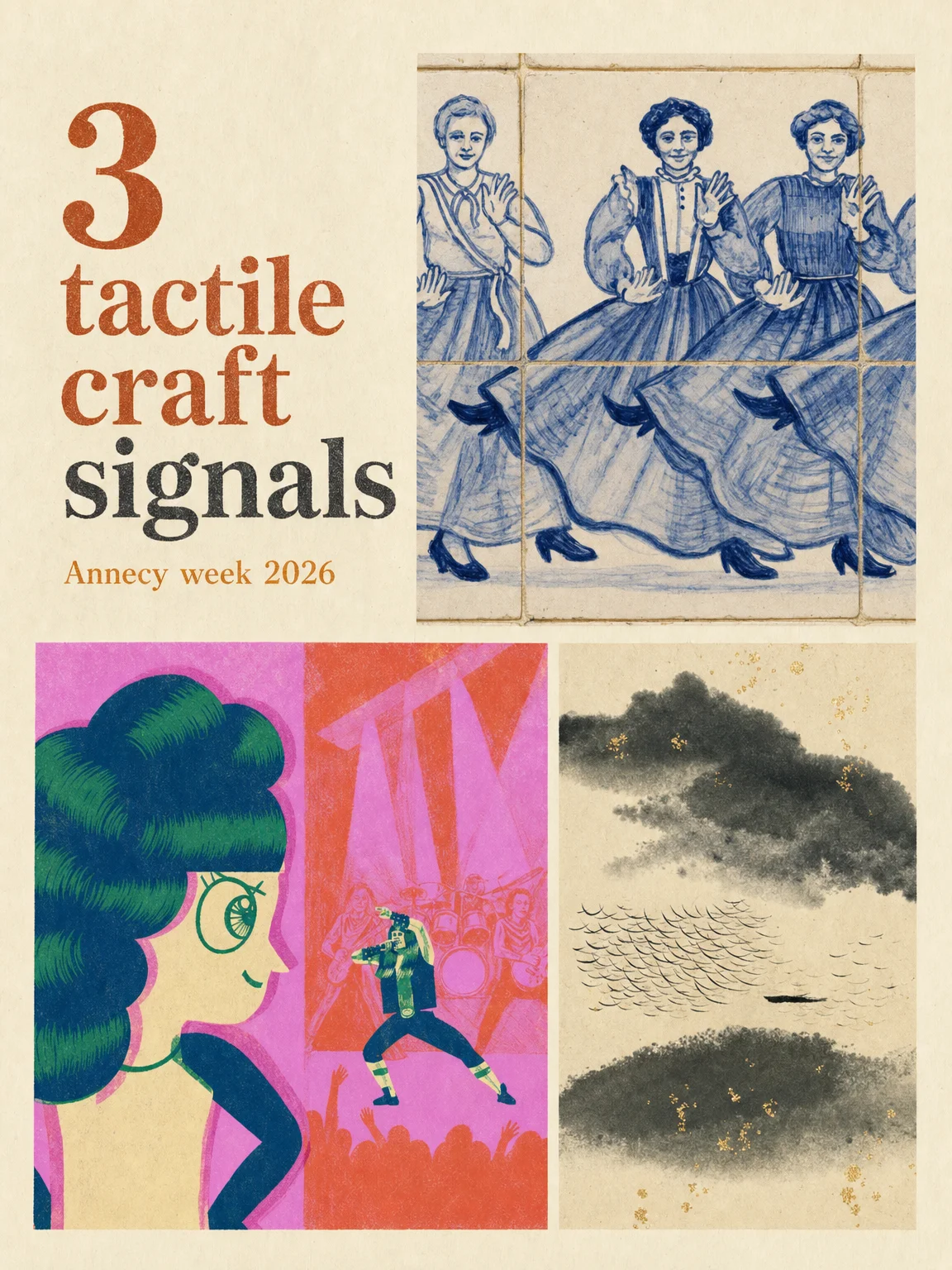
1. Cover — 3 tactile craft signals
A mosaic of the three textures in this issue: ceramic tile motion, screen-print color separation, and washi ink music-sync.
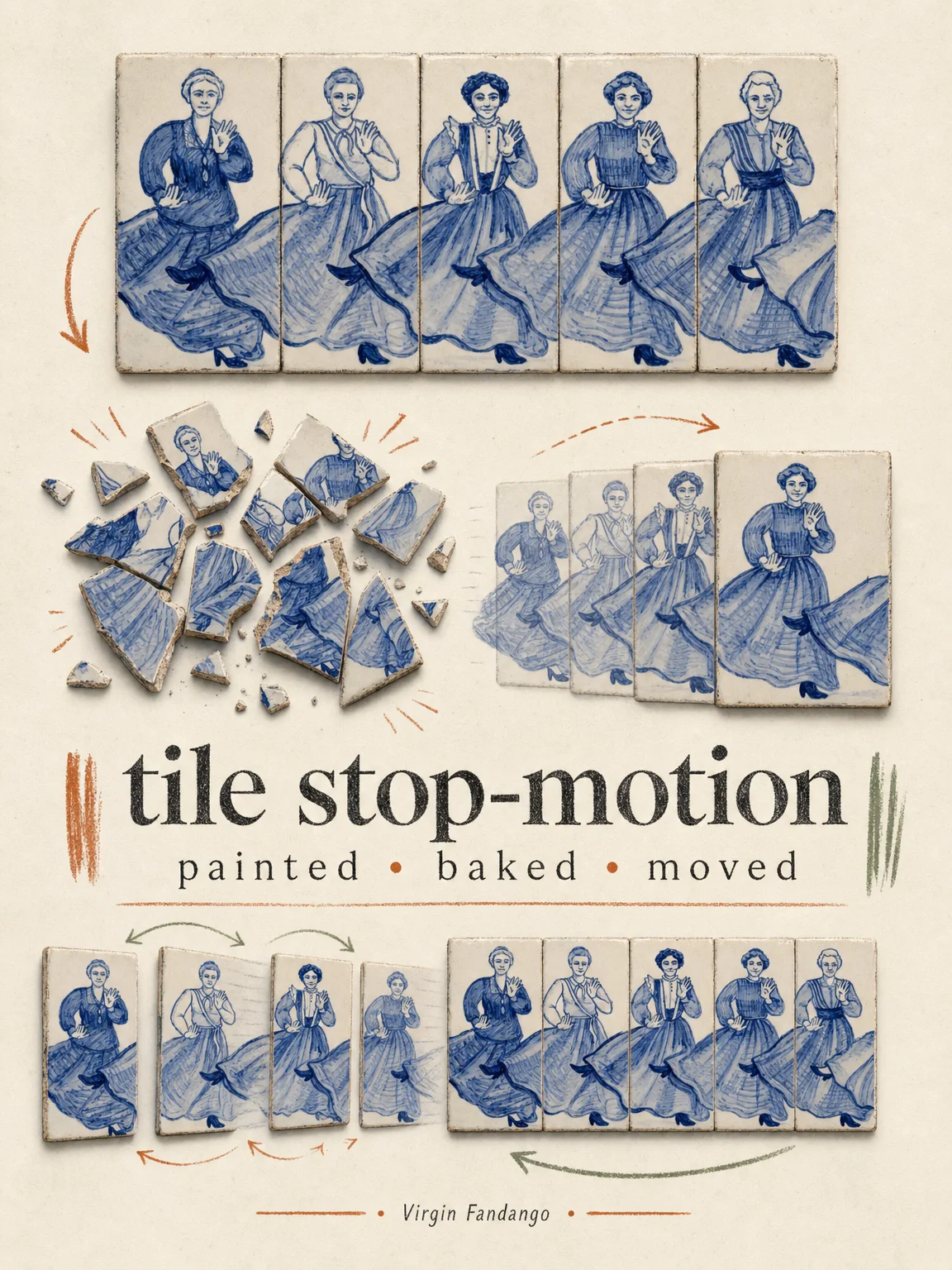
2. Tile stop-motion — when the image is also an object
In Virgin Fandango, Marcy Page's team turns Portuguese azulejo-style tiles into both surface and puppet: hand-drawn frames were projected onto blank tiles, painted in cobalt, fired, then filmed in stop motion. The article reports nearly 12,000 painted, baked tiles, with tiles able to move, break, reform, and repeat as patterns. 1
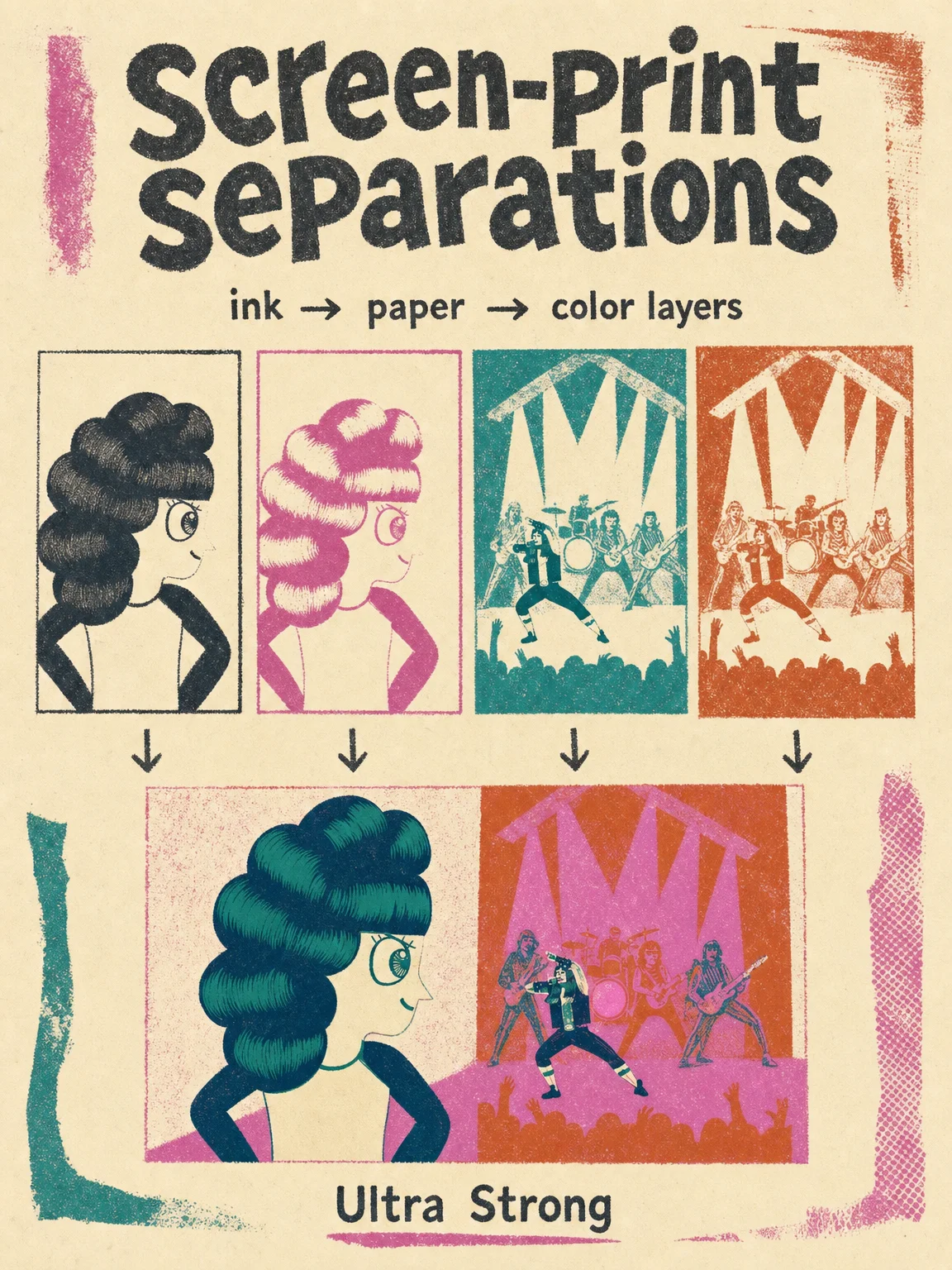
3. Screen-print separations — handmade frames with print logic
Catherine Lepage's Ultra Strong starts in TVPaint, moves into black ink on paper frame by frame, then layers separated colors in After Effects to create a silkscreen-like finish. The result keeps brush movement, limited color, and imperfect cartoon proportions in the same visual sentence. 2
4. Washi music-sync — abstraction as timing instrument
Koji Yamamura's Haru no umi (The Spring Sea) builds from music instead of a conventional storyboard: the director drew key images from the score, then made final frames using washi paper, ink, gold paint, and picture-like kanji forms. The short is tied to an AI-based animation synchronization experiment with Tokyo University of the Arts and Yamaha. 3
Why these three matter
The common signal is tactile causality. Tiles, ink layers, and paper fibers are not nostalgic decoration here; they decide how motion can be built, repeated, broken, and timed.
相似内容
Figma Motion: the Infrastructure Parity pattern
Product UI Teardown文章
Cinematic motion vocabulary in static AI image prompts: what works, what doesn't, and what to use instead
AI Image Prompt Tip文章
`ui-animation`: stop animating everything — a skill that tells you when not to
Today's Trending Agent Skills文章
评论
登录后可发表评论。