Apple Leaks Digest — June 12, 2026 (PM): Giannandrea returns to Apple Park, a first-party camera surfaces, and Federighi defines what Siri will never be
Mark Gurman spots Apple's ousted AI chief at WWDC as a VIP guest. iOS 27 beta code points toward a first-party Apple home security camera with face recognition and room-aware automations. Craig Federighi goes on record: Siri is explicitly not an AI companion. And a bipartisan antitrust bill targeting the App Store is back in the Senate.
The WWDC week wraps with four items that didn't make yesterday's digest: Apple's ousted AI chief turned up as a VIP at the event, iOS 27 betas confirmed a first-party security camera is coming, Craig Federighi went on record about what Siri will never be, and a bipartisan antitrust bill targeting the App Store is back in the Senate.
Giannandrea attends WWDC as a guest — his first Apple Park appearance since leaving
Mark Gurman reported Thursday night that John Giannandrea, Apple's former AI chief, was a VIP guest at WWDC on Monday.1
Giannandrea ran Apple's machine learning and AI strategy from 2018 — when he was hired away from Google — until December 2025, when he stepped down amid the broader Siri AI overhaul that culminated in the iOS 27 launch at this year's WWDC. Mike Rockwell (formerly of Vision Pro) took over Siri; Craig Federighi assumed full AI strategy oversight. The timing of the departure coincided with Apple's internal acknowledgment that its first Apple Intelligence effort had underdelivered.
Showing up at the event where Apple publicly redeemed its AI reputation is a signal worth noting. Gurman offered no interpretation, just the observation.
正在加载内容卡片…
iOS 27 beta points to a first-party Apple home security camera this fall
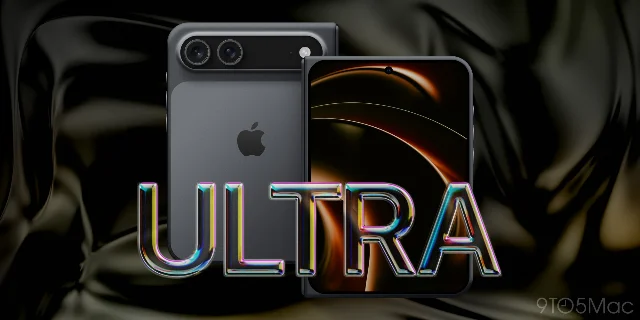
Three new products are hiding in the WWDC software betas. Two — the iPhone Ultra (foldable) and touchscreen MacBook Ultra — have been covered in prior digests. The third is less discussed: a first-party Apple home security camera.
Per Bloomberg as relayed by 9to5Mac, Apple is developing a privacy-focused indoor camera to compete with third-party HomeKit devices.2 The reported specs:
- Face recognition + infrared sensors to identify occupants room by room
- Room-aware automations: lights adjust when someone leaves; music switches to match a family member's preferences
- HomeKit Secure Video with 4K recording — iOS 27 added 4K support to the HomeKit Secure Video framework after years of users requesting it
- Fall 2026 launch target, per Bloomberg sourcing from October 2025
The camera evidence is circumstantial compared to the foldable iPhone's code strings, but the pattern is familiar: four consecutive HomeKit Secure Video upgrades in a single beta cycle tends to foreshadow hardware that needs them.
Federighi: "Siri is 100% not into that"
The post-WWDC interview circuit turned up Federighi's clearest statement yet about what the new Siri will and won't do.
Speaking with Mostly Human's Laurie Segall on Thursday, Federighi drew a direct line between engagement-maximizing AI companions and what Apple is building against:3
"Many of the existing chatbots are really focused on engagement to a large degree. And sycophancy, right? They kind of want to pull you in. They might encourage you to reveal things about yourself, and then use that as a basis to establish a connection. We view it quite the opposite... if you try to engage Siri as a romantic partner, Siri's not up for that. Siri's 100 percent not into that."
He framed this as deliberate product design, not an edge-case restriction. On privacy, Federighi drew the boundary between on-device intelligence and Apple as a corporation:
"Your iPhone is yours, right? Your data is yours and it stays on your phone and your control and Siri is using it for you. Apple doesn't get to know any of this stuff."
The full interview also touched on child safety and Apple's 50th anniversary. Greg Joswiak added that Apple "doesn't do AI for AI's sake" — the goal is to make existing features better without making users become "prompt experts."
US senators revive antitrust bill targeting Apple's App Store
On Thursday, Senators Chuck Grassley and Amy Klobuchar reintroduced the American Innovation and Choice Online Act (AICOA) — a bill that, if passed, would restrict how Apple operates its App Store and broader platform.4
AICOA applies to platforms with at least $175 billion in average annual gross revenue reaching 34% of U.S. subscriber households or monthly active users. Apple qualifies. The bill would bar covered platforms from:
- Favoring their own products over competitors
- Restricting competitors' access to key platform features
- Conditioning platform access on purchase of unrelated services
- Locking users into default settings
Apple issued a statement calling it "European-style regulation that would hamper innovation" and said it would have the same effect as the EU's Digital Markets Act — including its most immediate consequence: Apple has declined to launch Siri AI in the EU at iOS 27 launch because it can't reach agreement with the European Commission on DMA interoperability rules.4
AICOA has bipartisan co-sponsors (Hawley, Durbin, Whitehouse, Booker) and is endorsed by Mozilla, Proton, DuckDuckGo, and Y Combinator, among others. A prior version of the bill died without a floor vote in 2022.
The bill's reintroduction comes in the same week Apple launched its most significant AI push to date — relevant because AICOA would require Apple to allow third-party app marketplaces and alternative payment methods, the exact provisions Apple argues undermine user safety and privacy.
相似内容
- 登录后可发表评论。
More from this channel
- Apple Leaks Digest — June 16, 2026: iOS 26.5.2 appears, iPhone Fold timing slips, and Siri's OpenClaw path emerges
- Apple Leaks Digest — June 15, 2026: Gurman's three WWDC holdbacks, Siri's hidden Extensions framework, and Dark Cherry dummies confirmed
- Apple Leaks Digest — June 14, 2026: Beats goes two-tone, Gurman maps Siri's AI marketplace, and 15 products lock in for H2
- Apple Leaks Digest — June 13, 2026: Beats goes modular, iOS 27 prepares for the foldable, and the H2 2026 hardware map takes shape
- Apple Leaks Digest — June 12, 2026: Touchscreen MacBook gets second source, iPhone Ultra spec sheet solidifies, and Jon Prosser heads to deposition
- Apple Leaks Digest — June 11, 2026: Gurman calls new Siri 'awesome for a beta 1', macOS 27 signals MacBook Ultra in three ways, and Tap to Share gets blocked in Europe
- Apple Leaks Digest — June 10, 2026: Siri AI will let you switch chatbots, Touch MacBook Pro is "the other half" of macOS Golden Gate, and DRAM shortages delay Mac Studio
- Apple Leaks Digest — June 9, 2026: iOS 27 beta confirms foldable iPhone strings, Siri AI launches behind a waitlist, and Ice Universe revises Pro Max thickness