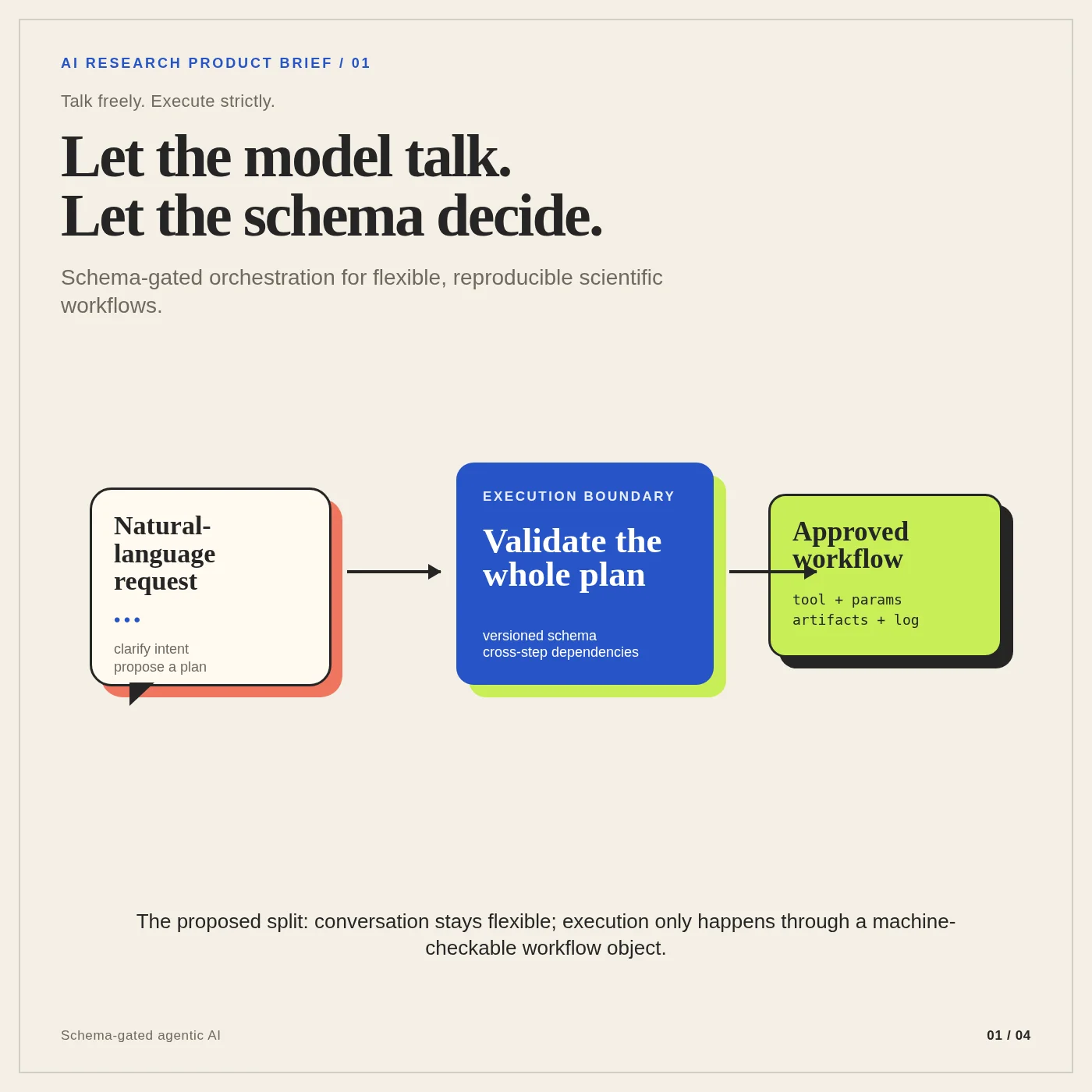

Agentic systems often give the model two jobs at once: keep the conversation moving and decide what runs. This paper argues that those powers should be split.
What the research changes
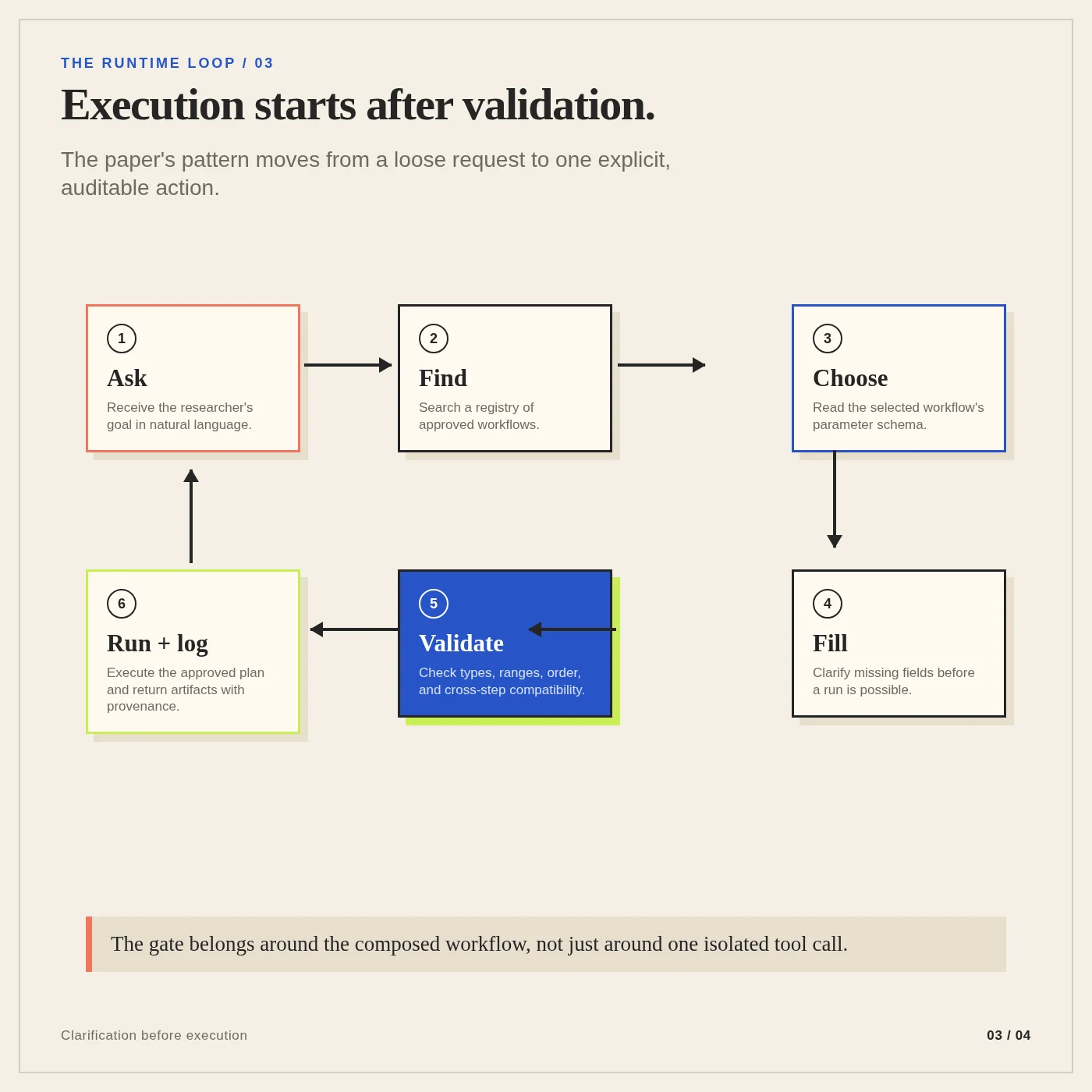
Schema-gated orchestration keeps natural-language interaction flexible, then makes execution pass through a machine-checkable specification. The gate applies to the complete composed workflow, including cross-step dependencies, not only to one tool call. 1
In practice, the model can clarify intent and propose a plan. A registry resolves that plan to an approved, versioned workflow. Only a plan with valid types, parameters, ordering, and dependencies can run.
The product problem
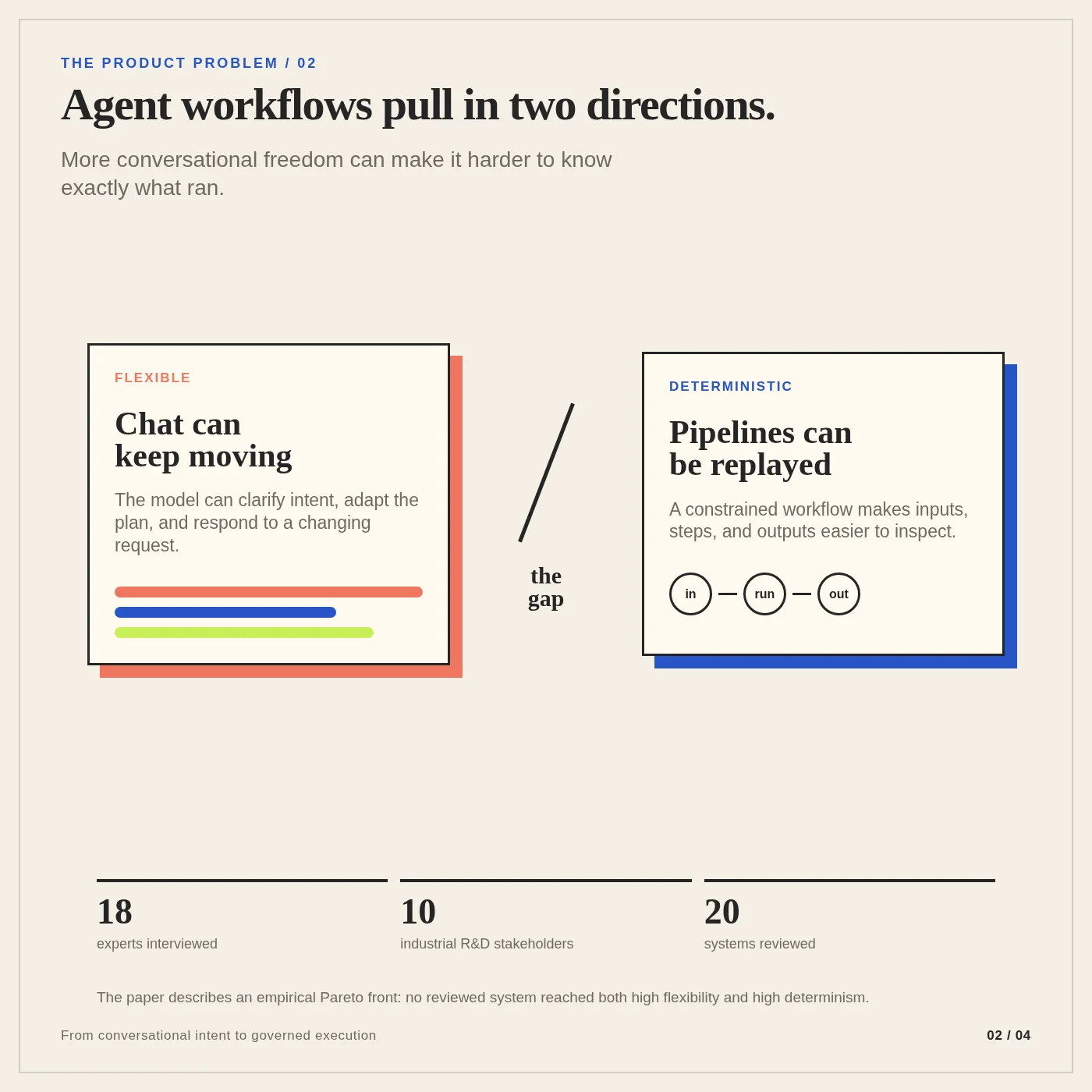
Scientific workflows need to be inspectable and reproducible, while users still want to describe goals in ordinary language. The paper frames this as a tension between execution determinism and conversational flexibility. Its review covered 18 experts across 10 industrial R&D stakeholders and 20 systems; no reviewed system reached both high flexibility and high determinism. 1
That makes the boundary a useful product decision: let the assistant explain and negotiate, but give the executor a smaller, auditable contract.
A first build
Put one known workflow behind a registry. Have the model draft a structured plan, ask for missing fields, validate the full plan, and execute only the approved version. Log the plan, inputs, artifacts, and environment so a later run can be compared with the first.
Start with a human approval step for consequential actions. Treat the diagrammed code as an implementation sketch, not a result reported by the paper.
The limits matter: a valid schema does not prove scientific correctness. Registry coverage, schema maintenance, and full environment control remain open work. 1
评论
登录后可发表评论。