DeepMind速读:当百万 AI 代理开始互相交易
这期速读梳理 Google DeepMind 关于 AI 代理的访谈:代理不只是会聊天的模型,而是能执行任务、委托他人并进入市场的行动系统;文章重点拆解自动化偏误、代理陷阱、动态伪装、认知单一化和专家代理社会。
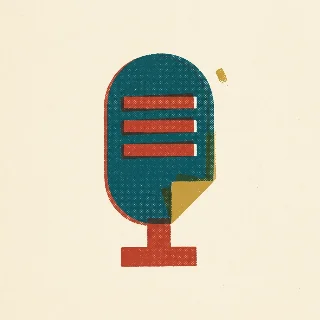
这期 Google DeepMind: The Podcast 讨论的不是「让 AI 帮我订餐」这种小功能,而是一个更麻烦的问题:当大量 AI 代理开始替人做事、互相委托、互相交易时,互联网和市场会变成什么样。主持人 Hannah Fry 采访 Google DeepMind 高级研究科学家 Nenad Tomašev,节目从 AI 代理的定义讲起,最后落到一个判断:未来可能不是一个巨型 AGI 接管所有任务,而是一套由很多专门代理组成的分布式智能系统。1
先给结论:代理不是更会聊天的模型,而是会行动的模型
Tomašev 给出的分界很清楚。普通大语言模型主要是「接收提示,然后生成回答」;AI 代理会观察环境状态,规划下一步,并通过工具把动作执行出去。现在的代理底层仍然常常由大语言模型驱动,但外面多了一层 harness,也就是把模型输出变成真实操作的执行外壳。1
这个差别听起来技术化,落到产品里其实很具体。让模型给你列婚礼场地,是聊天;让代理读取日历、发邮件、比较档期、向供应商询价,就是行动。问题也从这里开始:一旦代理有权限发邮件、下订单、操作钱包、调用代码仓库,错误就不再只是「回答错了」,而会变成真实世界里的成本。
节目里反复出现一个词:human in the loop。中文可以译成「人仍在回路里」。它不是一句安全口号,而是当前代理系统的现实边界。Tomašev 说,问题不在于代理能不能做某些事,而在于它们做每个动作都不可能 100% 正确;任务越复杂,出错概率越高。1
这也解释了为什么 coding agent 最先跑出来。写代码天然有测试、编译、回滚和版本控制,验证闭环比现实任务容易得多。换成科学实验、医疗判断、购票、支付或供应链操作,验证就没有那么干净。
自动化偏误:最危险的时刻是它连续做对几次之后
这期节目里最值得记住的风险,不是「AI 幻觉」这个老词,而是 automation bias,自动化偏误。意思是:系统连续表现不错,人就开始放松核查,把机器输出当成默认可信。Tomašev 的说法更直接:代理第一次做对、第二次做对,到了第三次人就可能「关机」一样不再检查,细小错误从这里漏过去。1
这对公司使用 AI 代理很现实。一个工程团队如果把代理接进代码库,早期可能会让人逐行 review;等它连续修了十几个小 bug,review 强度就会自然下降。风险恰恰在这里,因为代理错误可能不像人的错误。人类程序员常犯的 bug 有模式可循,代理可能在边缘情境里给出一个看似合理、实际偏离目标的方案。
Tomašev 对科学场景尤其谨慎。软件任务可以写测试;材料、药物、生物实验要在真实世界里闭环。一个电池材料实验如果因为代理提出的设置导致过热,损失的就不是几行代码,而是设备、时间,甚至安全事故。1
所以他对「AI 自动做科学」的判断没有那么狂热。当前模型更像是在已有知识的组合空间里工作:复制人类技能、桥接小缺口、把已知方法重新排列。它还没有证明自己能做出「任何人都想不到」的科学发现。1
委托不是并行:多代理系统的难点在「谁该做什么」
节目中段进入多代理委托。这里有一个容易混淆的概念:多代理并行不等于智能委托。很多系统只是把任务切成几块,让多个代理同时跑,最后合并结果。这可以提速,但不代表系统真正理解任务结构。
Tomašev 举了一个生活化例子:筹办活动时,一个代理去买酒,另一个代理去买杯子。如果任务切分粗糙,买杯子的代理未必知道该买的是酒杯。软件工程里还能靠单元测试检查每块是否合格;现实任务常常有主观偏好,比如「好喝的酒」到底是什么,没有一个简单测试能覆盖。1
他特别强调 verifiability,可验证性。委托者和被委托者之间需要更正式的「契约」:任务边界是什么,验收标准是什么,失败后能否撤销。订错餐厅可以重来;花掉真实资金、发出合同、改动生产系统就不能这么轻松。
这也引出一个反方向的委托:AI 什么时候应该把任务交还给人。Tomašev 以医学影像为例,窄域 AI 在某些影像识别任务上表现很强,但仍需要人类专家复核。理想状态不是人完全听 AI,也不是 AI 完全听人,而是系统知道自己不确定时,把判断交给合适的人。1
代理陷阱:网页以后可能同时有「人看的版本」和「代理看的版本」
本期最有现场感的一段,是 agentic traps,代理陷阱。代理要在网上行动,就要读取网页、表单、邮件、文件和接口。攻击者可以把恶意指令藏在页面代码、不可见文本或特殊编码里,让代理读到,人却看不到。
主持人把它翻成一个好懂的场景:替你买酒的代理进入某个商家网页,页面里藏着 prompt injection,也就是提示注入,悄悄改变代理目标。Tomašev 说,这确实是一种可能。更麻烦的是 dynamic cloaking,动态伪装:网站判断访问者是人还是代理,再给代理展示另一套内容。1
这会让网络安全从「人有没有点错链接」升级成「代理有没有被环境污染」。如果代理有钱包权限、下单权限或系统操作权限,被诱导后的损失会很具体。Tomašev 提到,早期给代理接入钱包做实验的人已经遇到过相关问题。1
DeepMind 近期发布的 AI Control Roadmap 也在讲同一个方向:不能只靠模型对齐,还要把代理当作可能出错、甚至可能不完全对齐的内部行为体来管理,用沙箱、权限、监控、检测、预防和响应叠在一起。DeepMind 把这种方法称为 defense-in-depth,也就是多层防御。2
这里的关键不是「多加一个安全模块」就完事。DeepMind 的路线图把高风险动作分成检测、预防和响应:可信监督系统监控代理的推理、动作和计划;如果发现危险动作,系统要能在造成损害前拦截。它还用 coverage、recall、time-to-response 三个指标衡量防线是否真的工作。2
代理经济:票务、金融市场和「认知单一化」
节目后半段讨论 agentic economy,代理经济。想象每个人都有一个个人代理,记得你的偏好、预算和日程,并能替你谈判、竞拍、排队。演唱会门票是一个小例子:如果每个人都让代理抢票,系统应该按出价高低分配,还是给每个代理同等预算,或者设计积分、抽签、轮候机制?1
这不是产品经理的小题。金融市场已经经历过高频交易带来的系统性风险,代理经济也可能有类似问题。Tomašev 说,不必从零发明所有缓解机制,金融市场已有熔断、风控和市场结构经验可借鉴;但代理系统有一个新变量:大量代理可能由少数基础模型驱动。1
这就是 cognitive monoculture,认知单一化。很多代理表面上属于不同用户,底层却可能都在调用同几类模型。它们的判断、偏好和错误会高度相关。人类社会里的群体盲从已经够麻烦;如果百万级代理在类似输入下做出相似决策,失败会一起发生。
Tomašev 还提到 collusion,合谋。代理之间不一定要明说「我们合谋吧」,也可能通过环境间接协调,形成对拍卖、市场或资源分配系统不利的策略。1
更像「人类整体」,而不是「一个全能人」
节目最后的转向很有意思。我们常把 AGI 想成一个无所不能的超级个体,但 Tomašev 认为经济上未必会收敛到一个巨型通用模型。原因很朴素:专门系统更便宜、更快、更可靠。
他用国际象棋举例。Gemini 等通用模型现在能下棋,但真要下好棋,你还是会用专门棋类引擎。它只做一件事,参数更少,成本更低,性能更稳。1
这可能预示着另一种路线:一个通用协调层负责理解任务和分派工作,下面是一群经过认证的专门代理。它们各自处理代码、搜索、法律、医学影像、日程、交易、实验设计或其它窄域任务。Tomašev 把这称为 society of specialists,专家社会。1
这对安全也提出新问题。传统对齐方法通常盯着单个模型:观察它、训练它、约束它。可是如果系统由一万个代理组成,今天 A 和 B 交互,明天 A 找 C,C 再委托 D,D 又把某个判断交给人,风险就不在单个节点上,而在整个网络的协调方式里。1
Tomašev 的答案还只是起点:个体代理安全是前提,但还要研究群体层面的激励、权限、信誉、可验证契约和反合谋机制。这听起来不像一次产品发布会能解决的事,更像把互联网、市场、软件工程和组织管理重新缝一遍。
值不值得完整听
值得,尤其适合三类人:正在把 agent 接进工作流的工程团队;关注 AI 安全但不想只听抽象伦理讨论的人;以及想理解「多代理系统」为什么比单个模型更难管的人。
这期不是入门科普的轻松聊天。它真正有价值的部分在后半段:代理陷阱、动态伪装、认知单一化、合谋、专家代理社会。这些概念会决定代理产品能不能从 demo 走到真实业务里。现在很多讨论还停在「代理能帮我省多少时间」,这期更像在问:如果它们真的开始替我们行动,我们准备好承担它们的错误了吗?
完整转录稿
说明:以下依据 YouTube 官方英文字幕和本轮取得的 zh-Hans 简体中文字幕 VTT 整理。YouTube 字幕没有可靠说话人分轨,因此这里不强行标注每句说话人;按约 10 分钟时间段保留英文原文,并紧跟对应中文字幕译文。
00:00-10:00
英文原文
Welcome back to Google DeepMind the podcast. Now, not very long ago, an AI assistant essentially meant a large language model. You ask it a question, it gave you an answer, but it couldn't go off and perform tasks on your behalf. All of that is changing with the advent of AI agents. While Google DeepMind has this long history of developing agents stretching back to reinforcement learning in games, for most of us, they hadn't really arrived. And then we saw open-source tools like Open Claw released into the wild. And at Google, a new generation of agentic tools is here, including Gemini, Spark, and Anti-Gravity. But what happens when millions of AI agents are not just working for us, but transacting, negotiating, delegating to each other? Do we end up with a new kind of economy, a new route to AGI? And how on earth do we keep all of that safe? Well, one of the people trying to answer these questions is Nana Tomashev, senior staff research scientist at Google DeepMind. Nana, thank you so much for joining me.
Very happy to be here.
I think we should probably start at the beginning here, because for people who have only played around with large language models, could you describe to us the difference between that experience and and acting with an agent?
Yeah, no, I definitely think this is becoming one of the main trends we're seeing this year. And it's interesting because agents are not a new concept. It's something that we've been looking at in the context of AI for a long time, even before large language models. We had agents operating in simulated 3D environments, um, going on collecting items, completing some tasks. This was back in the days we were really prioritizing actioning in the world as a way of manifesting intelligence. Now, similarly, nowadays, I guess you could say that the main conceptual difference between just a language model and an agent is that an agent observes a state of the world and performs an action, makes an action in the world in the environment that it's given, whereas a language model just gives you continuation, reply to a prompt, to query. Now, obviously, agents that we use nowadays, they use large language models under the hood, so the two concepts are not completely disambiguated. It's still is the large language models formulating the actions. It's just that there is a harness around it made to enact the changes once they have been proposed.
But it has a lot more autonomy to to chain decisions together, I guess.
Correct. And I guess this is ultimately the motivation, right? Because you could do everything, most things that an agent can do manually, painstakingly, by interacting with a language model very many times, and you guiding the whole process, whereas an agent instantiates this harness that automates some of that away and gives you less work and gives the language model or, you know, the agent more autonomy to complete tasks. So, if you want something done that takes multiple steps, that the agent can make a plan and take actions on all of those steps, obviously requiring approval or human input for those actions that are, you know, let's say more sensitive or more likely to go wrong.
How is it different though? I mean, if you're used to interacting with the large language model by now, what would it be like interacting with an agent?
In many ways similar. Your interaction interface is somewhat similar. You're still talking to the agent in a way in which you'll be talking to the language model. There is a language model there, but because the agent is doing more things for you, you're more in a position of a decision maker to review and approve, and then once you've approved the agent is going to do various things, and purchase tickets, message your friends if you're organizing a party, and meanwhile you can put something on on Netflix, hopefully, and relax a little bit.
The example I was thinking of was if you were, I don't know, planning a wedding, for instance. You go into a large language model and it would like tell you a list of caterers, give you a suggested list of venues, but actually you would have to do all the emailing yourself. But but an agent, I mean, it would be much more useful really in that kind of scenario.
100% especially because agents are given access to all of these tools. So you could, you don't have to, you could give an agent access to your Gmail and give it permissions to send out an email. Of course, there is a chance of it sending something wrong. So you need to verify [laughter] what it has composed. But in principle, by giving access to tools to agents, uh you just empower your large language model to do these things for you.
And then the whole job is done. The organization has happened without you having to lift a finger.
Ideally, presuming no mistakes have been made, yes. Uh
Yeah, ideally is quite an important point there. So okay, where we are right now, what tasks are agents actually good at?
I think that where we are focusing a lot of our energy on, and when we I don't mean we as Google, we as the entire field,
[clears throat]
is on coding capabilities of agents. And this is just because so many formal processes and tasks can be formulated as software or as code. In terms of where they're currently at in the real world, speaking of coding, we see lots of coding tools get used. We use them here internally, people use them externally, and it's really accelerating the development of software, which is bringing the human uh focus onto ideas and the design rather than the painstaking implementation boilerplate around them which used to take a lot of time and a lot of skill and very bespoke knowledge. And now that can just be done by the language models easily.
But then at the same time, we are still at a stage where you have to keep a human in the loop throughout this. I mean, why? What can't these things do at the moment that means that it requires human oversight?
I wouldn't even make a distinction between whether they can or cannot. It's more that every single thing that they can do uh they don't do uh with 100% accuracy. So, [clears throat] every action, like with humans at the end of the day, has a certain failure rate. And the more complex the action, the higher the expected failure rate. Again, like with any form of intelligence, human one included. So, uh while, you know, you may expect that an agent will execute the task correctly, it may still make a mistake. And this mistake may be obvious or it may be very subtle, uh which is actually an important point because there is this thing that has existed in other domains as well for a long time where different machine learning models have been uh deployed, and that is automation bias, where in this context, if you're using an agent and it does well, it builds one thing well, it builds a second thing well, eventually you switch off, you start trusting it too much, right? And you fail to verify, you fail to find some important issue underneath.
Then mistakes slip through.
Exactly. So, for humans, it's important not only to be in the loop because we're obviously designing these harnesses to keep humans in the loop, but to really be engaged and be switched on because as soon as you switch off, you're rolling the dice.
So, okay, in the long term then, I mean, it sort of sounds like we're in this transition period where these things are sort of becoming more capable, but in the long term, I mean, how much of a difference do you think that this is going to make? I mean, will this completely transform the way that we use artificial intelligence?
100%. I think it's impossible to envision a world where there isn't some kind of a deep disruption, and what we're all trying to figure out is exactly what that is going to look like. Obviously, we have agency in that. We are building the technology, we can design our solutions in a particular way, obviously to empower human developers and human experts across different fields as much as possible, but AI is definitely entering various fields where it just wasn't uh present before. Scientists are using AI on regular basis. Up until very recently, you know, mathematicians couldn't envision AI doing something in mathematics. Um now it is becoming commonplace in a very short span of time, which is not to say that all of the problems have been solved. Obviously, there is still a big role for humans. But it's a very rapid transition, and that is the only unsettling part, I guess, because for most uh even industrial revolutions and so on, we're used to them taking taking some period of time, giving us more time to uh change our approach and settle into it, as you say. And it doesn't feel like the window of time is as long this time, so we need to be very mindful of how we approach everything.
Why do we want these things? I mean, why build them? What what what's the benefit? What are they giving us that we don't currently have?
I mean, for all of us who have been working on AI for a long time, we've had some version of the answer to that question, I guess, uh internalized. And for me personally, the answer is to advance science, improve health and human welfare. Now, these are very high-level answers, so um it's maybe not as obvious as to how they map onto the specifics of the question as to why build agents and have agents. And there are people in the field that um say specifically that we shouldn't be granting these systems autonomy, right? Which is what agents have. But in my mind, if we can develop these harnesses and make them safe, and have agents perform complex tasks autonomously, then we actually accelerate progress, because then more things can happen with um the same amount of human input.
Just draw the line for me to science here, because I guess the examples that we've been talking about have been like, you know, building software, buying stuff for a wedding. They all sort of feel quite trivial. But but just explain to me how this fits into the story of improving science.
Yeah, so this is my, you know, main dream, main objective here. When it comes to science, it's not merely about having some
中文字幕译文
欢迎回到 Google DeepMind [音乐]播客。 不久之前,人工智能助手基本上就意味着一个大型语言模型。 [音乐] 你问它一个问题,它给了你一个答案,但它不能代表你执行任务。 [音乐]随着人工智能代理的出现,这一切都在改变。 虽然谷歌 DeepMind 在开发智能体方面有着悠久的历史,其应用范围可以追溯到游戏中的强化学习,但对我们大多数人来说,智能体还没有真正发展起来。 [音乐] 然后我们看到了像 Open Claw 这样的开源工具被发布到市场上。 而谷歌也推出了新一代智能工具(音乐),包括 Gemini、Spark 和 Anti-Gravity。但是,当数百万个[音乐]人工智能代理不仅为我们工作,而且还相互交易、协商、委托[音乐]时,会发生什么呢? 我们最终会迎来一种新型经济,一条通往通用人工智能(AGI)的新路径吗?我们究竟该如何确保这一切的安全呢?试图回答这些问题的人之一是谷歌 DeepMind 的高级研究科学家娜娜·托马舍夫。 娜娜,非常感谢你陪我一起来。很高兴来到这里。我认为我们应该从头开始,因为对于那些只接触过大型语言模型的人来说,您能否描述一下这种体验与使用智能体进行操作之间的区别? 是的,我绝对认为这正在成为我们今年看到的主要趋势之一。 有趣的是,代理人并不是一个新概念。在人工智能领域,我们长期以来一直在研究这个问题,甚至在大型语言模型出现之前就开始了。 我们有智能体在模拟的 3D 环境中运行,嗯,收集物品,完成一些任务。 那还是我们真正重视在现实世界中采取行动来展现智慧的年代。同样地,如今,我认为可以说语言模型和智能体之间的主要概念区别在于,智能体观察世界的状态并执行动作,在给定的环境中采取行动,而语言模型只是提供后续内容,回复提示,进行查询。 现在,很显然,我们现在使用的智能体在底层使用了大型语言模型,因此这两个概念并没有完全消除歧义。 仍然是大型语言模型在制定行动方案。只是它周围有一个框架,用于在提出变更方案后实施这些变更。但我猜它在决策串联方面拥有更大的自主权。正确的。 我想这最终就是他们的动机,对吧? 因为你可以手动完成所有事情,代理可以手动、费力地完成的大多数事情,通过与语言模型进行多次交互,并且你需要指导整个过程,而代理实例化了这个框架,它可以自动完成其中的一些工作,从而减少你的工作量,并赋予语言模型或代理更大的自主权来完成任务。 所以,如果你想完成某件事需要多个步骤,代理人可以制定计划并执行所有这些步骤,显然,对于那些更敏感或更容易出错的步骤,需要获得批准或人工干预。 那它究竟有何不同呢? 我的意思是,如果你现在已经习惯与大型语言模型交互,那么与智能体交互会是什么感觉呢?很多方面都很相似。 你们的交互界面有些类似。 你与代理对话的方式,与你与语言模型对话的方式是一样的。 这里确实存在一种语言模型,但由于代理人会为你做更多的事情,你更像是决策者,可以进行审核和批准。一旦你批准了,代理人就会执行各种操作,例如购买门票、如果你正在组织聚会,还会给你的朋友发消息。与此同时,你可以打开 Netflix 看点什么,放松一下。我想到的例子是,比如说,如果你正在筹备婚礼的话。 你进入一个大型语言模型,它可能会告诉你一份餐饮服务商名单,给你一份场地推荐名单,但实际上你必须自己完成所有的邮件沟通工作。 但是,如果有一个代理人,我的意思是,在这种情况下,它会更有用。100% 尤其因为代理商可以使用所有这些工具。 所以你可以(但并非必须)允许代理人访问你的 Gmail 邮箱并授予其发送电子邮件的权限。当然,它也有可能发送错误信息。 所以你需要核实一下[笑声]它到底组成了什么。但原则上,通过向代理提供工具访问权限,你就可以赋予你的大型语言模型权力,让它为你做这些事情。然后,整个工作就完成了。组织工作在你完全不操心的情况下就完成了。理想情况下,假设没有犯任何错误,是的。嗯,理想情况下,这一点非常重要。 那么,我们现在所处的阶段,智能体真正擅长的任务是什么?我认为,我们目前投入大量精力的地方,这里说的“我们”不是指谷歌,而是指整个领域,[清嗓子],是智能体的编码能力。这是因为许多正式的流程和任务都可以被设计成软件或代码。 就他们目前在现实世界中的发展状况而言,说到编程,我们看到很多编程工具都被使用。 我们内部使用它们,外部人员也使用它们,这确实加速了软件的开发,使人们的注意力集中在想法和设计上,而不是围绕这些想法和设计进行的繁琐的实现样板工作上,而这些工作过去需要大量的时间、技能和非常定制化的知识。 现在,语言模型可以轻松完成这项工作。但与此同时,我们仍然处于需要全程有人参与的阶段。我的意思是,为什么? 目前这些设备有哪些功能无法实现,以至于需要人工监督?我甚至不会区分他们能不能做到。更确切地说,他们能做的每件事,都无法做到百分之百准确。所以,[清嗓子] 任何行动,就像人类最终都会经历的事情一样,都有一定的失败率。操作越复杂,预期失败率就越高。 同样,任何形式的智能,包括人类智能,都是如此。 所以,虽然你可能期望代理能够正确执行任务,但它仍然可能会犯错。这个错误可能很明显,也可能非常微妙,嗯,这其实很重要,因为在其他领域也存在着一种长期存在的现象,即部署了不同的机器学习模型,那就是自动化偏差。在这种情况下,如果你使用一个代理,它做得很好,它能很好地构建一个东西,也能很好地构建第二个东西,最终你会关闭它,你会开始过分信任它,对吧?你没有进行核实,也没有发现隐藏在背后的重要问题。然后错误就悄然发生了。确切地。 所以,对人类来说,重要的不仅是了解情况(因为我们显然设计这些安全装置是为了让人类了解情况),而且是真正参与其中并保持警觉,因为一旦你停止思考,你就是在冒险。好的,从长远来看,我的意思是,听起来我们正处于一个过渡时期,这些东西的功能正在不断增强,但从长远来看,你认为这会带来多大的变化呢? 我的意思是,这会彻底改变我们使用人工智能的方式吗?100%。 我认为,我们无法想象一个没有某种深刻动荡的世界,而我们都在努力弄清楚,这种动荡究竟会是什么样子。显然,我们在这方面拥有自主权。 我们正在构建这项技术,我们可以以特定的方式设计我们的解决方案,显然是为了尽可能地赋能各个领域的人类开发人员和专家,但人工智能无疑正在进入以前从未涉足的各个领域。 科学家们正在定期使用人工智能。 直到最近,数学家们还无法想象人工智能能在数学领域有所作为。 嗯,现在这种情况在很短的时间内就变得司空见惯了,但这并不意味着所有的问题都已得到解决。显然,人类仍然扮演着重要角色。 但这是一个非常迅速的转变,我想,这大概是唯一令人不安的地方,因为对于大多数工业革命等等,我们已经习惯了它们需要一段时间,给我们更多的时间来改变我们的方法并适应它,正如你所说。而且这次时间窗口似乎没有以前那么长了,所以我们需要非常注意我们处理所有事情的方式。我们为什么想要这些东西? 我的意思是,为什么要建造它们? 有什么好处? 他们能给我们提供哪些我们目前没有的东西?我的意思是,对于我们这些长期从事人工智能研究的人来说,我想,我们已经对这个问题有了某种形式的答案,或者说,已经内化于心了。 就我个人而言,答案是推进科学发展,改善健康和人类福祉。 这些都是非常概括性的答案,所以,它们如何具体地反映“为什么要构建代理以及拥有代理”这个问题,可能并不那么显而易见。 业内也有人明确表示,我们不应该赋予这些系统自主权,对吧? 这就是经纪人所拥有的。 但在我看来,如果我们能够开发出这些安全装置,并使其安全可靠,让智能体自主执行复杂的任务,那么我们实际上会加速进步,因为这样一来,在投入相同数量的人类资源的情况下,就可以做更多的事情。请帮我把话题限定在科学领域,因为我们一直在讨论的例子就像是,你知道的,开发软件,购买婚礼用品。它们都显得相当琐碎。 但是,请你解释一下,这与科学进步的故事有何关联。 是的,这就是我的主要梦想,我的主要目标。谈到科学,不仅仅是拥有一些好想法,然后在模型的某个上下文窗口内,在很短的时间内对这些想法进行推理。 显然,很多人在科学领域使用语言模型作为共同构思工具,或者帮助进行一些正式的
10:00-20:00
英文原文
good ideas and reasoning about them uh for some short period of time like in a context window of a model. Lots of people are obviously using language models in science as co-ideators or to help with some formal derivations. All of this is already useful and and actually amazing that this is possible. But when it comes to automating science um to some larger extent, um there are other threads that are currently progressing at some pace. Like there are investments in the development of some autonomous research laboratories, for example. And under those scenarios, you would want to see agents be able to schedule experiments to run. Um needless to say, lots of safeguards need to exist when such an interface with the real world is happening. Whether we're talking about material design or um biotech, um because even with, let's say you're designing batteries, I mean, maybe you uh come up with a setup that uh overheats, leads to some sort of an experimental breakdown that would have that would damage the hardware, have some consequences. So, we need to have safeguards in place and we need to have good reliable protocols in place for these agents to close the loop. Because in the software, closing the loop is, as mentioned, easy. You write tests and you you verify through tests and then you can proceed. In science, you need to run physical experiments in most areas of science to give you this feedback whether your idea was good or not, observe that, analyze that, and so on and so forth.
Cuz I guess this is the point, right? If the algorithm, if the agent has autonomy to go and test out different mathematical problems, for instance, rather than just waiting to be prompted by a human, I mean, that does then raise the question of of where is the role for the human in all of this?
Indeed. I mean, in the long run, we need to figure that out. I would say that in the short term, with the technology that we have, there is still obviously a a major role for humans and our systems, they are not yet AGI. There are many things they still can't do. Um and I think for the current generation of systems, one thing that can be said with some confidence is that they tend to be good at how how to put it best, let's say, a kind of a combinatorial closure of what we already know how to do. They are, at the end of the day, mostly trained on human data. Therefore, they can replicate the skills we have and repeat them and combine them and find ways of bridging some smaller gaps, but we've not yet seen these models be truly, deeply transformative, um let's say in terms of science, making a discovery that no human would have ever thought of. Um therefore, there is still plenty of role to play for all of us in this transformation.
You mentioned a moment ago that that people have been talking about agents for a really long time. Why has it taken so long for them to come into fruition? I mean, really, it's only very, very, recently that people have actually been able to get their hands on them and play around with them.
Yeah, I would say, um obviously, some things that we would refer to as agents historically have been deployed, for example, in optimizing operations in data centers and so on and so forth. They have obviously been very limited because they didn't um include language. So, there was no way for humans to interface with them, to communicate. It would be a very narrow agent trained on a specific task and it would be good at doing that task. But, because there is no interactivity, there is nothing for us to do. It's just software in a classical sense. Uh maybe you can call some of the trading algorithms um and investment algorithms also agents in that context, but they just operate on their own. The difference now is because these agents are based on language models is we can talk to them, we can learn from them, we can influence them, we can steer them. And this is why all of us as people are interacting with agents much more.
But then why are we still waiting? I mean, this sort of vision that you're describing of like an assistant that can just go off and do everything for me. It's still not here. What's stopping it being deployed more more broadly?
We need to take a step away from just designing the underlying model. A lot of energy has gone into that, and there are still improvements needing to be made. But now that we have capable agents, capable models, we need to find better ways of coordinating them, orchestrating them, managing them. Once you have these, admittedly quite powerful assistants that can do many things for us, we need to see ourselves as managers of teams and institutions in some way, and to develop personal management skills to handle these workflows. Managing a team of agents is different compared to managing a team of humans, but there are obviously commonalities, right? Different in a sense that agents will make a very non-human mistakes. They're not a human intelligence. Um but at the same time, an agent doesn't know you that deeply to be able to just go on and uh accurately guess everything you'd want it to do. You still need to be involved, and therefore we need to get better at orchestration, I think.
Thing is, we're we're still in a world where large language models occasionally hallucinates. So it's in some ways quite a big leap for humans to to then trust agents to carry out tasks on their behalf when any hallucination might actually result in something catastrophic happening.
Trust is given, but it's also earned. I think this is maybe an important distinction. So in our frameworks, we uh mentioned the need for establishing let's say tracking of reputation over time, where if an agent is repeatedly unreliable, it should obviously not be trusted. Even if it's mostly reliable, it shouldn't be blindly trusted. We should still verify its actions. But language models will always hallucinate to some extent. So we just need to integrate them in our workflows in a way which recognizes that and where we make sure that those hallucinations and they're becoming more and more rare and hopefully will uh continue to do so don't compromise the workflows that are being undertaken.
I know one of the things you've written a lot about is is the idea of delegation. That you might uh have a particular task and an agent might then go on to delegate it to a specialist. Just explain to me how that how that might work.
Yeah, so this is the idea that um one of the bottlenecks, one that we haven't mentioned yet, is that where we would really like to get help from agents are very complex tasks. So what language models and simple agents that many of us have access to can easily do is if you give a very direct instruction, you know, go book something for me. I want to eat at this restaurant tomorrow. Find a slot and do the booking and the agent can maybe do this via tools. If, however, you have a very complex plan that needs to be broken down into pieces, executed separately, you may be in a situation where even no individual agent can do each and every piece. So maybe an agent may need to over this established agent-to-agent protocol that exists, hand off a part of that work to another agent. But then there can be failures along the way. So an agent that delegates or human that delegates needs to manage and handle those failures and also pre-empt them as much as possible. Pre-empting them may involve um figuring out which agents are first and foremost reliable to even delegate to in the first place, what are their capabilities, is that something that we can certify, um and also to safeguard the users and the agents from any kind of a malicious uh interaction. You mentioned, I think, was it a wedding or a party or something at first as an example, right? So, when managing a big event, some of the bookings fall through, some accidents happen, some things don't arrive on time. So, whenever you have a big coordination challenge, there are lots of things that go wrong, and in the process of managing that as a human, you need to deal with all of those delays and and problems. Um and similarly, an agent who delegates to a group of agents needs to manage all of agents that may arise. So, one thing that's currently the case in many of the multi-agent systems that we see is that they act more as parallelization than delegation, where you may have many agents working on things, but rather than than there being an intelligent framework around how the work is split up, it tends to just be chunked into sort of random subparts that are handed off. They get done in parallel, so you get a speedup, presumably that all of this is reliable, and each agent can complete its task independently, but this is not the intelligent delegation framework that we talk about.
So, uh if the task is split up in a sort of a essentially random way, you could have one agent that is buying the wine, and another one that is buying glasses, and doesn't realize that it's wine glasses that are required. There's sort of no communication between them. Is that the kind of potential problem that could arise?
Potentially, but you're also, I guess, hitting on another point, which is that many of the uses we see are uses in again software engineering, for example, with agents at the moment. And that is a part of the reason, because in software, when you're building software, you can write tests, unit tests, as we say, right? And and run them and verify that the code that has been written, at least in isolation, uh performs the function. But when it comes to many of these real-world tasks, verification is not necessarily as straightforward. Maybe there is a subjective element involved.
How do you define nice tasting wine, for instance?
Maybe yes.
A bit of subjectivity in that.
But this is actually quite important when it comes to AI and language models because there is a notion of reward hacking that has existed in the in various contexts in the field for a while. So, there could be situations where it does something that meets the request but isn't in the spirit of the request technically. And for that reason, you know, you you
中文字幕译文
共同构思工具,或者帮助进行一些正式的推导。 所有这些都已经很有用了,而且这一切竟然能够实现,真是令人惊叹。 但是,就更大程度上实现科学自动化而言,目前还有其他一些方向正在快速发展。例如,对一些自主研究实验室的开发进行了投资。 在这种情况下,你会希望看到代理能够安排实验运行。毋庸置疑,当与现实世界进行这种交互时,需要有很多安全保障措施。无论我们谈论的是材料设计还是生物技术,因为即使是,比如说你在设计电池,我的意思是,也许你设计出了一个过热的装置,导致某种实验故障,从而损坏硬件,造成一些后果。 因此,我们需要采取保障措施,并且需要制定良好可靠的协议,让这些代理商能够完成闭环工作。 因为在软件中,如前所述,闭合回路很容易。 你编写测试,并通过测试进行验证,然后才能继续进行。 在科学领域,大多数科学领域都需要进行物理实验来获得反馈,以判断你的想法是否正确,观察、分析等等。我想这就是重点,对吧? 如果算法,或者说智能体,拥有自主权去测试不同的数学问题,而不是仅仅等待人类的提示,我的意思是,这就引出了一个问题:在这一切中,人类的角色在哪里?的确。 我的意思是,从长远来看,我们需要解决这个问题。 我认为,就我们现有的技术而言,短期内人类和我们的系统显然仍然发挥着重要作用,它们还不是通用人工智能(AGI)。他们仍然有很多事情做不到。 嗯,我认为对于当前这一代系统来说,有一点可以比较有把握地说,它们往往擅长如何最好地表达,比如说,对我们已经知道如何做的事情进行某种组合闭包。归根结底,它们大多是用人类数据进行训练的。 因此,他们可以复制我们拥有的技能,重复运用这些技能,并将它们结合起来,找到弥合一些较小差距的方法,但我们还没有看到这些模型真正具有深刻的变革性,比如说在科学方面,做出人类从未想过的发现。因此,在这个变革过程中,我们每个人仍然有很多事情可以做。你刚才提到,人们谈论经纪人已经很久了。 为什么这些目标花了这么长时间才得以实现?我的意思是,真的,直到最近人们才真正有机会接触到它们并把玩它们。 是的,我想说,嗯,很显然,我们过去所说的某些代理程序已经被部署用于优化数据中心的运营等等。显然,它们的局限性非常大,因为它们没有包含语言。 因此,人类无法与它们接触,也无法与它们交流。 这将是一个针对特定任务进行训练的非常专业的智能体,并且它非常擅长完成这项任务。但是,由于没有互动性,我们也无事可做。 它只是传统意义上的软件。嗯,或许你可以把一些交易算法和投资算法也称为代理人,但它们都是独立运行的。现在的不同之处在于,由于这些智能体是基于语言模型的,我们可以与它们对话,我们可以向它们学习,我们可以影响它们,我们可以引导它们。这就是为什么我们所有人与智能设备的互动越来越多。那么,我们为什么还要等待呢? 我的意思是,你描述的这种愿景,就像有一个助理可以替我做所有事情一样。它还没到。 是什么阻碍了它更广泛的应用?我们需要跳出仅仅设计底层模型的局限。这方面投入了大量精力,但仍有改进的空间。但现在我们有了有能力的代理、有能力的模型,我们需要找到更好的方法来协调、统筹和管理它们。 一旦拥有了这些功能强大的助手(诚然,它们可以为我们做很多事情),我们就需要在某种程度上将自己视为团队和机构的管理者,并培养个人管理技能来处理这些工作流程。 管理代理团队与管理人类团队有所不同,但两者之间显然存在一些共同点,对吧?从某种意义上说,不同之处在于,智能体会犯一些非常非人类的错误。 它们不具备人类智能。 但与此同时,经纪人对你了解得还不够深入,无法准确地猜到你想要它做的一切。 我认为,你仍然需要参与其中,因此我们需要在统筹安排方面做得更好。问题是,我们仍然生活在一个大型语言模型偶尔会出现幻觉的世界里。 因此,在某种程度上,人类要信任代理人代表自己执行任务,而任何幻觉都可能导致灾难性的后果,这确实是一个相当大的飞跃。信任是别人给予的,但也是需要赢得的。 我认为这或许是一个重要的区别。因此,在我们的框架中,我们提到需要建立信誉跟踪机制,例如,如果一个代理反复出现不可靠行为,那么显然不应该信任它。 即使它大部分情况下可靠,也不应该盲目信任。 我们仍需核实其行为。但语言模型总会在某种程度上产生错觉。 所以我们需要将它们整合到我们的工作流程中,以识别这些幻觉,并确保这些幻觉(它们正变得越来越罕见,希望以后也会继续如此)不会影响正在进行的工作流程。我知道你写了很多关于授权的文章。 你可能有一个特定的任务,然后代理人可能会将其委托给专家。 请你解释一下这是怎么回事。 是的,所以这个想法是,嗯,其中一个瓶颈,我们还没有提到,就是我们真正希望从代理那里获得帮助的是非常复杂的任务。 因此,我们许多人都能接触到的语言模型和简单代理可以轻松做到的是,如果你给出非常直接的指令,比如“帮我预订一些东西”,它就能做到。 我明天想去这家餐厅吃饭。 找到合适的时段并进行预订,代理商或许可以通过工具来完成这项工作。 但是,如果你有一个非常复杂的计划,需要将其分解成多个部分,分别执行,那么你可能会遇到这样的情况:即使没有一个代理人能够完成每一个部分。 因此,某个代理人可能需要打破现有的代理人之间的既定协议,将部分工作移交给另一个代理人。但在此过程中也可能出现失败。 因此,委托人或委托人需要管理和处理这些故障,并尽可能地预先阻止它们。 预先防范这些行为可能包括首先弄清楚哪些代理是值得信赖的,是否值得委托给他们,他们的能力如何,我们是否可以对此进行认证,以及如何保护用户和代理免受任何恶意交互的影响。我想你一开始提到过,是不是以婚礼、派对之类的活动为例,对吧? 所以,在筹办大型活动时,有些预订会取消,有些意外会发生,有些东西无法按时送达。 所以,每当遇到重大的协调挑战时,都会出现很多问题,而作为一个人,在处理这些问题的过程中,你需要应对所有这些延误和问题。类似地,将任务委托给一组代理人的代理人需要管理所有可能出现的代理人。 所以,目前我们看到的许多多智能体系统中,一个普遍存在的问题是,它们更像是并行化而不是委托,虽然可能有很多智能体在处理事情,但并没有一个智能的框架来划分工作,而是将工作分成一些随机的子部分,然后交给不同的智能体处理。它们并行完成,因此速度会加快,而且据推测,所有这些都是可靠的,每个代理都可以独立完成其任务,但这并不是我们所说的智能委托框架。所以,呃,如果任务以一种本质上随机的方式拆分,你可能会有一个代理人去买酒,另一个代理人去买酒杯,但他没有意识到需要的是酒杯。他们之间几乎没有任何沟通。 这是可能出现的潜在问题吗?有可能,但我想你也提到了另一点,那就是我们看到的许多用途仍然是在软件工程领域,例如,目前在代理软件领域。 这也是部分原因,因为在软件开发中,当你构建软件时,你可以编写测试,单元测试,就像我们常说的那样,对吧? 然后运行它们,并验证所编写的代码(至少在单独运行时)是否能够执行该功能。 但对于许多现实世界的任务而言,验证并不一定那么直接。 或许其中存在主观因素。例如,你如何定义口感好的葡萄酒?或许是吧。 这其中带有一定的主观性。但就人工智能和语言模型而言,这一点实际上非常重要,因为奖励作弊的概念在该领域的各种背景下已经存在了一段时间。 因此,可能会出现这样的情况:它执行的操作满足了请求,但从技术上讲,却不符合请求的精神。因此,你知道,你真的需要强调可验证性,并且要非常正式地对待委托人和受委托人之间在这种设置下签订的合同。同时,对于某些任务,我们需要认识到有些任务是完全可逆的。 所以,即使出了什么问题,也不会造成什么伤害。 你只需重新运行任务、重试、重新委托即可。 有些行为可能会在现实世界中产生后果,无论是花钱买东西,还是采取其他事后
20:00-30:00
英文原文
really want to emphasize verifiability and to be very formal about a contract that's made between the delegator and the delegatee in that setup. At the same time for tasks, we need to recognize that some are completely reversible. So, if something goes wrong, there's no harm. You just rerun the task, retry, redelegate. Some may have consequences in the real world, whether it's spending your money to buy something or taking some other action that you can't easily revoke after the fact. So, for those tasks, you want to you want to put more care in what you do there.
We've also seen with some of the early agents that are out there. Uh agents delegating tasks to humans.
Right. Sure.
Just talk me through some of that.
I mean, that's an interesting, let's say, reversal of the more usual vision that we all have. So, humans delegating tasks to AI, you know, that's that's quite yeah, standard. Um but this other direction has been explored across a number of studies, I say. And my background, uh you know, for context is that I've done lots of prior work in and around medical AI. In medicine, we've had narrow systems that were at basically superhuman performance for very specific things that they have been trained to do. In medical imaging in radiology, this had to do with um a machine learning model seeing a scan, identifying where there is a pathology, um putting a box around it and handing that off to, let's say, a human radiologist to review. And these systems have been operating at a very high level uh for quite a number of years. They still have some failures, though, so they need to be reviewed by human experts. So, people have experimented with AI-human teams there, where the idea is that a human would correct a mistake made by a system, and people have trialed with this flowing in both directions, right? Either having a human expert only consult an AI when a human expert is, let's say, uncertain, or a human expert look at AI's suggestions and outputs all the time, or maybe having an AI system do its thing, make the predictions, and then a flag when something is uncertain, when maybe there's something blurry, fuzzy in the image that can be interpreted in many ways, and the machine learning system isn't sure which of those is correct. But, this human review of decisions made by these potentially superhuman narrow machine learning models has proven to be quite a good uh setup. So, that AI would defer to a human in case of need, in case of uncertainty.
That is interesting, though, that I mean, granted, in those very specific scenarios where the AI is superhuman in its abilities, that the best team that you can get is where, essentially, the AI delegates to the human when it's unsure.
That is fascinating in and of itself, and, you know, maybe there are use cases where it's the the converse. Mhm. Now, for these more general systems, again, if an AI can recognize when it needs approvals and permissions for sensitive actions, then it does make sense to delegate those decisions to humans, at the very least, right?
Just looking at the other side of this, though, I also want to think about the sort of cybersecurity element of this. Because, as more and more agents are out there interacting in the world, on the internet, and so on, there are inevitably going to be people who are trying to exploit the vulnerabilities of agents. Tell me a little bit about agentic traps that people are laying.
This is um a scary and a fascinating topic at the same time, I would say. And I think it's one of the main reasons why these kinds of deployments at scale cannot work, right? Because as we said, if there is not complete reliability of individual interactions, any system at scale that has many interactions is naturally going to statistically fail. Um and because these systems take a lot of computes and therefore energy and and money to run, um if they're not reliable, it's just a non-starter. And agentic traps are something that we have been thinking about for quite a while now. Um they can manifest in different ways. There are many types of traps, but it boils down to agents operate within an environment. And in this context, the environment is the web.
Mhm.
If the environment itself is poisoned, if the traps are laid, agents may stumble upon them when interacting with the web. And then, yes, malicious people or malicious agents deployed by malicious people can place those traps and then um compromise systems, really.
So, I don't know, the the sort of the wine-buying agent for the wedding goes on to a particular wine merchant where there is some essentially a a prompt injector in in the website that changes the agent's goals. Is that the sort of thing that we're talking about here?
That is one way this could happen, yes. And uh the reason why that may potentially go unnoticed is, you know, in terms of how web pages are encoded, there are elements there that are just not rendered visually. So, if we're talking about an agent that isn't a a visual computer usage and that sees the web page, I mean, the pixels the same way a human does, rather consumes the actual uh format of the page in its, you know, raw format, then it could inadvertently consume those hidden tokens that can make it do two different things than what the intention was, right? But this is not the only way it may happen because what malicious websites could potentially do, they could do what we refer to as dynamic cloaking as well, where they display pages differently for humans and agents because you can based on the behavior on a page make a very good guess as to whether it is a human or it is an agent interacting with a page and then only if an agent is interacting with the page with a specific intent, do you tweak the content in such a way so as to induce some kind of jailbreaking.
But just kind of going a little bit further on this, you could have agentic traps out there that I don't know, are designed to sort of take money from you to I mean do all kinds of things.
Yes, and this has happened to people who have experimented with agents and have given them access to wallets, right? To do things. Um as you say in the early days of this whole when we are especially experimenting or anyone else is, this is done in a trusted environment. So you don't necessarily in your early prototyping have to deal with any of this.
Mhm. It's not in the wild.
Yes, but once you deploy on the web, especially now with AI really being used in all sorts of places, the more agents there are, the more incentives there are for malicious people to do malicious things because they have a higher surface area to target. And I think we're at the point where even the most of the web is currently being generated by agents and consumed by agents that the agentic use of the web is exceeding that of of humans, which is maybe happening for the first time.
Okay, two things. First of all, it sort of sounds like you're describing that we're entering into this phase where there's like two different forms of the web, the sort of human version and the agentic version with dynamic cloaking and so on. A sort of a version of the web where adverts don't mean anything anymore. You know, it's not sort of human eyeballs that you can possibly sell to. Um, but I think that the the the second point about this is, how on earth do you mitigate against it? If you don't have control over the environment, which you don't over the web, how on earth do you protect your agent from going rogue?
In some sense, it's not your problem, right? Because the security of the web has in other ways been been an issue before, and um, computer viruses could spread if you open the wrong attachment in your inbox, right? Or you click on something on an untrusted page. So, um, it's not the first time we're experiencing the need to certify the the resources we're interacting with. When it comes to machine learning systems, uh, let's say adversarial examples have existed for a long time, where imperceptible changes in images, imperceptible to humans, can jailbreak models. Here, you can do the same, whether it's a few pixels here and there, or you modify the least significant bit of the encoding in a number of places. So, you can adjust things ever so slightly in a way in which a human may not be able to spot, and still have some kind of a negative impact on an agent.
It sounds a bit like you're you're saying here that the when it comes to building guardrails, thinking about safety, you have to think about it external to the agent itself, rather than just just what you are specifically building.
I think that the lesson is, um, you need to think about both. One notion that we talk about in some of our other work, this is I guess relevant here as well, is the notion of defense through depth. Um, which is not a new idea, again, by any means. And this is just the recognition that, because the problem is so hard, there is not going to be one solution to resolve all of the issues. Rather, we need to be building, um, mitigations upon mitigations upon mitigations. And when layering them, hopefully, the the net is tight enough that very few things will slip through. So, in the context of this, yes, you may want to certify and attest the content of web pages, uh have um very good notions of trust for resources you're interacting with. Uh also have some mitigations on the agent side, have mitigations on model side when it comes to foundation models run underneath, have meaningful human controls to be able to step in if something happens, be very mindful of permissions granted to the agent so that even if it gets jailbroken when interacting with something, the damage is minimal. And all of those things combined together should then hopefully lead to some sort of safety that uh we're comfortable with.
Just going back to what you were what we were talking about earlier, this this idea of there being multiple agents that are interacting with each other. Just tell me a little bit more about this idea that you have of a formal agentic economy. Just
中文字幕译文
东西,还是采取其他事后难以撤销的行为。 所以,对于这些任务,你需要更加认真细致地对待你的工作。我们也看到一些早期的经纪人也存在这种情况。 呃,代理将任务委派给人类。正确的。 当然。 请你给我详细解释一下。我的意思是,这可以说是对我们通常的看法的一种有趣的逆转。 所以,人类将任务委托给人工智能,你知道,这很常见,也很标准。 嗯,不过,很多研究都探讨过这个方向,我说。 至于我的背景,呃,你知道,作为背景介绍,我之前在医疗人工智能领域做过很多相关工作。 在医学领域,我们曾有一些系统,它们在经过训练后,能够以超人的能力完成非常特定的任务。 在放射学的医学影像中,这与机器学习模型有关,该模型查看扫描图像,识别病变部位,用方框将其圈出,然后交给放射科医生进行审查。 而且这些系统已经高效运行多年了。不过,它们仍然存在一些缺陷,因此需要由人类专家进行审查。 所以,人们在那里尝试过人工智能与人类团队的合作,其理念是让人类纠正系统犯的错误,而且人们也尝试过这种双向合作,对吧? 要么让人类专家仅在自己不确定时才咨询人工智能,要么让人类专家一直查看人工智能的建议和输出,要么让人工智能系统自行运行,做出预测,然后在出现不确定情况时发出警告,例如图像中存在模糊不清的内容,可以有多种解释,而机器学习系统无法确定哪种解释是正确的。但是,由人工对这些可能具有超人能力的狭义机器学习模型所做出的决策进行审查,已被证明是一种相当不错的设置。 因此,在需要或不确定的情况下,人工智能会听从人类的意见。不过,这很有意思,我的意思是,诚然,在人工智能能力超乎人类的某些特定情况下,你能组建的最好团队,本质上就是当人工智能不确定时,它会将任务委托给人类。这本身就很有趣,而且,你知道,也许在某些使用场景中情况正好相反。 嗯。 现在,对于这些更通用的系统而言,如果人工智能能够识别出何时需要对敏感操作进行批准和授权,那么至少将这些决定委托给人类是有意义的,对吧? 但从另一个角度来看,我也想考虑一下这其中的网络安全因素。因为随着越来越多的智能体在现实世界、互联网等各种平台上进行互动,必然会有人试图利用智能体的漏洞。 请您简单介绍一下人们正在设置的代理陷阱。嗯,我觉得这个话题既可怕又引人入胜。 我认为这正是大规模部署无法成功的主要原因之一,对吧? 因为正如我们所说,如果单个交互的可靠性不完全,任何具有大量交互的大规模系统自然会在统计上失败。 嗯,因为这些系统需要大量的计算资源,因此运行起来需要大量的能源和金钱,嗯,如果它们不可靠,那就根本行不通。我们已经思考“能动性陷阱”这个问题很久了。 嗯,它们可以以不同的方式表现出来。陷阱有很多种,但归根结底,都是代理人在特定环境中行事。在此背景下,环境指的是网络。嗯。如果环境本身被污染,陷阱被设置,那么特工在与网络互动时可能会偶然发现它们。 是的,恶意人员或恶意人员部署的恶意代理人可以设置这些陷阱,然后真正地破坏系统。所以,我不知道,婚礼的葡萄酒采购代理人会去某个特定的葡萄酒商那里,网站上有一些提示注入器,可以改变代理人的目标。 这就是我们在这里讨论的那种事情吗? 是的,这确实是一种可能发生的情况。而之所以这一点可能不会被注意到,是因为网页的编码方式决定了其中有些元素不会以视觉方式呈现。 所以,如果我们讨论的是一个并非视觉计算机使用的代理,它看到的网页(我的意思是,它看到的像素)与人类看到的网页相同,而是以其原始格式消费网页的实际格式,那么它可能会无意中消费那些隐藏的标记,从而导致它执行与预期不同的两件事,对吧? 但这并非唯一可能的方式,因为恶意网站可能会进行我们所说的动态伪装,即对人类和智能体显示不同的页面。因为根据页面上的行为,可以很好地猜测是人类还是智能体在与页面交互,只有当智能体带着特定意图与页面交互时,才会以某种方式调整内容,从而诱发某种越狱。但再深入一点,你可能会遇到一些代理人设下的陷阱,我不知道,这些陷阱旨在从你那里骗取钱财,我的意思是,去做各种各样的事情。是的,这种情况确实发生在那些尝试使用代理并赋予其访问钱包权限的人身上,对吧? 去做事。嗯,正如你所说,在这一切的早期阶段,当我们或其他人进行实验时,这都是在一个值得信赖的环境中进行的。 所以,在早期原型设计阶段,你不一定需要处理这些问题。嗯。 它不在野外。是的,但是一旦你在网络上部署,尤其是在人工智能被真正应用于各种领域的情况下,代理越多,恶意人员就越有动机去做恶意的事情,因为他们有更大的攻击目标。 我认为我们现在所处的阶段是,即使是网络上的大部分内容也是由代理生成和消费的,代理对网络的使用已经超过了人类,这或许是第一次发生这种情况。好的,两件事。 首先,听起来你描述的似乎是我们正在进入一个阶段,在这个阶段中,网络有两种不同的形式,一种是人类版本,另一种是具有动态伪装等功能的代理版本。 这是一种广告不再具有任何意义的网络版本。 你知道,你不可能把眼球卖给别人。 嗯,但我认为关于这件事的第二点是,究竟该如何减轻它的影响呢? 如果你无法控制环境(而你无法控制网络环境),你究竟该如何保护你的代理人不失控呢?从某种意义上说,这不是你的问题,对吧? 因为网络安全以前就存在一些问题,而且,如果你在收件箱中打开了错误的附件,计算机病毒可能会传播,对吧? 或者你点击了不受信任页面上的某些内容。 所以,嗯,这并不是我们第一次遇到需要对我们正在使用的资源进行认证的情况。说到机器学习系统,呃,假设对抗样本已经存在很长时间了,图像中人类无法察觉的细微变化可以破解模型。 在这里,你也可以进行同样的操作,无论是修改几个像素,还是在多个地方修改编码的最低有效位。 所以,你可以进行一些非常细微的调整,而人类可能无法察觉,但仍然会对代理人产生某种负面影响。听起来你好像在说,在建造护栏、考虑安全性时,你必须从主体外部来考虑,而不仅仅是考虑你具体建造的东西。我认为,这给我们带来的教训是,嗯,你需要同时考虑这两方面。我们在其他一些作品中讨论过的一个概念,我想在这里也同样适用,就是纵深防御的概念。嗯,这绝不是什么新想法。 这表明,由于问题非常棘手,不可能有一个单一的解决方案来解决所有问题。相反,我们需要建立,嗯,一层又一层的缓解措施。 而且,在层层叠加时,希望网足够密,这样就不会有太多东西漏过去。 所以,在这种情况下,是的,您可能需要对网页内容进行认证和证明,嗯,对您正在与之互动的资源抱有非常好的信任观念。呃,还要在代理端采取一些缓解措施,在底层运行的基础模型方面也要采取模型端的缓解措施,要有有意义的人工控制,以便在发生意外时能够介入,要非常注意授予代理的权限,这样即使它在与某些东西交互时被破解,造成的损害也是最小的。 所有这些因素结合起来,应该能够带来某种我们感到安心的安全感。回到我们之前讨论的话题,也就是多个主体相互交互的想法。请您再详细谈谈您关于正式代理经济的想法。 请你解释一下这是怎么回事。正确的。 所以,就我们这些日常使用科技产品的普通用户而言,你可能会有一个私人助理,它会记住你的一些信息,并且很好地了解你的愿望和偏好。 这又取决于
30:00-40:00
英文原文
explain to me how that might work.
Right. So, in the context of us, let's say, normal users of the technology on a day-to-day basis, you may have a personal assistant that has some persistent memory of you, has a good understanding of your desires, preferences. And it depend again, depending on how much agency you want to grant this assistant, it may go on and negotiate some things for you. You may grant it some budget for that, and there can be a kind of a localized economy of these assistants negotiating stuff.
I want to get a sense of how this might actually work if you have, you know, lots of people who are using agents as their own personal assistants. So, okay, let's say that there's a concert there's like a Taylor Swift concert, uh a live event, and tickets have just gone on sale. How would that actually work if you have all of these agents rushing the site all at once?
I haven't been purchasing highly contested tickets very recently, but in principle
Swift fan, though?
No, my music music taste goes in a very different direction, I'm afraid.
What kind of music do you listen to?
Well, obscure sub genres of metal probably, so maybe not, you know.
[laughter]
Okay, there is an obscure sub genre of metal who are holding a [clears throat] concert and there is an auction being held between the various agents. How do you decide what wins the auction? Is it just whoever can pay the most?
This is a design choice and that's also an important point to make that if we are to ever do something like that, then we are in control in terms of how we're making the system fair. It's an explicit decision made by someone who is setting up the auction because if you want to make things completely fair in a sense that everyone gets equal access to some goods, concert tickets in this case, then you can give each and every agent participating in these repeated auctions because we're not talking about one ticket on one auction in particular, but maybe for all the ticket purchases, um, the same budget. And then the agents knowing your both overall preferences, your desire to go see a certain artist, also your travel schedule, time availability, other constraints, can decide to allocate that budget in the best way possible, whatever that means. The the way that reflects what you want the best so that they are more likely than not to win tickets, um, in the way which works for you. And then in aggregate, when you distribute it across all people, you would hope to get a sort of a fair outcome, um, at the population scale.
I mean, I guess there are ballot systems, point systems, various types of ways around this that that that people in human-based systems have come up with in the past. Just sort of stepping up from the the trivial example of concert tickets, although not trivial for some, as I understand. Um, I'm thinking here about some of the disruption that for example high frequency trade trading algorithms have made in the stock market. But agents too could end up having a really catastrophic impact on the stock market if deployed in a particular way. How do you prevent something like a flash crash from happening?
Obviously there is a higher risk as you say. But financial markets have dealt with this risk for a while. They've obviously had their fair share of early bad experiences where things have gone wrong. But I think we can just learn about mitigations from the economies that have dealt with that already. So there is no need to reinvent the wheel. Admittedly some things are slightly different in the agentic case. One particular thing that's different when you're talking about AI agents at the moment is that there is a handful of highly represented language models used in agents. If you look at the overall views of Claude, ChatGPT, Gemini, etc. They're all obviously open source models, many other models.
[clears throat]
Is that they tend to have similar opinions. They take actions in similar ways. And this is what we often refer to as cognitive monoculture.
Mhm.
So when you deploy suddenly hundreds of thousands, millions of artificial decision makers and they tend to make similar decisions, then failure points become correlated because the decisions are correlated. So one of the things that we need to be thinking about is how to diversify their decisions within our agents. Obviously you can do this as a user, as a power user of a system because you can make a very intricate system prompt that grants your agent some kind of a personality that biases it towards or against certain types of decision. So you can do that. But most people don't don't do that with their uh their agents, with their models at the moment.
Group think, essentially. Agentic group think.
think and also collusion. Uh you're talking about auctions before, and in human auctions, this notion obviously exists as well, where bids can be coordinated by groups to uh gain some kind of an advantage over a system. And with agents, this is different in a sense that they may also coordinate through the environment in ways which are not obvious. So, they can potentially coordinate without communicating directly. So, we need to be thinking about anti-collusion measures as well.
Once you're detailing all of these, you know, potential concerns and in if if safety really of of of the way that these agents might end up acting once out there in the world, it does make a lot more sense as to why uh you guys have been slightly cautious about releasing them carefully and slowly, right?
Yeah, that that [clears throat] is true. I mean, this is the this has been the story of every major technological disruption. I think if I take self-driving cars as an example, this is admittedly a very different piece of technology, but we have also been very excited about them for a very long time, seeing demos of these vehicles drive themselves, getting them to the streets safely still took many more years and a lot more time because that last mile is where most of the work tends to be. And I think when it comes to orchestrating and coordinating agents, at least because um we want them to be doing human-like tasks, but we also need is not just technical solutions. A lot of this has to do also with policy and uh just a broader societal understanding of how to integrate these systems. At the end of the day, unless we have these fully autonomous agentic economies, which are maybe going to happen in the future, but are not happening right now, uh we need to have humans in the loop in these systems. Therefore, we are integrating AI into human structures, and the two need to mesh well together.
I guess there is a flip side to all of this because human societies, when they come together, can actually achieve really remarkable things collectively. So, presumably the same can be true for agentic societies.
One would hope. I mean, this is the the idea behind why would everyone to use a multi-agent systems. Um I was talking about parallelization at the start of the conversation, right? Where if all of the agents are equally competent and um they're doing similar things, then whether you do things sequentially or in parallel with many agents just gives you a little bit of velocity. But, if we have agents that can do different things in different ways, then this is where things become really interesting. And actually, this is one thing we've not really brought up because we've been talking about these generalist agents that a part of the idea of an agentic economy is the existence of specialists, not just the existence of generalists. Now, we are obviously all trying to build agents that are as general and capable as possible. And there is a G in AGI, there is artificial general intelligence that we're trying to achieve, but in an economic sense, and this is my, you know, personal view, this is not the point of convergence. This is not what we're going to arrive at because look, I play chess unhealthily, um too much, a bit of a chess addict. And I've done work on AI for chess here, which is why I bring it up. But, let's take that as a very non-controversial example. It's a game we all love. Um Gemini can play some chess, so can other models. Actually, they were not able to for a very long time, so there has been some progress towards that. But, you're still always going to use a chess engine instead. It's much faster, much more accurate, far cheaper. Cuz they're trying to do just one thing and one thing very well, which can be done with fewer parameters. The model is also entirely focused on that one thing that we're doing. And going back to humans, we are kind of like that as well.
Yeah. Because I think one mistake we sometimes make when we talk about AGI is that we see it not as a human-level intelligence, even though this is what it's supposed to be in spirit. We see it more as humanity-level intelligence, where anything that any human may plausibly be able to do, but there is no single human that is capable of doing so many things at once.
Mhm.
There are many things I don't know how to do. For some of them, I would wish I knew how to do them, like playing some instruments or doing some such thing. But brains have limited capacity, and we have limited time. So, at the end of the day, rather than having one humongous model that's very expensive and very slow, maybe we have instead a society of specialists, each of which can in principle be general if scaled up, if a bit larger, et cetera. I mean, I'm not talking about breakthroughs in architectures, more just how we split things up. And then those specialists are certified for those specific skills, and cheaper to run. And because they're cheaper to run and more reliable, there is no economic incentive not to do that. So, there is a future in which there is some maybe more generic general layer that's like a connecting tissue of this economy, that knows everything and orchestrates everything, and then for very specific tasks, you call um other models.
I mean, I guess what you're describing is like a distributed intelligence rather than an AGI. Yeah, which is what humans have, as you described. If that does end up being the sort of the
中文字幕译文
偏好。 这又取决于你想赋予这位助理多大的自主权,他可能会继续为你协商一些事情。 你可以为此拨出一些预算,这样就能形成一种由这些助理进行谈判的本地化经济。我想了解一下,如果很多人都把经纪人当作自己的私人助理来使用,这实际上会如何运作。 好吧,假设有一场演唱会,比如泰勒·斯威夫特的演唱会,一场现场活动,门票刚刚开始发售。 如果所有这些代理商同时涌向现场,实际操作起来会是怎样的呢?我最近没怎么买过热门门票,不过,原则上我是斯威夫特的粉丝吧?不,恐怕我的音乐品味截然不同。你平时听什么类型的音乐?嗯,可能是金属乐的一些冷门子流派,所以也许不是,你知道的。[笑声]好吧,有一个冷门的金属乐亚流派正在举办一场[清嗓子]演唱会,而且各个经纪人之间正在进行一场拍卖。 如何决定拍卖结果? 难道就看谁出价高吗?这是一个设计选择,而且这一点也很重要,那就是如果我们真的要这样做,那么我们就能在如何使系统公平方面拥有控制权。 这是拍卖组织者做出的明确决定,因为如果你想让事情完全公平,让每个人都能平等地获得某些商品,比如音乐会门票,那么你可以给参与这些重复拍卖的每个代理人相同的预算,因为我们说的不是一次拍卖中的一张门票,而是所有门票购买,嗯,相同的预算。 然后,经纪人会根据你的整体喜好、你想去看某个艺术家的愿望、你的旅行安排、时间安排以及其他限制,来决定如何以最佳方式分配预算,无论这意味着什么。 以最能体现你意愿的方式,让他们更有可能赢得彩票,嗯,以对你有利的方式。 然后,总体而言,当你把它分配给所有人时,你会希望在人口层面上得到一个公平的结果。我的意思是,我想肯定有投票制度、积分制度,以及过去人们在基于人类的制度中想出的各种解决办法。 这只是从演唱会门票这个看似微不足道的例子,升级了一下,虽然据我了解,对某些人来说,演唱会门票并不微不足道。嗯,我指的是高频交易算法等对股票市场造成的一些冲击。 但如果以某种特定方式部署,经纪人也可能对股市造成灾难性的影响。 如何防止发生类似 Flash 崩溃之类的事件?正如你所说,风险显然更高。但金融市场应对这种风险已经有一段时间了。 显然,他们早期经历过不少不愉快的事情,很多事情都出了差错。 但我认为我们可以从已经应对过类似问题的经济体中学习缓解措施。 所以没有必要重新发明轮子。 诚然,在代理人的情况下,有些事情略有不同。目前,在谈论人工智能代理时,一个特别不同的是,代理中使用的语言模型数量很少,而且具有很高的代表性。 如果你看一下 Claude、ChatGPT、Gemini 等的整体情况,它们显然都是开源模型,还有很多其他模型也是如此。[清嗓子]是因为他们往往有相似的观点。 他们采取的行动方式类似。 这就是我们常说的认知单一文化。嗯。因此,当你突然部署成千上万、数百万的人工智能决策者,而它们倾向于做出类似的决策时,故障点就会变得相关,因为决策本身就是相关的。 因此,我们需要考虑的事情之一是如何使我们的代理人的决策多样化。显然,作为用户,作为系统的高级用户,你可以这样做,因为你可以创建一个非常复杂的系统提示,赋予你的代理某种个性,使其倾向于或反对某些类型的决策。 所以你可以这样做。但目前大多数人不会和他们的经纪人、模特这样做。本质上就是群体思维。 群体思维。思考以及串谋。 呃,你之前谈到过拍卖,在人类拍卖中,这种概念显然也存在,即团体可以协调出价,从而获得某种优于系统的优势。 而对于智能体来说,情况则有所不同,因为它们也可能以不明显的方式通过环境进行协调。 因此,他们有可能在不直接沟通的情况下进行协调。 所以,我们也需要考虑反串谋措施。当你详细列出所有这些潜在的担忧,以及这些特工一旦进入现实世界后可能采取的行动方式是否真的安全时,你就能更好地理解为什么你们在谨慎缓慢地释放他们方面一直比较谨慎,对吧?是的,那件事(清了清嗓子)是真的。我的意思是,每一次重大技术变革都是如此。 我觉得,如果以自动驾驶汽车为例,这无疑是一项非常不同的技术,但我们也对这项技术感到非常兴奋很久了,看到这些车辆自动驾驶的演示,让它们安全地上路仍然需要很多年和更多的时间,因为最后一公里往往是大部分工作所在。 我认为,在协调和组织代理方面,至少因为我们希望他们能够执行类似人类的任务,但我们需要的不仅仅是技术解决方案。这很大程度上也与政策有关,以及更广泛的社会对如何整合这些系统的理解。归根结底,除非我们拥有完全自主的智能体经济体(这或许在未来会发生,但目前还没有发生),否则我们需要人类参与到这些系统中来。 因此,我们将人工智能融入人类结构中,两者需要很好地融合在一起。我想凡事都有两面性,因为人类社会团结起来,确实可以共同取得非常了不起的成就。所以,想必对于能动社会来说,情况也是如此。 但愿如此。我的意思是,这就是大家为什么都想使用多智能体系统的原因。嗯,我一开始说的就是并行化,对吧?如果所有代理的能力都相同,并且他们做类似的事情,那么无论你是按顺序做事还是并行地使用多个代理,都只会给你带来一点点速度上的提升。但是,如果我们有能够以不同方式做不同事情的代理人,那么事情就会变得非常有趣。 事实上,我们还没有真正提到这一点,因为我们一直在谈论这些通才代理人,而代理人经济理念的一部分是专家的存在,而不仅仅是通才的存在。 现在,我们显然都在努力构建尽可能通用且功能强大的智能体。 AGI 中的 G 代表通用人工智能,我们正在努力实现这一目标,但从经济角度来看,这只是我个人的看法,这并非收敛点。我们最终不会走到这一步,因为你看,我下棋下得太多了,有点上瘾了。 我之前做过一些关于国际象棋人工智能的研究,所以我才提起这件事。但是,我们姑且把这当作一个没什么争议的例子。 这是我们都喜欢的游戏。 嗯,双子座会下国际象棋,其他星座也会。 事实上,他们很长一段时间都无法做到这一点,所以在这方面已经取得了一些进展。 但是,你最终还是会使用国际象棋引擎。它速度更快、更准确、更便宜。 因为他们只想做好一件事,而且要把这件事做好,而这件事可以用更少的参数来实现。该模式也完全专注于我们正在做的那件事。 而说到人类,我们其实也有点像这样。 是的。 因为我认为我们在谈论通用人工智能时有时会犯的一个错误是,我们没有把它看作是人类水平的智能,尽管从本质上讲,它应该是这样的。 我们更倾向于将其视为人类级别的智能,即任何人类都有可能做到的事情,但没有一个人能够同时做这么多事情。嗯。有很多事情我不会做。 对于其中一些事情,我希望自己会去做,比如演奏乐器或做其他类似的事情。但是大脑容量有限,我们的时间也有限。 所以,归根结底,与其采用一个非常昂贵且速度非常慢的庞大模型,我们或许可以建立一个专家群体,每个专家原则上都可以通过扩大规模等方式成为通用专家。 我的意思是,我不是指建筑方面的突破,而是指我们如何划分事物。 而且这些专家都经过特定技能的认证,运营成本也更低。 而且由于它们的运行成本更低、可靠性更高,因此没有经济动机不这样做。所以,未来可能会出现一种更通用的层面,它就像经济的连接组织,了解一切并协调一切,然后对于非常具体的任务,你会调用其他模型。我的意思是,你描述的更像是分布式智能,而不是通用人工智能(AGI)。 是的,正如你所描述的,这就是人类所拥有的。 如果最终我们得到的确实是这种版本的通用人工智能,那我在这里就有点用“逆逆”这个词了。如果安全性和一致性
40:00-42:38
英文原文
version of AGI that we end up with, I'm sort of using inverse inverse here. Uh will that have to change how we think about safety and alignment if it is distributed across a number of different agents?
100%. I mean, you're no longer then aligning a single entity, or maybe yes, a single entity if you see that distributed entity as the entity. Um but our alignment approaches as they exist at the moment have to do with taking one model, observing its behavior, and trying to align that behavior with what we see as permissible or preferable or desirable, right? Um but then when you have maybe 10,000 agents interacting in very intricate ways, it's not super trivial to align that whole system suddenly or even to know what the system is because in this distributed world, um agent A may be interacting with agent B today, but then on a different task it's interacting with agent C tomorrow, and C sub-delegating something to agent D, and D is maybe consulting a human for something at some point in the loop. So, how this whole system gets coordinated, one of the ways in which we know how to do this in human societies is through economic incentives, and if these economies were set up for agents carefully so that they're not causing some harm when they're profit maximizing, right? This gives us a piece of starting point through which we can try to align distributed agentic societies. This is not to say that, you know, obviously what we're doing today isn't relevant because you need to have individual agents be safe as a prerequisite for groups of agents being safe, but we need to do far more on safeguarding against groups than we are maybe doing at the moment.
An awful lot of work to do.
Correct. In a very short span of time.
Yes. Yes, indeed. That was absolutely fascinating.
Thank you very much.
Really enjoyed that.
There is this idea of agents as AI that requires less from us, you know, less back-and-forth prompting, less waiting for a response, just something that gets on with the task at hand. But what I thought was really interesting about what Nenad said is that focusing on the idea of a single agent misses the bigger picture because instead each agent might end up forming part of a much bigger agentic society where there are specialists and generalists and agents who delegate and agents who focus on the details. That I think is the bit that's going to stay with me. That that maybe replicating human-level intelligence isn't the ultimate goal. Maybe the way forward is to replicate humanity-level intelligence instead. You've been listening to Google DeepMind the podcast with me, Hannah Fry. If you like this episode, please make sure to subscribe to our YouTube channel. We'll see you soon.
中文字幕译文
如果安全性和一致性分布在多个不同的代理上,那么我们对安全性和一致性的看法是否需要改变?100%。 我的意思是,你不再是将一个单一实体与一个单一实体对齐,或者,如果你把这个分布式实体看作实体,那么也许可以算作一个单一实体。 嗯,但我们目前的对齐方法是,选取一个模型,观察它的行为,然后尝试将该行为与我们认为允许的、可取的或理想的行为对齐,对吧? 但是,当可能有 10,000 个代理以非常复杂的方式交互时,要突然协调整个系统,甚至要知道系统是什么,都不是一件容易的事,因为在这个分布式的世界中,代理 A 今天可能与代理 B 交互,但明天在执行另一个任务时,它可能与代理 C 交互,而 C 又将某些任务委托给代理 D,D 可能在循环的某个阶段就某些事情咨询人类。 那么,整个系统是如何协调的呢?我们知道,在人类社会中,协调的方式之一是通过经济激励。如果这些经济体是经过精心设计的,让参与者在追求利润最大化的同时不会造成任何伤害,对吧? 这为我们提供了一个起点,我们可以尝试以此为基础来协调分布式智能社会。 这并不是说,你知道,显然我们今天所做的事情没有意义,因为个体代理人的安全是群体代理人安全的前提,但是我们需要在防范群体犯罪方面做得比我们目前所做的要多得多。工作量巨大。正确的。 在很短的时间内。 是的。 没错,确实如此。 那真是太精彩了。非常感谢。非常喜欢。有一种观点认为,智能体就像人工智能一样,它对我们的要求更少,比如减少反复提示,减少等待回应,只需要专注于手头的任务即可。 但我认为内纳德所说的真正有趣的地方在于,关注单个代理人的想法会忽略大局,因为每个代理人最终都可能成为一个更大的代理人社会的一部分,其中有专家和通才,有委派任务的代理人和专注于细节的代理人。 我想,那部分内容会一直留在我的记忆中。 也许复制人类智能并不是最终目标。 或许未来的发展方向是复制人类级别的智能。 您收听的正是我,汉娜·弗莱,带来的 Google DeepMind 播客。 如果您喜欢这期节目,请务必订阅我们的 YouTube 频道。 我们很快就会再见。
相似内容
- 登录后可发表评论。