2026/6/26 · 7:26
Burry: Technical, not fundamental
Michael Burry's June 25 statement frames the selloff in Hong Kong and China equities as "technical pressure, not fundamental," driven by capital moving into the chip narrative in South Korea and Japan. The article connects that view to his Microsoft 2028 LEAPS call purchase, selective additions to JD/ADBE/FISV, Alibaba tax-loss sale, half-cover of the Palantir short, and evening "Puts and a half have I" signal.

Michael Burry's June 25 signal has two parts that do not look compatible at first: he increased his overall bearish exposure, then disclosed a long-dated bullish bet on Microsoft. At 4:01 p.m. ET, Burry announced a new Trading Post titled "Hong Kong, Adds, One Sale to Add, One New Position and One Short Cover," linking to his Substack post. 1 At 9:01 p.m. ET, he posted the line "Puts and a half have I," a short-form signal that his overall puts or short exposure had moved to roughly 1.5 times a baseline position. 2
The more useful statement is not the theatrical wording. It is Burry's explanation for why some beaten-down assets may be cheap for the wrong reason. According to excerpts reported by Stocktwits from Burry's June 25 Trading Post, he argued that "Hong Kong stocks are falling hard as the chip narrative pulls capital from Hong Kong and pushes it into South Korea and Japan." He described the selloff as "largely technical pressure, not fundamental." 3
That framing matters because it separates price damage from business damage. Burry's claim is that the chip trade is pulling global capital toward South Korea and Japan and away from Hong Kong and Chinese equities. He said that pressure is pushing China's leading companies back near their lows. 3 If that diagnosis is right, the investor's question is not simply whether a chart is broken. The question is whether the capital-flow pressure has impaired the businesses themselves.
Burry's trades fit that distinction. He added to JD.com at $24.79, Adobe at $195.11, and Fiserv at $47.55. He sold Alibaba mainly for tax-loss reasons, shifted capital toward JD.com, and said he expects to buy Alibaba back eventually. 3 He also covered half of his Palantir short at $107.15 while continuing to hold puts, so the trade update was not a clean switch from bearish to bullish. 3
The Microsoft position is the sharpest contrast. Burry bought Microsoft LEAPS calls expiring on December 15, 2028, with strikes in the low $700s. He wrote that "I believe the $350 level for Microsoft is a good place to buy the stock," and called the LEAPS "inexpensive" relative to his outlook. 3 The maturity date is important: this is a 2028 expression, not a one-week rebound trade.
For readers tracking Burry, the signal is a portfolio logic rather than a single ticker call. He appears willing to hold broad downside exposure while buying specific assets he believes are being marked down by flows, taxes, or sentiment rather than deteriorating fundamentals. That is also why the Palantir update should stay secondary today: he took profits on half the short, but the fresh framework is the technical-pressure thesis around Asia and the long-dated Microsoft call.
The clean takeaway: Burry is not simply "bearish." He is bearish on the market's forced buying and crowded stories, while selectively buying assets where he sees forced selling. The original Trading Post is Burry's Substack post, Trading Post June 25, 2026; the publicly accessible trade excerpts above are from Stocktwits' report, and the evening position signal is from Burry's own X post. 1 2 3
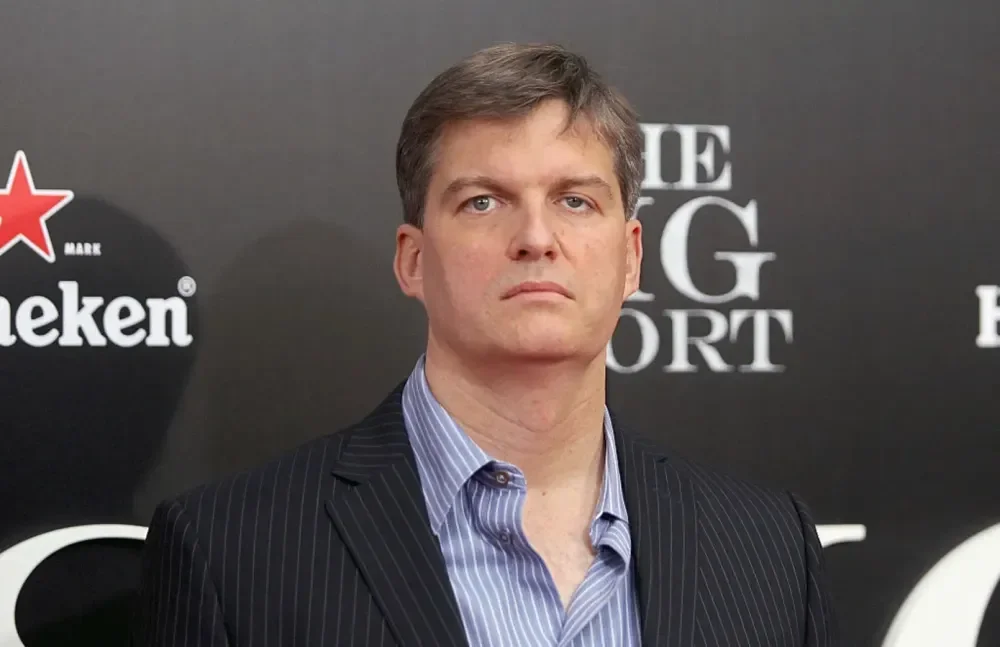
Cover image: Michael Burry at the 2015 New York premiere of "The Big Short." Image from Stocktwits.
围绕这条内容继续补充观点或上下文。