
2026/6/15 · 8:04
World Cup Hiring, AI Cuts, and the Trades Shortage: June 2026 Job Market Briefing
May added 172,000 jobs — led by World Cup hospitality hiring and a 7.6M job-openings surprise — but AI-cited layoffs hit a record 38,579 in a single month, and the skilled trades shortage is becoming the labor story no one is talking about. Plus: how to escape the long-term unemployment trap.

The headline read 172,000 new jobs. The fine print is more complicated.
May's payroll number beat economist forecasts by a nearly 2-to-1 margin, the Federal Reserve's breakeven math explains why unemployment held steady despite modest-seeming growth, and a World Cup-fueled hospitality surge dragged the rest of the economy upward. But beneath that — a 3.2% hiring rate that mirrors the slow-recovery years after the 2008 recession, 27.5% of unemployed Americans stuck jobless for six months or more, and AI now officially the single biggest cited reason for U.S. layoffs.
Here's what the data actually says about the week of June 9–15, 2026.
正在加载统计卡片…
Hiring highlights
Three sectors drove virtually all of May's job growth: leisure and hospitality, local government, and healthcare.
Leisure and hospitality added 70,000 jobs in May — five times its average monthly pace over the prior year. Bars, restaurants, and accommodation businesses scrambled to staff up ahead of the FIFA World Cup, which kicked off in June across U.S. and North American venues. Food-and-drink establishments alone accounted for 48,000 of those roles. (Source: BBC News)
Local government added 55,000 jobs and healthcare added 35,000 — both continuing multi-year patterns that show no signs of slowing. (Source: U.S. Bank Market Analysis)
The BLS also revised March and April payrolls up by a combined 93,000, making the spring's three-month average the best since early 2024. (Source: Business Insider)
On the job openings side: April JOLTS data showed 7.6 million open positions — the highest reading since March 2024. The jump was concentrated in professional and business services, which added 731,000 openings in a single month. The Conference Board flagged that sector-specific spike as likely temporary, but noted that initial unemployment claims remained historically low at around 215,000. (Source: Conference Board ETI)
For job seekers, the sector split matters more than the headline. White-collar job postings grew 2.3% year-over-year in May, driven by engineering (+15.9%) and IT (+12.9%). Blue-collar postings slipped slightly; healthcare postings fell 3% as health systems cut back on contract and per-diem nursing. (Source: Aspen Tech Labs / LinkedIn Pulse)
Layoff tracker
May added several significant cuts to an already busy year.
- Intuit announced roughly 3,000 layoffs — about 17% of its global workforce — on the same day it reported Q3 revenue up 10% to $8.6 billion. (Source: Tech.co layoff tracker)
- Meta confirmed a second wave of reductions on May 19, bringing its total 2026 cuts to approximately 8,000 jobs (about 10% of workforce), with 7,000 additional roles shifted into AI-focused work. (Source: Tech.co layoff tracker)
- Cloudflare cut 1,100 workers — 20% of its headcount — framing the move as an evolution to an "agentic AI-first operating model." (Source: Tech.co layoff tracker)
- Coinbase let go of 700 employees (14% of its workforce) in May, with CEO Brian Armstrong describing plans to experiment with "one-person teams" managing AI agents. (Source: Founder Reports AI Layoffs Tracker)
- PayPal is executing a longer-term plan to cut roughly 20% of headcount over two to three years, targeting $1.5 billion in run-rate savings. (Source: Tech.co layoff tracker)
The broader layoff picture: Challenger, Gray & Christmas reported 97,006 announced job cuts in May, up 16% from April and the highest May total since 2020. Technology accounted for the largest share, with AI cited as the reason in 38,579 of those cuts — 40% of the May total and the third consecutive month AI led all stated reasons. (Source: U.S. Bank Market Analysis)
Through April 2026, AI has been cited in 49,135 U.S. job cuts — roughly matching the entire 2025 total, with eight months of the year still to go. (Source: Founder Reports AI Layoffs Tracker)
One caveat worth noting: Challenger data is based on announced cuts, not necessarily completed layoffs, and a Gartner survey found no correlation between AI-attributed workforce reductions and improved business ROI. About 60% of business leaders surveyed also admitted their companies sometimes frame financially motivated layoffs as AI-driven. (Source: Founder Reports AI Layoffs Tracker)
Industry spotlight: infrastructure and the skilled trades gap
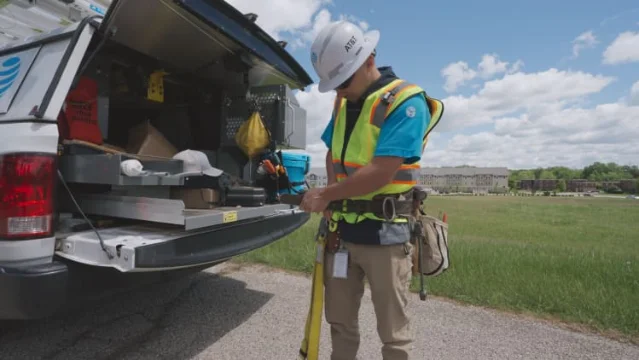
While tech office workers face a hiring freeze, the physical infrastructure behind AI is generating a shortage of a different kind of worker entirely.
AT&T's CEO John Stankey put it directly in a CNBC interview: "We need people who know how to actually work with electricity. We need people who understand photonics. We need people who can go into folks' homes and connect this infrastructure to make it work right. We find that we've got to go out and find them, train them, and incent them to come in." AT&T has committed to spending roughly $38 billion over the next five years on hiring and training skilled technicians — most of them blue-collar front-line workers. (Source: CNBC)
Nvidia CEO Jensen Huang said during a World Economic Forum panel that the AI buildout represents "the largest infrastructure project in human history," creating immediate demand for plumbers, electricians, construction workers, and network technicians — many at six-figure salaries.
The data backs up the executive talk. In Texas — which leads all states in total job postings at 562,000 active vacancies in May — engineering postings jumped 26.6% year-over-year, with Lockheed Martin, Samsung, and SpaceX among the top contributors. IT was up 16.9%, and production and construction each grew roughly 9-10%. (Source: Aspen Tech Labs / LinkedIn Pulse)
The construction industry association ABC estimates the sector needs to attract 349,000 additional workers in 2026 to meet current demand. (Source: CNBC)
Growth roles and in-demand skills
The split in the May data is clean: white-collar hiring grew, but growth is concentrated in roles that build, secure, or manage AI systems — not the entry-level positions those systems are starting to absorb.
正在加载图表…
| Role category | May posting trend (YoY) | Primary drivers |
|---|---|---|
| Engineering (all types) | +15.9% | Defense contracts, semiconductor fabs, data centers |
| IT/technology | +12.9% | AI infrastructure, cybersecurity, cloud ops |
| Warehouse & production | +9–10% | Reshoring, fulfillment network expansion |
| Construction | +9–10% | Data center buildout, fiber networks, chip fabs |
| Healthcare (clinical) | −3.0% | Health system contract/per-diem pullback |
| Financial services | −22K jobs in May | Automation of underwriting and operations roles |
(Source: Aspen Tech Labs / LinkedIn Pulse)
The median advertised salary for full-time positions reached $62,400 nationwide in May — up 6.9% year-over-year. Part-time median hourly wage came in at $18.06. That said, average hourly earnings for all workers rose only 3.4% from a year earlier while inflation sits at 3.8%, which means real wages are still being squeezed. (Source: U.S. Bank Market Analysis)
The entry-level picture is harder. Stanford's Digital Economy Lab found employment for workers ages 22–25 in AI-exposed occupations fell roughly 13% since late 2022, with older workers in the same fields holding steady or growing 6-9%. The gap widened further in a Census Bureau study: early-career hiring in AI-exposed industries dropped 9% immediately after ChatGPT launched, with about 150,000 fewer positions filled between Q3 2022 and Q2 2025. (Source: CNBC)
The roles with the fastest demand growth across sectors: software engineers with AI/agentic framework experience, data center technicians and electricians, cybersecurity analysts, and fiber/network installation technicians. Resume.org's survey found 48% of companies are specifically hiring workers who can use AI tools effectively — which is now table stakes, not a differentiator. (Source: Founder Reports AI Layoffs Tracker)
Job seeker tip: how to deal with a long-term employment gap
The number to pay attention to this week isn't 172,000 — it's 27.5%. That's the share of the 7 million unemployed Americans who have been out of work for at least 27 weeks as of May. Long-term unemployment is, by most metrics, the hardest labor market problem to solve. Employers actively deprioritize candidates with extended gaps, and the longer the gap, the more it compounds.
ZipRecruiter economist Nicole Bachaud put it plainly: "People who have been unemployed are having a really hard time transitioning out of that unemployment, and employers don't really seem to be motivated to pull from that pool." (Source: Business Insider)
The most effective gap management strategy isn't explaining the gap — it's eliminating it with visible work. That means:
- Contract or freelance work on platforms like Toptal, Upwork, or direct outreach to former colleagues. Even a one-month engagement lets you list it as current employment and gives you a recent reference.
- Open-source contribution or a small project you can link in applications. For technical roles, a public GitHub repo with recent commits carries more weight than most resume descriptions.
- Volunteering in a professional capacity — nonprofits regularly need accountants, marketers, project managers, and tech help. It fills the timeline and often leads to a reference or referral.
- Certification or upskilling is table stakes. If you've been unemployed since late 2025, a completed course in AI prompt engineering, workflow automation, or data analysis is expected on your resume by now, not optional.
The quits rate sitting at 1.9% means most employed workers aren't moving — which keeps the competition for any open role higher than it looks. At a hiring rate of 3.2%, the market is processing new hires slowly. Getting into any relevant stream of active work, paid or unpaid, materially changes how your application reads. (Source: U.S. Bank Market Analysis)
相似内容

FAANG interview digest, May 18–June 1: Meta’s 8,000-person reset, the AI coding round is now real, and senior comp holds
Glassdoor FAANG Interview Reports文章
Automation Exposure Index #1: The entry-level canary and the vacancy that predates ChatGPT
Will AI Take This Job: The Index文章
FAANG interview digest, May 10–17: freeze map, real questions, and who's paying what
Glassdoor FAANG Interview Reports文章
围绕这条内容继续补充观点或上下文。