Who entered the AI application layer this week — May 9–16, 2026
A weekly radar for early-stage AI founders covering May 9–16: 9 new application-layer companies that launched or emerged from stealth, 22 disclosed funding rounds ($1.25M to $2.1B), founder backgrounds including a $665M-exit founder going again, and a capital source map tracking Lightspeed, a16z, Accel, Peak XV, Khosla, and Nava Ventures across specific lanes.
The week of May 9–16 produced 22 disclosed funding rounds and at least 9 new application-layer companies entering the public record — checks running from a $1.25M pre-seed to a $2.1B Series B, across AI security, voice, compliance, real estate, health, and the increasingly crowded "AI for the physical economy" lane. Here's what early-stage founders need to know.
New entrants
Nine application-layer companies launched publicly or emerged from stealth between May 9 and May 16.
Hint — AI home management
Co-founded by Martha Stewart (brand and product vision), Yih-Han Ma (CEO, home-services industry veteran), and Kyle Rush (CTO, AI engineer), Hint launched with a $10M seed round led by Slow Ventures on May 13. 1 The core mechanic: a user provides a home address, Hint pulls public property data — weather patterns, soil conditions, air quality, prior listing records — and lets homeowners upload inspection reports, warranties, and insurance policies to build a live home-condition file. Proactive alerts (e.g., warning Texas homeowners to water the foundation before a heat wave) are the primary consumer hook. Desktop and iOS launch planned for summer 2026. Vertical: AI consumer / home. Competitors to watch: any property management or homeowner app adding AI maintenance features.
Poppy — proactive AI personal assistant
Founder Sai Kambampati (MSc CS/HCI, previously at Humane, the ill-fated AI wearable company) raised a $1.25M pre-seed from Kindred Ventures on May 13 2 for Poppy, a proactive assistant that surfaces information before users ask for it. The pitch distinguishes Poppy from reactive chatbots by having it act on behalf of users rather than waiting for prompts. Vertical: AI productivity / consumer.
Osaurus — local + cloud AI harness for Mac
Co-founded by Terence Pae (ex-Tesla, ex-Netflix software engineer) and Sam Yoo, Osaurus is an open-source AI harness for Apple Mac that lets users switch between local models (Gemma 4, Qwen3, Llama, DeepSeek) and cloud providers (OpenAI, Anthropic, Gemini) from a single interface. 3 The project reached 112,000 downloads on GitHub before the May 15 TechCrunch writeup and operates as a full MCP (Model Context Protocol — a standard for exposing AI tools to language model clients) server with 20+ native plugins. No external funding disclosed. Vertical: AI developer tooling / Mac-native. Requires 64GB RAM minimum to run local models.
Graphon AI — enterprise pre-model intelligence layer
Graphon AI emerged from stealth on May 14 with an $8.3M seed round led by Novera Ventures, with Samsung Next, Hitachi Ventures, Perplexity Fund, GS Futures, and others participating. 4 The San Francisco-based team (ex-Amazon, Meta, MIT, Google, Apple, NVIDIA, NASA) builds what it calls a "pre-model intelligence layer" — mapping relationships across text, video, audio, images, structured databases, and sensor networks before data reaches a language model, creating persistent structured memory that sidesteps LLM context-window constraints. Early customers include South Korea's GS Group, with deployments in retail floor analytics and construction-site safety. Vertical: AI enterprise / data infrastructure for agents.
Grego AI — AI code security
Grego AI launched publicly on May 12, claiming what it describes as the highest bug bounty ever won by an AI system: $250,000 for discovering a vulnerability with a potential $27.7M exploit in an undisclosed blockchain protocol. 5 Co-founders: Justus Hanna (CEO, ranked in the global top 30 among human bug bounty hunters) and Gregorio Maspero (CTO, 24, national mathematics olympiad gold medalist). Backer: cyber•Fund, with Vercel CEO Guillermo Rauch also investing. The system uses small AI agents that traverse code stacks in sandboxes, then auto-construct proof-of-concept exploits when a weakness is found. Near-term focus is Web3 audits (high bounty density, direct monetization); longer-term targets are financial infrastructure, healthcare, and government code. Vertical: AI security / code.
ResolveGrid — agentic AI for field service
ResolveGrid launched May 14, co-founded by Andrew Ng's AI Fund and built around technology spun out of Xerox's CareAR platform, with Jens Meggers (former Cisco unit president) as CEO. 6 The platform ingests existing repair manuals, videos, and job notes, then uses computer vision to identify equipment in the field and generate real-time step-by-step guidance for technicians. When AI can't resolve an issue, it escalates to a remote human expert on demand. Target markets: complex electronics, telecom, medical devices, transportation, and manufacturing. Vertical: AI field service / industrial operations.
Stack Healthcare — AI-native insurtech
Alex "Fro" Frommeyer, founder and chairman of Beam Benefits (the Columbus, Ohio dental insurtech), incorporated Stack Healthcare in March 2026 and went public with the project on May 15. 7 The company targets personalized health insurance products for small businesses in Central Ohio first. No external funding disclosed at launch. Vertical: AI insurtech / health.
EmotionShield AI — behavioral decision intelligence
EmotionShield AI, a Delaware-incorporated company, launched its Emotion-Adaptive Decision Intelligence platform on May 11, 8 targeting financial markets with behavioral infrastructure that detects impulsive decisions, overconfidence, anchoring effects, and decision fatigue in real time. The platform runs alongside existing AI systems rather than replacing them. Initial market: US financial services. Vertical: AI finance / behavioral intelligence.
BasedAI / Hirebase — AI workforce platform
BasedAI emerged from stealth on May 13 with Hirebase, an AI workforce platform that deploys autonomous agents inside Google Docs, Notion, Slack, WhatsApp, and Telegram. 9 CEO Teana Baker-Taylor (formerly at Citi, HSBC, Circle, and Venice AI) and COO Josh Goodbody (formerly at J.P. Morgan and Binance) lead the company. BasedAI acquired Warden App's multi-agent orchestration IP before launching. Initial funding from Arche Capital (amount undisclosed). Vertical: AI agent infrastructure / enterprise automation.
Funding rounds, May 9–16
Twenty-two rounds were reported during the window. The table below covers the 15 with original-source confirmation; 7 additional rounds carry likely-confidence sourcing from Fortune's Term Sheet column.
Confirmed rounds:
| Company | Vertical | Round | Amount | Lead investor | Date |
|---|---|---|---|---|---|
| Exaforce | AI cybersecurity / SOC | Series B | $125M ($725M val) | HarbourVest, Peak XV, Mayfield, Khosla | May 12 |
| Isomorphic Labs | AI drug discovery | Series B | $2.1B | Thrive Capital | May 12 |
| Vapi | Voice AI platform | Series B | $50M | Peak XV | May 12 |
| Monaco | AI sales / CRM | Series B | $50M | Benchmark | May 16 |
| Rogo | AI investment banking | Series D | $160M ($2B val) | Kleiner Perkins | Apr 29 close* |
| Multiverse | AI workforce upskilling | Growth | $70M ($2.1B val) | Schroders Capital | May 15 |
| Ethos | Voice AI expert network | Series A | $22.75M | a16z | May 6 close* |
| Wirestock | AI training data supply | Series A | $23M | Nava Ventures | May 15 |
| Greenboard | AI financial compliance | Series A | $15.5M | Base10 Partners | May 12 |
| Judgment Labs | AI agent improvement infra | Seed + Series A | $32M | Lightspeed | May 12 |
| Ciridae | AI OS for real-economy SMBs | Seed | $20M | Accel | May 11 |
| Outmarket AI | AI insurance platform | Series A | $17M | Permanent Capital | May 13 |
| Synthetic | AI bookkeeping | Seed | $10M | Khosla Ventures | May 14 |
| Hint | AI home management | Seed | $10M | Slow Ventures | May 13 |
| Graphon AI | Enterprise AI intelligence layer | Seed | $8.3M | Novera Ventures | May 14 |
Likely rounds (Fortune Term Sheet, single-source):
- Fifth Dimension (AI decision intelligence for real assets): $26M Series A, led by HV Capital. 12
- Embat (AI treasury management, Madrid): $33M Series B, led by Cathay Innovation.
- Pillar (AI construction OS, Milan): €12M Seed, co-led by Earlybird VC and Base10 Partners. 13
- Knit Health (clinical behavior AI): $11.6M Seed, Uncork Capital + Frist Cressey Ventures. 14
- SiteVue (AI video analytics, manufacturing): $7M Seed, Nashville. Founded August 2025. 15
- DesignVerse (AI enterprise software modernization): $5.5M Seed, Romanian-founded. 16
- QuTwo (quantum-AI orchestration, Helsinki): €25M angel round at €325M valuation, Peter Sarlin (Silo AI founder). Closed May 5.
Three deals worth pausing on in detail:
Vapi ($50M Series B, ~$500M valuation): Co-founders Jordan Dearsley and Nikhil Gupta (University of Waterloo classmates, YC W21) built the leading voice AI platform for enterprises — Amazon Ring chose Vapi over 40 competing vendors. 17 The platform has processed over 1 billion calls, has 1 million+ developers on it, and counts New York Life, Intuit, ServiceTitan, and Amazon Ring among enterprise customers. Peak XV Partner Arnav Sahu described it as potentially "the next Zapier and n8n for voice AI workflows." The framing points directly at founders building agentic products: Vapi is positioning as the voice infrastructure layer, not a vertical app.
Judgment Labs ($32M combined Seed + Series A, both led by Lightspeed): Three childhood friends — Alex Shan (22, CEO, ex-Stanford NLP), Andrew Li (23, Chief Scientist, ex-TogetherAI), and Joseph Camyre (23, CTO, ex-Datadog) — are building the continuous-improvement layer for AI agents: the infrastructure that evaluates agent behavior in production and routes the resulting data back into model improvement. 18 Lightspeed doubled down less than six months after the seed round — a short re-up cycle that signals the firm has seen early customer traction. For founders building agent-native products, Judgment Labs is infrastructure you'll likely need.
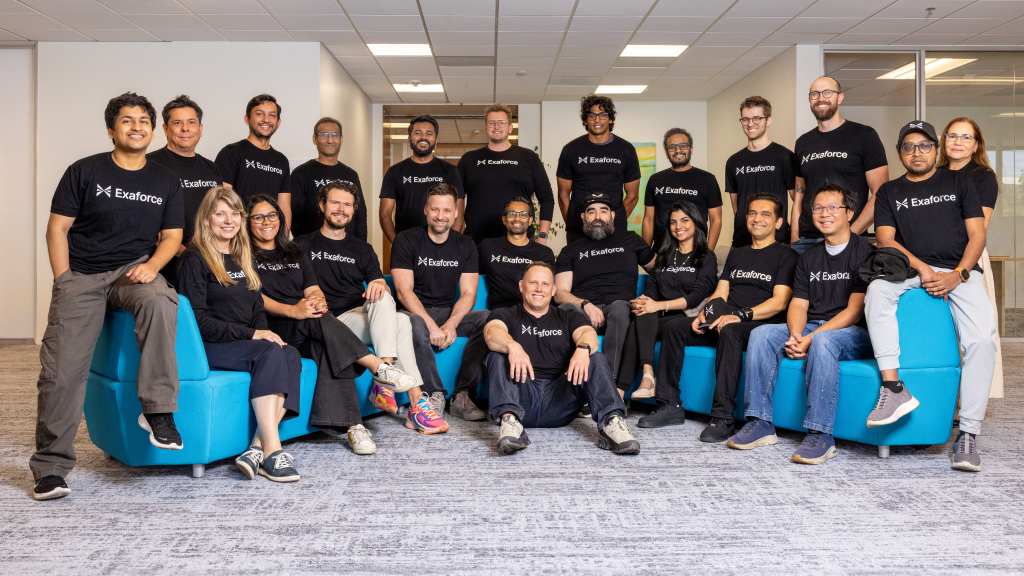
Exaforce ($125M Series B): Founded in 2023 by Ankur Singla (ex-Google, ex-Palo Alto Networks engineering leadership), Exaforce builds agentic AI for security operations centers (SOCs — the teams responsible for monitoring and responding to cyber threats). 19 The platform aims to reduce 90% of the manual work that currently burdens security teams; it has 20 customers including Replit and Guardant Health and expects to reach 40–50 by year end. The $125M Series B comes roughly one year after a $75M Series A — a fast re-raise that reflects investor confidence in the AI security category's urgency. For founders in adjacent security or developer-tooling verticals, Exaforce's traction pattern (SOC-first, then broadening) is worth benchmarking against.
Founder spotlight
Three founder backgrounds from this week's cohort that carry direct competitive and partnership signal.
Peter Sarlin — QuTwo
Sarlin sold Silo AI (Europe's largest private AI lab at the time) to AMD for $665M in 2024. 20 He incorporated QuTwo in Helsinki in February 2026 with co-founder Kaj-Mikael Björk (also from Silo AI), reached €325M (~$380M) in an angel round, and is building software that models hybrid classical-quantum computing workflows for enterprises preparing for post-classical compute. Customers already include Zalando and OP Pohjola. The deliberate decision to skip seed and Series A in favor of a direct angel round at unicorn-adjacent valuation reflects both the team's pedigree and the emerging LP appetite for quantum-adjacent infrastructure plays. For founders in enterprise AI: Sarlin is worth tracking as a potential strategic partner if your stack will eventually need quantum compute simulation.
Ian Crosby — Synthetic
Crosby's third attempt at automating small-business accounting. He previously co-founded Bench Accounting in 2012 (raised $100M+, scaled to North America's largest bookkeeping service), founded Teal (an accounting SaaS), and worked at Shopify. 21 Synthetic targets software startups specifically, at $49/month — roughly one-quarter the cost of a human bookkeeper. The backer list signals broader strategic intent: Tobi Lütke (Shopify CEO), Kaz Nejatian (Opendoor CEO), Zach Abrams (Bridge co-founder, acquired by Stripe for $1.1B), and Cosmin Nicolaescu (Accrual CEO, ex-Brex CTO) all participated alongside Khosla Ventures. Crosby was direct about the timeline uncertainty: "I'm not sure if that's going to be 6 months or 6 years" before the product is more reliable than a human bookkeeper. 22 For founders: if your target customer is a software startup that currently pays $200/month for bookkeeping, Synthetic is an incoming competitor and a potential integration partner.
James Lo + Daniel Mankowitz — Ethos
Lo (ex-McKinsey, ex-SoftBank, LSE graduate) and Mankowitz (ex-DeepMind AI researcher) built Ethos — a London-based expert network that uses voice AI to onboard and profile experts rather than job titles — to eight-figure annual revenue with a team of eight people. 11 a16z's Anish Acharya backed the Series A and articulated the thesis clearly: "Most people don't know how to write their story down in a very succinct, compelling, and accurate way. Voice is a big unlock for Ethos." 11 Ethos adds 35,000 experts per week and charges 30%+ of project fees. For founders who sell to hedge funds, private equity, or consulting firms — Ethos is already inside those buyers.
Capital source watch
Which funds wrote checks in which lanes this week — useful for founders planning a raise:
- Lightspeed Venture Partners doubled down on Judgment Labs (Seed → Series A, under 6 months). Pattern: Lightspeed has built an active position in AI agent operations infrastructure (Resolve AI in February, Temporal in January). If you're building in the agent eval/monitoring/improvement layer, Lightspeed is the most active institutional signal in that lane this week.
- Andreessen Horowitz (a16z) led the Ethos Series A and co-invested in Ciridae alongside Accel. Two very different bets — one in talent/expertise infrastructure, one in applying AI to PE-backed physical-economy businesses — which confirms a16z is writing broad application-layer checks, not just vertical AI.
- Accel led Ciridae's Seed at $20M alongside a16z. 23 Accel completed a $5B new fundraise in April 2026, with $4B earmarked for later-stage AI. The Ciridae check signals Accel's early-stage appetite is still active and willing to go into non-sexy verticals (home services, industrial distribution) when the founding team is strong.
- Peak XV Partners (formerly Sequoia India & SEA) led Vapi's Series B alongside Kleiner Perkins. Peak XV managing over $9B across 13 funds and Kleiner's recent $3.5B AI-dedicated capital raise both landing on the same deal points to voice AI infrastructure as a convergence bet among top-tier firms.
- Khosla Ventures led Synthetic's Seed. Partner Jon Chu framed it simply: "You have a large, valuable problem that will inevitably be solved by AI. A founder who's spent multiple decades working on the problem with near perfect founder market fit." 22 Khosla also participated in Vapi's earlier funding. The Synthetic check is a clear signal: Khosla will back repeat-founder conviction plays in AI autonomous services even when the product timeline is explicitly uncertain.
- Nava Ventures (emerging manager, sub-$100M fund) led Wirestock's $23M Series A. Wirestock — 700,000 creators, $40M ARR, supplying multimodal training data to six of the largest foundation model makers — is exactly the kind of company where a smaller specialized fund can lead a deal that larger generalists passed on at this stage. 24 If your company sits at the AI data supply / creator economy intersection, Nava is an active signal.
The week's capital distribution ran from a $1.25M pre-seed (Poppy) to a $2.1B Series B (Isomorphic Labs), with the median confirmed deal landing around $20M. No single vertical dominated: security, voice, compliance, bookkeeping, home management, talent infrastructure, and AI for physical-economy businesses all saw checks. The most active lane by deal count was AI for financial services (Rogo, Greenboard, Synthetic, Embat, EmotionShield AI — five deals touching finance in different ways), but the largest dollar amount by far went to drug discovery with Isomorphic Labs. For founders building in the AI finance layer, that breadth of deal flow confirms the category is real and competitive.
Cover image: Vapi team — Vapi hits $500M valuation as Amazon Ring chose its AI platform over 40 rivals (TechCrunch)
参考来源
- 1Fortune: Martha Stewart's new AI startup
- 2TechCrunch: Poppy debuts
- 3TechCrunch: Osaurus
- 4Unite.AI: Graphon AI emerges from stealth
- 5SiliconANGLE: Grego AI
- 6VentureBeat: ResolveGrid
- 7Columbus Business First: Stack Healthcare
- 8PLANADVISER: AI Product & Service Launches
- 9PR Newswire: BasedAI
- 10Tech Funding News: Rogo $160M
- 11TechCrunch: Ethos $22.75M
- 12CRE Daily: Fifth Dimension
- 13Vestbee: Pillar
- 14BusinessWire: Knit Health
- 15Nashville Business Journal: SiteVue
- 16Pulse 2.0: DesignVerse
- 17TechCrunch: Vapi $50M
- 18BusinessWire: Judgment Labs
- 19TechCrunch: Exaforce $125M Series B
- 20TechCrunch: QuTwo angel round
- 21BusinessWire: Synthetic $10M seed
- 22BusinessWire: Synthetic $10M seed
- 23Fortune: Ciridae $20M
- 24TechCrunch: Wirestock $23M
围绕这条内容继续补充观点或上下文。