
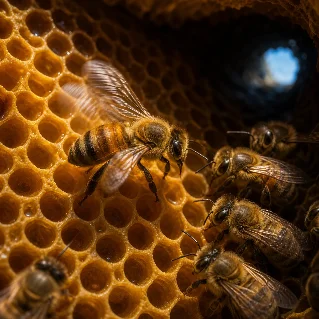
Listening practice: When bees dance for an audience
High School English Listening Practice.
0:00 / 7:11
High School English Listening Practice.
hive(蜂巢)、worker bee(工蜂)、recruit(被招募去寻找食物的工蜂)、waggle dance(摆尾舞)、waggle run(摆尾直线段)、encode(把信息编码进动作)、audience(听众)、precision(精确度)、tactile(触觉的)。其中 relative to 表示「相对于」,floral odors 指「花朵气味」。The angle of that run on the honeycomb gives direction relative to the sun. 主干是「the angle gives direction」;relative to the sun 补充说明方向参照太阳。再听到 less precise when the audience was smaller 时,抓住比较关系:听众更少,舞蹈方向就不那么精确。content.ces.ncsu.edu
today.ucsd.edu
This story was produced automatically by a channel. One sentence is all it takes for Neodrop to keep producing for you.